For over a thousand years, a unique spiritual community has quietly shaped Russia’s cultural landscape. Representing less than 1% of the population, this group blends European traditions with local customs—a testament to centuries of adaptation. Their story intertwines with pivotal moments like the Great Schism of 1054 and the rise and fall of empires, revealing how faith persists through shifting political tides.
Recent surveys highlight intriguing details: nearly half of these believers pray daily, a rate far higher than other major religious groups. Ethnic diversity adds another layer, with nearly half identifying as ethnically Russian. From Polish influences during the Tsarist era to Soviet-era persecution, each chapter has left indelible marks on worship practices and community identity.
Today’s challenges feel familiar yet urgent. Geopolitical tensions, particularly surrounding Ukraine, echo historical East-West divides. Communities now balance loyalty to global religious institutions with their place in a predominantly Orthodox society. This delicate dance continues to inspire art, literature, and intellectual debates that enrich Russia’s cultural tapestry.
Key Takeaways
- Russia’s Catholic population shows remarkable ethnic diversity, with nearly half identifying as ethnically Russian
- Daily prayer rates among these believers triple those of other major religious groups
- Historical events from medieval schisms to 20th-century conflicts shaped unique worship traditions
- Modern communities navigate complex relationships with both Orthodox neighbors and global religious institutions
- Current geopolitical tensions revive centuries-old debates about faith’s role in cultural identity
Historical Foundations and Early Interactions
Centuries before modern borders took shape, spiritual messengers journeyed eastward to lands that would become Russia. Diplomatic efforts by figures like Princess Olga laid groundwork for religious exchange, though early missions often ended in tragedy. “We found no glory here, only martyrdom,” wrote one chronicler about 10th-century priests who faced violent resistance.
Early Missionary Efforts and Medieval Encounters
German bishops Adaldag and Libutius pioneered missions to Slavic territories in the 900s, but their successors met grim fates. When Archbishop Adalbertus arrived in 961, angry locals killed his companions. Prince Vladimir’s famous 987 religious survey revealed fierce competition between Western and Eastern churches. His eventual Orthodox choice shaped the region’s spiritual identity for centuries.
The Impact of Schisms and Religious Rivalries
The 1054 Great Schism deepened divides between churches. Debates over papal authority and liturgical practices turned theological differences into cultural fault lines. By 1002, missionaries like the Saxon archbishop of Magdeburg faced execution for challenging local traditions. These events created lasting suspicions that still color interfaith relations today.
Medieval priests navigated more than doctrine—they wrestled with language barriers and shifting alliances. Bishop Reinbert’s imprisonment in 1013 showed how faith became entangled with politics. Yet these early struggles planted seeds for a complex religious landscape where multiple traditions coexist.
Cultural and Political Influences on the Catholic Church
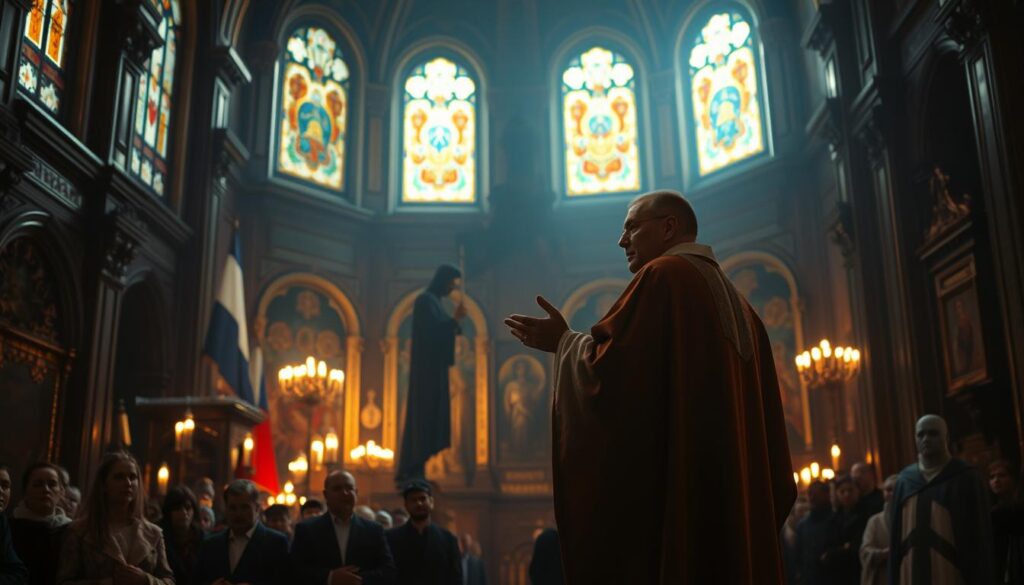
Political power and spiritual authority have danced a complex tango throughout Russian history. When Tsar Peter I declared himself head of the Orthodox Church in 1721, it set the stage for centuries of state oversight in religious matters. This relationship took dramatic turns under different rulers, shaping how communities practiced their faith.
State-Church Dynamics Through the Centuries
Catherine the Great made bold moves that reshaped religious life. She founded the Mohilev diocese in 1772 without Vatican approval – a power play later accepted by Rome. Her support for Jesuit schools showed how the Russian Empire could embrace Catholic education when it served imperial goals.
By 1820, shifting politics led to Jesuit expulsion. The government viewed foreign religious orders as threats during wartime tensions. This pattern repeated: tolerance during peace, suspicion during conflict. Polish uprisings in the 1800s deepened divisions, linking Catholic identity with rebellion in official eyes.
The Role of Catholic Thought in Russian National Identity
Philosopher Petr Chaadaev once wrote:
“We lack the cement binding Western societies – the eternal principles preserved by Rome.”
His controversial views sparked debates about Russia’s spiritual path. Meanwhile, Dostoevsky saw Catholic influence as incompatible with Slavic traditions.
These intellectual clashes mirrored real-world struggles. The 1917 Revolution shattered thriving parish networks – over 150 churches vanished almost overnight. Yet the organizational frameworks built over centuries proved resilient, surviving political storms that reshaped the nation.
Societal Impacts and Cross-Cultural Dialogues
Russia’s spiritual landscape reveals surprising harmonies amid historical tensions. The Orthodox Church and Catholic communities developed unique patterns of exchange, shaping everything from village festivals to philosophical debates.
Interplay Between Catholic and Orthodox Traditions
19th-century thinkers forged new ideas through religious contrasts. Slavophile Alexei Khomyakov argued:
“True unity flows from spiritual freedom – not Roman decrees.”
His concept ofsobornostbecame a cornerstone ofRussian Orthodoxtheology, opposing centralized papal authority.
Literary giants turned theological debates into gripping narratives. Dostoevsky’s characters often framed Catholic influences as threats – one protagonist calls Rome “the cradle of soul-crushing rationalism.” These portrayals reflected real fears during conflicts like the Crimean War.
Influence on Art, Literature, and Family Life
Creative fusion emerged where doctrine divided. Churches in St. Petersburg blended Byzantine domes with Gothic arches, while composers like Bortniansky wove Latin hymns into Orthodox chants. Families became living bridges – children in mixed households often learned both prayer traditions.
| Aspect | Orthodox Influence | Catholic Contribution |
|---|---|---|
| Theology | Sobornost (communal unity) | Scholastic philosophy |
| Literature | Mystical symbolism | Rational inquiry themes |
| Family Life | Icon corners | Rosary practices |
| Art | Iconostasis tradition | Stained glass techniques |
Shared festivals kept dialogue alive. Villagers often attended both Christmas services – Julian calendar celebrations in Orthodox parishes and Gregorian observances in Catholic ones. This practical coexistence softened official tensions, creating space for mutual respect.
Regional Perspectives: Catholic Communities in Russia
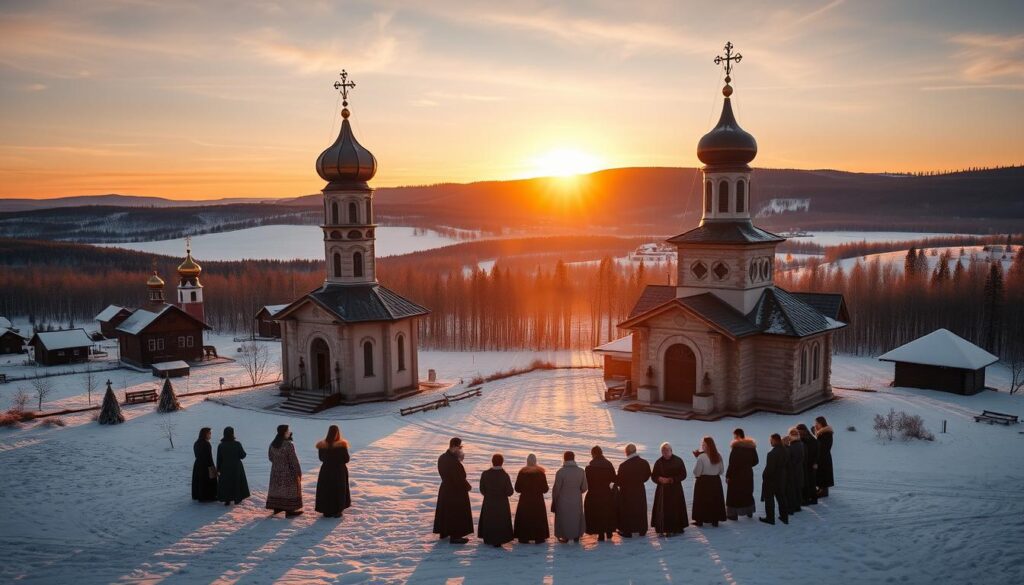
Beyond the Ural Mountains lies a story of faith forged through exile. The vast territories of Eastern Siberia and the Russian Far East became unlikely centers for spiritual resilience. Political banishment policies from the 1600s to 1800s shaped these communities in ways still visible today.
Eastern Siberia and the Far East: Growth and Challenges
Missionary orders laid foundations in harsh conditions. Dominicans established Irkutsk’s first Catholic base in 1806, followed by Jesuits and Franciscans. By 1825, the Church of the Assumption served a parish spanning regions larger than France – priests traveled months to reach scattered members.
The 1830 Polish Uprising changed everything. “We carried our churches in our hearts,” wrote one exiled rebel. Thousands of educated Poles brought vibrant traditions to the area, making them the majority in Siberian parishes. Their influence transformed cities like Vladivostok into hubs for Catholic culture.
Infrastructure projects accelerated growth. The Trans-Siberian Railroad (1891-1916) enabled new settlements. Agricultural reforms attracted voluntary migrants who blended European farming methods with Siberian practices. By 1911, Irkutsk province saw Catholic numbers multiply five times – a direct result of determined community building.
These groups faced unique challenges:
- Parishes covering 500,000+ square miles
- Priests serving multiple cities through extreme weather
- Ethnic diversity requiring multilingual services
Isolation became strength. German, Lithuanian, and Polish members maintained distinct customs while sharing sacraments. This cultural mosaic still defines the region’s spiritual identity, proving faith can flourish even in Earth’s harshest climates.
Modern Developments in Catholicism in Russia
The rebirth of faith communities after decades of suppression reveals extraordinary resilience. Following 69 years under the Soviet Union, only two functioning churches remained by 1939 – both serving foreign diplomats in Moscow and St. Petersburg.
Rebuilding Sacred Spaces
Post-1991 reforms sparked dramatic changes. The first legally registered parish emerged in Magadan city, followed by new communities from Vladivostok to Khabarovsk. Bishops like Joseph Werth spearheaded efforts to restore spiritual networks across Asian territories.
Bridging Past and Present
Modern parishes balance tradition with innovation. International religious orders support local priests in reviving practices once forced underground. Remarkably, over 60% of members now come from majority ethnic groups rather than historical minority communities.
New dioceses established since 2002 help strengthen global connections while respecting regional identities. As these communities grow, they continue shaping dialogues about cultural heritage in changing times – proving faith’s enduring power to unite across generations.
FAQ
How has the Russian Orthodox Church influenced Catholic communities historically?
The Russian Orthodox Church has often held a dominant role in shaping religious policies, leading to tensions and occasional restrictions on Catholic activities. Conflicts date back to medieval schisms and intensified under tsars like Peter the Great, who favored Orthodox traditions.
What challenges did Catholics face during the Soviet era?
Under Soviet rule, many churches, including the Cathedral of the Immaculate Conception in Moscow, were seized or destroyed. Priests faced persecution, and worship was driven underground. The state promoted atheism, severely limiting public religious expression.
How do Catholic and Orthodox traditions coexist in modern Russia?
While theological differences remain, both groups collaborate on social initiatives. Pope Francis and Patriarch Kirill have met to discuss unity, though political issues like the war in Ukraine complicate dialogue. Local parishes often share cultural events to foster mutual respect.
Are Catholic communities growing in regions like Eastern Siberia?
Small but active groups exist, particularly in cities like Irkutsk. Challenges include vast distances between parishes and limited resources. Missionaries focus on charity work, such as aiding families, to strengthen ties with local populations.
How has Vladimir Putin’s government addressed Catholic concerns?
The Kremlin recognizes the Church’s role in global diplomacy but maintains close ties with the Russian Orthodox Church. Laws restricting “foreign religious activity” sometimes affect Catholic dioceses, complicating efforts to train clergy or import literature.
What role does the Cathedral of the Immaculate Conception play today?
Rebuilt in the 1990s, this Moscow landmark symbolizes Catholic resilience. It hosts multilingual services and cultural programs, bridging gaps between Russian and international visitors. Its Gothic architecture also draws tourists, highlighting faith’s artistic legacy.
How has the invasion of Ukraine impacted Catholic-Orthodox relations?
Patriarch Kirill’s support for the war strained ties with the Vatican, which advocates for peace. Some Ukrainian Catholic leaders criticize Moscow’s stance, creating divisions. However, grassroots interfaith efforts continue to promote reconciliation.