The Catholic Church stands at a unique crossroads in modern history. Over the past decade, it has balanced ancient traditions with rapid cultural shifts. From social justice debates to digital outreach, religious leaders face both familiar struggles and new opportunities.
Global growth remains a hallmark of the church, with vibrant communities emerging across Africa, Asia, and Latin America. These regions bring fresh energy to theological conversations while honoring centuries-old practices. Meanwhile, younger generations seek spiritual connections that align with their values around inclusion and environmental stewardship.
Technology reshapes how believers engage with their faith. Livestreamed Masses and faith-based apps now complement traditional parish life. This digital evolution helps the Catholic Church reach people across borders—yet raises questions about maintaining sacred rituals in virtual spaces.
Recent leadership has emphasized dialogue on climate change, migration, and economic inequality. Such efforts reflect attempts to stay relevant in a fast-changing world. At the same time, the church continues wrestling with internal reforms and external pressures to adapt.
Key Takeaways
- The Catholic Church maintains global influence through cultural adaptation and technological innovation
- Younger generations drive demand for faith communities addressing social justice and environmental issues
- Digital tools expand religious participation but challenge traditional worship formats
- Leadership focuses on balancing core teachings with contemporary societal needs
- Global demographic shifts create new centers of Catholic growth and theological discussion
Emerging Modern Challenges in the Catholic Church
Recent developments highlight ongoing tensions between tradition and transformation. From sudden leadership shifts to evolving roles for women, the institution navigates complex debates about its future direction.
When Leaders Change Course
The abrupt dismissal of theologian Ralph Martin, 82, from seminary duties shocked many. Archbishop Edward Weisenburger’s decision reflects broader patterns of personnel changes under Pope Leo XIV‘s leadership. Such moves often aim to align institutions with modern priorities while preserving doctrinal integrity.
Seminary reforms now emphasize rigorous interview processes for faculty roles. Candidates face deeper vetting on both theological alignment and pastoral sensitivity. These changes help address community calls for transparency in priest appointments and educational standards.
Reforms That Spark Dialogue
Discussions about expanding women‘s roles continue gaining momentum. Many parishes now see female leaders managing administrative tasks previously reserved for clergy. Yet questions remain about participation in sacramental functions.
Bishop reassignments frequently trigger strong reactions, as seen when popular leaders transition to new dioceses. A recent interview with Vatican officials revealed evolving criteria for these decisions: “We balance tradition with each community’s unique needs,” the representative noted.
As Pope Leo XIV encourages gradual reforms, some advocates push for faster change. This tension shapes ongoing debates about how quickly the Catholic Church should adapt to contemporary expectations while honoring its 2,000-year legacy.
Understanding catholicism today
Modern faith communities are reshaping religious practices while honoring centuries-old traditions. This balance creates spaces where ancient rituals meet innovative approaches to spiritual growth. Below, we explore how these dynamics unfold in worship and cultural adaptation.
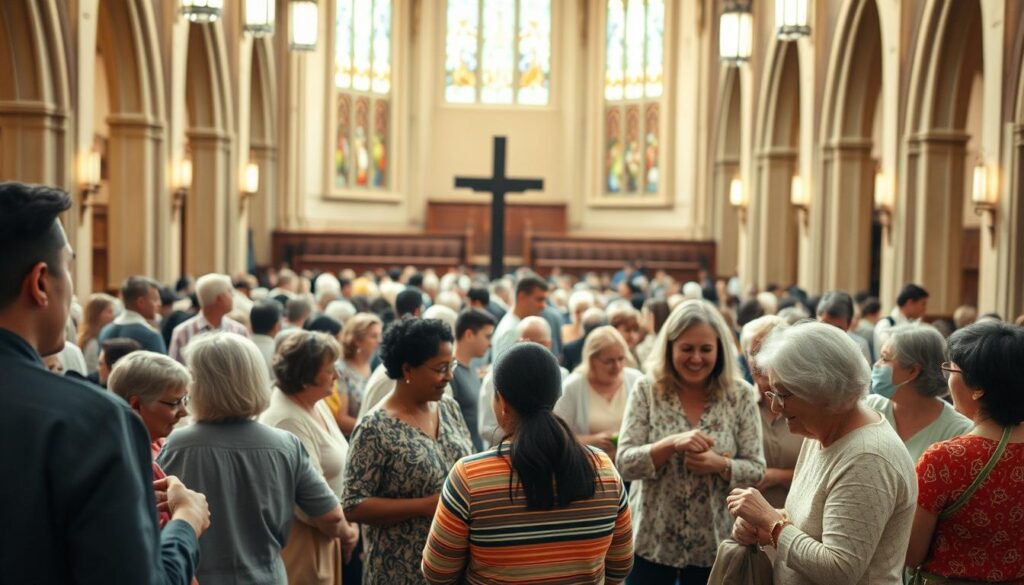
Trends in Worship and Spiritual Engagement
Worship experiences now range from candlelit Latin Masses to guitar-led youth services. Many parishes blend traditional liturgy with modern music, creating accessible entry points for younger generations. Virtual participation has become permanent for some, with 43% of regular churchgoers occasionally joining services online.
Personal spiritual practices are evolving too. Apps offering daily Lectio Divina reflections coexist with TikTok faith challenges. “Our people want roots and relevance,” notes a Chicago parish leader. “They seek connections that feel both timeless and immediate.”
Adapting to a Changing Cultural Landscape
The concept of holy family now embraces diverse household structures while upholding core values. Single-parent support groups and blended family retreats help communities live Catholic teachings in modern contexts.
Environmental action has become spiritual practice for many. Parishes organize river cleanups alongside traditional prayer chains. Young adults particularly value this integration, with 68% citing climate care as essential to their faith life.
Technology bridges gaps between ancient traditions and digital natives. Interactive confession guides and AI-powered scripture tools help people engage with their beliefs daily. As one millennial Catholic explains: “My faith life isn’t just Sunday mornings—it’s how I move through the world every day.”
Political and Global Perspectives on Faith
Global politics increasingly shape how religious institutions engage with societal challenges. The Catholic Church navigates complex relationships with governments while advocating for ethical policies worldwide. This interplay between faith and governance sparks debates about religious liberty, human rights, and diplomatic engagement.
Impact of Political Administration and Law Enforcement
The Trump administration reshaped church-state dynamics in the United States. Policy changes affected immigration support programs and healthcare access through Catholic charities. Many dioceses strengthened partnerships with law enforcement to protect vulnerable communities while maintaining sanctuary church traditions.
State-level legislation continues testing religious institutions. Recent laws targeting social services funding forced creative adaptations in Catholic outreach programs. As one diocesan director noted: “We follow Christ’s teachings first, but legal frameworks dictate how we serve.”
International News and Its Influence on the Church
Global conflicts like the Israel-Gaza crisis demand urgent responses. The Vatican often deploys mediators and issues calls for ceasefire agreements. Through its global network, the Catholic Church provides humanitarian aid while advocating diplomatic solutions.
Vatican correspondents play crucial roles in interpreting these actions. Their reports help believers understand how papal statements address specific country situations. This coverage bridges local concerns with universal Church teachings, especially during administration changes affecting Catholic institutions abroad.
Innovations and Renewal in Church Leadership
Dynamic shifts in religious leadership are redefining how global communities experience their faith. Under Pope Leo XIV, the Vatican has launched initiatives blending ancient wisdom with modern problem-solving. These changes aim to maintain doctrinal integrity while addressing urgent issues like climate change and social inequality.

Insights from Vatican Developments and Pope Influences
Castel Gandolfo now hosts climate summits pairing scientists with theologians. This historic papal retreat illustrates Pope Leo XIV‘s approach: using tradition-rich spaces for contemporary dialogue. Recent seminary reforms require priest candidates to complete cultural competency training alongside scripture studies.
The pontiff’s monthly video messages reach millions through social platforms. “Leadership means showing up where people live,” he remarked in a 2023 interview. This accessibility reshapes how Catholics worldwide perceive church authority.
Modern Approaches to Tradition and Faith
Dioceses now use community feedback in bishop selection processes. Lay members join review panels assessing candidates’ crisis management skills and tech literacy. One Midwest diocese reported 40% faster conflict resolution after adopting these methods.
Leadership programs at Castel Gandolfo teach ancient governance models alongside digital outreach strategies. Participants learn to balance sacramental duties with managing food banks or immigration services. As one graduate noted: “We’re called to be shepherds and social innovators.”
News and Global Events Shaping the Church
The Gaza conflict has thrust religious institutions into urgent humanitarian roles. Catholic communities there balance spiritual support with lifesaving aid. Global networks mobilize resources while facing logistical hurdles.
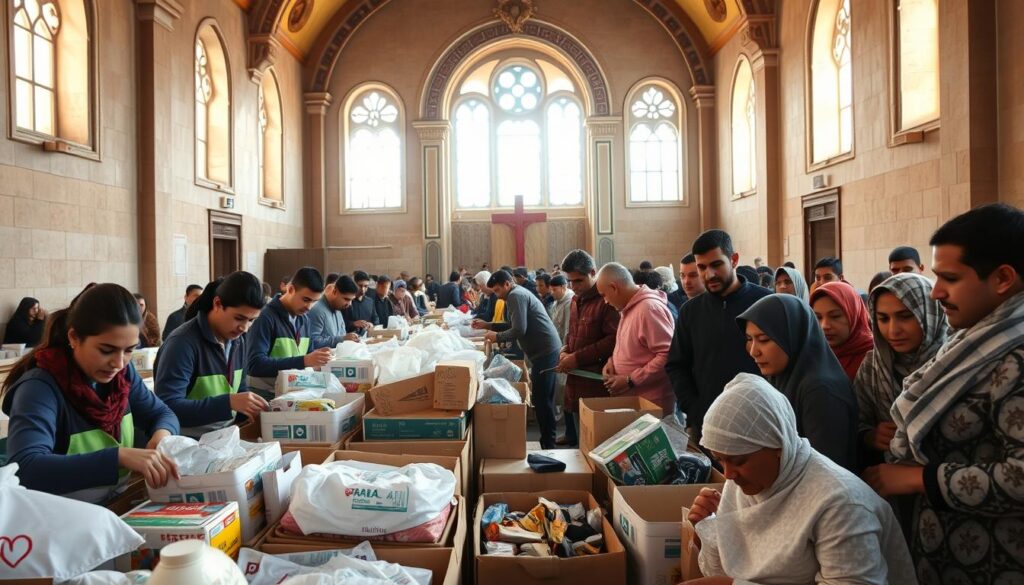
Reactions to International Crises and Aid Efforts
Recent deadly strikes near Gaza church properties have drawn global attention. One parish sheltering 300 families became a makeshift hospital after nearby bombings. “Our walls shake, but our resolve doesn’t,” shared a local deacon via news correspondent reports.
Vatican officials coordinate with multiple country leaders to secure ceasefire agreements.
“Attacking places of worship crosses every moral line,”
stated a Vatican spokesperson duringIsrael saysnegotiations. Catholic Relief Services delivers food packages despitestrike Gazadisruptions, often using underground supply routes.
International aid faces hurdles like blocked shipments and damaged infrastructure. Volunteers repurpose church basements as storage hubs, prioritizing children’s nutritional needs. Over 60% of Gaza Catholic families now rely on these distributions for survival.
Faith leaders worldwide amplify calls for conflict resolution. U.S. dioceses host interfaith vigils while pressuring lawmakers to increase support for humanitarian corridors. These efforts showcase how global crises reshape religious communities’ priorities and partnerships.
Controversies and Allegations Impacting the Church
Institutional accountability remains central to maintaining trust in faith communities. Recent years have seen increased demands for ethical governance and protective measures across religious organizations.
Paths Toward Healing and Prevention
Updated protocols now guide how churches address abuse allegations. Immediate reporting to civil authorities has become standard practice, with victim advocates participating in investigations. Many dioceses fund counseling services while streamlining compensation processes for survivors.
New child protection policies require annual training for all staff and volunteers. Background checks now extend to parish event chaperones and youth program leaders. “We’ve redesigned our systems to center survivors’ voices,” explained a Midwest diocese spokesperson.
Some communities face criticism over strike responses during labor disputes. Faith leaders increasingly mediate conflicts between church-affiliated institutions and employee groups. These efforts aim to balance operational needs with fair treatment standards.
While progress continues, many advocate faster reforms. Independent review boards now help assess priest appointments and leadership decisions. As one survivor-led initiative states: “True healing begins when prevention becomes inseparable from our mission.”
FAQ
How is the Catholic Church addressing leadership transitions under Pope Francis?
Pope Francis has focused on decentralizing authority, empowering bishops, and promoting dialogue. His emphasis on synodality encourages collective decision-making while balancing tradition with modern pastoral needs.
What role does the Church play in international crises like the Gaza strike?
The Church often advocates for peace and humanitarian aid. For example, after the deadly strike near Gaza’s Holy Family Church, Vatican officials called for ceasefires and urged protection for civilians in conflict zones.
How is the Church adapting to cultural shifts in worship practices?
Many parishes now blend traditional rituals with contemporary outreach, like digital Masses or youth programs. Figures like Carlo Acutis, a tech-savvy millennial saint, inspire younger generations to engage with faith innovatively.
What reforms are underway to address abuse allegations?
The Vatican has strengthened accountability measures, including mandatory reporting protocols and lay oversight committees. However, survivors and advocates argue faster, more transparent action is still needed globally.
How do political administrations like the Trump era impact Church priorities?
Political shifts often influence issues like immigration, religious freedom, and social justice. The U.S. bishops, for instance, have clashed with administrations over policies affecting marginalized communities or aid distribution.
Why is Pope Francis emphasizing environmental stewardship?
His encyclical *Laudato Si’* links ecological care to moral responsibility. This aligns with broader efforts to address climate change and promote sustainability as part of Catholic social teaching.
How does the Church support communities during global conflicts?
Catholic organizations like Caritas Internationalis provide emergency relief, healthcare, and advocacy. Local dioceses also partner with NGOs to deliver aid in regions like Ukraine or Sudan.
What challenges does the Church face in retaining young members?
Surveys show declining engagement among youth due to cultural disconnect or scandals. Initiatives like World Youth Day and digital evangelization aim to rebuild trust and relevance.