Walk through any town in this Southeast Asian nation, and you’ll find churches filled with worshippers, lively fiestas honoring saints, and families gathering for weekly Mass. With over 85 million followers, the local religious community forms one of the largest Catholic populations globally. This spiritual legacy began over 400 years ago, blending European influences with native customs to create traditions unlike anywhere else.
Across more than 2,000 islands, vibrant practices thrive. Some regions host processions where devotees walk barefoot for miles, while others celebrate with street dances and floral offerings. These rituals reflect a deep connection to faith that shapes daily life, community bonds, and even national identity.
The country’s devotion extends beyond its shores. Missionaries and overseas workers carry their traditions worldwide, making local customs a familiar sight in global cities. Yet the heart of this spiritual tapestry remains rooted in homegrown celebrations that honor both ancient beliefs and colonial history.
Key Takeaways
- Home to the third-largest Catholic community globally, with over 85 million followers
- Unique blend of Spanish colonial traditions and indigenous cultural practices
- Notable for physical expressions of faith, including processions and festivals
- Diverse regional customs across thousands of islands
- Significant influence on global Catholic practices through diaspora communities
Historical Roots and Colonial Influence
The archipelago’s spiritual landscape once thrived with diverse beliefs rooted in nature and ancestor veneration. For over 1,000 years, communities practiced rituals honoring spirits in mountains, rivers, and sacred trees. These traditions coexisted with Hindu and Buddhist influences from neighboring Asian cultures, creating layered spiritual identities.
Pre-Colonial Spiritual Foundations
Early societies saw the divine in everyday life. Shamans mediated between humans and nature spirits, while harvest festivals celebrated earth’s bounty. This animistic worldview shaped beliefs practices that survived despite foreign influences.
A New Religious Era Begins
Ferdinand Magellan’s 1521 arrival changed everything. Spanish colonizers used religion to consolidate power, building churches where indigenous shrines once stood. By the 16th century, missionaries had established the first Catholic settlements.
| Aspect | Indigenous Practices | Spanish Influence |
|---|---|---|
| Deities | Nature spirits & ancestral gods | Saints & Holy Trinity |
| Worship Spaces | Sacred groves & home altars | Stone churches & cathedrals |
| Education | Oral traditions | Church-run schools |
Over 400 years, this fusion created unique traditions. Farmers still bless crops using both Latin prayers and ancient chants. Such blends show how early beliefs adapted rather than vanished under colonial rule.
The Emergence of Filipino Catholic Culture
Vivid colors swirl through crowded streets as drumbeats sync with chanted prayers—a signature blend of faith and festivity defines spiritual life here. This culture thrives through rituals that turn belief into tangible experiences, connecting communities across islands and generations.
Devotional Feasts and Pilgrimages
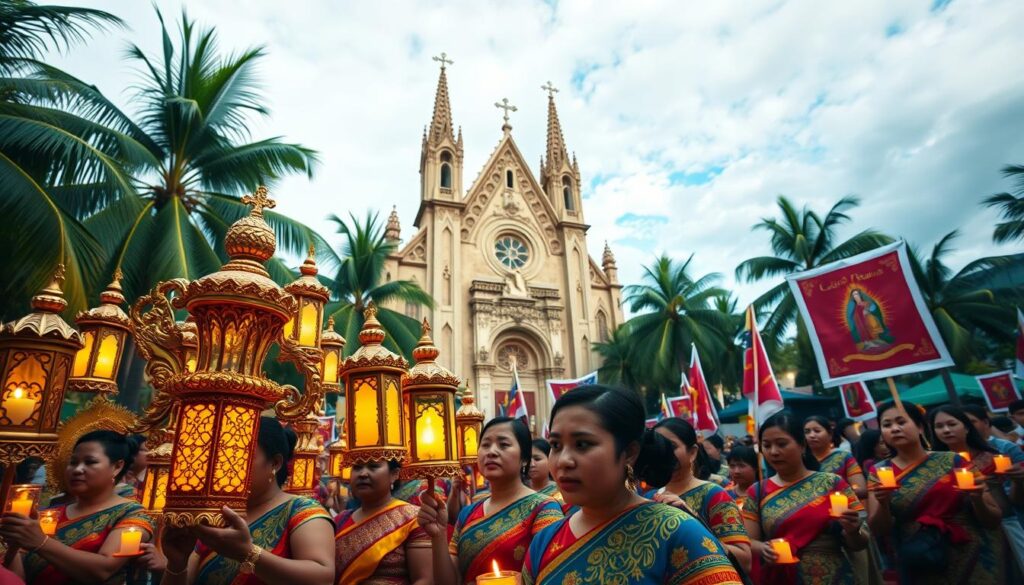
January transforms Manila into a sea of devotees during the Black Nazarene procession. Over 2 million participants brave the chaos to touch the statue’s robe, believing in its healing power. “It’s not just a tradition—it’s our heartbeat,” shares a lifelong participant.
Holy Week reveals even deeper expressions. In Pampanga, penitents reenact Christ’s suffering through self-flagellation—a practice blending medieval Spanish customs with local interpretations of sacrifice.
Marian Devotion and Santo Niño Traditions
May flowers carpet churches during Flores de Mayo, where children present bouquets to Mary. This youth-centered celebration contrasts with September’s Peñafrancia Festival, where a Marian image glides down rivers on flower-decked boats.
The Santo Niño (Holy Child) inspires year-round joy. Cebu’s Sinulog Festival erupts each January with dancers in radiant costumes mimicking the child-king’s swaying motions. These events show how Spanish-era symbols gained new life through indigenous movement and music.
| Tradition | Unique Feature | Cultural Blend |
|---|---|---|
| Black Nazarene | Mass participation | Spanish icon + urban Filipino resilience |
| Flores de Mayo | Youth involvement | Marian devotion + floral harvest rites |
| Sinulog | Warrior dances | Holy Child veneration + pre-colonial rhythm |
catholicism in philippines as a Cultural Force
When yellow confetti rained on Manila’s streets in 1986, millions stood united not just by politics—but by shared prayers. This spiritual solidarity has repeatedly shaped the nation’s story, blending religion with collective action. From village fiestas to constitutional reforms, belief systems influence how people live, celebrate, and govern.
Shaping National Identity Through Faith
Cardinal Jaime Sin’s radio call during the People Power Revolution shows how spiritual leaders steer history. His plea brought citizens to EDSA Highway, creating a human barricade that toppled dictatorship without violence. “The cross and the rosary became our weapons,” recalls a protester from that time.
Family life mirrors this unity. Sunday meals follow Mass, while grandparents pass down devotional practices. The country’s ban on divorce—shared only with Vatican City—reveals how deeply religious values shape laws. Yet traditions evolve: young couples now personalize wedding vows while keeping sacramental roots.
Regional festivals also share this adaptive spirit. In Cebu, street parades mix saints’ processions with pre-colonial dance steps. These fusions create a culture where candlelit prayers feel as natural as karaoke parties. As one scholar notes: “Our faith isn’t just practiced—it’s lived through every joy and struggle.”
Today, the country balances ancient rituals with modern challenges. Youth groups address climate change through eco-friendly Lenten projects, proving tradition fuels progress. This enduring blend keeps spiritual identity central to what it means to belong here.
Demographics and Social Influence
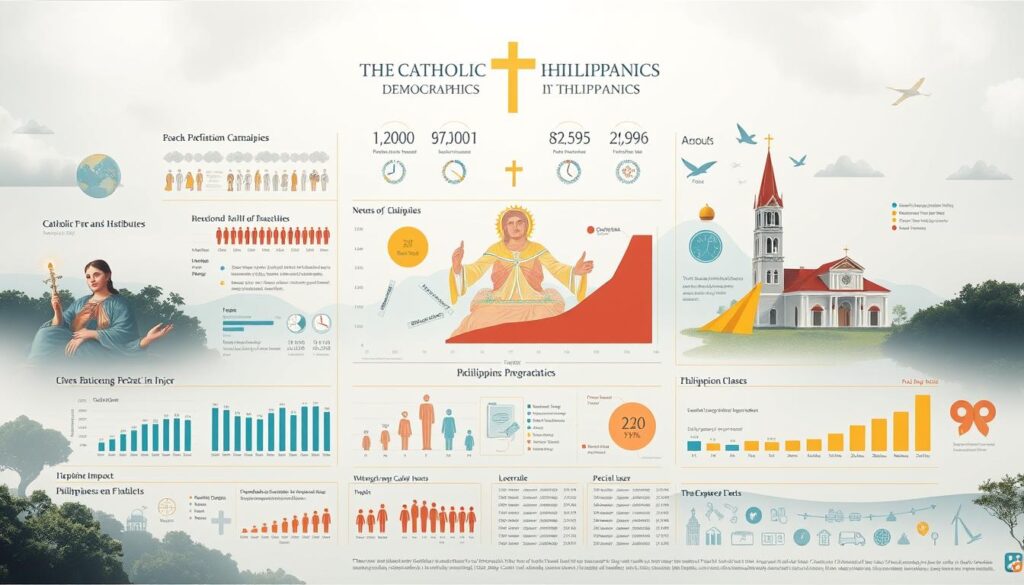
Numbers tell a compelling story about faith’s role in shaping communities. Recent data reveals 78.8% of the population—over 85 million people—identify with this religious tradition. This figure has remained remarkably stable, dipping only slightly from 85% in 1990 despite societal changes.
Statistical Insights and Catholic Population Metrics
Religious infrastructure supports this massive following. Over 10,400 priests serve 3,694 parishes nationwide—each clergy member shepherding nearly 8,900 believers. Urban centers like Metro Manila and Cebu Province show particularly strong engagement, with more than 90% participation rates.
Education forms a cornerstone of community impact:
| Institution Type | Enrollment | Social Impact |
|---|---|---|
| Primary Schools | 318,554 students | Foundational values education |
| Secondary Schools | 829,567 students | Youth leadership development |
| Universities | 611,964 students | Professional training with ethical focus |
Beyond classrooms, 48 specialized hospitals and 95 care facilities address public health needs. “These institutions don’t just heal bodies—they nourish souls,” notes a Manila-based social worker. This network complements government programs while maintaining distinct spiritual dimensions.
Such statistics highlight how religious groups share responsibility for societal well-being. From education to healthcare, these numbers prove faith remains woven into the country’s social fabric.
Catholicism and Political Influence in the Philippines
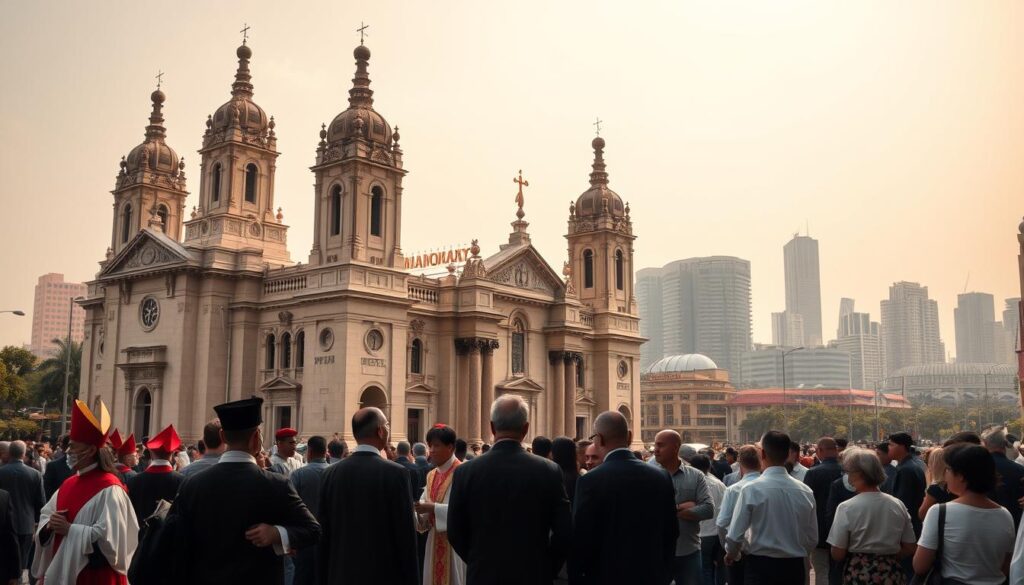
How does a nation balance spiritual authority with democratic governance? The answer lies in a unique partnership where religious groups and the government collaborate while maintaining separate roles. This relationship has shaped laws, toppled dictators, and sparked ongoing debates about freedom and power.
Church-State Relationships and Political Engagement
The constitution strictly separates religion and state affairs. Yet schools and hospitals run by religious groups receive public funding—a system called “benevolent secularism.” This cooperation became vital during the 20th century when church leaders sheltered activists opposing martial law.
| Constitutional Principle | Real-World Practice |
|---|---|
| No state religion | Religious symbols in government buildings |
| Separation of powers | Joint social programs |
| Secular legislation | Faith-based laws on marriage |
Cardinal Jaime Sin’s 1986 radio broadcast mobilized millions to overthrow a regime through peaceful protests. “We proved faith could dismantle tanks,” recalls a protest organizer. This event showed how moral authority could reshape the country‘s destiny without violence.
Modern challenges persist. Security forces sometimes accuse clergy of supporting rebel groups—a practice called “red-tagging.” These claims create risks for religious workers advocating social justice. Meanwhile, the nation remains divorce-free, reflecting ongoing church influence on government policies affecting family life.
The Modern Face of Filipino Catholicism
From living rooms to foreign cities, spiritual expressions evolve while keeping tradition alive. Today’s practices blend time-honored rituals with fresh approaches, reflecting how communities adapt faith to modern life.
Charismatic Movements and Home Altars
Groups like El Shaddai energize worship with stadium rallies and TV broadcasts. This movement—followed by millions—mixes gospel teachings with financial advice, drawing crowds seeking both spiritual and practical guidance. “We feel God’s presence differently here,” shares a Manila-based member.
Home shrines remain central to daily devotion. Families arrange Santo Niño statues beside wifi routers, creating sacred spaces where technology meets tradition. These altars serve as reminders of heritage, especially for younger generations navigating global influences.
Impact of the Filipino Diaspora on Faith Practices
Overseas workers carry customs worldwide, transforming local parishes from Rome to Dubai. In Hong Kong, where Filipina migrants boost Catholic numbers, El Shaddai’s prayer warriors host weekend gatherings. Their joyful services contrast with the city’s fast-paced lifestyle.
Adaptations continue as communities face new challenges. Virtual pilgrimages now connect devotees across time zones, while social media groups share daily reflections. This global network ensures traditions thrive beyond the country’s shores, uniting people through shared beliefs.
FAQ
How did Spanish colonization shape religious practices in the islands?
Spanish missionaries introduced Roman Catholicism in the 16th century, blending it with local traditions. Churches became community hubs, and festivals like Pahiyas and Sinulog merged indigenous rituals with Christian themes.
What role does Marian devotion play in Filipino spiritual life?
Many communities revere figures like Our Lady of Peñafrancia and Our Lady of Manaoag. Annual pilgrimages and processions reflect deep connections to Mary, often seen as a unifying symbol of hope and resilience.
How has the faith influenced national identity?
Shared traditions like Simbang Gabi (night Masses) and Barrio Fiestas foster cultural unity. Religious icons, such as the Santo Niño de Cebú, are celebrated as symbols of both faith and Filipino heritage.
What modern trends are reshaping worship today?
Charismatic groups emphasize lively prayer sessions and healing ministries. Overseas Filipino workers also spread hybrid practices, blending global influences with homegrown customs like home altars and family-led rosaries.
How does the Church engage with political issues locally?
Clergy often advocate for social justice, disaster relief, and ethical governance. Historic events like the 1986 EDSA Revolution highlight the Church’s role in mobilizing public action during crises.
Are indigenous beliefs still part of religious life today?
Yes! Practices like animism and ancestor veneration coexist with Christian rituals. For example, some communities honor nature spirits during harvest festivals while attending Mass for blessings.
What percentage of the population identifies with this faith?
Roughly 80% of Filipinos are affiliated with the religion, making it one of the largest Catholic-majority nations globally. Youth participation remains strong, with many attending weekly services or campus ministries.