For the first time in centuries, active church attendance tells a surprising story. The Roman Catholic Church now draws more weekly worshippers in England than the Church of England. Among young people, this shift is even more striking—41% of Gen Z churchgoers identify as Catholic, compared to just 20% who align with Anglicanism.
What’s driving this quiet transformation? Many point to changing ideas about faith and community. Younger generations seem drawn to traditions that offer a clear sense of identity in today’s fast-paced world. Historic Catholic landmarks, from medieval cathedrals to modern parish centers, are becoming hubs for this renewed interest.
This guide explores how a once-minority religion is reshaping spiritual life across the country. We’ll look at demographic trends, cultural influences, and the unique ways Catholicism connects with modern values. You’ll discover how centuries of hidden history now meet 21st-century needs.
Key Takeaways
- Catholic congregations now outnumber Anglican ones in weekly attendance across England
- Young adults are embracing Catholic traditions at twice the rate of Anglican practices
- Urban centers like London show the strongest growth in Catholic participation
- Historical roots and modern community-building both play key roles in this shift
- The trend reflects broader changes in how people approach organized religion today
Historical Roots and Evolution of Catholicism in the UK
England’s landscape tells a hidden story of faith carved into stone. The Catholic Church’s history here stretches back over 1,000 years, long before modern borders took shape. From the ruins of Bath Abbey to Westminster’s soaring arches, these spaces whisper tales of devotion that shaped the nation.
Catholic Heritage and Early Influences
Medieval churches weren’t just buildings—they were community engines. St. Edward the Confessor, a sainted king, left marks still visible in London’s skyline. His Westminster Abbey became a blueprint for sacred architecture. “These stones hold more than prayers,” notes one historian. “They’re diaries of a people’s relationship with the divine.”
Creative survival defined turbulent times. When Henry VIII split from Rome in the 1530s, families like the Shakespeares became accidental rebels. John Shakespeare’s choice to hide Catholic art under whitewash—rather than destroy it—shows how faith endured. Secret priest holes and midnight masses kept traditions alive through persecution.
Impact of the Reformation on Catholic Identity
The Reformation didn’t erase Catholicism—it reshaped it. Martyrs like St. Thomas More became symbols of resistance, their stories passed down like heirlooms. Underground networks preserved rituals that later fueled revivals. By the 1800s, emancipation let Catholics rebuild openly, blending ancient practices with new British realities.
Today, this complex story lives in guidebooks and tourist trails. A visit to the Tower of London isn’t complete without honoring Reformation-era figures. As one writer observed, “England’s past isn’t just history—it’s layers of faith fighting to be remembered.”
catholicism uk: Current Trends and Changing Demographics
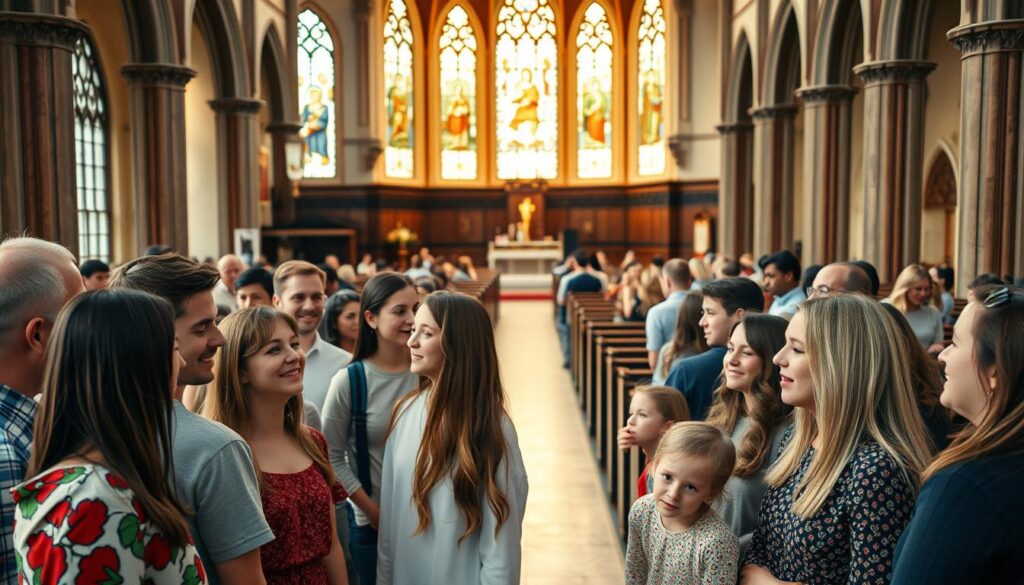
Demographic shifts are rewriting the story of faith in modern Britain. For the first time since the Reformation, weekly attendance figures show catholics outnumber anglicans in active worship. This reversal appears most sharply among 18-24 year-olds, where 21% of young men now attend monthly services.
Shifts in Church Attendance and Leadership
Recent reports reveal unexpected patterns:
| Age Group | Monthly Attendance | Gender Gap |
|---|---|---|
| 18-24 | 16% | +9% men |
| 25-34 | 14% | +5% men |
| 35-44 | 11% | +2% women |
Stephen Bullivant of St. Mary’s University notes: “Mass attendance hasn’t fully rebounded from pandemic lows, but the upward trend among young people defies expectations.” Church leaders now prioritize multilingual services and digital outreach to engage diverse urban congregations.
Youth Engagement and Emerging Faith Communities
University chaplaincies report record participation, with 33% of Gen Z identifying as believers. Daily prayer practices increased 40% among students since 2020.
“We’re seeing a hunger for tradition that provides roots in rootless times,”
shares a London campus minister.
This generation’s search for meaning blends ancient rituals with modern social activism. Nearly 1 in 4 young adults now volunteer through church programs, creating vibrant hubs where faith meets community service.
Cultural Impact and Community Life Within British Catholicism
Neighborhoods across the country are discovering how church communities shape more than Sunday mornings. Recent studies show 72% of regular Mass attendees volunteer locally, compared to 34% of non-churchgoers. This isn’t just about religion—it’s about creating webs of support that catch people before they fall.
Social Involvement and Community Well-Being
Shared rituals like weekly Mass build invisible bridges between generations. At St. Catherine’s in Manchester, teens teach elderly members to use food bank apps while seniors share cooking skills. “Our faith gives us common ground,” explains a parish leader. “But it’s the daily acts that transform strangers into family.”
Catholic social teaching fuels practical action. Over 60% of urban parishes now host job training programs alongside traditional prayer groups. This blend of spiritual and social care creates unique safe spaces—especially for immigrants navigating new life challenges.
Yet shadows linger. The abuse crisis led 29% of surveyed members to reduce attendance. As one London mother confides, “We still believe—but trust needs rebuilding.” Despite this, 83% report their local church remains central to their sense of belonging.
From food pantries to refugee support networks, these communities prove ancient traditions can meet modern needs. They’re not just preserving religion—they’re redefining what it means to belong in today’s world.
Comparative Analysis: Catholicism Versus Other Christian Denominations
In a world craving certainty, religious choices reveal unexpected patterns. While many churches adapt to cultural shifts, others draw strength from unwavering traditions. This tension shapes why some communities grow as others shrink.
Anglican Decline and the Rise of Catholicism
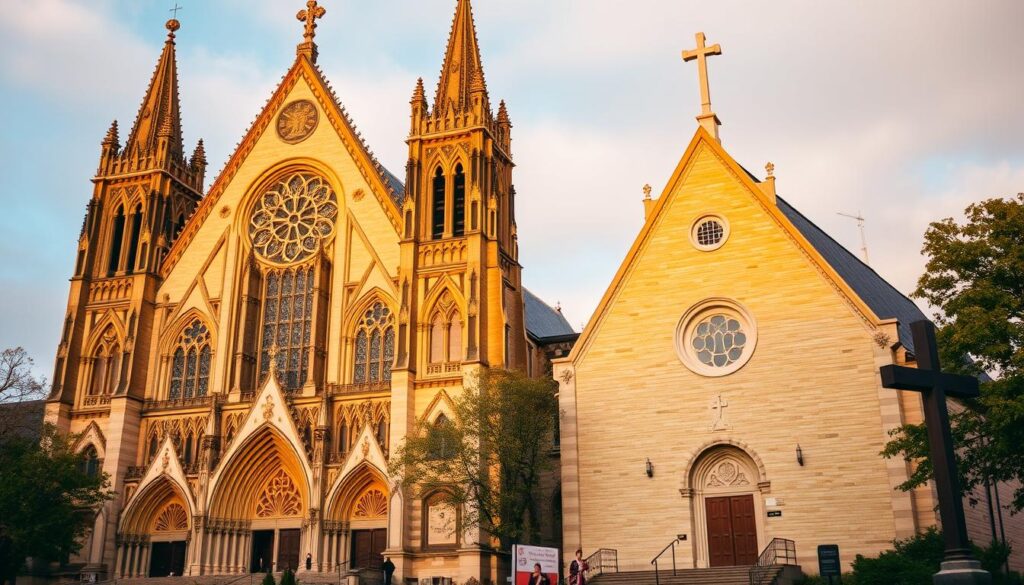
Recent figures show Catholics outnumber Anglicans in weekly worship across England—a first since the Reformation. Similar trends appear in the United States, where Episcopal churches face parallel challenges. “People want anchors, not weathervanes,” observes a theologian, noting how changing doctrines confuse some believers.
The Anglican Church’s democratic approach allows evolving stances on social issues. In contrast, Catholic teachings remain fixed. This stability attracts converts like writer Paul Kingsnorth, who calls it “truth that doesn’t bend with the wind.”
Differences in Worship Styles and Institutional Structure
Walk into any Catholic Mass worldwide, and you’ll find the same rituals. Anglican services vary more by region—a flexibility some find refreshing, others unsettling. The church structure differs too: Catholic leaders answer to Rome, while Anglican bishops govern locally.
High-profile conversions highlight this divide. Historian Tom Holland recently joined Catholicism, praising its “coherent way of seeing life’s purpose.” Meanwhile, former Anglicans often cite their old church’s “endless debates” as draining.
These contrasts matter today. As society questions old norms, many seek faiths offering clear answers—not more questions. Time will tell if this preference reshapes religious landscapes beyond Britain.
Exploring Historic Sites and Catholic Heritage in England
Walking through England feels like turning pages in a living history book. Ancient stones whisper tales of faith that shaped communities for centuries. From hidden artworks to soaring cathedrals, these spaces bridge past and present.
Monuments, Cathedrals, and Sacred Relics
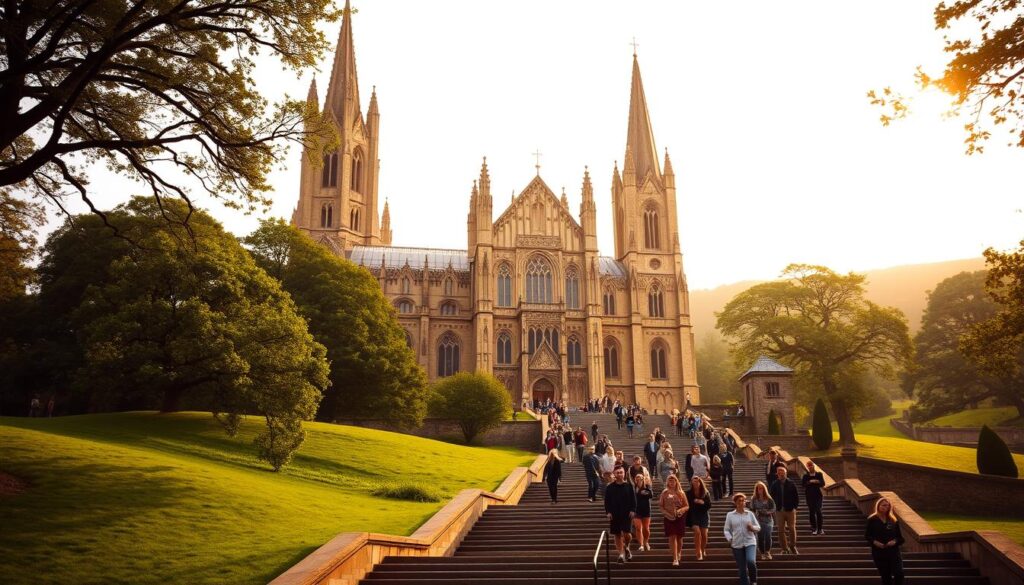
Bath Abbey’s 1,400-year story shows how sacred places adapt through time. Its famous “lantern of the West” design still guides visitors today. Just 90 minutes away, St. Edward’s Church hides a curious feature—a Tolkien-esque door that sparks imaginations.
Westminster Abbey holds quiet surprises. Beneath its Anglican surface lie Catholic treasures like St. Edward’s shrine and medieval artworks. “These stones remember when all England prayed as one,” notes a recent heritage report.
Cultural Narratives: Literature, Art, and Tourism
Shakespeare’s schoolroom reveals Reformation-era secrets. Preserved Catholic paintings, once whitewashed, now draw curious travelers. Nearby, the Cotswolds’ country churches inspire modern writers much like they moved poets centuries ago.
Over 3 million visitors explore these sites yearly. They’re not just tourists—many seek connections to spiritual ancestors. As one guidebook writer observed, “History here isn’t dead. It’s part of how we understand faith’s place in modern life.”
From quiet village chapels to grand cathedrals, England’s landscape keeps Catholic truth alive through beauty. Each stone tells a story that still shapes hearts today.
Conclusion
A quiet revolution is reshaping spiritual landscapes across the country. Young adults are driving this change, finding purpose in structured traditions that bridge ancient rituals and modern life. As Stephen Bullivant observes, rumors of the church‘s decline prove exaggerated—weekly attendance continues its slow climb post-pandemic.
This renewal thrives where history meets innovation. Millennials pack cathedrals redesigned with podcast studios, while Gen Z volunteers blend social justice work with contemplative faith practices. The catholic church‘s global network offers both roots and relevance in our mobile world.
Challenges persist, from rebuilding trust to adapting physical spaces. Yet the trajectory hints at something lasting. As one London student puts it, “We’re not looking for the easy way—we want a path that’s walked together.”
What emerges isn’t just survival, but a blueprint for meaningful community in fractured times. The story unfolding today suggests traditions can evolve without losing their soul—if they remember why people still seek sacred places.
FAQ
How did the Reformation reshape Catholic identity in Britain?
The Reformation led to centuries of persecution, forcing Catholics to practice discreetly. The Catholic Emancipation Act of 1829 restored rights, but tensions lingered. Today, traditions like pilgrimages to Walsingham reflect resilience and a reclaimed spiritual legacy.
Why are young people drawn to Catholic communities today?
Many find meaning in the Church’s emphasis on social justice, communal rituals like Mass, and inclusive spaces for dialogue. Initiatives like Youth 2000 or student ministries foster connection in an increasingly secular culture.
How does Catholic worship differ from Anglican practices?
Catholic services often prioritize structured liturgy, sacraments like the Eucharist, and devotion to saints. Anglican worship varies widely but tends to blend traditional and modern elements, with less centralized authority.
What historic sites highlight Britain’s Catholic heritage?
Westminster Cathedral, St. Paul’s Cathedral (originally Catholic), and medieval ruins like Fountains Abbey reveal this layered history. Relics such as the Chalice of St. Winefride also attract pilgrims and historians alike.
Has church attendance shifted between Catholics and Anglicans?
Recent figures suggest Catholics now outnumber Anglicans in weekly attendance. While both face declining numbers, Catholic communities benefit from immigrant populations and vibrant parish programs.
How do Catholic organizations contribute to community well-being?
Groups like Caritas focus on homelessness, food banks, and refugee support. Parishes often serve as hubs for interfaith collaboration, emphasizing dignity and service as core values.