For the first time in modern history, a quiet revolution is reshaping religious life across the United Kingdom. Recent data reveals that weekly attendance at Roman Catholic services now exceeds Anglican participation, particularly among younger generations. This shift marks a historic reversal of post-Reformation trends, with London leading the charge as a hub for vibrant Catholic communities.
What draws people to these ancient traditions in our fast-paced world? Many point to the enduring appeal of clear doctrine and spiritual continuity. Unlike institutions adapting to cultural currents, the Catholic Church maintains steadfast teachings on morality and purpose. Young adults especially appear drawn to this unapologetic stance in an era of shifting social values.
The growth isn’t confined to worship spaces. From university campuses to neighborhood initiatives, Catholic organizations are fostering connections through service and shared identity. Urban centers showcase this best, where diverse congregations blend centuries-old rituals with contemporary community-building.
Key Takeaways
- Catholic weekly attendance now surpasses Anglican services nationally
- Young adults drive much of this demographic shift
- Clear doctrinal positions attract seekers of spiritual certainty
- London serves as epicenter for this religious transformation
- Growth reflects broader cultural trends favoring tradition
Understanding the Current Religious Landscape in the UK
Recent surveys reveal a dramatic shift in Britain’s religious affiliations. For over 500 years, the Church of England held cultural dominance after the Reformation. But the past few decades tell a different story—one where Catholic communities steadily gain ground.
Historical Context: Anglicanism Versus Catholicism
The Church of England shaped national identity since the 16th century. However, its influence has softened in recent years. Census reports show Anglican affiliation dropped from 40% to 12% between 1983 and 2023. Meanwhile, Catholic numbers remained stable, buoyed by immigration and younger followers.
Recent Trends and Survey Findings
Bible Society figures highlight striking changes. Gen Z churchgoers now prefer Catholic services by a 2:1 margin over Anglican ones. Monthly attendance patterns flipped dramatically:
| Denomination | 2018 | 2024 |
|---|---|---|
| Anglican | 41% | 34% |
| Catholic | 23% | 31% |
| Post-COVID Recovery | 503k (2022) | 555k (2023) |
Urban centers drive this change. London’s diverse population increasingly embraces Catholic traditions, blending global influences with ancient rituals. While pandemic closures hit all faith groups, Catholic communities rebounded faster—a sign of stronger commitment to regular worship.
Key Insights into catholicism uk: Growth and Transformation
A surprising spiritual awakening is redefining religious engagement among Britain’s youth. While older generations gradually step back, those under 25 are embracing organized faith at rates not seen in decades.
Generational Shifts Reshape Religious Participation
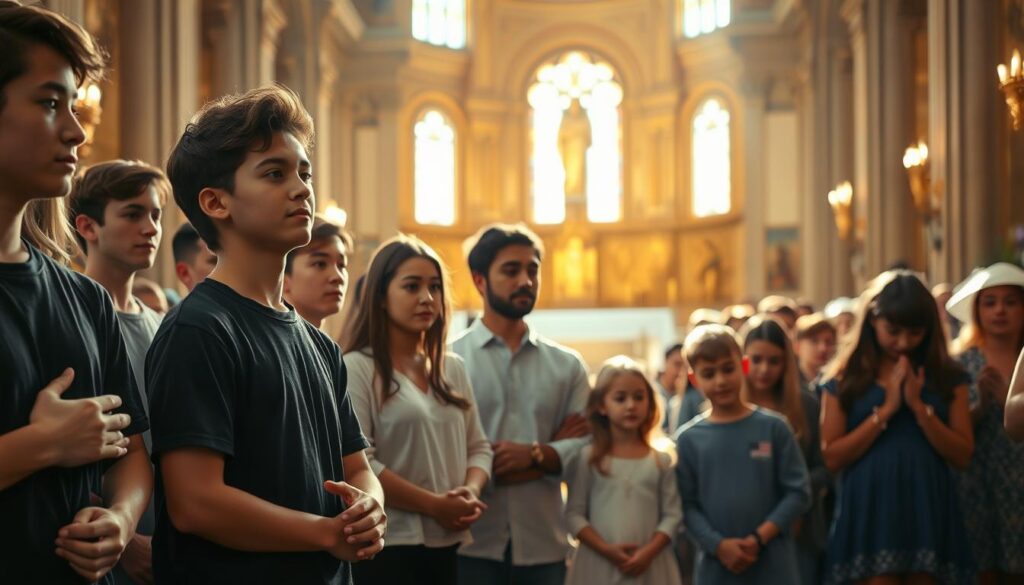
Recent studies reveal 16% of 18-24 year-olds attend monthly services—nearly matching the 19% rate among seniors. But what truly stuns researchers? 41% of these young churchgoers now identify with Catholic traditions, doubling Anglican affiliation since 2018.
| Affiliation | 2018 | 2024 |
|---|---|---|
| Catholic | 30% | 41% |
| Anglican | 30% | 20% |
| Pentecostal | 15% | 18% |
This growth isn’t about inherited beliefs. Young converts often cite the appeal of structured rituals and moral clarity. “We’re tired of endless options,” shares one 22-year-old revert. “Ancient practices feel real in our screen-dominated lives.”
Men aged 18-24 show particular interest, with 33% affirming belief in God—higher than any other age group. Their daily prayer habits (23%) suggest deeper commitment than casual cultural adherence.
Urban parishes report vibrant communities where young people blend traditional Mass with social justice work. This fusion of timeless faith and modern purpose appears key to attracting among Gen Z seekers.
Social Media and Modern Influences on Faith
Young believers are finding their spiritual home in unexpected online spaces. Digital platforms like TikTok and Instagram now host vibrant communities where ancient traditions meet modern storytelling. Social media creators blend relatable humor with deep theological insights, making faith feel accessible to a generation raised on screens.
Impact of Digital Content and Authentic Voices
Luke Lenz, a 25-year-old convert, explains: “People crave truth that doesn’t shift with trends. Catholic creators show how principles apply to real life—dating, careers, even memes.” This authenticity resonates: accounts like @BibleInAFilter gain 500k+ followers by connecting scripture to daily struggles.
| Platform | 2020 Users | 2024 Users | Growth |
|---|---|---|---|
| TikTok | 12k | 290k | 2,317% |
| 45k | 610k | 1,255% | |
| YouTube | 88k | 420k | 377% |
How Online Engagement Reshapes Community Ties
Digital connections often spark real-world action. Group chats become prayer circles, while viral challenges lead to food drives. Mark Lambert of “Catholic Unscripted” notes: “Our viewers organize local meetups before ever stepping into a church.”
This online-offline blend creates global support networks. Young members share resources across time zones—a Canadian’s video guides Londoners through Lent. In a fractured world, these bonds offer both stability and adventure.
The Role of Church Leadership and Institutional Shifts
Religious communities thrive or falter based on how leaders navigate modern challenges. Two distinct approaches emerge when comparing the Catholic Church and Anglican institutions—one rooted in unwavering conviction, the other adapting to cultural currents.
Leadership Styles: Comparing Structural Foundations
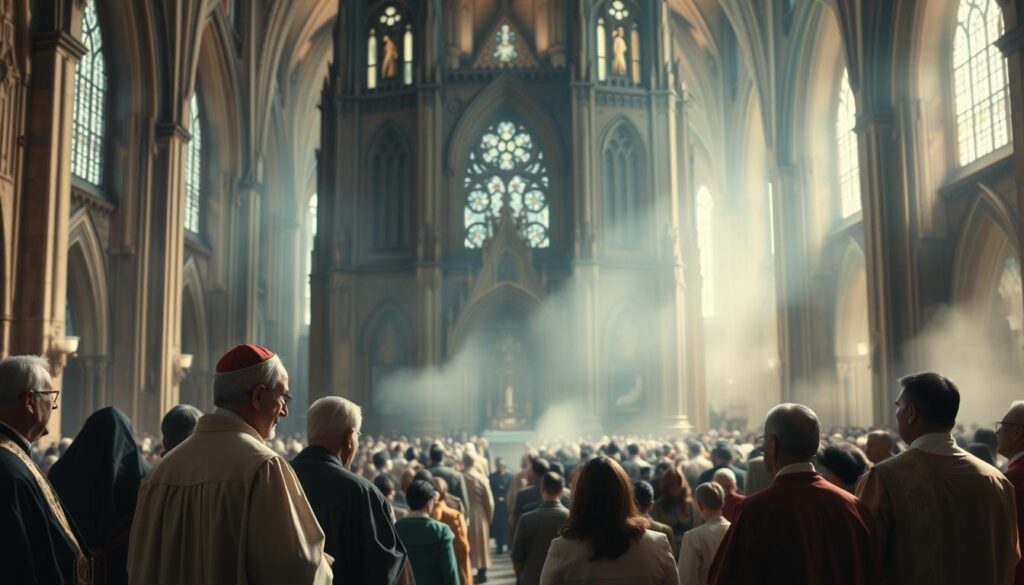
The hierarchy of Roman Catholicism operates like a spiritual compass—fixed and centralized. Bishops enforce consistent teaching across all levels, creating stability many find reassuring. Anglican leadership, by contrast, often debates doctrine through democratic processes. This difference shows in recent surveys:
| Aspect | Catholic Approach | Anglican Approach |
|---|---|---|
| Doctrine Formation | Centralized authority | Synod voting systems |
| Cultural Engagement | Non-negotiable principles | Evolving interpretations |
| Member Confidence (2024) | 67% | 41% |
When Flexibility Weakens Authority
Anglicanism’s struggle with clarity became evident during debates on human sexuality. Former Archbishop Justin Welby faced criticism for what some called “wishy-washy leadership.” A 2023 religious study noted: “Institutions lose credibility when core beliefs shift with opinion polls.”
Case Study: The Conviction Advantage
Data from Georgetown University reveals why strict structures attract followers:
- 78% of Catholic converts cite “doctrinal certainty” as key factor
- Anglican retention rates dropped 22% since 2018
- 63% of young believers prefer leaders who “stand firm”
While critics argue against inflexibility, the numbers suggest many crave religion that doesn’t bend to every societal wind. As one London parishioner put it: “You don’t remodel a lighthouse to match passing ships.”
Community Renewal and the Revival of Traditional Practices
Ancient bells ring with renewed purpose across London’s neighborhoods. The dioceses of Southwark and Westminster report record-breaking conversion rates, with over 950 new members joining last year alone. This surge isn’t just numbers—it’s a cultural shift toward timeless rituals in modern urban life.
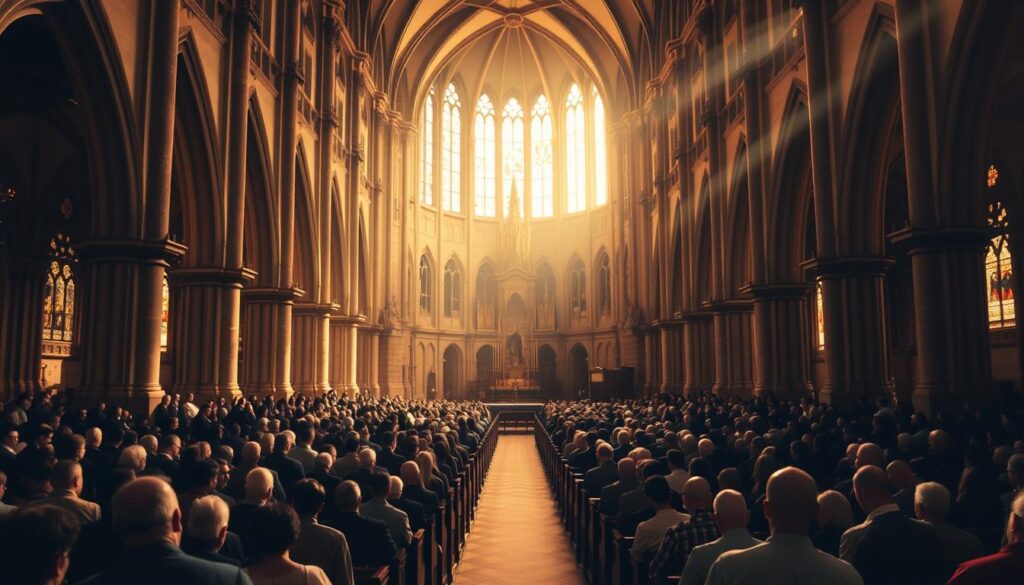
Increased participation in Mass and community prayer
Weekend services now overflow with diverse crowds. Southwark’s 450 new candidates mark its highest intake in 10 years, while Westminster saw a 25% jump in registrations. Young men lead this trend—33% of converts under 35 are male, reversing decades of gender imbalances in religious participation.
Parishes blend old and new:
- Midnight Masses with live-streamed prayers
- Neighborhood rosary circles meeting in coffee shops
- 24-hour adoration chapels attracting night-shift workers
New converts and the growing appeal of ritual and tradition
Half of Westminster’s newcomers seek baptism, drawn by what Archbishop Mark O’Toole calls “the magnetic pull of spiritual clarity.” Converts often describe feeling anchored by rituals that predate smartphones and social media.
Recent data shows why ancient practices resonate today:
| Practice | Under-35 Participation | Growth Since 2020 |
|---|---|---|
| Weekly Mass | 41% | +18% |
| Monthly Confession | 29% | +22% |
| Daily Prayer | 33% | +15% |
As one 28-year-old engineer put it: “In a world of endless options, the Mass feels like coming home.” This revival creates its own momentum—vibrant communities naturally attract more seekers craving authenticity.
Conclusion
Across Western nations, a countercultural movement is taking root. Young adults increasingly embrace ancient faith practices as antidotes to modern fragmentation. From Paris to Pittsburgh, church attendance patterns reveal a hunger for spiritual clarity that transcends political trends.
This revival thrives through unexpected alliances. Social media influencers share sacramental wisdom beside viral memes. Urban parishes blend incense with soup kitchens. As commentator Michael Knowles notes, people crave “truth that withstands life’s storms”—a need many find fulfilled in time-tested traditions.
The growth brings fresh challenges. Expanding congregations require new ministries and spaces. Yet the rewards outweigh the work: communities where men and women rediscover purpose through shared rituals and service.
While some dismiss this as a passing reaction to uncertainty, figures suggest deeper roots. Weekly Mass attendance among under-35s now rivals senior churchgoers. As institutions adapt to this shift, they’re learning timeless truths still meet modern needs—when presented with conviction and compassion.
FAQ
Why are young adults in Britain increasingly drawn to Catholicism?
Surveys suggest younger generations value the Catholic Church’s emphasis on tradition, spiritual depth, and clarity in teachings. Authentic engagement on social media by faith leaders and peers also plays a role in connecting with this age group.
How does social media influence religious participation today?
Platforms like Instagram and TikTok allow churches to share teachings, testimonies, and live events, creating accessible entry points for curious individuals. This digital reach helps rebuild community ties, especially among those disconnected from physical congregations.
What explains the decline in Anglican church attendance?
Factors include generational shifts, reduced cultural influence of state-aligned institutions, and a growing preference for denominations offering stronger doctrinal identity. Reports highlight Catholicism and Pentecostal groups as beneficiaries of this trend.
Are traditional practices like Mass gaining popularity?
Yes. Many find rituals like Eucharistic adoration or communal prayer spiritually grounding. New converts often cite the beauty of liturgy and a sense of historical continuity as key reasons for joining Catholic communities.
How do leadership styles differ between Anglican and Catholic churches?
Catholic leadership often emphasizes centralized authority and doctrinal consistency, while Anglican structures vary regionally. Younger believers increasingly favor bold, conviction-driven approaches seen in some Catholic circles.
What role does community play in faith renewal?
Strong parish networks, youth groups, and service initiatives foster belonging. For many, shared prayer and social outreach bridge gaps left by secular culture, making faith feel relevant to daily life.