Welcome to a journey through the vibrant traditions that unite over 1.3 billion people globally. For centuries, these shared rituals and beliefs have created a spiritual framework rooted in teachings passed down from the earliest followers of Christianity. Today, they form the heartbeat of a faith that spans continents and cultures.
At its core, this global community thrives on ancient customs refined over generations. From weekly gatherings to sacred sacraments, every element serves a purpose: strengthening bonds with the divine and one another. These observances aren’t just historical relics—they’re living traditions that shape daily life for millions.
You’ll find that structure and meaning intertwine here. Personal prayer, seasonal celebrations, and acts of service work together to nurture both individual growth and collective identity. This guide explores how these elements create a rhythm of faith, offering clarity and connection in an ever-changing world.
Key Takeaways
- Over 1.3 billion people participate in these global traditions
- Rooted in teachings from Christianity’s earliest days
- Rituals blend personal devotion with community connection
- Modern observances maintain historical significance
- Creates a spiritual rhythm for daily life
Foundational Beliefs and Commandments
What defines the moral compass for millions worldwide? At its core, Catholic teaching builds on two revolutionary principles taught by Jesus Christ: total love for God and genuine care for others. These aren’t abstract ideas—they’re actionable guidelines shaping how believers engage with faith and community.
God’s Two Great Commandments
Jesus simplified centuries of religious law into one powerful statement:
“Love the Lord your God with all your heart… and love your neighbor as yourself”
(Matthew 22:37,39). This dual focus creates a balanced spiritual life—honoring the divine while serving those around you. It’s why many describe these teachings as“faith in motion.”
The Ten Commandments Explained
The Ten Commandments put these ideals into practice. The first three show how to love God:
- Prioritize spiritual connection over material pursuits
- Respect sacred spaces and moments
- Set aside time for worship weekly
The remaining seven guide human relationships:
- Honor family bonds
- Protect life and dignity
- Value truth and loyalty
Far from outdated rules, they address modern challenges like digital ethics and social justice. This framework helps people navigate complex situations while maintaining integrity—a timeless way of life that continues to resonate.
The Sacraments: Channels of Grace
How do ancient rituals become modern pathways to spiritual growth? The seven sacraments answer this by creating visible encounters with divine grace, each marking pivotal moments in a believer’s journey. These sacred acts aren’t mere formalities—they’re transformative experiences that shape lives.
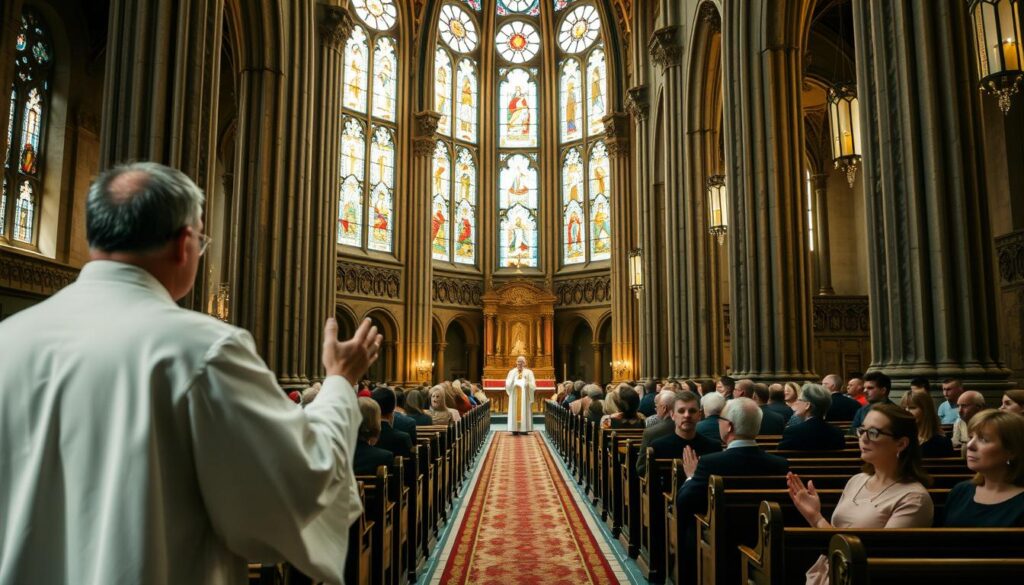
Doorways to Spiritual Life
Three initiation rites form your foundation. Baptism washes away original sin through holy water, symbolizing rebirth. As one priest explains:
“The old self drowns so Christ’s light can rise within you.”
Confirmation follows, sealing believers with sacred oil and the Holy Spirit’s gifts. This empowers you to live faith boldly. Finally, the Eucharist nourishes through communion—ordinary bread and wine becoming Christ’s body and blood during Mass.
Healing and Life’s Callings
Two sacraments restore wholeness. Reconciliation offers forgiveness through private confession, while anointing of the sick brings comfort during illness. For life paths, holy orders ordain clergy through prayer, and marriage unites couples as living symbols of Christ’s love.
| Sacrament | Purpose | Key Element |
|---|---|---|
| Baptism | Spiritual rebirth | Holy water |
| Confirmation | Strengthening faith | Chrism oil |
| Eucharist | Divine nourishment | Consecrated bread |
| Anointing | Physical/spiritual healing | Prayer & oil |
| Holy Orders | Priestly consecration | Laying on of hands |
Whether beginning your journey or seeking renewal, these sacraments offer concrete ways to experience grace. They turn abstract beliefs into lived truth, connecting everyday struggles to eternal hope.
Exploring catholicism practices in Worship and Community
How do ancient rhythms shape modern spiritual lives? Weekly gatherings blend centuries-old patterns with fresh meaning, creating spaces where individuals grow together. This balance between personal devotion and shared experience forms the heartbeat of faith communities.
Mass Structure and Spiritual Nourishment
Sunday services follow a timeless pattern. The priest leads the congregation through Scripture readings and homily reflections. One parish leader notes:
“Our liturgy isn’t just routine—it’s how we sync our hearts to heaven’s rhythm.”
The Eucharistic celebration remains central. Believers witness bread and wine transformed, then receive communion as spiritual fuel. Daily Mass options help busy lives stay grounded.
Body Language of Belief
Physical actions deepen spiritual connections. Common gestures include:
| Gesture | Meaning | When Used |
|---|---|---|
| Sign of the Cross | Affirms Trinity belief | Prayer openings/closings |
| Genuflection | Honors Christ’s presence | Entering pews |
| Folded hands | Shows humble focus | Personal prayer |
These movements turn abstract faith into tangible expression. The Holy Spirit’s guidance becomes visible through coordinated actions that unite diverse congregations. From meal blessings to bedtime prayers, these habits form spiritual anchors.
Community bonds strengthen through shared rituals. Whether raising voices in hymn or bowing heads in silence, collective worship transforms individual seekers into a living tradition that spans generations.
Rituals, Traditions, and Penance
Ever wonder how annual rhythms shape spiritual growth? Six special holy days in the U.S. calendar invite deeper reflection beyond Sunday Mass. These include Christmas, Mary’s Assumption, and All Saints’ Day—moments to honor sacred mysteries through communal worship.
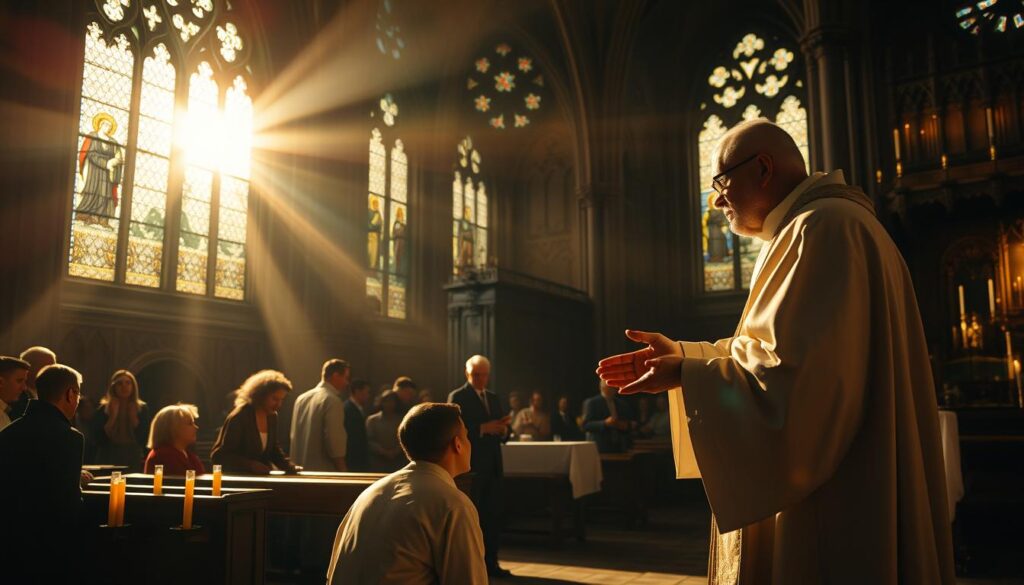
Holy Days, Fasting, and Abstinence
Penance takes tangible form through dietary disciplines. Adults under 60 fast on Ash Wednesday and Good Friday—one full meal plus two small snacks. Meat-free Fridays during Lent connect believers to Christ’s sacrifice, a practice echoing through 20 centuries.
| Practice | Age Group | Details |
|---|---|---|
| Abstinence | 14+ | No meat on Lenten Fridays |
| Fasting | 18-59 | One meal + two snacks |
Corporal and Spiritual Works of Mercy
True charity extends beyond personal sacrifice. The seven corporal works address physical needs—feeding the hungry, visiting prisoners. Spiritual works nurture souls through guidance and forgiveness. As one volunteer shared:
“Handing a sandwich to someone homeless makes faith visible—like love with skin on.”
These works transform penance into active care. Burying the dead or comforting the grieving becomes sacred service. Whether teaching faith basics or bearing insults patiently, mercy bridges belief and action—proving ancient traditions remain vital today.
Historical and Theological Perspectives
What connects medieval kings to modern reformers in shaping spiritual tradition? The Catholic Church’s story unfolds through visionary leaders who balanced divine calling with earthly challenges. Their decisions still echo in today’s parishes and global policies.
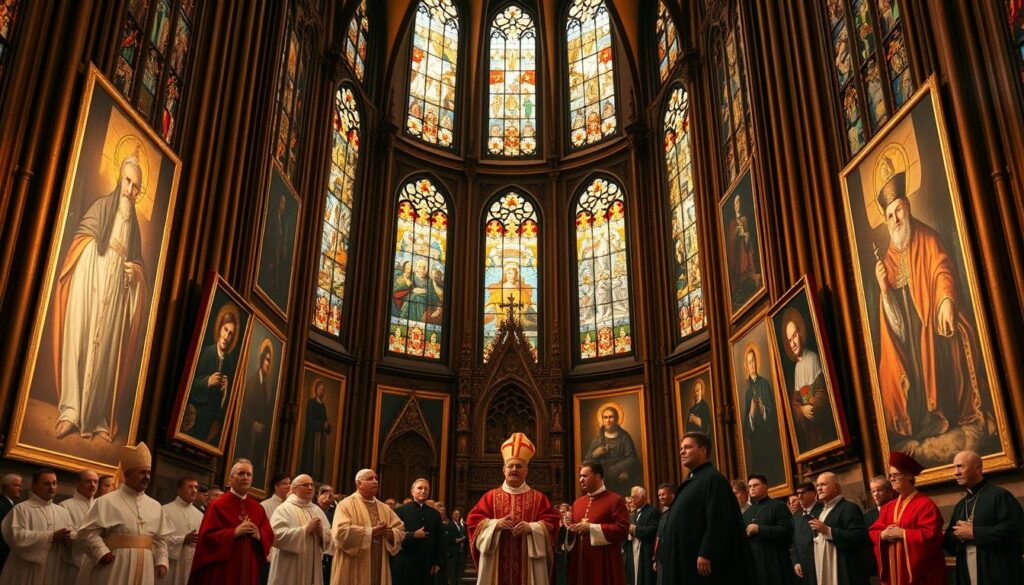
Architects of Faith Through the Ages
Saint Francis of Assisi redefined service by embracing radical poverty. His “joyful simplicity” inspired new religious orders focused on helping others. Centuries earlier, Saint Irenaeus laid groundwork by declaring Scripture, apostolic succession, and sacred tradition as the church’s triple foundation.
Saint Gregory the Great strengthened papal authority while refining liturgical music. As one historian notes:
“Gregory’s reforms made worship accessible—turning Latin chants into prayers every farmer could feel.”
Doctrine’s Living Legacy
The church’s teachings evolved through councils and crises. Vatican II (1962-1965), led by Saint John XXIII, modernized practices without altering core beliefs. This balance between change and continuity helps the Catholic Church address modern issues like social justice while honoring Jesus Christ’s original message.
From house churches to the Vatican’s diplomatic network, organizational growth reflects practical needs. The Roman Curia’s departments—handling liturgy, education, and reconciliation—show how ancient truths adapt to serve people worldwide. Through it all, the anointing of leaders and sacraments maintains spiritual order across generations.
Conclusion
This exploration reveals a spiritual framework that bridges ancient wisdom with modern life. Forged through centuries, these traditions offer more than rituals—they provide a living roadmap for connecting faith to daily choices. From sacraments to service, each practice reinforces relationships with the divine and community.
The beauty lies in adaptability. While rooted in timeless truths, these customs evolve to address today’s challenges—digital ethics, social justice, and personal purpose. They transform abstract beliefs into tangible actions, turning ordinary moments into sacred opportunities.
Whether through prayer gestures or works of mercy, this way of living fosters both individual growth and collective strength. It invites everyone to participate in a story larger than themselves—one that reshapes hearts while serving the world.
As you reflect on these insights, consider how small acts of love and devotion create ripples through time. What might it look like to weave such purpose into your own life?
FAQ
What are the most important sacraments in the Catholic faith?
The Eucharist, Baptism, and Confirmation form the Sacraments of Christian Initiation. These mark a person’s entry into the Church and deepen their bond with Jesus Christ. The sacraments of healing, like Reconciliation and Anointing of the Sick, also play vital roles in spiritual life.
How do Catholics observe fasting and abstinence?
Fasting (eating one full meal plus two smaller ones) and abstaining from meat are practiced on Ash Wednesday and Good Friday. During Lent, many also give up personal comforts as a form of penance, reflecting on Christ’s sacrifice.
Why is the Mass central to Catholic worship?
The Mass celebrates the Last Supper, where bread and wine become the Body and Blood of Christ (transubstantiation). It unites the community in prayer, scripture, and Communion, reinforcing their connection to God and one another.
What are the Corporal Works of Mercy?
These are acts like feeding the hungry, sheltering the homeless, and visiting the sick. Rooted in Jesus’ teachings, they guide Catholics to serve others as expressions of love and charity, reflecting God’s grace in action.
How does Confirmation strengthen a Catholic’s faith?
Through Confirmation, believers receive the Holy Spirit’s gifts, like wisdom and courage. It deepens their commitment to live as disciples, often involving a personal renewal of baptismal promises and active participation in the Church.
Who are key figures in Catholic history?
Saints like Augustine of Hippo, Thomas Aquinas, and Teresa of Ávila shaped theology and spirituality. Modern figures like Mother Teresa and Pope John Paul II also inspired global devotion through their works and teachings.
What role do holy days like Easter and Christmas play?
These celebrations honor pivotal moments in Jesus’ life—His resurrection and birth. They unite Catholics worldwide in liturgy, prayer, and traditions, fostering joy and reverence for divine mysteries.