The Catholic Church stands as one of the most influential religious institutions globally, guiding over a billion followers. Rooted in sacred traditions, its practices blend ancient wisdom with modern spiritual needs. This faith community spans continents, cultures, and generations, offering a shared framework for worship and moral living.
At its core, Catholic guidelines aren’t merely restrictions but pathways to deepen one’s relationship with God and others. These principles emerge from Scripture, centuries of reflection, and the Church’s role as a guardian of truth. They shape how believers pray, serve their communities, and engage with today’s complex world.
For many, these teachings act as a compass—offering clarity in ethical decisions and fostering unity among diverse cultures. The Church’s structure, led by the pope and bishops, ensures consistency while adapting to contemporary challenges. This balance between tradition and relevance defines its enduring impact.
Key Takeaways
- The Catholic Church unites over 1.3 billion people worldwide through shared beliefs.
- Its teachings combine divine inspiration with historical reflection.
- Guidelines prioritize spiritual growth and community connection.
- Leadership structures maintain unity across global congregations.
- Rules adapt to modern contexts without losing core values.
Foundations of Catholic Life and Canon Law
At the heart of Catholic practice lies a unique blend of spiritual guidance and structured governance. Unlike typical religious customs, these principles form an organized system called Canon Law. This framework ensures unity across global communities while respecting cultural diversity.
Overview of Catholic Precepts and Traditions
The Church’s legal structure traces its roots to ancient texts like the Didache, written in the first century. These early guidelines shaped sacraments, marriage practices, and leadership roles. Today, the 1983 Code of Canon Law serves as the primary rulebook, reflecting centuries of refinement.
The Role of Canon Law in Shaping Faith
Canon Law isn’t about control—it’s a roadmap for spiritual growth. It clarifies responsibilities for clergy and laypeople alike, from baptism protocols to resolving disputes. While civil laws govern nations, this system focuses on sacred obligations and moral accountability.
Key aspects include:
- Balancing ancient tradition with modern needs
- Maintaining the Church’s authority through consistent practices
- Protecting core doctrine while allowing pastoral flexibility
Through this legal lens, believers find clarity in their spiritual journey without losing connection to shared heritage. The system evolves, but its purpose remains: nurturing faith through orderly, compassionate guidance.
Catholicism Rules in Practice: Key Guidelines and Their Origins
Living out one’s faith involves concrete actions that shape daily practice. The Church outlines five essential commitments that guide believers in balancing worship, reflection, and service. These guidelines evolved over centuries but remain deeply relevant today.
Modern Precepts from the Catechism
The Sunday Mass obligation anchors community life. Gathering weekly strengthens bonds between members and renews spiritual focus. Resting from unnecessary work on these days creates space for reflection and family connection.
Annual confession offers a reset button for the soul. This sacrament helps believers address mistakes and grow in self-awareness. Receiving the Eucharist during Easter celebrates renewal—a cornerstone of the liturgical year.
Fasting rules, especially during Lent, teach discipline and empathy. Abstaining from meat on Fridays or limiting meals fosters solidarity with those in need. These practices aren’t about deprivation but shared humanity.
Finally, supporting the Church financially ensures its mission continues. Whether through tithing or special donations, this practice maintains sacred spaces and community programs. Together, these guidelines form a rhythm of life that nurtures both personal faith and collective responsibility.
Historical Evolution of Catholic Church Regulations
From ancient scrolls to digital age councils, Church guidelines reveal a story of adaptation. Early believers navigated cultural shifts while preserving sacred traditions. This journey spans Roman governance, medieval manuscripts, and 20th-century reforms—each era leaving its mark.
Ancient Traditions and Early Church Orders
Fourth-century leaders like Constantine I prioritized Sunday worship to unify communities. Documents like the Didache (1st century) and Apostolic Constitutions laid groundwork for sacraments and fasting. By the 7th century, Theodore of Canterbury’s Penitentiary enforced Sunday observance with clear penalties.

Medieval thinkers organized these practices into structured codes. Pope Celestine V’s 13th-century work categorized fasting, confession, and marriage rules. Later, Ernest von Parduvitz urged priests to teach these principles in plain language—making faith accessible across generations.
Influence of the Second Vatican Council
The 1960s brought transformative updates through the Second Vatican Council. While keeping core beliefs, it embraced modern needs—like celebrating Mass in local languages. This balance honored New Testament roots while addressing contemporary questions.
Key changes included:
- Greater emphasis on lay participation
- Renewed focus on Scripture’s role in daily life
- Dialogue with other faith traditions
Through centuries of refinement, the Church maintains its mission—guiding believers with timeless wisdom shaped by history’s lessons.
Essential Sacraments and Ceremonial Practices
Sacred rituals shape the rhythm of spiritual life for millions worldwide. The Church recognizes seven sacraments that mark key moments in a believer’s journey—from birth to eternal rest. Each one carries divine grace through visible signs, creating bridges between heaven and earth.
Power Through Proper Form
The principle of ex opere operato ensures sacraments work when performed correctly. As the Catechism states:
“Sacraments act through the power of Christ, not personal holiness.”
This means even imperfect ministers can administer valid rites if they follow theformestablished by tradition.
Let’s explore key practices:
| Sacrament | Purpose | Key Aspect |
|---|---|---|
| Baptism | Spiritual rebirth | Water + Trinitarian formula |
| Eucharist | Divine nourishment | Transubstantiation |
| Confession | Soul cleansing | Seal of secrecy |
| Matrimony | Sacred union | Canonical form |
Confession’s content remains strictly confidential—priests face excommunication for breaking the seal. Marriage requires specific vows before clergy to ensure validity. These structures protect sacraments’ integrity while allowing cultural adaptations.
Understanding these practices helps believers engage more deeply. Whether receiving communion or preparing for marriage, sacraments offer tangible connections to divine love through time-tested church traditions.
Navigating Family Dynamics and Religious Conflict
Family bonds often face their toughest tests when faith becomes a dividing line. Differences in belief can strain relationships, creating tension during holidays or major life events. Yet these moments also offer opportunities to model compassion while staying true to personal convictions.

Managing Division Within Families
When loved ones disagree on spiritual matters, heated debates rarely help. As Jesus warned:
“I have not come to bring peace, but a sword” (Matt. 10:34-36).
This reality calls for wisdom. Six practical approaches can ease friction:
- Replace arguments with active listening
- Express care through actions, not just words
- Prayerfully entrust difficult questions to God
Strategies for Reconciliation and Peace
Parents grieving a child’s departure from the family faith often find hope in quiet persistence. Sharing joyful moments—like volunteering together—speaks louder than sermons. Many discover that others respond better to third-party mentors than parental pressure.
Key steps include:
- Studying shared values instead of focusing on differences
- Creating new traditions that honor both sides
- Trusting time and grace to soften hearts
True reconciliation grows when we release control and let love guide every interaction.
Practical Steps for Embracing Catholic Teachings
Integrating faith into daily routines transforms beliefs into lived experiences. Start by carving out moments for reflection—even five minutes of morning prayer sets a purposeful tone. St. Peter’s advice rings true today:
“Always be ready to explain your hope with gentleness”
This balance of knowledge and kindness anchors authentic spiritual growth.
The Role of Prayer, Study, and Sacrifice
Daily prayer builds resilience, much like the persistent widow in Jesus’ parable. Try simple methods: gratitude lists, rosary apps, or silent meditation. Pair this with weekly Scripture study—the Bible remains central to understanding teachings and connecting with other Christians.
Sacrifice strengthens spiritual muscles. Skip dessert on Fridays, donate unused clothes, or volunteer monthly. These acts mirror Christ’s compassion while teaching self-discipline. As St. Peter modeled, readiness to serve others starts with personal commitment.
Implementing Acts of Love in Daily Life
Kindness becomes revolutionary when practiced consistently. Hold doors open, compliment coworkers, or cook meals for sick neighbors. Join parish food drives or mentor youth—these actions make faith visible.
Family interactions offer prime opportunities. Listen without interrupting during disagreements. Forgive minor annoyances quickly. Small choices, repeated daily, create lasting bonds and reflect divine love in tangible ways.
Contemporary Challenges and Adaptations in Church Practice
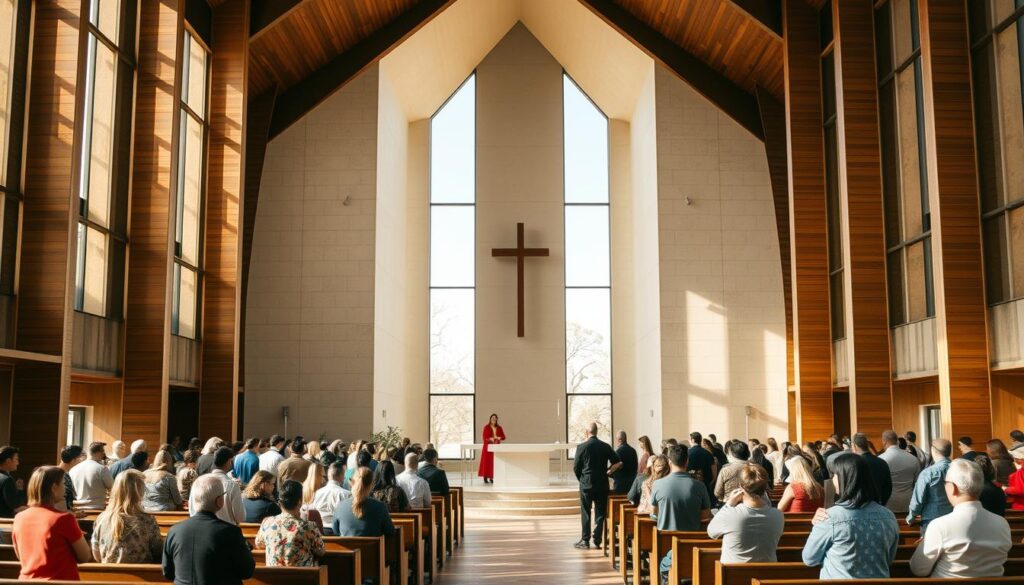
Navigating modern complexities requires faith communities to harmonize timeless wisdom with evolving realities. The Church faces unique pressures as it bridges ancient traditions with digital-age expectations. Vatican City, though small in size, plays an outsized role in guiding this global balancing act.
Balancing Tradition with Modern Needs
Local churches creatively adapt while preserving core teachings. Many now livestream Masses or use apps for prayer reminders—tools unimagined a generation ago. These innovations help connect with younger generations raised in a screen-dominated world.
Social justice initiatives show how ancient principles address new problems. Parishes increasingly focus on environmental stewardship, echoing Pope Francis’ call in Laudato Si’:
“We need a conversation that includes everyone, since the environmental challenge affects us all.”
Consider these adaptations across three key areas:
| Aspect | Traditional Approach | Modern Adaptation |
|---|---|---|
| Liturgy | Latin Mass | Multilingual services |
| Outreach | Door-to-door visits | Social media campaigns |
| Education | Catechism classes | Interactive online courses |
Cultural diversity adds another layer. In the United States, parishes blend ethnic traditions—like mariachi Masses or Vietnamese lunar New Year celebrations—with universal Church teachings. This flexibility strengthens community bonds without compromising doctrine.
Young people often drive change through faith-based podcasts and volunteer networks. Their fresh perspectives help the world see ancient truths through modern eyes. As technology reshapes communication, the Church continues writing its next chapter—one that honors the book of tradition while speaking today’s language.
Conclusion
Guiding principles shape lives across generations, offering timeless wisdom for modern challenges. The Church provides a moral compass through sacred traditions while adapting to cultural shifts. Its teachings unite diverse communities under shared values of compassion, service, and spiritual growth.
From weekly worship to annual sacraments, these guidelines foster personal commitment and collective responsibility. Leadership structures—led by the pope and bishops—maintain unity without stifling local expressions of faith. This balance ensures relevance in changing times.
Individuals find strength in rituals like prayer and confession, while families build bonds through shared practices. The global community thrives when members blend ancient wisdom with contemporary acts of love. Whether volunteering or embracing new technologies, believers carry forward a living tradition.
As challenges evolve, the Church’s mission remains constant: nurturing hope through grace-filled guidance. By honoring heritage while engaging today’s world, this faith family continues writing its story—one marked by resilience, unity, and enduring purpose.
FAQ
What role does the Second Vatican Council play in modern Church practices?
The Second Vatican Council (1962–1965) reshaped how the Church engages with the modern world. It emphasized liturgy in local languages, interfaith dialogue, and lay participation while preserving core teachings like the Eucharist’s centrality. Documents like Lumen Gentium reaffirmed the authority of bishops and the Pope.
How does Confession align with Catholic teachings on reconciliation?
The Sacrament of Reconciliation reflects Jesus’ call to forgive others (Matthew 18:22). Through Confession, believers seek God’s mercy, repair relationships, and commit to change. This practice mirrors St. Paul’s teachings on becoming “a new creation” (2 Corinthians 5:17).
Why does the Church prioritize family unity in religious conflicts?
Families are called “domestic churches” in the Catechism (CCC 1656). Teachings like Ephesians 4:3 urge preserving “the bond of peace.” Open dialogue, prayer, and acts of service help bridge divides while respecting individual consciences.
How does Canon Law address contemporary issues like marriage annulments?
Canon Law (Codex Iuris Canonici) outlines conditions for valid sacraments, including marriage. Annulments require proving a defect in consent or understanding at the time of vows. Local tribunals apply these rules with pastoral care.
What’s the significance of sacramental practices like the Eucharist?
The Eucharist, called the “source and summit” of faith (CCC 1324), embodies Christ’s sacrifice. Early Christians, like those in 1 Corinthians 11:23–26, upheld this tradition. Today, it unites believers across cultures through shared ritual.
How do Catholic social teachings address modern challenges?
Principles like solidarity and subsidiarity guide responses to issues like poverty or climate change. Pope Francis’ Laudato Si’ merges environmental care with human dignity, showing how timeless doctrines adapt to new contexts.
Why is St. Peter considered foundational to Church authority?
Jesus named Peter the “rock” of the Church (Matthew 16:18), establishing apostolic succession. The Pope, as Peter’s successor, ensures unity in teaching. This structure dates to early Christian communities in Rome.
How do fasting rules during Lent reflect broader spiritual goals?
Fasting mirrors Jesus’ 40-day desert journey, prioritizing prayer over worldly comforts. It cultivates self-discipline, echoing St. Augustine’s call to “fast from strife” and serve others—a balance of sacrifice and charity.