Living a life aligned with spiritual values requires understanding core beliefs. For those in the Catholic Church, recognizing what separates individuals from divine connection shapes daily choices. This framework isn’t about fear—it’s a roadmap to deeper faith and personal growth.
The Church’s teachings categorize actions based on their impact on spiritual well-being. Some choices create minor fractures in relationships, while others risk severing ties to grace. These distinctions help believers prioritize healing through reflection and community support.
Modern life adds complexity to age-old principles. This guide simplifies doctrine to show how timeless wisdom applies today. You’ll learn practical ways to strengthen your journey toward salvation, whether you’re deepening lifelong beliefs or exploring spiritual foundations.
Key Takeaways
- The Church’s teachings aim to foster spiritual freedom, not guilt
- Sin categories help assess impacts on divine relationships
- Redemption is always accessible through conscious effort
- Modern challenges require adapting historical principles
- Community plays a vital role in forgiveness processes
- Self-reflection strengthens connection to faith traditions
The Theology Behind Catholicism Sins
Faith practices start by recognizing humanity’s inherited spiritual condition. This understanding shapes how believers approach their relationship with the divine. At birth, every person enters the world needing spiritual renewal—a concept tied to original sin.
Understanding Original Sin and Renewal
Baptism serves as the first step toward transformation. Through this sacrament, individuals receive sanctifying grace—a supernatural gift that heals the soul. This grace isn’t earned but freely given, bridging the gap created by human limitations.
Three key effects of sanctifying grace:
- Restores divine connection lost through sin
- Empowers acts of love and compassion
- Prepares the soul for eternal life
Divine Mercy’s Transformative Power
Even when grace is lost, restoration remains possible. The Church teaches that God’s mercy flows through sacraments like confession. These channels offer fresh starts, reflecting the sacrifice made for humanity’s redemption.
| Sacrament | Role in Grace | Impact on Soul |
|---|---|---|
| Baptism | Initial reception | Cleanses original sin |
| Confession | Restoration | Repairs broken bonds |
| Eucharist | Sustenance | Strengthens divine life |
This system isn’t about punishment but growth. Through consistent practice, believers maintain their spiritual health while embracing mercy’s endless opportunities.
Exploring catholicism sins in the Modern World
Modern life creates fresh tests for those striving to align daily choices with timeless values. Smartphones, social platforms, and shifting cultural attitudes reshape how moral failures manifest while introducing new ethical gray areas.

Impact on Daily Life and Spirituality
Every swipe, click, and conversation carries spiritual weight. Workplace shortcuts, streaming content choices, and online interactions often challenge traditional teachings about human dignity. Many overlook how routine decisions affect their inner peace and community bonds.
Consider these common modern struggles:
| Traditional Issue | Modern Equivalent | Spiritual Risk |
|---|---|---|
| Gossip | Social media shaming | Damages community trust |
| Dishonesty | Digital identity masking | Erodes personal integrity |
| Immodesty | Oversharing private moments | Reduces human dignity |
Church teachings act like guardrails against society’s “always-on” mentality. They help believers recognize when convenience conflicts with eternal truths. Regular self-reflection becomes crucial when cultural norms shift faster than ever.
Practical steps for modern spiritual health:
- Audit screen time’s impact on relationships
- Seek accountability partners for tough choices
- Align purchases with ethical standards
By viewing technology and trends through a lens of compassion, individuals can engage the world without losing their moral footing. The path forward blends ancient wisdom with thoughtful adaptation.
Differentiating Mortal Sins and Venial Sins
Moral choices in faith traditions carry varying spiritual weights. The Church provides clear guidance to help believers navigate these distinctions. Scripture states: “All wrongdoing is sin, but there is sin that does not lead to death” (1 John 5:17). This foundational truth shapes how we understand spiritual accountability.
Criteria for Determining Mortal Sin
Three elements must align for an act to qualify as mortal. First, the matter must involve grave wrongdoing—actions directly opposing divine law. Second, the person must fully understand the action’s seriousness. Third, there must be complete willingness to commit the act despite this knowledge.
| Factor | Mortal Sin | Venial Sin |
|---|---|---|
| Matter | Grave offense | Less serious |
| Consent | Full intention | Partial awareness |
| Impact | Severs grace | Weakens faith |
Examples and Explanations of Venial Sins
Daily life presents smaller missteps that don’t rupture divine connection. These might include:
- Harsh words spoken in frustration
- Brief envy of a neighbor’s success
- Forgetting a promised prayer
While these require reflection, they differ from mortal sins like violence or betrayal. Regular self-examination helps maintain spiritual clarity amid life’s complexities.
The Impact of Confession, Grace, and Redemption
Spiritual renewal begins when we acknowledge our need for healing. The Church offers a path to rebuild fractured relationships through sacred practices that bridge human imperfection and divine love. At the heart of this journey lies a simple truth: growth requires both humility and action.
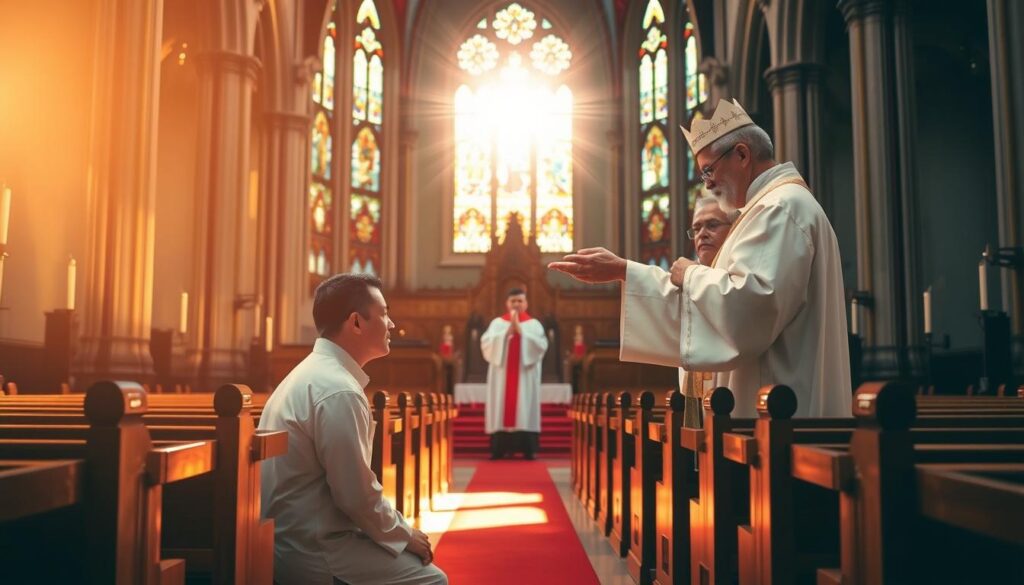
The Power of Confession in Restoring Grace
Confession acts like a reset button for the soul. Through this sacrament, believers receive forgiveness that mirrors Christ’s promise: “Whose sins you forgive are forgiven them” (John 20:23). It’s not just about listing wrongs—it’s about reconnecting with grace that fuels transformation.
| Aspect | Before Confession | After Confession |
|---|---|---|
| Spiritual State | Separated from grace | Restored to divine life |
| Emotional Weight | Guilt and shame | Peace and freedom |
| Future Choices | Vulnerable to sin | Strengthened resolve |
Three key benefits emerge from this practice:
- Clears conscience through sanctifying grace
- Provides guidance to avoid repeating mistakes
- Releases fear of eternal separation
Many hesitate to confess deeply personal struggles. Yet priests hear these stories daily, offering compassion rather than judgment. What feels like embarrassment becomes liberation—10 minutes of courage outweigh years of spiritual stagnation.
Regular participation in confession builds resilience. It turns fleeting guilt into lasting change, helping believers walk lighter on their way toward redemption. This isn’t about earning love but accepting it fully, flaws and all.
Unpacking the Seven Deadly Sins in Catholic Teachings
Human struggles with moral failings have been categorized for centuries to guide spiritual growth. Since Pope Gregory the Great’s 6th-century list, these patterns help believers recognize behaviors that distance them from divine connection. Geoffrey Chaucer’s Canterbury Tales later brought these concepts to wider audiences, showing their timeless relevance.
Pride, Envy, and Lust Under Close Scrutiny
Pride, often called the deadliest vice, twists self-worth into superiority. It makes personal desires override higher principles. Envy follows—whether resenting others’ possessions or spiritual gifts. Both forms poison relationships and cloud gratitude.
Lust reduces people to objects rather than sacred beings. This distortion ignores the deeper purpose of human connection. The antidotes? Humility softens pride’s grip, kindness counters envy, and chastity redirects lust toward respectful love.
Gluttony, Greed, and Sloth: A Deeper Look
Gluttony isn’t just overeating—it’s any excess that numbs spiritual awareness. Greed hoards resources while others lack necessities. Sloth, more than laziness, avoids prayer and moral responsibilities.
Temperance balances consumption, generosity shares blessings, and diligence fuels purposeful action. These virtues restore order when human weaknesses threaten spiritual health.
| Vice | Virtue | Action |
|---|---|---|
| Pride | Humility | Seeks others’ input |
| Envy | Kindness | Celebrates others’ joy |
| Lust | Chastity | Values whole-person respect |
| Gluttony | Temperance | Chooses moderation |
| Greed | Generosity | Shares resources freely |
| Sloth | Diligence | Prioritizes spiritual duties |
Social and Personal Consequences of Sin
Choices ripple outward, shaping more than just individual destinies. Every decision carries weight in our connections with loved ones, neighbors, and faith communities. What begins as personal struggle often grows into shared burdens when left unaddressed.

Effects on Faith, Family, and Community
Personal failures weaken our capacity for authentic relationships. A parent skipping religious education harms their child’s spiritual foundation. Workplace dishonesty erodes trust in entire teams.
Four critical failures carry grave communal impacts:
- Neglecting children’s faith formation
- Spreading harmful rumors about others
- Regularly missing communal worship
- Withholding fair pay from workers
These actions fracture people’s trust in institutions and each other. A shop owner underpaying staff creates generational poverty cycles. Gossip destroys reputations, making reconciliation harder.
Communities thrive when members prioritize collective well-being. Simple choices—like attending services or paying fair wages—strengthen society’s moral fabric. Through conscious effort, we build hope instead of division.
Navigating Controversial Moral Issues and Sexual Sins
Modern believers face complex questions where personal choices intersect with ancient teachings. The Church provides clear guidance on actions affecting spiritual health, especially in areas sparking cultural debate. These principles aim to protect human dignity while fostering authentic love.
Understanding Moral Boundaries and Confession Stakes
Certain intimate acts carry grave spiritual risks when misaligned with divine design. Thomas Aquinas taught that even passionate kissing before marriage becomes mortal sin if driven by lust. This standard applies to other actions like contraceptive use—which may prevent conception or end early life unintentionally.
Dress choices matter too. Immodest clothing like leggings or short shorts can tempt others toward lust, creating shared spiritual harm. Same-sex relationships and marital intimacy outside natural design also conflict with teachings on sacred bonds.
Confession offers freedom from guilt tied to these struggles. While society often dismisses such sins, the Church emphasizes their eternal consequences. Regular sacramental healing helps believers avoid hell while growing in virtue.
These teachings aren’t about shame—they’re lifelines for those seeking deeper connection. By honoring boundaries, individuals protect their relationships with God and others. Every choice becomes a step toward light or shadow.
FAQ
What’s the difference between mortal and venial sins?
Mortal sins sever your relationship with God through grave acts committed with full intent, like murder or adultery. Venial sins weaken grace but don’t destroy it—think gossip or minor dishonesty. Thomas Aquinas emphasized that mortal sin requires serious matter, full knowledge, and deliberate consent.
How do the seven deadly sins affect spiritual growth?
Pride, envy, lust, and others act as roots of harmful behavior, blocking holiness. For example, pride distorts humility, while greed fuels selfishness. Overcoming these through prayer and virtue helps align your heart with divine love, as St. John highlights in his teachings on spiritual renewal.
Why is confession vital for restoring grace?
Confession offers healing by reconciling you with God and the Church. Through contrition and absolution, sanctifying grace—the soul’s divine life—is renewed. This sacrament, rooted in Christ’s mercy, helps repair personal and communal bonds damaged by wrongdoing.
Can societal pressures influence what’s considered sinful?
Yes. Modern issues like materialism or unethical tech use challenge traditional morals. The Church urges discernment, asking believers to weigh actions against love for God and neighbor. St. Augustine’s “disordered loves” concept explains how misplaced desires lead to harmful choices.
How does original sin impact daily life?
Inherited from Adam and Eve, original sin introduces a tendency toward selfishness. Baptism restores grace, but ongoing struggles with temptation remind us to rely on prayer, sacraments, and charity to reflect Christ’s light in a broken world.
Are sexual sins always considered mortal?
Not always. While acts like adultery or pornography often meet the mortal criteria, factors like consent or ignorance matter. The Catechism stresses that lust becomes sinful when it reduces others to objects—contrary to the call to love as Christ does.
How can one avoid falling into habitual sin?
Regular examination of conscience, sacraments, and accountability in faith communities help break cycles. St. Paul’s advice to “take every thought captive” encourages replacing negative patterns with acts of service, prayer, and gratitude.
What role does divine mercy play in redemption?
Mercy is central—Jesus’ sacrifice offers endless forgiveness to those who repent. As Pope Francis teaches, God’s love isn’t earned; it’s a gift. Even grave failures can become stories of redemption when met with humility and trust in grace.