What began as a small group of believers in Jerusalem grew into one of history’s most enduring institutions. Many wonder how this global religion took shape, blending spiritual conviction with centuries of tradition. Let’s unravel this story together.
According to sacred accounts, the foundation traces back to Pentecost. Followers gathered after Jesus’ resurrection, united by a transformative experience. This event marks what many consider the birth of the Christian community that would become the Catholic Church.
The early structure relied on apostles chosen by Jesus himself. Their leadership created a chain of authority that continues today. Bishops are seen as their direct successors, with the Pope holding a unique role as St. Peter’s spiritual heir.
Understanding these beginnings requires balancing historical records with sacred narratives. While scholars examine ancient texts, believers find deeper meaning in traditions passed through generations. This dual perspective makes the Catholic Church’s origin story particularly compelling.
Why does this 2,000-year journey matter now? It helps explain how spiritual practices evolved and why certain traditions endure. Exploring these roots offers insight into a faith that continues to shape cultures worldwide.
Key Takeaways
- The Catholic Church traces its spiritual beginnings to Pentecost experiences
- Apostolic succession forms the basis of ecclesiastical leadership
- Historical analysis complements religious tradition in understanding origins
- The Pope’s role connects directly to St. Peter’s ministry in Rome
- Early Christian communities laid groundwork for modern practices
Historical Foundations and Beginnings
The story of early Christianity hinges on two transformative events that reshaped religious history. These moments turned despair into purpose and created a blueprint for spiritual organization that survives today.
Jesus’ Crucifixion and the Resurrection Belief
Roman authorities executed Jesus of Nazareth around 33 CE. His death initially crushed his followers’ hopes. But reported sightings of a risen Christ ignited radical new beliefs.
This resurrection conviction separated Jesus’ group from other Jewish reformers. Unlike fallen rebel leaders, Jesus became seen as divine. His followers now claimed:
- Victory over physical death
- Fulfillment of ancient prophecies
- Authority to continue his teachings
Formation of the First Christian Assembly
About 120 believers gathered in Jerusalem after Jesus’ ascension. This community shared meals, prayed together, and taught in the temple courts. Their structure blended Jewish traditions with new practices.
The Catholic Church identifies Pentecost as its launch point. When the Holy Spirit descended, apostles began preaching boldly. Listeners from across the Roman Empire heard them in their native languages.
| Early Group | Core Focus | Meeting Style |
|---|---|---|
| Jerusalem Assembly | Resurrection teachings | Home gatherings |
| Pharisees | Law observance | Synagogue services |
| Essenes | Ritual purity | Monastic communities |
This Christian community grew rapidly despite persecution. Their message offered hope to marginalized groups and urban workers. The Catholic Church later formalized these grassroots practices into enduring sacraments.
Catholicism Started: The Emergence of a Faith Tradition
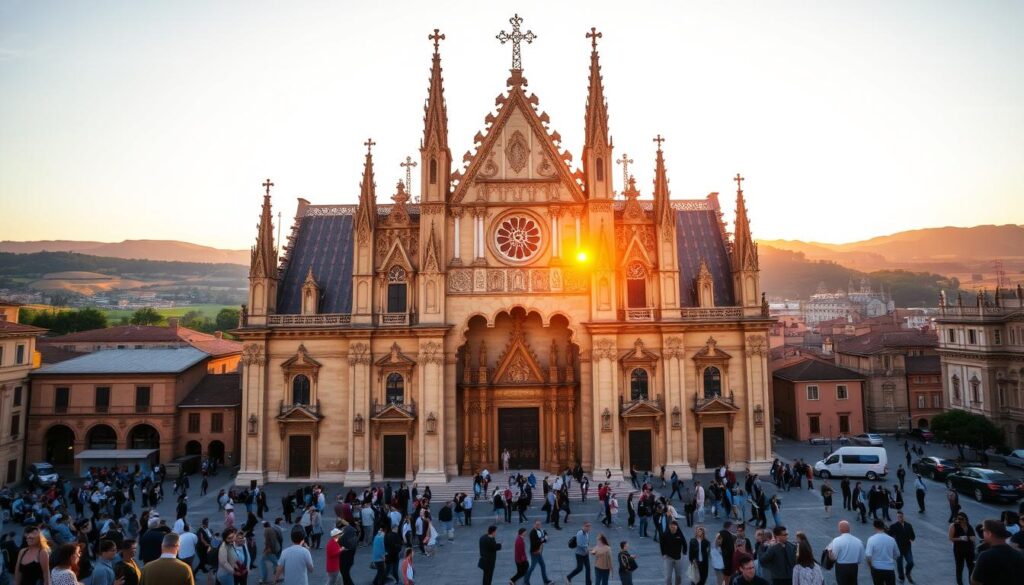
Language became a powerful tool as early Christians sought to define their growing movement. In the early 2nd century, a bishop facing martyrdom gave the faith its enduring name. Saint Ignatius of Antioch first used the phrase “Catholic Church” while traveling to Rome for execution, forever changing how believers described their community.
The Rhetorical Birth of the “Catholic” Identity
Ignatius chose the Greek word katholikos, meaning “universal,” to address divisions among believers. His letters reveal three key goals:
- Unite scattered congregations under shared beliefs
- Distinguish mainstream groups from splinter factions
- Strengthen bishops’ authority as doctrinal guardians
This term emerged during intense debates about Christian truth. Various groups claimed exclusive access to Jesus’ teachings, from Gnostics to Jewish-Christian sects. The “Catholic Church” label became a rallying cry for those valuing apostolic continuity.
Ignatius’ letters show how early leaders balanced flexibility with structure. While celebrating the faith’s diversity, he insisted on:
- Common worship practices
- Allegiance to local bishops
- Rejection of “false” interpretations
This tradition of verbal unity laid groundwork for later institutional growth. By the 3rd century, the Catholic Church label helped coordinate responses to persecution and heresy alike.
Early Apostolic Figures and Their Legacies
Two apostles shaped Christianity’s growth in ways that still echo today. Their contrasting approaches created a spiritual framework that balanced structure with adaptability. Let’s explore how their efforts laid groundwork for future generations.
Saint Peter’s Role in Rome
Peter’s connection to Rome remains pivotal. Tradition holds he became the city’s first bishop, establishing leadership continuity. Modern scholars debate this claim, noting early Christian groups operated differently.
The Gospel of Matthew records Jesus declaring: “You are Peter, and on this rock I will build my church.” This statement fuels the Roman Catholic Church‘s view of papal authority. Historical records suggest Peter helped organize believers before his martyrdom under Nero.
| Perspective | Peter’s Role | Evidence |
|---|---|---|
| Traditional | Bishop of Rome | Early church writings |
| Academic | Influential leader | Archaeological findings |
| Theological | Spiritual foundation | Scriptural interpretation |
Paul’s Missionary Journey and Influence
Paul revolutionized Christian outreach. His 10,000-mile travels created networks across the Mediterranean. Unlike Peter’s focus on Jewish converts, Paul welcomed Gentiles without strict law observance.
Letters to new churches reveal flexible leadership models. Apostles like Paul relied on personal charisma rather than formal titles. This approach helped Christianity adapt to diverse cultures while maintaining core teachings.
| Aspect | Peter | Paul |
|---|---|---|
| Primary Audience | Jewish Christians | Gentile converts |
| Leadership Style | Institutional | Charismatic |
| Lasting Legacy | Papal succession | Global missions |
Both men died in Rome during Nero’s persecutions. Their shared sacrifice cemented the city’s status as Christianity’s heart. Through different methods, these apostles built bridges between traditions and innovations.
Insights into Jesus’ Teachings and His Resurrection
The transformative power of Jesus’ message reshaped ancient spiritual landscapes. His lessons blended everyday wisdom with cosmic truth, creating a blueprint for communal living that still resonates today.
Core Doctrinal Messages and Symbolism
At the heart of Jesus’ teachings lay radical ideas about compassion. “Love your neighbor as yourself” became more than advice—it transformed into a spiritual mandate. The New Testament shows how these principles shaped early Christian identity.
His final meal with disciples holds special significance. This shared supper evolved into the Eucharist, where believers recall Jesus’ sacrifice. As the Gospel of John states: “The Word became flesh and made his dwelling among us”—a cornerstone of beliefs about divine incarnation.
Miraculous Events That Shaped Early Beliefs
Empty tombs changed everything. Followers who’d scattered after Jesus’ death became bold proclaimers of resurrection truth. This event turned grief into unshakable conviction, fueling rapid growth across regions.
| Event | Impact | New Testament Reference |
|---|---|---|
| Resurrection | Confirmed divine authority | Matthew 28:5-6 |
| Healing miracles | Demonstrated compassion | Mark 5:34 |
| Feeding multitudes | Symbolized spiritual nourishment | John 6:11-13 |
These accounts formed the bedrock of early Christian life. Through shared meals and retold stories, believers maintained connection to Jesus Christ‘s life and mission. The New Testament preserves this legacy, blending historical events with enduring spiritual insights.
The Rise of Early Church Communities
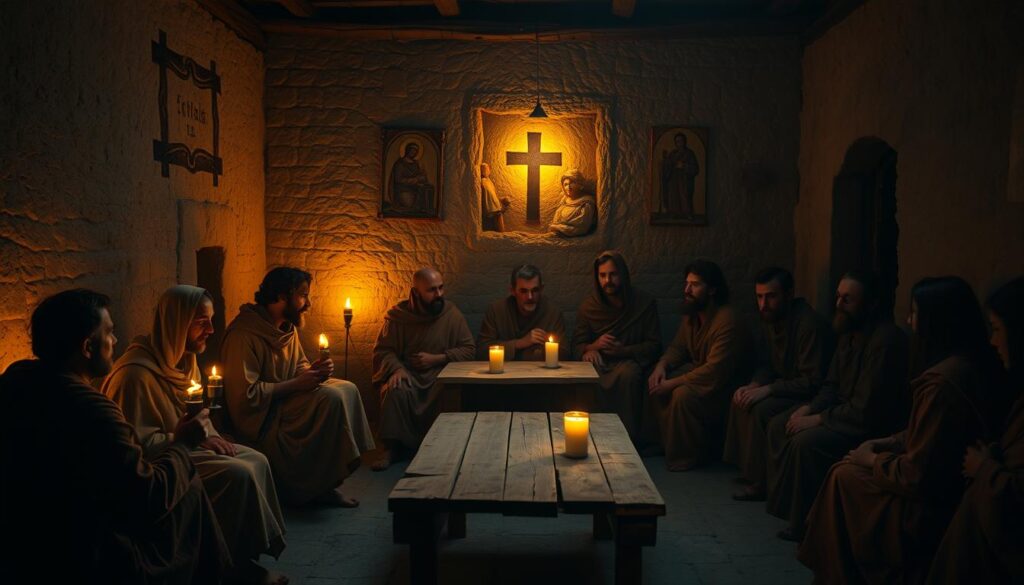
Urban markets buzzed with whispers about a radical new community forming in hidden courtyards. By 100 AD, over 40 Christian groups thrived from Spain to India, united by shared meals and bold teachings. This network grew through ancient trade routes and daring travelers who carried hope in their satchels.
Jewish-Christian Origins and the Assembly in Jerusalem
Jerusalem’s first believers blended synagogue visits with new rituals. They broke bread in homes while debating big questions: Should non-Jewish converts follow dietary laws? The Council of Jerusalem answered decisively around 50 CE. Leaders declared Gentile believers free from most Mosaic rules, creating a welcoming path for diverse people.
This decision transformed the movement. Sunday worship emerged as a distinct practice within twenty years of Jesus’ death. The mother church maintained Hebrew traditions while celebrating Messiah’s universal message. Letters between cities show how apostles balanced local customs with core teachings.
Growth in Urban Centers Across the Roman Empire
Roman cities became incubators for fledgling churches. Slaves and laborers first embraced the faith’s promise of dignity. Wealthy women soon joined, using homes as meeting spaces. The empire’s roads and common Greek language let ideas travel faster than legionnaires.
| City | Unique Feature | Notable Convert |
|---|---|---|
| Antioch | First called “Christians” | Lydia (merchant) |
| Corinth | Multi-ethnic membership | Priscilla (tentmaker) |
| Rome | Underground catacombs | Phoebe (deaconess) |
By the late 1st century, these groups developed local leaders while staying connected through traveling teachers. Their growth patterns shaped how later churches organized worship and outreach. What began as neighborhood gatherings became anchors for a faith revolution.
Impact of Roman Governance on Early Christianity
Imperial decisions reshaped Christianity’s path from underground movement to cultural cornerstone. Shifts in political power created unexpected opportunities for a once-persecuted faith.
Edict of Milan and Legal Recognition
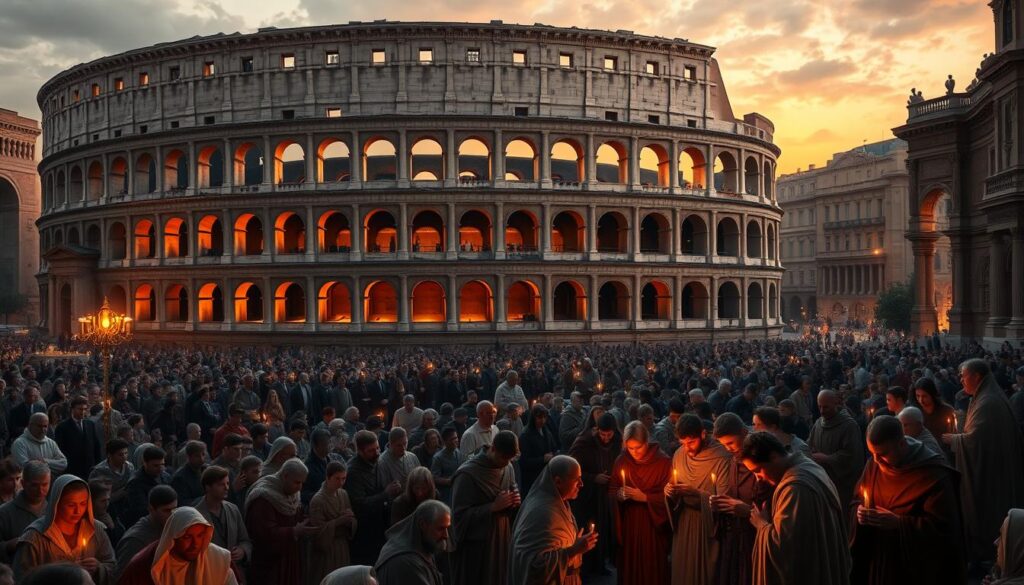
In 313 CE, a groundbreaking agreement changed everything. Constantine and co-emperor Licinius declared religious tolerance across the Roman Empire. This wasn’t just about Christianity – it protected all beliefs.
The edict returned confiscated church properties and banned forced pagan sacrifices. For the first time, believers could worship openly without fear. This state endorsement helped Christian communities expand rapidly.
Constantine’s Conversion and Imperial Patronage
A vision before battle altered history. Constantine reportedly saw a cross-shaped symbol with the words “In this sign, conquer” before defeating rival Maxentius in 312 CE. His victory cemented belief in divine favor.
The emperor showered the church with privileges:
- Tax exemptions for clergy
- Funds for grand basilicas
- Legal authority for bishops
By 380 CE, Emperor Theodosius made Christianity the Roman Empire’s official religion. This power shift brought new challenges as church leaders balanced spiritual使命 with political realities.
Evolution of Church Hierarchy and Leadership
Early Christian communities faced growing pains as they expanded across regions. Local leaders initially shared responsibilities, but practical needs soon demanded clearer structures. This shift laid the groundwork for organized church governance that still influences modern practices.
Transition from Plural Presbyters to a Single Bishop Model
In Rome’s early churches, groups of elders called presbyters guided believers collectively. Historical records show this shared leadership model lasted until the 150s CE. As communities grew, coordinating worship and resolving disputes required stronger authority.
By the mid-2nd century, a single bishop emerged as chief leader in most congregations. This change brought consistency but sparked debates. Some groups resisted centralizing power, valuing their local traditions.
The Influence of Ignatius of Antioch on Structure
A key voice championed unified leadership. Ignatius, writing around 110 CE, insisted each church needed one bishop working with presbyters and deacons. His letters compared the bishop to God the Father – the spiritual anchor for communities.
This vision helped standardize roles across regions. Bishops gained responsibility for teaching purity and managing resources. Their growing authority created chains of accountability that shaped church hierarchy for centuries.
FAQ
How did Jesus’ crucifixion shape early Christian beliefs?
The crucifixion and resurrection of Jesus became central to Christian theology, symbolizing redemption and eternal life. These events solidified followers’ faith in his divine mission and laid the groundwork for teachings about salvation.
What role did Saint Peter play in the early church?
Saint Peter is traditionally regarded as the first bishop of Rome and a foundational leader. His ministry emphasized unity and authority, which later influenced the papacy’s development in the Roman Catholic Church.
Why was the Edict of Milan significant for Christianity?
Issued in 313 CE, the Edict of Milan granted religious tolerance to Christians in the Roman Empire. This ended widespread persecution and allowed the faith to grow openly, paving the way for its eventual dominance.
How did Ignatius of Antioch influence church structure?
Ignatius promoted a hierarchical model, advocating for a single bishop to lead each community. His writings emphasized unity under episcopal authority, shaping early administrative practices still seen today.
What were the key teachings of Paul the Apostle?
Paul’s missionary journeys spread doctrines like grace through faith and Christ’s universal message. His epistles addressed theological debates and helped unify diverse congregations across the Roman Empire.
How did Constantine’s conversion impact Christianity?
Constantine’s embrace of Christianity in the 4th century led to imperial support, including funding for churches and councils. His patronage accelerated the faith’s integration into Roman culture and governance.
What defined early Jewish-Christian communities?
The Jerusalem assembly blended Jewish traditions with belief in Jesus as the Messiah. Practices like communal meals and Torah observance reflected their roots while adapting to new theological ideas.
When did the term “catholic” first describe the church?
The word “catholic” (meaning “universal”) appeared in early 2nd-century writings, like those of Ignatius of Antioch. It highlighted the church’s mission to unite believers across regions under shared doctrines.