For centuries, people have used body art to express spiritual identity. Today, this practice sparks fresh conversations about how ancient beliefs meet modern self-expression. In France alone, 1 in 3 young adults chooses body ink – a trend reflecting global shifts in personal spirituality.
Religious leaders have taken notice. While no official rules exist about body art in major faith groups, recent statements encourage open dialogue. One prominent figure noted: “Don’t fear meaningful symbols on skin – believers have worn sacred marks for generations.”
This growing acceptance creates new questions. How do personal choices align with traditional teachings? What matters most – the design’s meaning or its permanence? Our exploration balances historical context with current perspectives.
Key Takeaways
- Body art continues ancient faith practices in modern forms
- Religious leaders emphasize intention over appearance
- Personal expression and tradition can coexist meaningfully
- Cultural shifts influence spiritual self-expression methods
- Informed decisions require understanding historical context
The Historical and Religious Context of Catholicism Tattoos
Ancient civilizations etched sacred symbols onto skin long before modern ink techniques emerged. These permanent marks served as spiritual armor, tribal identifiers, and connections to divine forces. Early Christian communities inherited this complex legacy of body modification practices.
Ancient Traditions and Biblical Insights
The Old Testament contains specific guidance about body markings in Leviticus 19:28. Scholars clarify this ceremonial law targeted pagan mourning rituals involving self-cutting and idol worship. As one theologian explains: “Ancient Egyptians used tattoos to honor false gods – the prohibition protected Jewish identity.”
Early Christians faced similar challenges distinguishing their practices from surrounding cultures. Body art became associated with:
- Pagan initiation rites
- Magical protection symbols
- Slave ownership markings
From Prohibition to Purposeful Expression
The 787 Council of Northumberland made a groundbreaking distinction:
“When marked for faith and love of God, these signs become commendable. Superstitious markings hold no spiritual value.”
This decision paved the way for evolving perspectives. Medieval pilgrims often received Jerusalem cross tattoos as devotion markers. Modern interpretations focus on intention rather than the act itself – a shift reflecting deeper understanding of ancient texts.
Today’s religious leaders emphasize context when discussing body modifications. As cultural attitudes evolve, so does the conversation about permanent spiritual expressions.
Exploring Faith and Ink: Personal Narratives and Cultural Impact
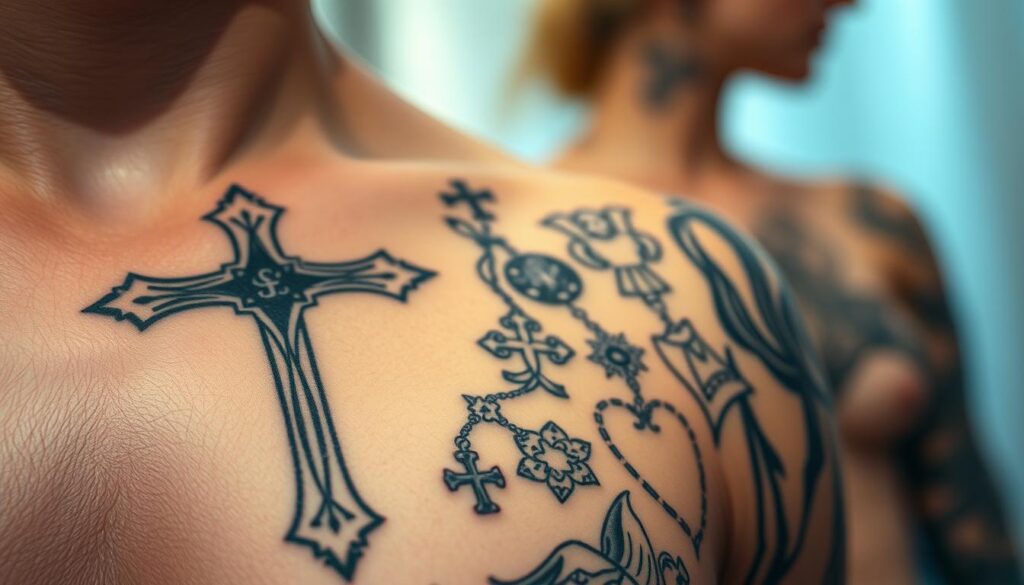
In Manila’s bustling streets, a young woman displays a rose-covered cross on her forearm. Across the globe in Mexico City, a construction worker bears the Sacred Heart over his chest. These stories reflect a growing movement where spiritual symbols merge with skin art.
Stories Behind the Ink
Maria, a nurse from Cebu, chose a rosary design after surviving cancer. “Every bead reminds me to pray, even during 12-hour shifts,” she shares. Like many Filipinos, her ink serves as both personal armor and public testimony.
Latin American communities show similar trends. Diego from Guadalajara explains his Christ portrait: “It’s not decoration – it’s my life’s compass.” Such narratives reveal how body art becomes living scripture for modern believers.
Tattoos as a Manifestation of Devotion
Popular designs carry layered meanings:
| Symbol | Meaning | Common Placement |
|---|---|---|
| Sacred Heart | Divine compassion | Chest/Upper arm |
| Marian Cross | Protection | Neck/Wrist |
| St. Michael | Spiritual warfare | Back/Shoulder |
| Chi-Rho | Christ’s authority | Hand/Forearm |
Women often opt for subtle placements – ankle chains of tiny crosses or collarbone scripts of favorite verses. These choices balance visibility with personal significance. As ink becomes mainstream, it sparks new dialogues about faith in public spaces.
Catholicism Tattoos: Meaning, Guidelines, and Church Perspectives
Modern faith expressions through body art now spark fresh debates about sacred symbolism. The Vatican recently set workplace rules requiring St. Peter’s Basilica staff to cover visible ink – a policy that doesn’t apply to visitors. This distinction highlights how religious institutions balance tradition with evolving cultural norms.
Religious Symbolism and Design Choices
Popular cross designs range from Celtic knots symbolizing nature’s elements to gothic arches showing medieval influences. The Sydney Archdiocese advises selecting images that “uplift rather than offend,” steering clear of violent or suggestive themes. Common placements include:
| Design | Meaning | Typical Placement |
|---|---|---|
| Flowery cross | Growth through faith | Forearm |
| Dove & cross | Peace with Christ | Upper back |
| Rosary chain | Prayer commitment | Wrist/Hand |
| Ankh cross | Eternal life | Ankle/Neck |
Smaller symbols like Marian stars often appear behind ears or on fingers. Larger pieces might feature detailed faces of saints across the chest or arm. “Your skin becomes a living testimony,” shares tattoo artist Marco Ricci, who specializes in religious artwork.
The Role of Church Regulations and Social Perceptions
While no universal law bans body art, some parishes discourage facial or highly visible placements. Younger generations often view ink as valid faith expression – 68% of U.S. Catholics under 35 support religious tattoos according to recent surveys.
Church leaders emphasize intention over appearance. As one priest notes: “A sacred image on your arm isn’t sinful if it deepens your spiritual journey.” However, designs promoting harmful ideologies or mocking beliefs remain controversial.
Practical tips for believers considering ink include researching artists skilled in religious imagery and avoiding impulse decisions. The key lies in choosing designs that honor tradition while reflecting personal devotion.
Conclusion
Choosing meaningful body art requires careful thought and respect for its lasting impact. Many religious leaders suggest waiting several months before committing to permanent designs. This reflection period helps ensure your choice aligns with both personal faith and respect for sacred symbols.
Modern perspectives emphasize “honoring the body as a divine gift” through proper hygiene and skilled artists. While religious imagery like crosses remains popular, the focus stays on intention over decoration. A well-chosen design can spark spiritual conversations, but doesn’t replace prayer or sacraments.
Ultimately, this personal decision balances self-expression with tradition. Some find visible symbols strengthen their spiritual journey, while others prefer private devotion. What matters most is approaching the choice with discernment, recognizing both cultural shifts and timeless truths about human dignity.
FAQ
Does the Catholic Church allow tattoos?
The Catholic Church doesn’t officially forbid body art, but emphasizes respecting the body as sacred. Many believers choose designs like the cross or sacred heart to express faith, as long as the intent aligns with reverence.
Are there biblical references about tattoos?
Leviticus 19:28 mentions avoiding marks for the dead, which some interpret as a restriction. However, New Testament teachings focus on internal devotion over external rules, leading many to view ink as a personal expression of belief.
What symbols are popular in Catholic-inspired designs?
Common choices include the rosary, saints, Scripture verses, or the Sacred Heart. These often reflect personal stories, cultural heritage, or milestones, blending traditional imagery with modern artistry.
How do cultural views affect acceptance of religious ink?
Attitudes vary globally. In some regions, visible placements like the arm or neck are embraced as acts of devotion. Others may still associate body art with rebellion, though this perception is shifting, especially among younger generations.
Can tattoos deepen one’s spiritual connection?
For many, permanent symbols serve as daily reminders of faith, healing, or answered prayers. Stories of inked tributes to loved ones or spiritual journeys highlight how art can anchor personal beliefs.
Are there guidelines for choosing faith-based designs?
While the Church doesn’t enforce rules, believers often prioritize meaning over trends. Consulting clergy or artists familiar with religious iconography ensures designs honor tradition while reflecting individual significance.