For nearly 2,000 years, believers have explored profound questions through a dynamic system of spiritual wisdom. This tradition combines divine revelation with human reasoning, creating a bridge between timeless truths and everyday life. Its teachings continue to shape millions of lives worldwide, offering answers to our deepest existential queries.
At its core, this belief system draws from three pillars: sacred texts, lived traditions, and guided interpretation. These elements work together like a compass, helping communities navigate moral dilemmas and spiritual growth. The result is a living framework that evolves while staying rooted in ancient principles.
What makes this approach unique? It celebrates both mystery and logic. While embracing concepts beyond full human understanding, it also values intellectual exploration. This balance has fueled vibrant discussions about ethics, community, and humanity’s role in creation.
Key Takeaways
- Discover a 2,000-year-old tradition blending divine wisdom and human insight
- Explore three foundational sources: sacred texts, traditions, and teaching authority
- Understand how spiritual principles address modern life challenges
- Learn why this framework values both mystery and rational inquiry
- See how global communities apply these teachings in daily practice
Introduction to Catholicism Theology
Exploring divine truth involves two guiding lights: sacred writings and centuries of practice. These twin pillars help believers understand life’s biggest questions while staying connected to ancient wisdom. Together, they form a roadmap for spiritual growth and ethical living.
Faith’s Framework in Action
The Church’s teachings cover both cosmic truths and daily choices. From understanding creation to resolving modern dilemmas, doctrine offers clear direction. It’s not just about beliefs – it shapes how communities eat, work, and care for others.
| Source | Role | Example |
|---|---|---|
| Scripture | Written revelation | Gospel teachings |
| Tradition | Lived wisdom | Prayer practices |
| Teaching Authority | Guided interpretation | Moral guidelines |
Divine Communication Channels
Revelation acts like a spiritual radio signal – God’s message coming through clearly. The Church teaches this guidance flows through Bible stories and lasting customs. “Truth isn’t frozen in time,” one scholar notes. “It grows through faithful understanding.”
This approach values both heart and mind. Mysteries like the Trinity aren’t puzzles to solve but wonders to embrace. Through study and prayer, believers connect dots between ancient texts and today’s challenges.
Foundations of Catholic Doctrine and Dogma
Three interconnected elements form the structural steel of religious teaching. Like a historic cathedral, they support each other to maintain integrity through centuries of cultural shifts.
Scripture and Sacred Tradition
The Bible serves as the cornerstone text, containing stories and teachings preserved across millennia. But written words alone don’t tell the whole story. Tradition acts like a living commentary, passing down practices from early Christian communities through today.
| Element | Function | Modern Impact |
|---|---|---|
| Scripture | Divine revelation | Weekly worship readings |
| Tradition | Cultural transmission | Lent observances |
| Magisterium | Guidance system | Social justice teachings |
The Authority of the Magisterium
Church leaders act as guardians of continuity. Their role? To ensure core teachings remain consistent while addressing new questions.
“We’re not inventing truth,” explains Cardinal Müller, “but keeping its flame alive through careful stewardship.”
This system prevents conflicting interpretations. When medical ethics questions arise about IVF or euthanasia, the Magisterium applies ancient principles to modern dilemmas. Doctrine evolves in application while staying rooted in eternal truths.
Historical Evolution of Catholic Theology
Christian thought has transformed through pivotal moments that reshaped spiritual understanding. These turning points reveal how communities adapted timeless truths to new challenges while preserving core principles.
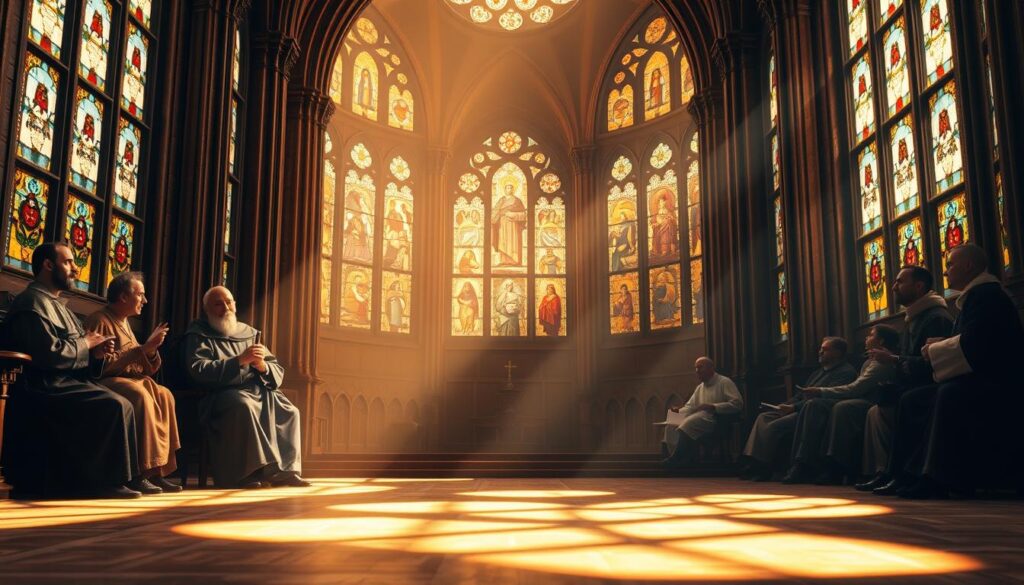
Milestones in Church History
The first four centuries established cornerstone documents like the Nicene Creed. Early councils tackled questions about Christ’s nature, creating unified beliefs across growing communities. Church Fathers like Augustine blended scriptural wisdom with philosophical insights.
Medieval thinkers revolutionized spiritual thought. Thomas Aquinas showed how faith and reason could coexist, using Aristotle’s ideas to explain divine truths. This period birthed universities where theological debates flourished.
The 16th-century Council of Trent addressed Reformation challenges. It clarified teachings on sacraments and scripture, strengthening the church’s identity. Centuries later, Vatican II (1962-1965) modernized practices while keeping ancient traditions alive.
Twice in history, popes defined dogmas without councils – including the 1854 Immaculate Conception declaration. These rare moments show how leadership guides belief through changing times.
“Great councils don’t invent truth – they illuminate what’s always been there,” notes historian Eamon Duffy.
Today, the Catholic Church balances 2,000-year-old creeds with contemporary issues like bioethics. This living history proves spiritual wisdom grows richer when rooted in enduring foundations.
Key Figures in Catholic Theology
Certain thinkers leave marks that shape centuries of spiritual exploration. Their insights become guideposts for understanding divine mysteries and human purpose. One such figure transformed how communities approach faith through reason.
The Bridge Between Ancient Wisdom and Modern Thought
Thomas Aquinas revolutionized religious scholarship by merging Greek philosophy with spiritual teachings. His writings demonstrate how logical inquiry deepens rather than threatens faith. This approach created a blueprint for addressing complex questions about existence and ethics.
The Summa Theologica, his masterwork, tackles 600+ topics through methodical analysis. Each section considers objections before offering reasoned conclusions. This structure became the gold standard for theological education worldwide.
“Sound pedagogy requires marrying human wisdom with sacred truth,” observed Church leaders endorsing Aquinas’s methods.
Modern theologians still use his framework to examine bioethics and social justice. The table below shows key aspects of his enduring influence:
| Element | Application | Modern Example |
|---|---|---|
| Philosophical roots | Ethical reasoning | End-of-life debates |
| Systematic approach | Doctrine development | Climate change teachings |
| Interfaith dialogue | Common ground discovery | Abrahamic partnerships |
Aquinas proved that asking hard questions strengthens belief. His work remains required reading in seminaries, showing how timeless principles adapt to new challenges.
The Essence of Catholic Faith and Belief
Human hearts carry an invisible compass pointing toward divine connection. This inner pull reflects a core teaching: people are made by God and for God. Like plants turning toward sunlight, souls naturally seek their Creator through both quiet reflection and active service.
Reason and faith work together like two lenses. Our minds can spot God’s fingerprints in nature’s patterns and life’s mysteries. But full understanding needs divine help – the “lightbulb moment” where truth clicks into place. As the Catechism notes:
“Faith is certain because it rests on God’s word.”
Belief thrives in community. Shared rituals and teachings create a spiritual family tree stretching back centuries. This network helps individuals grow while keeping core truths intact across generations.
| Aspect | Role | Example |
|---|---|---|
| Human Reason | Discerns basic truths | Observing creation’s order |
| Divine Faith | Accepts deeper truths | Understanding sacraments |
| Communal Practice | Sustains belief | Shared prayer traditions |
The Catholic Church teaches that true freedom comes from aligning with this design. When lives mirror divine love, they radiate purpose that outlasts temporary trends. This journey transforms not just individuals, but entire communities.
Exploring Catholic Sacraments and Liturgy
Seven sacred ceremonies mark life’s spiritual milestones, blending physical actions with divine purpose. These rituals form a spiritual roadmap, guiding believers through birth, growth, healing, and commitment. The Catholic Church teaches they’re not symbolic gestures but living encounters with grace that transform hearts.
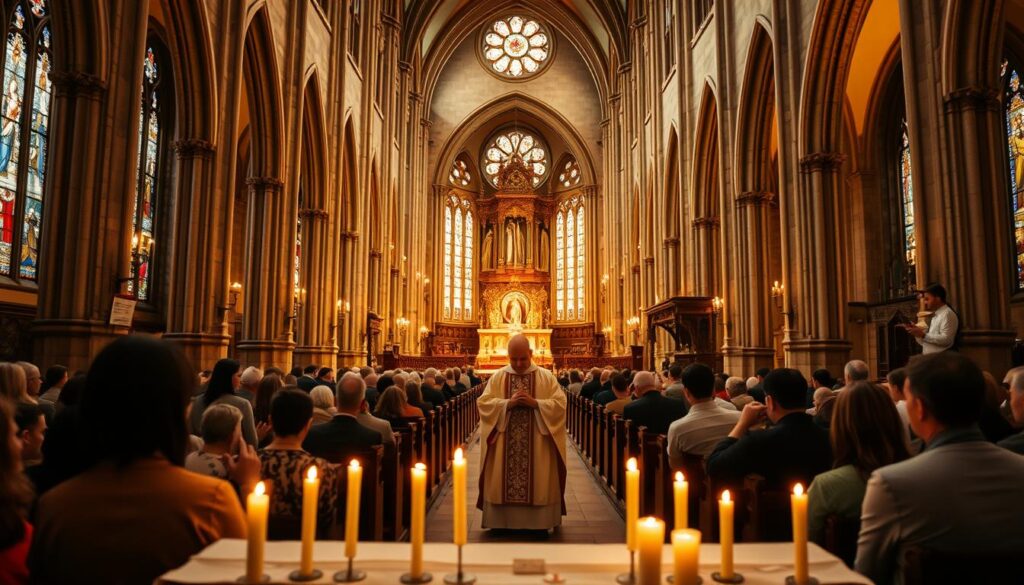
Baptism opens this journey, washing away original sin and welcoming new members into the faith family. Confirmation deepens this bond through the Holy Spirit’s gifts. At life’s center stands the Eucharist – a sacred meal renewing Christ’s sacrifice while nourishing souls.
Other sacraments address specific needs. Penance offers reconciliation, while Anointing brings comfort during illness. Holy Orders and Matrimony shape vocational paths, showing how grace meets daily realities. “Sacraments make visible what God does silently in hearts,” notes the Catechism.
These practices rely on simple elements – water, oil, bread – to convey profound truths. Like sunlight through stained glass, ordinary materials become channels for extraordinary blessings. This approach reflects a core belief: the divine touches humanity through tangible means.
Regular participation shapes spiritual growth. Weekly Mass, seasonal observances, and sacramental prep work keep communities rooted. Through these shared rhythms, individuals and groups alike experience faith as a lived journey rather than abstract ideas.
The Role of the Holy Spirit in Catholic Worship
In the heart of Catholic worship breathes a divine force that animates every ritual and prayer. The Holy Spirit acts as God’s living breath within the Church, turning ancient practices into fresh encounters with the divine. This presence isn’t symbolic – it’s the spark that ignites sacraments and gives power to communal prayers.
Pentecost celebrations highlight this reality vividly. During Eastertide’s climax, believers recall how the Spirit descended on early followers, empowering them to live their faith courageously. This annual remembrance fuels the Church’s mission today, much like wind filling sails.
Central to worship is the Eucharist’s miraculous change. Through epiclesis – the invocation prayer – the Holy Spirit transforms bread and wine into sacred nourishment that channels God’s grace. This moment reveals heaven’s desire to meet people through tangible means.
Scripture and Tradition remain vibrant because the Spirit’s work continually helps communities apply eternal truths. From personal conversion to social justice efforts, this divine guide bridges heaven and earth in everyday moments, proving faith isn’t static but alive with possibility.
FAQ
What’s the relationship between Scripture and Sacred Tradition?
Scripture (the Bible) and Sacred Tradition work together to pass down teachings revealed by God. The Church views both as essential for understanding divine truth, guided by the Holy Spirit to ensure consistency across generations.
How does the Magisterium influence Catholic beliefs?
The Magisterium, composed of bishops and the Pope, interprets Scripture and Tradition authoritatively. Its role is to preserve teachings from error and clarify doctrines, ensuring unity in faith and practice.
Why is Thomas Aquinas important to Catholic thought?
Aquinas blended philosophy with theology, offering clear explanations of complex ideas like grace and nature. His works, such as Summa Theologica, remain foundational for understanding doctrines like the Eucharist and moral principles.
What role do sacraments play in worship?
Sacraments like Baptism and the Eucharist are visible signs of God’s grace. They strengthen faith, unite believers with Christ, and mark key moments in spiritual life, fostering a deeper connection to the Church.
How has Church history shaped modern practices?
Events like Vatican II reformed liturgy and engagement with the world. Historical councils, such as Nicaea, defined core beliefs (e.g., the Trinity), ensuring teachings adapt while staying rooted in revelation.
Why is the Holy Spirit central to Catholic worship?
The Spirit guides prayer, inspires unity, and empowers sacraments. Believed to dwell within the faithful, it helps individuals live virtuously and discern truth, making worship a dynamic encounter with God.