Christianity’s rich tapestry includes countless traditions, but few comparisons spark as much curiosity as those between two major branches. While both groups share foundational teachings like the Trinity and Jesus Christ’s divinity, their paths diverge in meaningful ways. Understanding these variations helps explain how faith communities evolve while staying rooted in shared principles.
The Roman Catholic Church traces its origins to ancient times, emphasizing sacraments and church authority. In contrast, Evangelical traditions emerged during the Protestant Reformation, prioritizing personal spiritual experiences. These distinct approaches shape everything from worship styles to interpretations of scripture.
This guide explores how these communities approach salvation, biblical authority, and spiritual practices. We’ll uncover how historical events like the Reformation created lasting theological divides. Rather than judging which path is “better,” we’ll highlight how each tradition meets believers’ unique needs.
Whether you’re exploring your own beliefs or seeking to understand others, this comparison offers clarity. Let’s dive into the heart of what unites – and distinguishes – these influential expressions of Christian faith.
Key Takeaways
- Both traditions share core Christian doctrines but differ in practices and authority structures
- Catholicism emphasizes sacraments and church tradition, while Evangelicals focus on personal conversion
- The Protestant Reformation directly influenced Evangelical approaches to scripture interpretation
- Differences in worship styles reflect distinct theological priorities
- Understanding these variations fosters better interfaith dialogue and personal discernment
Overview of the Comparison
Imagine two neighbors tending the same garden but using different tools – that’s how Catholic and Evangelical approaches to faith coexist within Christianity. Both groups cherish Christ’s teachings yet cultivate their spiritual lives through distinct methods. This section clarifies common misunderstandings while mapping out what truly sets these traditions apart.
Understanding the Core Differences
Many people mistakenly assume one group isn’t “truly Christian.” In reality, both affirm Jesus as Savior. The difference lies in how they express this belief. Catholics lean on ancient rituals and church hierarchy, while Evangelicals prioritize personal Bible study and spontaneous worship.
Consider these contrasts:
| Aspect | Catholic Approach | Evangelical Approach |
|---|---|---|
| Historical Roots | Direct lineage from early apostles | 16th-century Reformation origins |
| Authority | Church tradition + Scripture | Scripture alone |
| Salvation | Grace through sacraments | Personal conversion experience |
Article Objectives and Scope
This comparison isn’t about declaring winners. We’ll explore why your Catholic cousin values Mass rituals while your Evangelical coworker shares “testimonies” during lunch breaks. You’ll gain tools to understand both church communities better – whether you’re visiting a candlelit cathedral or a modern megachurch.
We’ll tackle key questions: How do these groups view spiritual authority? What makes their worship styles feel worlds apart? By focusing on these differences, we foster mutual respect among believers who share the same roots but branch out uniquely.
Historical Roots and Developments
Time travel through Christian history reveals how two major traditions took shape. One grew from ancient roots, while the other sprouted during a period of dramatic change. Let’s explore how these distinct timelines created lasting spiritual legacies.
The Catholic Church’s Ancient Origins
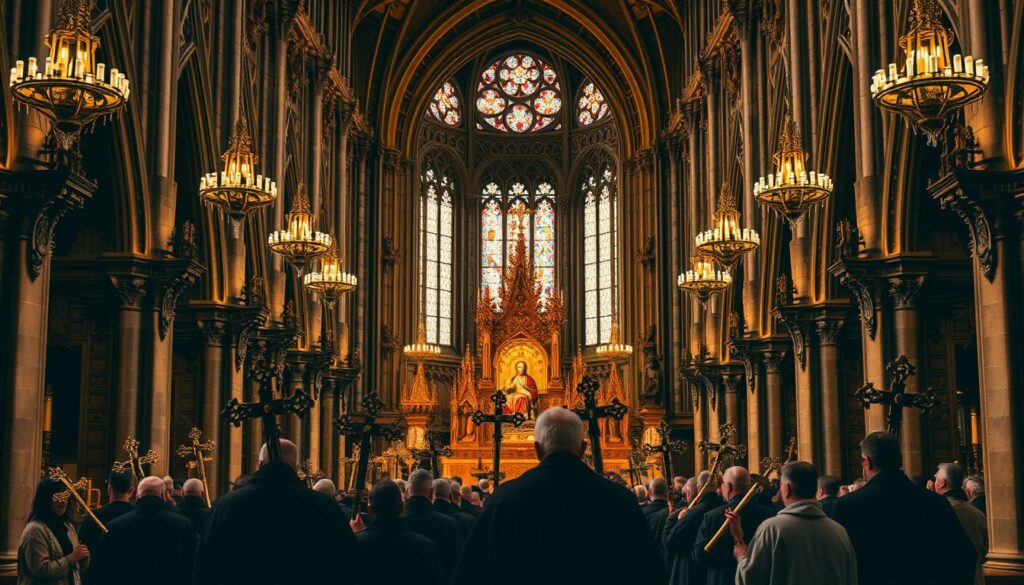
The Catholic Church traces its leadership to a lakeside moment in Galilee. According to Matthew 16:19, Jesus told Peter: “I will give you the keys of the kingdom of heaven.” This declaration established what believers consider an unbroken chain of leadership spanning twenty centuries.
For over 1,500 years, this institution shaped Western culture and society. Its monasteries preserved knowledge during the Middle Ages. Its cathedrals became landmarks of faith and artistry. The church’s teachings influenced everything from royal coronations to daily routines.
The Rise of Evangelicalism and the Reformation
Everything changed when a German monk nailed his complaints to a church door in 1517. Martin Luther’s protests sparked the Protestant Reformation – a movement demanding scriptural focus over tradition. This birthed core ideas like “Scripture alone” that still guide Evangelicals today.
The table below shows key historical milestones:
| Period | Catholic Church | Evangelical Movement |
|---|---|---|
| 1st-15th century | Developed sacraments and papal authority | – |
| 16th century | Faced Reformation challenges | Embraced sola scriptura principle |
| 18th-19th century | Maintained traditional structures | Expanded through revival meetings |
Great Awakenings later added emotional worship styles and personal conversion experiences to Evangelical practice. These developments created a faith tradition that thrives in modern settings – from urban storefront churches to global mission fields.
Doctrinal Foundations: Scripture and Tradition
Picture two librarians preserving ancient texts – one keeps every scroll, while the other focuses on the original manuscripts. This analogy captures how Christian groups handle divine truth. Their approaches to spiritual guidance reveal deep-rooted theological perspectives.
Catholic Emphasis on Sacred Tradition
The Catholic Church treats faith like a family heirloom passed through generations. Sacred Tradition – oral teachings tracing back to Jesus’ apostles – holds equal weight with the Bible. This explains why Catholic Bibles contain 73 books, including texts like Tobit and Wisdom of Solomon that Martin Luther later questioned.
Evangelical Focus on Sola Scriptura
Reformation leaders championed scripture alone as Christianity’s sole authority. Their Bibles feature 66 books, excluding writings not found in ancient Hebrew texts. This principle empowers believers to interpret God’s word personally, without mandatory church guidance.
| Aspect | Catholic View | Evangelical View |
|---|---|---|
| Source of Truth | Bible + Tradition | Bible only |
| Biblical Books | 73 | 66 |
| Interpretation | Church-led | Individual-led |
These differences shape real-world decisions. A Catholic might cite papal teachings on social issues, while an Evangelical asks, “Where’s that in Scripture?” Both approaches aim to honor God – through communal wisdom or personal biblical study.
The Impact of the Reformation on Beliefs
Imagine a librarian reorganizing shelves by removing certain titles – that’s what happened when Reformation leaders reshaped Christianity’s literary foundation. This seismic shift didn’t just rearrange pages; it rewrote how millions engage with their faith.
Redefining Sacred Texts
Martin Luther’s Bible became 7 books lighter than its Catholic counterpart. Out went Tobit and Maccabees – texts he deemed less essential for spiritual guidance. Even New Testament writings like James faced scrutiny, with Luther calling its message “straw” compared to Gospel truths.
| Biblical Category | Removed Books | Disputed NT Texts |
|---|---|---|
| Old Testament | Tobit, Judith, Wisdom of Solomon | – |
| New Testament | – | Hebrews, James, Revelation |
This editorial boldness stemmed from sola scriptura – the belief that Scripture alone holds divine authority. Where church leaders once mediated biblical understanding, Protestants championed personal interpretation through prayer and study.
The ripple effects transformed spiritual life:
- Birth of vernacular Bibles accessible to laypeople
- Shift from Latin Mass to sermon-centered worship
- Rise of diverse denominations interpreting texts uniquely
Luther’s legacy lives on when believers open personal Bibles rather than relying solely on clerical guidance. This empowerment extended beyond theology, fueling revolutions in education and self-governance that shaped modern democracies.
Exploring Core Beliefs and Authority
Think of spiritual guidance like house keys – some trust a master locksmith, while others make their own copies. This contrast shapes how different Christian groups approach truth and leadership. At the heart lies a crucial question: Who holds the authority to interpret divine messages?
Divine Revelation and the Role of the Church
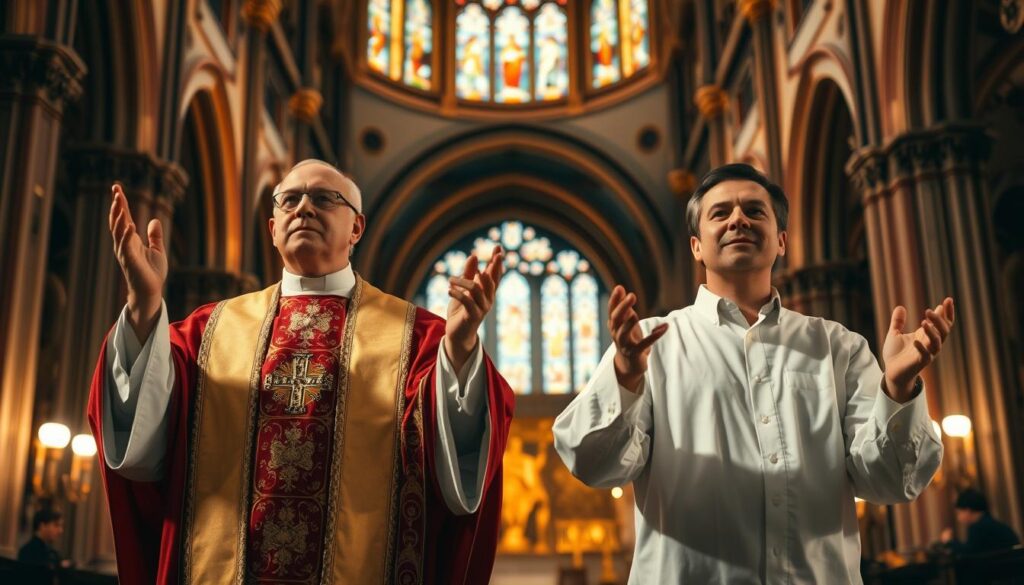
For one tradition, Jesus’ words to Peter in Matthew 16:18 form an unbroken chain of leadership. “You are Peter, and on this rock I will build my church,” serves as the foundation for institutional guidance. Followers believe the Holy Spirit continuously aids leaders in preserving sacred revelation through both Scripture and oral teachings.
Another perspective champions personal spiritual empowerment. Every believer becomes their own theologian through direct Bible access. This approach views hierarchical structures as unnecessary middlemen in one’s relationship with God.
| Authority Aspect | Institutional View | Personal View |
|---|---|---|
| Source of Truth | Scripture + Sacred Tradition | Scripture alone |
| Leadership | Papal succession | Local congregations |
| Decision Making | Centralized teachings | Individual conviction |
These contrasting approaches affect daily faith practices. Some consult church documents for moral guidance, while others search Scripture independently. Both methods aim to honor divine revelation but through different lenses of authority.
The table above shows how structural differences shape spiritual journeys. Whether through ancient rituals or personal Bible studies, believers seek truth within their understanding of God’s communication methods.
catholicism vs evangelical: A Comparative Look
Imagine two architects using the same blueprint but constructing vastly different homes. This analogy captures how Christian communities develop distinct spiritual practices while sharing core doctrines. Though both groups affirm foundational truths like the Trinity and Christ’s resurrection, their applications diverge in meaningful ways.
Direct Contrasts in Belief Systems
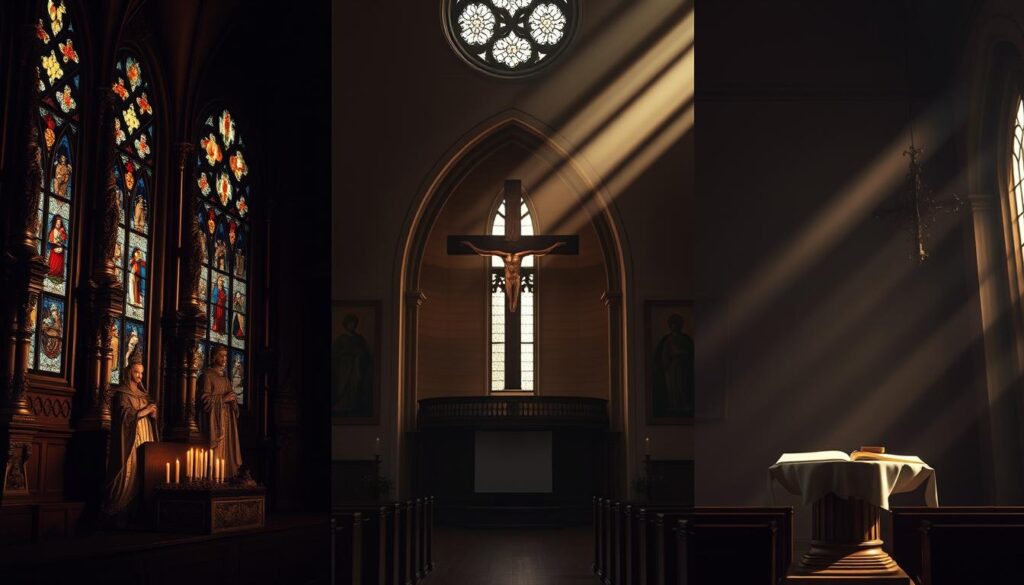
One striking difference centers on spiritual mediation. Many Catholics believe sacraments and church leadership are essential for connecting with God. In contrast, Evangelicals emphasize direct access through personal prayer and Scripture study. This shapes how each group approaches daily faith practices.
The concept of salvation reveals another key point. For one tradition, it’s a lifelong journey involving sacraments and good works. The other views it as a decisive moment of faith commitment. These perspectives influence everything from baptism rituals to end-of-life preparations.
Consider these additional contrasts:
- Mary’s role: Venerated as heavenly advocate vs. honored as Jesus’ earthly mother
- Spiritual authority: Church teachings + Scripture vs. Scripture alone
- Worship style: Structured liturgy vs. spontaneous praise
These theological differences create unique spiritual cultures. One values ancient rituals that unite generations of believers. The other thrives on personal testimonies and modern worship music. Both paths aim to honor Christ – they simply speak different dialects of the same faith.
The Role of the Holy Spirit and Personal Relationship with Jesus
Picture a gardener watering plants – one uses an intricate irrigation system, while another relies on rainclouds. Both achieve growth through water, just as believers nurture their personal relationship with Jesus through different spiritual “watering methods.”
One tradition sees the Holy Spirit as a direct life source. “Walk with God like you’re holding His hand daily,” many believers say. This approach values spontaneous prayer and Bible meditation as primary ways to strengthen one’s relationship with Christ.
Another perspective views divine connection through structured channels:
- Sacraments as spiritual milestones
- Communal worship as grace-filled encounters
- Church teachings as guardrails for faith
Consider these contrasting approaches:
| Aspect | Spontaneous Guidance | Structured Nurturing |
|---|---|---|
| Prayer Style | Conversational | Liturgical |
| Scripture Use | Personal interpretation | Church-supported study |
| Sacraments | Symbolic acts | Means of grace |
Both paths aim to deepen one’s personal relationship with Jesus. One thrives on emotional intimacy during worship songs, while another finds connection through Eucharist rituals. As one pastor noted: “The Holy Spirit works in highways and backroads – both lead home.”
These differences explain why some prefer quiet Bible studies while others cherish incense-filled services. Yet shared devotion to Christ unites these expressions of faith across all relationship-building practices.
Worship Practices: Liturgy vs. Contemporary Styles
Imagine two choirs singing the same hymn – one follows sheet music precisely, while the other improvises harmonies. This contrast captures how Christian communities express devotion through distinct worship rhythms. These approaches shape spiritual experiences while honoring shared convictions.
Formal Rituals in the Mass
One tradition structures worship like a sacred dance with centuries-old steps. The Eucharist remains central, celebrated through precise gestures and recited prayers. Incense swirls as congregations follow liturgical calendars, finding comfort in rituals that connect them to generations past.
Casual Fellowship in Services
Another community treats worship as a vibrant conversation. Services often begin with upbeat music led by bands, followed by practical sermons applying Scripture to daily life. Testimonies and altar calls create spaces for spontaneous spiritual moments.
Both styles nurture a sense of connection. One finds beauty in timeless traditions, the other in relatable modern expressions. Whether through chanting psalms or raising hands during praise songs, these practices remind believers that faith thrives in diverse forms of reverence.
FAQ
What’s the main difference in how Catholics and Evangelicals view authority?
Catholics rely on Sacred Tradition and the Church’s teachings alongside Scripture, while Evangelicals emphasize Sola Scriptura (Scripture alone) as the sole authority for faith and practice.
Do both groups believe salvation comes through faith?
Evangelicals stress faith alone for salvation, while Catholics teach that salvation involves faith and participation in sacraments like baptism and the Eucharist, guided by good works.
How do worship styles differ between the two?
Catholic services follow structured liturgies like the Mass, centered on the Eucharist. Evangelical gatherings often prioritize contemporary music, sermons, and informal fellowship focused on a personal connection with Jesus.
Why do Catholics pray to saints?
Catholics view saints as intercessors who can pray to God on their behalf. Evangelicals typically pray directly to God, emphasizing a personal relationship without mediators.
Is the Holy Spirit’s role the same in both traditions?
Both believe the Holy Spirit guides believers, but Evangelicals often highlight His role in personal conversion and daily life. Catholics connect the Spirit more closely to sacraments and Church unity.
What sparked the divide between these groups?
The Protestant Reformation challenged Catholic doctrines like papal authority and justification by works. Evangelicals later emerged, prioritizing Scripture, evangelism, and a born-again experience.
Do Evangelicals observe sacraments like Catholics?
Evangelicals practice baptism and Communion as symbolic ordinances, not sacraments conveying grace. Catholics recognize seven sacraments as essential channels of God’s grace.
How does each group view the Bible?
Catholics include deuterocanonical books in their Old Testament, while Evangelicals follow the Protestant canon. Both value Scripture but interpret it differently—Catholics through Church teaching, Evangelicals through personal study.