Christianity is a vibrant faith with many traditions. While all Christians share core beliefs about Jesus Christ, practices and teachings vary widely. This guide explores how distinct interpretations of scripture, history, and worship shape different denominations.
The term “Catholic” comes from the Greek word for “universal,” reflecting its global presence and unified structure. Catholics trace their roots to Jesus appointing Saint Peter as the Church’s foundation. Other Christian groups prioritize local governance or personal interpretation of the Bible.
Over 2,000 years, these traditions developed unique approaches to prayer, sacraments, and leadership. For example, some emphasize symbolic rituals, while others focus on spontaneous worship. Understanding these nuances fosters respect among believers and clarifies common misconceptions.
We’ll also explore how historical events, like the Reformation, influenced modern practices. Today, these differences impact everything from holiday celebrations to views on social issues in the U.S. Whether you’re deepening your faith or learning about others, this comparison offers valuable insights.
Key Takeaways
- Christian traditions share core beliefs but differ in practices and governance.
- The Catholic Church emphasizes universal unity and apostolic succession.
- Other denominations often prioritize personal interpretation of scripture.
- Historical events shaped modern worship styles and theological priorities.
- Understanding these differences encourages respectful interfaith dialogue.
- Cultural context influences how beliefs are expressed in American society.
Historical Roots and Evolution of Catholicism
How did a faith born in ancient Judea become one of the world’s most influential religions? Let’s unpack its journey through time. What began as a small group of followers in the first century CE now spans continents, shaping cultures and spiritual lives for billions.
Origins in the Roman Province of Judea
Jesus Christ’s teachings in Judea—modern-day Israel, Palestine, and Lebanon—laid the groundwork. His disciple Peter became the first Pope, symbolizing leadership continuity. Early believers faced persecution but kept their message alive through secret gatherings and oral traditions.
Development Through Centuries
The church’s growth accelerated under Roman Emperor Constantine in the 4th century. By medieval times, it wielded both spiritual and political power. Today, Vatican City stands as its global hub, guiding over 1.3 billion followers.
Latin America now hosts 69% of Catholics, showing how missionary efforts reshaped demographics. From creating sacraments to adapting local customs, the church balances ancient roots with modern needs. Its ability to evolve while preserving core beliefs explains its enduring relevance.
Foundational Beliefs and Doctrines in Catholicism
At the heart of Catholic practice lies a rich tapestry of spiritual tools and teachings. These elements guide believers through life’s milestones while connecting them to centuries of shared wisdom.
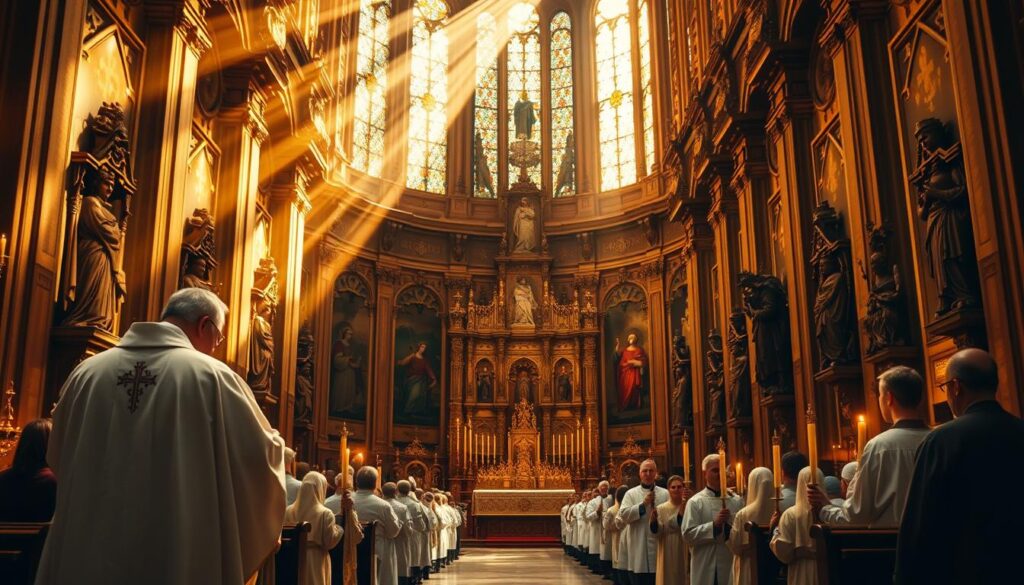
Sacraments, Scripture, and Tradition
Catholics receive divine grace through seven sacraments. These rituals mark key moments from birth (Baptism) to death (Anointing of the Sick). The Eucharist stands central, celebrated as Christ’s literal presence during Mass.
| Sacrament | Purpose | Life Stage |
|---|---|---|
| Confirmation | Strengthens spiritual maturity | Adolescence/Adulthood |
| Holy Orders | Empowers clergy leadership | Vocational commitment |
| Confession | Offers reconciliation | Ongoing spiritual renewal |
Scripture gains meaning when paired with tradition and Church teachings. This three-part approach prevents isolated interpretations. Historical practices like Lenten observances illustrate how customs evolve while maintaining core truths.
The Role of Faith and Good Works
Belief and action intertwine in Catholic doctrine. While faith opens the door to grace, good works demonstrate its transformative power. Feeding the hungry or forgiving enemies becomes both a duty and a blessing.
This balance avoids extremes. It honors God’s gift of salvation while recognizing human cooperation matters. Sunday Mass attendance fuels weekday service – each act reinforcing the other.
Exploring [Other Belief]: Origins and Core Tenets
The Protestant movement reshaped Christianity’s landscape through its bold reimagining of faith practices. Born from 16th-century reformers like Martin Luther, it emphasizes Jesus Christ as the Church’s true founder. Over two billion people globally identify with this tradition, making it the world’s largest Christian group.
Central to Protestant beliefs is the Trinity: one God as Father, Son, and Holy Spirit. Followers celebrate Christ’s resurrection as humanity’s path to salvation. Unlike some traditions, they view Scripture as the ultimate authority – not church leaders.
| Denomination | Key Belief | Worship Style |
|---|---|---|
| Lutheran | Salvation through faith alone | Liturgical |
| Baptist | Believer’s baptism | Congregational |
| Methodist | Social holiness | Hymn-based |
| Pentecostal | Spiritual gifts | Charismatic |
These groups share core ideas about Christ’s divinity but differ in leadership structures. Some use bishops, while others let local churches govern themselves. This flexibility allows adaptation to cultural contexts while keeping Scripture central.
Modern Protestant churches focus on personal relationships with God. They often prioritize Bible study over formal rituals. This approach reflects their founding principle: “Faith comes from hearing the message” (Romans 10:17).
Catholicism vs: Theological and Philosophical Perspectives
How do different Christian traditions view ultimate spiritual authority? This question lies at the heart of theological dialogue. Doctrine shapes how communities understand divine purpose and human responsibility.
The Catholic perspective holds that Jesus established one visible church through Peter. This institution safeguards the “fullness of truth” through apostolic succession. While recognizing other faiths may contain elements of truth, it teaches salvation flows primarily through its sacraments and teachings.
Protestant traditions take a different approach. Many emphasize Christ alone as Christianity’s foundation, not church structures. “All believers are priests before God,” wrote Martin Luther, rejecting exclusive institutional authority. Personal faith and Scripture study often replace formal hierarchies.
These views shape philosophical frameworks. Catholic thinkers like Thomas Aquinas blended Greek philosophy with biblical study, creating systematic theology. Protestant reformers prioritized individual conscience and direct grace access. Both systems aim to honor God but through distinct lenses.
Modern believers navigate these differences daily. Some find comfort in ancient rituals, others in spontaneous worship. Recognizing these varied paths fosters mutual respect while clarifying why traditions develop unique practices.
Scripture, Canon, and Interpretative Differences
Why do Christian Bibles sometimes have different book counts? The answer lies in how traditions define their canon – the official list of sacred texts. While all agree on the New Testament’s 27 books, variations in the Old Testament create meaningful distinctions.
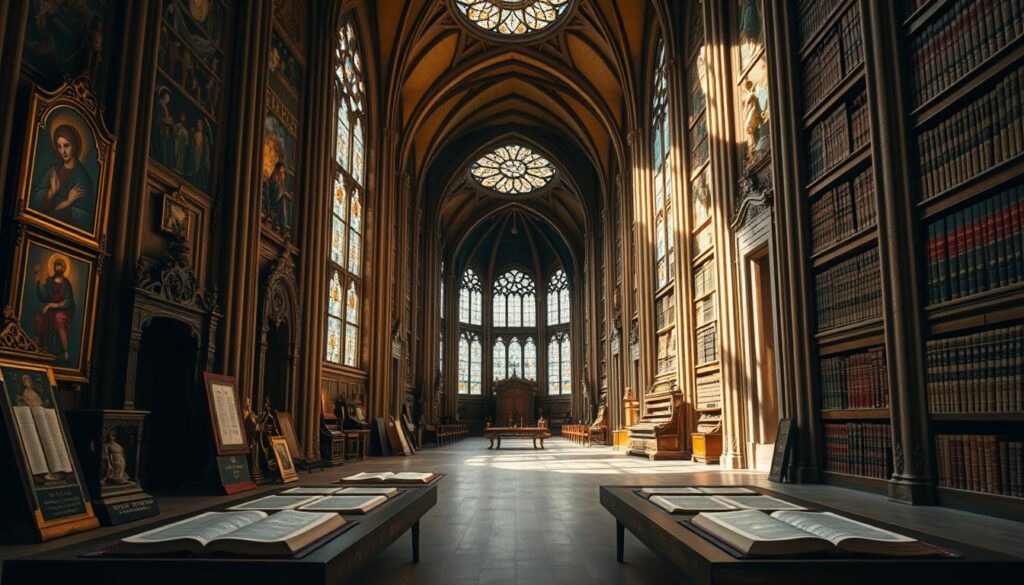
Old Testament, New Testament, and the Apocrypha
Catholic Bibles include 46 Old Testament books, drawing from ancient Greek translations used by early Christians. Seven additional texts – like Wisdom of Solomon and Judith – appear in Catholic Scripture but not in most Protestant editions. These works, called Deuterocanonical books, were part of the Septuagint, a 3rd-century BCE Greek Bible.
Protestant reformers later adopted the Hebrew Old Testament, which excludes these seven texts. This decision stemmed from their focus on original Hebrew manuscripts. Today, these differences affect teachings about prayer for the dead and purgatory, as some doctrines reference Deuterocanonical passages.
The New Testament remains unified across traditions. All 27 books – Gospels, Acts, and epistles – guide Christian beliefs about Jesus’ life and resurrection. This shared core shows how diverse groups still honor common spiritual roots.
Interpretation styles also vary. Catholics consult Church tradition alongside Scripture, while many Protestants prioritize personal Bible study. These approaches shape how believers apply ancient texts to modern life, from social justice issues to family practices.
Authority and Leadership: Papal Influence vs. Other Structures
Christian communities organize themselves in strikingly different ways. These leadership models shape how believers practice faith and resolve theological questions. At the center of this debate stands the role of the Pope – a figure revered by some and rejected by others.
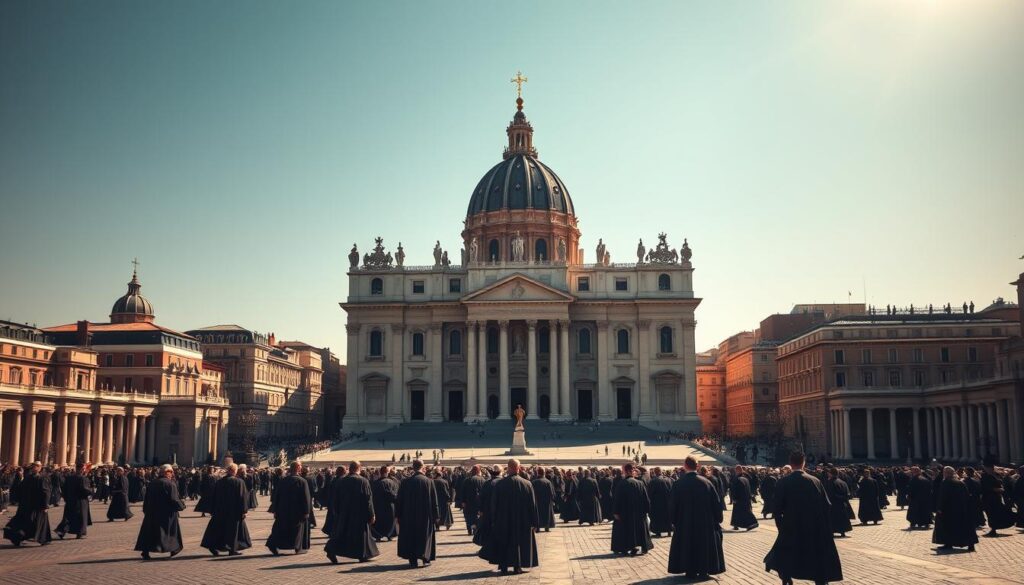
Papal Authority and Its Rejection
The Catholic Church teaches that the Pope serves as St. Peter’s successor, inheriting spiritual authority from Jesus’ words: “You are Peter, and on this rock I will build my church” (Matthew 16:18). This belief supports papal supremacy – the idea that the Pope holds final authority over all Christians.
Other traditions strongly disagree. Protestant groups argue Christ alone leads the church, not human figures. Many cite Jesus’ warning: “Do not call anyone on earth your father” (Matthew 23:9). Orthodox Christians respect the Pope as a historic leader but see him as first among equals rather than supreme ruler.
| Church Type | Leadership Model | Authority Source | View on Pope |
|---|---|---|---|
| Catholic | Papal supremacy | Apostolic succession | Supreme leader |
| Orthodox | Patriarch council | Consensus tradition | Honored peer |
| Protestant | Varied systems | Scripture alone | No authority |
These differences affect daily church operations. Catholic doctrine development flows through Vatican councils, while Protestant denominations let local congregations or regional bodies decide teachings. The 1870 declaration of papal infallibility remains particularly controversial outside Catholic circles.
Despite these divisions, all groups share a goal: guiding believers toward spiritual truth. Whether through a pope, pastors, or personal study, leadership structures aim to honor Christ’s teachings in unique ways.
Salvation: Faith, Good Works, and Divine Grace
What determines eternal life in Christian belief? This question reveals one of Christianity’s most profound debates. While all believers agree Christ’s sacrifice offers redemption, how grace works in daily life sparks meaningful discussion.
Grace, Justification, and Spiritual Growth
Many Christians see baptism as the starting point of salvation. But what happens next? Catholic teaching emphasizes ongoing spiritual maintenance. Mortal sins can break this connection, requiring confession and renewed commitment through sacraments like Eucharist.
Protestant traditions take a different view. “Faith alone makes someone holy,” wrote Martin Luther. They teach Christ’s sacrifice fully covers believers’ sins from the moment of acceptance. Good deeds become thank-you notes rather than requirements.
| Aspect | Catholic Approach | Protestant View |
|---|---|---|
| Justification | Lifelong process | Instant declaration |
| Sacraments | 7 channels of grace | Symbolic acts |
| Assurance | Through perseverance | Through faith |
Both groups share core ground. All affirm Jesus as humanity’s only savior. The resurrection remains central. Where they differ is human responsibility. Does spiritual growth require church rituals or personal trust?
These perspectives shape daily living. Catholics might prioritize Mass attendance, while Protestants focus on Bible study. Yet both aim to honor Christ’s command: “Love one another as I have loved you.”
Comparative Sacramental Practices and Worship
Sacred rituals shape spiritual identity across Christian traditions in profound ways. While sacraments serve as channels of divine grace, their expression varies significantly. These differences highlight how communities interpret sacred moments through worship and symbolism.
Eucharist and the Mystery of Transubstantiation
Central to many traditions is the Eucharist, seen as Christ’s enduring gift. Catholics and Orthodox Christians believe the bread and wine become his literal body and blood during Mass. This change, called transubstantiation, maintains their physical appearance while transforming their essence.
Other groups view communion as a memorial rather than a mystical event. They honor Jesus’ sacrifice through symbolic gestures. Despite these contrasts, all agree the ritual connects believers to foundational Christian truths.
Shared reverence for this meal reveals unity amid diversity. Whether seen as mystery or metaphor, it remains a cornerstone of collective worship. These practices remind participants of their spiritual roots while nurturing community bonds.
FAQ
How do Catholic views on salvation differ from Protestant beliefs?
The Catholic Church teaches that salvation comes through faith, good works, and participation in sacraments like Baptism and the Eucharist. Many Protestant traditions emphasize faith alone (sola fide) and God’s grace as the sole means of salvation, rejecting the necessity of sacraments or merit-based works.
Why does the Pope hold unique authority in Catholicism?
Catholics believe the Pope is the successor of St. Peter, whom Jesus called the “rock” of the Church. This role grants him spiritual and doctrinal authority to guide believers. Most Protestant and Orthodox Christian groups reject papal supremacy, favoring decentralized leadership structures.
What’s the difference between the Catholic and Protestant Bibles?
The Catholic Bible includes seven additional books in the Old Testament, called the Deuterocanon or Apocrypha, such as Tobit and Maccabees. Protestant Bibles exclude these texts, following the Jewish Tanakh’s canon established during the Reformation.
Do Catholics prioritize tradition over Scripture?
Catholicism teaches that Scripture and Sacred Tradition hold equal authority, both guided by the Holy Spirit. This differs from sola scriptura (Scripture alone) in many Protestant denominations, which reject tradition as a source of divine revelation.
How do sacraments like the Eucharist shape Catholic worship?
Catholics believe sacraments are visible signs of God’s grace. The Eucharist, for example, involves transubstantiation—the belief that bread and wine become Christ’s body and blood. Most Protestant groups view communion as symbolic or memorial, not a literal sacrifice.
Why do Catholics pray to Mary and saints?
Catholics ask Mary and saints to intercede with God on their behalf, viewing them as spiritual allies. This contrasts with many Protestant beliefs that prayer should be directed solely to God, based on Jesus’ role as the sole mediator.