Many people use the terms “Catholic” and “Roman Catholic” as if they mean the same thing. But here’s a surprising fact: they actually describe different aspects of a shared faith tradition. This mix-up often hides the vibrant diversity within the global Catholic community.
The Catholic Church isn’t a single uniform group. It includes over 20 distinct rites and churches worldwide. These groups all share core beliefs, sacraments, and loyalty to Rome. However, they celebrate their faith through unique traditions, languages, and cultural practices.
For example, Maronite Catholics in Lebanon or Syro-Malabar Catholics in India follow ancient liturgical customs. These differ from the more familiar Roman rite. Yet all are united under the Pope and the same foundational teachings.
Understanding these distinctions helps us appreciate how faith adapts to local cultures while staying true to its roots. Let’s explore how these terms evolved and why they matter for millions of believers today.
Key Takeaways
- “Catholic” and “Roman Catholic” aren’t interchangeable terms
- The Church includes over 20 unique rites worldwide
- All groups share core beliefs and recognize the Pope’s authority
- Differences appear in worship styles and cultural traditions
- Unity comes from shared sacraments and apostolic succession
Understanding the Foundations of Catholicism and Roman Catholicism
When exploring the Catholic faith, two concepts stand out as organizational cornerstones. These elements allow for both global unity and regional diversity. Let’s unpack the framework that holds this ancient tradition together.
Defining Key Terms and Traditions
Father John Hardon’s Catholic Dictionary clarifies that a Rite determines “how we worship,” covering everything from prayers to ceremonial details. These practices trace back to early Christian communities. For example:
- Byzantine Rite services feature standing worship and incense
- Roman Rite Masses often use kneeling and Gregorian chant
“A Church is an assembly ordered under bishops, whether worldwide or local,” notes Hardon’s definition. This explains why we speak of both the universal Catholic Church and particular Churches like the Chaldean Catholic Church in Iraq.
The Role of the Catholic Church and Its Universality
St. Robert Bellarmine captured the essence: “One faith, shared sacraments, and recognition of the Pope’s leadership” create unity. This structure allows:
| Aspect | Rite | Church |
|---|---|---|
| Focus | Worship style | Community structure |
| Examples | Roman, Alexandrian | Maronite, Syro-Malabar |
| Governance | Follows liturgical rules | Led by local bishops |
This system maintains core beliefs while letting traditions adapt. Whether attending a Roman Catholic parish in Chicago or an Ethiopian Catholic service in Addis Ababa, members share the same sacraments and papal connection.
Exploring Liturgical Traditions and Rites
Liturgical diversity forms the heartbeat of global Catholic practice. While sharing core beliefs, communities express faith through distinct worship styles that span centuries and continents.
The Roman Rite and Its Evolution
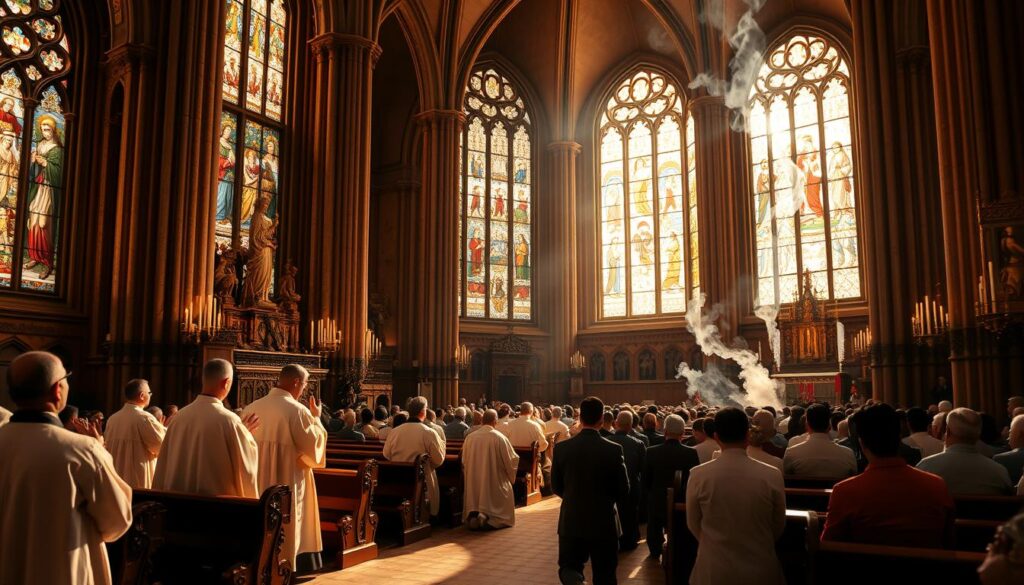
The Roman Rite serves over 1.3 billion believers worldwide. Its classic form, the Tridentine Mass, took shape after the Council of Trent (1545-1563). Pope St. Pius V standardized this liturgy to preserve unity during Reformation challenges.
St. Gregory the Great refined these practices in the 6th century. His work earned the rite its nickname: Usus Antiquior (Ancient Usage). Elements like the Eucharistic Prayer trace back to Rome’s first Christian communities.
“The liturgy is a living connection to our spiritual ancestors,” wrote Pope St. Gregory. “Through it, we touch hands across time.”
An Overview of Eastern Liturgical Practices
Eastern traditions offer different paths to the same sacred truths. The Byzantine Rite uses Greek or Slavonic languages, while the Alexandrian tradition features Coptic chants. These rites follow unique liturgical calendars that shape daily spiritual life.
| Tradition | Language | Calendar | Distinct Feature |
|---|---|---|---|
| Byzantine | Greek/Slavonic | Revised Julian | Iconostasis use |
| Antiochian | Syriac/Arabic | Gregorian | Incense emphasis |
| Ambrosian | Latin | Roman | Long Advent season |
From Dominican friars to Ukrainian Greek Catholics, these practices prove faith thrives in many forms. All maintain communion with Rome while celebrating local spiritual heritage.
Key Theological and Doctrinal Differences
The Catholic faith’s unity shines through its diverse expressions. While Eastern and Roman believers share identical foundations, their theological approaches reveal fascinating nuances. These differences highlight how ancient truths adapt to cultural contexts without compromising doctrine.
Core Dogmas and Sacramental Life
All Catholics affirm the same dogmas of faith, from Mary’s Immaculate Conception to purgatory. Eastern traditions often frame these teachings through poetic imagery rather than legal definitions. For example, purgatory might be described as “the final purification through divine love” instead of a temporal state.
The seven sacraments unite both traditions, though names differ. Eastern Catholics call Confirmation “Chrismation” and celebrate it immediately after baptism. Marriage becomes the “Crowning” sacrament, symbolizing eternal union. Even the Eucharist shows variation:
- Roman theology emphasizes the Words of Institution
- Eastern rites focus on the epiclesis (Holy Spirit invocation)
The Role of the Pope vs. Eastern Governance
Eastern Catholics maintain self-governance through patriarchs and synods. The Maronite Church, for instance, follows its own canon law while recognizing the Pope as Christ’s Vicar. This system preserves ancient structures described by St. Ignatius of Antioch:
“Where the bishop is, there let the people gather, as where Christ is, there is the Catholic Church.”
Roman diocesan bishops oversee parishes directly. Eastern communities instead answer to regional leaders who collaborate with Rome. Both models ensure communion while honoring distinct histories.
catholicism vs roman catholicism: Similarities and Common Ground
Beneath surface-level differences in worship styles, Eastern and Roman Catholics share an unshakable spiritual foundation. This unity becomes clear when we examine their core beliefs and practices.
Shared Creed and Essential Beliefs
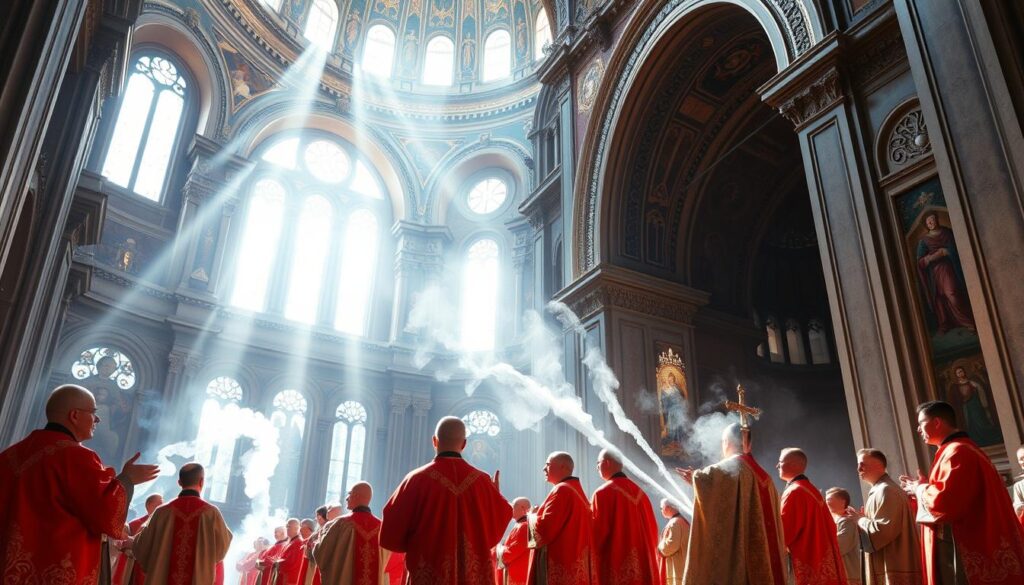
Both groups recite the Niceno-Constantinopolitan Creed from 381 AD. Byzantine Catholics use the original Greek version without the “Filioque” clause about the Holy Spirit’s origin. Despite this wording difference, all affirm the same Trinity doctrine and Christ’s divinity.
Great saints like John Chrysostom and Athanasius bridge both traditions. These early Church Fathers shaped Catholic theology through writings still studied worldwide. Their legacy shows how Eastern and Western thought developed together.
Common Sacraments and Historical Roots
Seven sacraments unite all Catholics, though names vary. Roman Catholics experience Confirmation years after baptism, while Eastern Catholics receive Chrismation immediately. Both forms confer the Holy Spirit’s gifts through sacred oils.
“The various liturgical traditions are bound together through apostolic succession,” notes Vatican II documents. “They equally enjoy dignity within the Church.”
This sacramental unity allows Roman Catholics to attend Eastern Divine Liturgies for Sunday obligations. Shared history stretches back to Christianity’s first thousand years when East and West collaborated on doctrine. Today, both groups maintain communion with Rome while celebrating distinct cultural expressions.
Historical and Cultural Perspectives
Christian history reveals a vibrant tapestry where shared roots bloom into diverse spiritual expressions. This journey through time shows how communities maintained unity while nurturing distinct identities.
A Shared Millennium of History
For over a thousand years, Eastern and Western believers walked side by side. They honored the same saints, debated theology at joint councils, and shaped core doctrines together. St. John Cassian bridged worlds by bringing Egyptian monastic wisdom to Europe, inspiring Western orders like the Dominicans.
Unique Cultural Expressions and Liturgical Languages
Eastern Catholics celebrate saints like Ephrem of Nisibis through Syriac hymns and Byzantine chant. Their liturgical language choices – from Arabic to Old Slavonic – keep ancient spiritual tradition alive. Maronite communities honor St. Jacob of Serugh’s poetry, while Byzantine eastern catholics recite prayers composed by St. Gregory Palamas.
These cultural treasures remind us that faith thrives through local music, art, and storytelling. Yet all paths lead back to Rome – a testament to enduring unity within beautiful diversity.
FAQ
What’s the main difference between Catholicism and Roman Catholicism?
The term “Catholicism” broadly refers to the global faith community united under the Pope. “Roman Catholicism” specifically describes the tradition following the Roman Rite, the largest liturgical practice within the Church. Eastern Catholic Churches, like the Maronite or Ukrainian Greek, are also part of the Catholic Church but follow distinct rites.
Do Roman Catholics and Eastern Catholics share the same beliefs?
Yes! Both groups affirm core teachings like the Nicene Creed, sacraments, and the Pope’s authority. Differences lie in liturgical styles, governance, and cultural traditions. For example, Eastern Catholics often allow married priests, while Roman Catholic priests typically take vows of celibacy.
Why does the Roman Catholic Church emphasize the Pope’s role?
Roman Catholics view the Pope as the successor of St. Peter and the Vicar of Christ, ensuring unity in doctrine. Eastern Catholic Churches, while respecting papal authority, often govern through synods or patriarchs, reflecting their historical and cultural contexts.
Are there differences in how sacraments are celebrated?
Sacraments like Baptism and Eucharist are universal, but practices vary. Roman Catholics use unleavened bread in the Eucharist, while many Eastern Churches use leavened bread. Liturgical languages also differ—Latin in the Roman Rite vs. Greek, Arabic, or Church Slavonic in Eastern traditions.
Is the Roman Catholic Church the only “Catholic” Church?
No. The Catholic Church includes 24 autonomous Churches, with the Roman Catholic Church being the largest. Eastern Catholic Churches, such as the Syro-Malabar or Chaldean Catholic Church, maintain their own liturgies and traditions while remaining in full communion with Rome.
How do cultural traditions influence worship practices?
Cultural heritage shapes liturgy, music, and rituals. For instance, Roman Catholic Masses often feature Gregorian chant, while Eastern Catholic services might include Byzantine hymns or incense processions. These variations reflect the Church’s adaptability to local customs over centuries.
Are there theological disagreements between the groups?
Both uphold the same dogmas defined by councils like Trent and Vatican I. Minor differences exist in theological emphasis—for example, Eastern Catholics may focus more on mysticism, while Roman Catholics prioritize scholastic theology. These nuances coexist within shared doctrine.