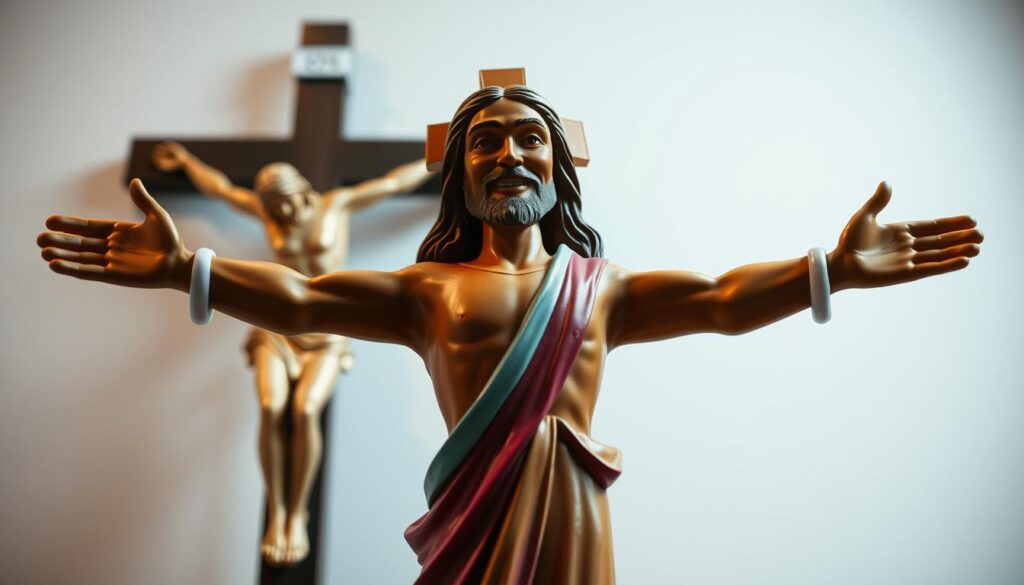
When Kevin Smith’s Dogma hit theaters in 1999, it sparked a firestorm. The comedy dared to reimagine religious symbols, blending satire with questions about tradition. At its core was a fictional campaign called “Catholicism WOW,” aiming to refresh the Church’s image with ideas like the lighthearted “Buddy Christ” statue.
The movie didn’t just entertain—it challenged viewers. By poking fun at rigid structures, it asked how faith could stay relevant. While some called it blasphemous, others saw a clever critique of outdated practices.
Smith’s work became a cultural touchstone. Fans debated whether humor could coexist with reverence. The film’s bold concepts even leaked into real-world discussions about modernizing religion.
Today, Dogma remains a fascinating case study. It shows how art can push boundaries while respecting personal beliefs. Its legacy? Proving that even controversial ideas can inspire meaningful dialogue.
Key Takeaways
- Kevin Smith’s 1999 film sparked debates about faith and modernization
- Fictional “Catholicism WOW” campaign blended humor with social critique
- Balancing satire and respect remains a topic of discussion today
- Audiences connected with reimagined religious symbols like “Buddy Christ”
- The movie’s themes still influence conversations about tradition vs. change
Revisiting Dogma’s Cultural Impact
Twenty-five years after its release, Kevin Smith’s Dogma still stands as a lightning rod for discussions about faith in modern media. The film blended A-list talent with bold ideas, creating a cocktail of humor and theological debate that few movies dared to attempt.
Kevin Smith’s Bold Take on Faith and Film
Smith assembled an unlikely dream team for his 1999 project. Matt Damon and Ben Affleck played fallen angels, while Alanis Morissette’s silent God and George Carlin’s progressive cardinal flipped traditional expectations. The movie’s $10 million budget – Smith’s largest at the time – funded interdimensional battles and a memorable Jersey Shore showdown.
The Role of Satire in Challenging Traditional Beliefs
Through absurd scenarios like exploiting Church loopholes to reverse damnation, the film asked serious questions. Chris Rock’s forgotten apostle delivered biting commentary on religious exclusion, while Salma Hayek’s muse character bridged ancient myths with modern struggles.
Not every gag aged perfectly – the infamous “Shit Demon” still divides fans. But Smith’s mix of slapstick and sincerity created space for viewers to laugh while examining their own beliefs. The movie’s anniversary proves its themes of institutional critique and personal spirituality remain urgent today.
Exploring catholicism wow: Redefining Faith and Style
Modern religious dialogue often grapples with visual storytelling’s power to shape belief systems. The fictional “Catholicism WOW” campaign from Dogma proposed radical changes to sacred symbols, sparking debates about tradition versus accessibility in spiritual messaging.
How the New Imagery of Faith Resonates in Modern Times
George Carlin’s Cardinal Glick argued traditional symbols needed a refresh: “Christ didn’t come to earth to give us the willies”. This fictional rebranding mirrors real-world efforts to make spiritual concepts feel approachable. Churches today experiment with digital art and interactive installations to engage younger audiences.
The Evolution from the Crucifix to Buddy Christ
The shift from sacrificial imagery to upbeat symbols raises key questions. While the crucifix represents profound sacrifice, Buddy Christ offers instant positivity. Theological experts note: “Friendly symbols risk simplifying complex spiritual truths”.
| Symbol | Meaning | Modern Reception |
|---|---|---|
| Traditional Crucifix | Sacrifice & redemption | 57% find it meaningful* |
| Buddy Christ | Encouragement & approachability | 41% prefer updated versions* |
*2023 Pew Research Center survey on religious symbolism
This tension between ancient traditions and contemporary communication styles continues shaping how institutions present timeless messages. The key lies in balancing reverence with relatability – a challenge as old as faith itself.
Religious Satire and Personal Belief in America
For many Americans, spiritual identity forms through unexpected collisions of tradition and rebellion. Thirteen years of Catholic schooling taught me rituals without resonance – weekly Masses felt like attendance checks, not sacred moments. The real faith-building happened in quiet resistance.
A Personal Journey from Catholic School Memories to Self-Created Faith
I crafted my own divine team: God became “a chill cheerleader who texted occasionally”, while Jesus transformed into an anti-establishment activist. This DIY spirituality focused on practical ethics – helping neighbors mattered more than memorizing catechism. When Kevin Smith’s film arrived, its humor felt like validation: “Finally, someone gets it!”
Analyzing the Humor and Critique of Institutional Religion
Satire became my secret decoder ring for religious questions. The movie’s jokes about Church loopholes mirrored real frustrations with institutional priorities. As abuse scandals emerged, laughter turned to action – many left pews but kept their moral compasses.
Comedy offers safe ground for tough conversations. Through absurd characters and situations, people explore doubts without abandoning cultural roots. This balancing act – honoring tradition while demanding better – defines modern spiritual journeys across America.
Conclusion
The conversation Dogma started 25 years ago isn’t over. Kevin Smith still mentions potential sequels multiple times a year, though most remain daydreams. Yet the movie’s real legacy lives in weekly discussions about balancing tradition with modern life.
The film showed humor could tackle sacred topics without disrespect. Its fictional “Catholicism WOW” campaign became a real-world reference point for updating religious communication. People now use these ideas when debating how institutions can stay relevant.
What keeps Dogma fresh after all this time? It’s the way it makes space for doubt and devotion to coexist. The story reminds us that questioning beliefs can strengthen personal faith – a message that still resonates as society evolves.
As new generations discover the film, its core truth endures: spiritual growth often happens through laughter, not lectures. In a world craving authenticity, Dogma‘s version of compassionate critique feels more vital than ever.
FAQ
How did Kevin Smith’s film Dogma challenge traditional Catholic views?
Kevin Smith’s 1999 film Dogma used satire to question rigid religious structures, blending humor with critiques of dogma. By portraying angels, demons, and flawed divine rules, it sparked debates about faith’s role in modern culture while staying rooted in Smith’s Catholic upbringing.
What makes satire effective in discussing religion?
Satire allows creators like Kevin Smith to highlight contradictions in institutional practices without dismissing faith itself. By using humor, films like Dogma invite audiences to reflect on tradition while fostering dialogue about personal spirituality versus organized doctrine.
Why did Dogma replace traditional symbols like the crucifix with “Buddy Christ”?
The “Buddy Christ” statue in Dogma symbolized a shift toward accessible, lighthearted imagery. It critiqued how commercialization can dilute sacred symbols while suggesting faith could evolve to feel more relatable in contemporary society.
How did Kevin Smith’s Catholic background shape his films?
Growing up Catholic influenced Smith’s storytelling, blending reverence with rebellion. Films like Dogma reflect his struggle to reconcile childhood teachings with adult skepticism, creating narratives that honor faith while challenging its institutional flaws.
Can humor coexist with genuine religious critique?
Yes. Smith’s work shows humor can dissect serious topics without mockery. By poking fun at bureaucracy within the Catholic Church, his films encourage viewers to separate spiritual truth from human-made structures, fostering deeper introspection.