Welcome to a journey through one of history’s most enduring spiritual families. With roots stretching back 2,000 years, this global faith community unites over 1.3 billion people through shared beliefs and diverse practices. You’re about to discover how unity and variety coexist within this ancient tradition.
At its core, the organization maintains a remarkable balance between centralized leadership and cultural adaptation. While many recognize the Roman Catholic Church as its most visible expression, fewer know about the equally vital Eastern Catholic Churches. Both groups share the same essential teachings but celebrate them through different liturgical styles.
This guide will help you understand how these traditions developed distinct identities while remaining united. You’ll learn why their rituals vary across regions, yet their sacraments and doctrines align perfectly. From Rome to Beirut, Manila to Nairobi, each community adds unique flavors to their shared spiritual heritage.
Key Takeaways
- The faith community comprises two main groups united under papal leadership
- Shared doctrines bind different traditions across 23 distinct churches
- Cultural diversity enriches worship practices while maintaining core beliefs
- Roman Catholicism represents the largest single Christian denomination worldwide
- Eastern traditions preserve ancient liturgical customs dating to early Christianity
By exploring these living traditions, you’ll gain new appreciation for how spiritual unity thrives through cultural diversity. Let’s begin unraveling this tapestry of faith that continues shaping civilizations.
Historical Evolution and Foundations of Catholicism
How did scattered followers of a crucified teacher become architects of a global faith? The answer lies in three revolutionary anchors: scripture, leadership, and living tradition. These elements transformed first-century believers into a movement that reshaped empires.
From Fishermen to Foundations
The New Testament reveals Christianity’s DNA. Acts 2 shows terrified disciples becoming bold proclaimers. By Acts 15, they’re making binding decisions for Mediterranean communities. Early believers didn’t just share stories—they built systems to preserve truth across generations.
St. Irenaeus solved critical challenges in the second century. His three-legged stool of authority became Christianity’s backbone:
- Scriptures approved by apostolic churches
- Bishops leading key cities like Rome and Antioch
- Unbroken teaching passed through generations
Councils That Shaped Belief
When disputes arose, the early church didn’t tweet—they convened. The Council of Nicaea (325 CE) united leaders from Egypt to Spain. These gatherings:
- Defined core doctrines like Christ’s divinity
- Finalized the New Testament canon
- Created creeds still recited today
Through eight ecumenical councils over five centuries, leaders balanced flexibility with fidelity. They proved unity wasn’t about sameness, but shared truth across diverse cultures. This foundation let the faith survive empires’ rise and fall while keeping its revolutionary heart.
Exploring catholicism branches: Roman Catholic and Eastern Catholic Perspectives
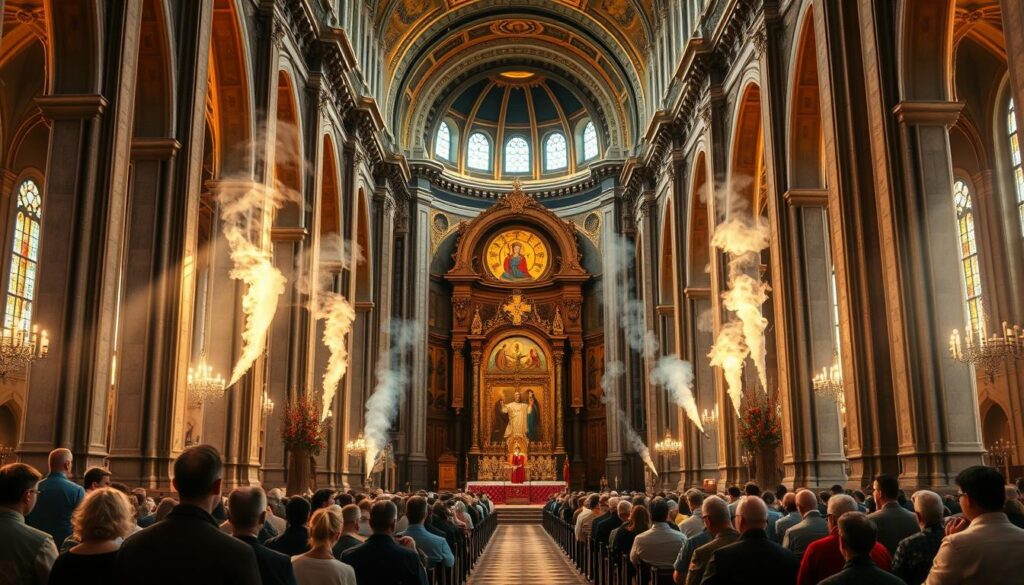
Imagine walking into two sacred spaces on the same Sunday morning. In Rome, you hear Gregorian chant echoing through a cathedral. In Damascus, incense swirls around ancient Aramaic prayers. Both communities share identical beliefs but express them through strikingly different lenses.
Rituals, Doctrines, and Distinctive Practices
The Roman Catholic Church, also known as the Latin Church, uses bread without yeast for communion. Eastern traditions bake leavened loaves with intricate patterns. These variations showcase how shared sacraments adapt to cultural contexts:
- Western services typically use local languages like English or Spanish
- Eastern liturgies preserve ancient tongues like Syriac and Church Slavonic
- Both use identical baptism formulas despite different ceremonial styles
Unity Amid Diverse Traditions
Twenty-three distinct churches form this global family. From Ukrainian Greek Catholics to Maronite Christians in Lebanon, each maintains unique customs while sharing:
- Recognition of papal authority
- Seven sacraments with identical spiritual effects
- Common doctrinal foundations established through councils
This structure allows Ethiopian Catholics to drum during worship while Polish nuns sing hymns – all within one united faith. The denominations differ in expression but never in essential truths.
Organizational Structures and Social Hierarchies
Behind every thriving community lies a well-organized framework. The faith’s structure operates through three interconnected groups: clergy guiding worship, monastics modeling devotion, and laity living faith daily. Each part strengthens the whole while serving distinct purposes.
Clergy Roles: Bishops, Priests, and Deacons
Bishops stand as spiritual CEOs, governing dioceses with sacramental authority passed from early apostles. They confirm members, ordain clergy, and ensure doctrinal unity. One bishop remarked:
“Our power isn’t control – it’s responsibility to serve truth.”
Priests act as neighborhood ambassadors, celebrating Mass and offering guidance. Appointed by their bishop, they become trusted counselors in schools, hospitals, and parishes. Deacons bridge clergy and people, often working secular jobs while assisting in:
- Baptism ceremonies
- Marriage preparations
- Community outreach programs
Monastics and the Role of Godparents
Behind monastery walls, nuns and monks live radical simplicity. Their vows of poverty, chastity, and obedience inspire lay followers through prayer-centered lives. These communities preserve ancient practices while addressing modern needs like environmental care.
Godparents form spiritual extended families. Selected during baptism, they promise to support children’s faith journey. This part of Catholic life creates lifelong bonds, with many people maintaining close ties to their sponsors into adulthood.
Authority and the Role of the Pope
What does it mean to lead a global faith community spanning two millennia? The bishop of Rome, recognized worldwide as the Pope, carries this unique responsibility. His role blends spiritual guidance with administrative oversight, connecting 1.3 billion followers across 200+ countries.
Papal Leadership and the Significance of the Holy See
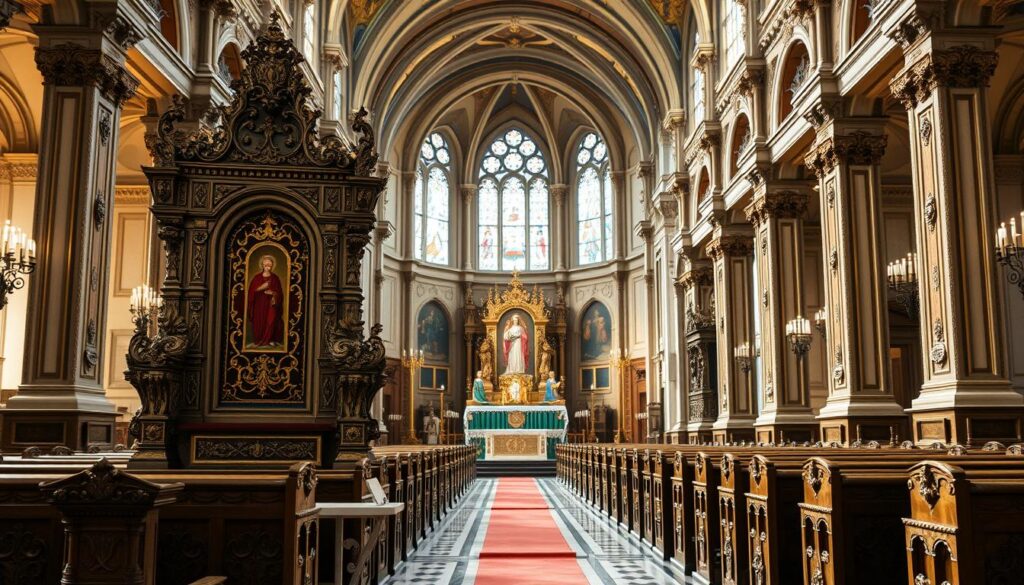
The Pope traces his office to St. Peter, Jesus’ first disciple. This unbroken chain of leadership gives him special authority to interpret doctrine and guide worship practices. Cardinals gather in Vatican City’s Sistine Chapel when electing new popes, using smoke signals to announce their choice.
| Role | Responsibility | Unique Fact |
|---|---|---|
| Pope | Global spiritual leadership | Only elected monarch worldwide |
| Cardinals | Elect new popes | Wear distinctive red robes |
| Holy See | Church governance | Operates from 110-acre city-state |
Since 2013, Pope Francis has brought fresh perspectives from Argentina. Born Jorge Mario Bergoglio, he emphasizes helping refugees and protecting the environment. His Jesuit background shapes his hands-on leadership style.
The bishop of Rome works with the Roman Curia – think of it as the Vatican’s executive team. They manage everything from clergy appointments to interfaith dialogue. Despite the bureaucracy, the Pope remains the visible face of unity for diverse Catholic traditions.
“True power lies in washing feet, not wearing crowns.”
Vatican City’s 44-hectare territory hosts the Holy See’s operations. This sovereign nation issues passports, mints coins, and maintains diplomatic relations with 183 countries – all while preserving sacred art and ancient manuscripts.
Sacraments and Worship Practices
Have you ever wondered how faith becomes tangible? Catholic traditions answer through physical expressions that engage every human sense. Sacraments transform ordinary moments into divine encounters, using elements like water, oil, and bread to connect believers with sacred truths.
These rituals bridge heaven and earth through multisensory experiences. From the splash of baptismal water to the aroma of incense, each practice carries layers of meaning rooted in ancient traditions.
The Symbolism of Baptism, Communion, and Other Sacraments
In baptism, water washes away sin while fragrant chrism oil marks spiritual rebirth. This dual symbolism reflects both cleansing and new identity within the faith community. “You become a new creation,” explains Father Mark, a parish priest from Chicago.
Communion’s unleavened bread and wine undergo what believers call transubstantiation. This practice turns simple meals into sacred nourishment. Churches worldwide maintain this ritual despite cultural differences in music or language.
The seven sacraments guide life’s journey from cradle to grave. Confirmation strengthens faith, marriage unites couples, and anointing offers comfort during illness. Bishops oversee these rites, while priests and deacons assist in local settings.
Through these timeless worship practices, ordinary objects become channels of grace. They link modern believers to generations past while addressing today’s spiritual hunger.
Impact on Faith, Life, and Community
Faith isn’t just Sunday mornings – it’s Monday’s choices and Friday’s acts of kindness. At its heart, this tradition transforms beliefs into action through Catholic Social Teaching. Seven principles rooted in scripture guide how believers honor dignity, pursue peace, and care for creation in daily life.
Spiritual Gifts, Social Justice, and Daily Practice
These teachings shape everything from family meals to global policies. Early Christians fed the hungry; modern followers continue this legacy through food banks and fair-trade advocacy. The Just War Theory, developed centuries ago, still informs ethical debates about conflict resolution today.
Ordinary believers fuel this mission. Parents teach kindness through bedtime stories. Nurses offer comfort beyond medical charts. Teachers create classrooms where every child feels valued. This way of living turns neighborhoods into community hubs where faith meets practical care.
Silent prayer and ancient rituals ground this active life. Many find strength in lighting candles or walking labyrinths – simple acts that connect personal faith with generations of spiritual wisdom. Through both action and contemplation, this path weaves sacred purpose into everyday moments.
FAQ
How did the Roman Catholic Church develop from the early Christian community?
The Roman Catholic Church traces its roots to the teachings of Jesus Christ and the apostles in the New Testament. Over time, the bishop of Rome gained prominence, evolving into the papacy. Key doctrines and practices were solidified through councils like Nicaea and traditions passed down by clergy.
What distinguishes Eastern Catholic Churches from the Roman Catholic Church?
Eastern Catholic Churches share core beliefs like sacraments and papal authority but preserve unique rituals, such as Byzantine-style liturgies. They often use leavened bread for Communion and allow married priests, reflecting cultural traditions from regions like the Middle East or Eastern Europe.
Why is the pope considered central to Catholic leadership?
Catholics believe the pope, as the bishop of Rome, inherits spiritual authority from Saint Peter through apostolic succession. The Holy See guides global matters of faith and morals, though local bishops manage day-to-day church operations in their dioceses.
How do sacraments like baptism shape Catholic spiritual life?
Sacraments like baptism, Eucharist, and confession are seen as channels of God’s grace. Baptism marks entry into the faith community, while Communion symbolizes unity with Christ’s sacrifice. These rituals reinforce beliefs and connect individuals to centuries-old traditions.
What role do laypeople play in Catholic communities?
Lay Catholics participate through ministries, teaching, or social justice initiatives. Godparents support spiritual growth during baptism, while monastic orders like Benedictines focus on prayer and service. Everyone contributes to the church’s mission, guided by clergy leadership.
How does Catholicism address modern social issues?
The church emphasizes teachings on human dignity, often advocating for poverty relief or immigration reform. Pope Francis has highlighted environmental care and inclusivity, though debates persist on topics like gender roles. Local parishes may adapt outreach based on cultural contexts.