What began as a small group of believers in ancient Jerusalem grew into the world’s largest Christian tradition. The Catholic Church traces its spiritual roots to Jesus Christ’s teachings and the dramatic events following his ministry. Followers believe this global faith took shape during Pentecost, when the Holy Spirit empowered early Christians to spread their message.
From these humble beginnings, the Church evolved through centuries of challenges and transformations. Roman persecution tested early believers, while later imperial support helped solidify its structure. Bishops emerged as spiritual leaders, claiming direct ties to Christ’s original apostles.
The Pope’s unique role developed from Saint Peter’s legacy, creating a central authority that endures today. Cultural exchanges and theological debates shaped practices still observed by 1.3 billion Catholics worldwide. This journey reveals how ancient traditions adapt while maintaining core beliefs.
Key Takeaways
- The Catholic Church identifies Pentecost as its foundational moment
- Grew from localized groups to a global community spanning 2,000 years
- Blends sacred traditions with historical developments
- Leadership structure connects modern clergy to Jesus’ apostles
- External forces like Roman politics influenced growth patterns
- Maintains continuity while adapting to cultural changes
Historical Foundations of Catholicism
In the shadow of Roman temples, Jewish synagogues became unexpected birthplaces for a revolutionary faith movement. Early believers navigated complex cultural landscapes while maintaining core spiritual practices from their Jewish heritage.
Early Religious Context and Jewish Influence
The first followers of Jesus operated within a Jewish religious framework, interpreting ancient scriptures through fresh perspectives. Synagogues served as hubs where people debated prophecies about the Messiah. This blending of tradition and innovation created fertile ground for a new religion.
Archaeologists find evidence of shared worship spaces in cities like Ephesus and Corinth. Believers initially kept Jewish holidays while adding rituals like communal meals. Sunday gatherings gained prominence as resurrection celebrations replaced Sabbath focus.
Formation of the Christian Community
By 100 AD, over 40 groups practiced this evolving faith across Mediterranean trade routes. Leadership structures emerged naturally – elders managed resources while traveling teachers connected distant church networks.
Gentile converts sparked debates about cultural adaptation. Should non-Jewish followers keep dietary laws? Leaders ultimately prioritized spiritual unity over ethnic customs. This decision shaped the development of a universal belief system accessible to diverse people.
Letters between communities reveal how early Christians organized charity work and resolved disputes. These practical steps laid groundwork for the church’s enduring institutional structure during challenging times.
The Journey from Jesus Christ to Early Christianity
Across dusty roads and fishing villages, a spiritual revolution took root through one teacher’s transformative words. Jesus Christ reshaped ancient concepts of faith while preparing followers for a mission that would outlive empires.
Christ’s Teachings and the Great Commission
At the heart of this movement lay radical ideas about love as divine truth. Stories like the Good Samaritan challenged social norms, while parables about forgiveness offered new paths to spiritual freedom.
Twelve ordinary men became extraordinary leaders through direct mentorship. The apostles witnessed miracles and learned to heal the sick, forming the first network of Christian teachers. Their training culminated in a world-changing directive:
“Go therefore and make disciples of all nations” (Matthew 28:19). This command propelled believers beyond familiar territories, sparking history’s most enduring spiritual expansion.
After Jesus’ resurrection, the church faced its first leadership test. Pentecost’s fiery descent transformed frightened disciples into bold preachers. Their sermons in Jerusalem’s streets drew thousands, proving spiritual conviction could thrive without earthly armies.
The New Testament preserves these explosive early years through letters and gospels. From baptism rituals to communion practices, foundational traditions took shape under apostolic guidance – creating blueprints still followed two millennia later.
The Role of Saint Peter and Apostolic Succession
Leadership in the early Church found its cornerstone in a fisherman turned spiritual guide. Saint Peter’s journey from Galilean disciple to foundational figure shaped Christianity’s governance model, blending divine calling with practical organization.
Peter as the Rock: Biblical Insights
Jesus’ declaration to Peter in Matthew 16:18 – “You are Peter, and on this rock I will build my church” – established more than symbolic wordplay. This moment defined Peter’s authority as chief among apostles, a status later bishops would inherit through consecration.
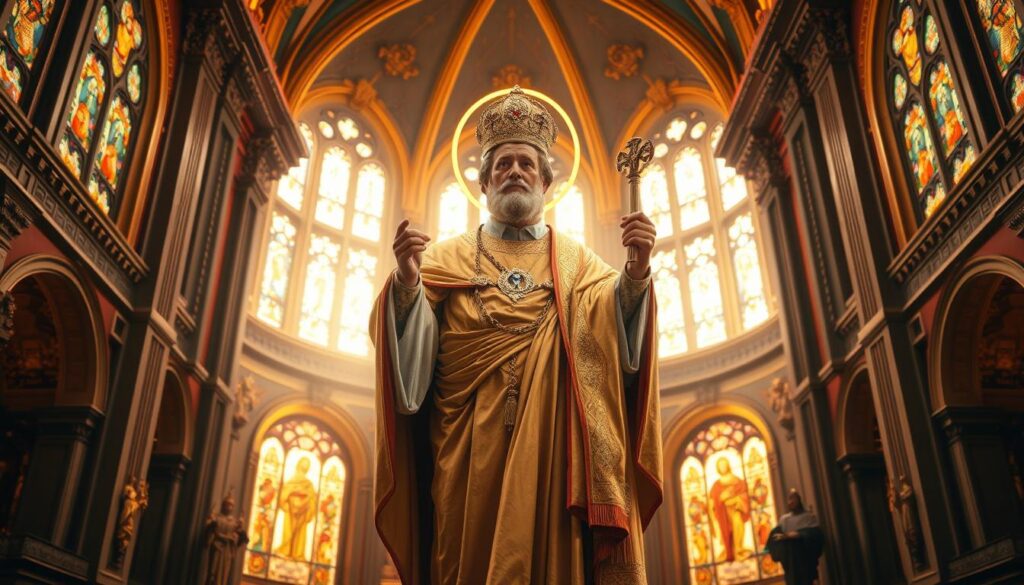
Historical records show Peter ministered in Rome during Nero’s rule. His martyrdom there around 64 AD cemented the city’s status as Christianity’s administrative heart. When Peter ordained Linus as successor, he launched an unbroken chain of leadership continuing through Pope Leo XIV today.
The Evolution of Papal Authority
Early Christian writers like Irenaeus emphasized Rome’s unique role, arguing unity with its bishop guaranteed doctrinal purity. By 200 AD, Roman bishops began settling disputes between distant congregations, gradually expanding their influence.
The First Vatican Council’s 1870 declaration on papal infallibility didn’t invent new power but clarified existing beliefs. Modern popes balance ancient traditions with contemporary issues, serving as both spiritual guides and institutional anchors for 1.3 billion believers worldwide.
Exploring the origin of catholicism
Ancient texts and modern archaeology reveal how early believers blended spiritual truths with practical community-building. This dynamic process created lasting frameworks for preserving teachings while adapting to new challenges.
Sacred Tradition and Apostolic Foundations
Saint Irenaeus identified three anchors for Christian belief in the 2nd century. The church relies on Scripture, apostolic leadership succession, and living tradition passed through generations. These elements work together like three legs supporting a stool.
Early communities maintained unity through shared practices. The apostles appointed bishops to guard against conflicting ideas. This system ensured teachings remained consistent across regions and cultures.
Historical Interpretations and Scholarly Debates
Modern researchers examine ancient letters and artifacts to test traditional accounts. Some discoveries confirm details about early worship practices. Others reveal unexpected diversity in local customs.
| Aspect | Traditional View | Scholarly Insights |
|---|---|---|
| Leadership Structure | Direct succession from apostles | Gradual organizational development |
| Sacraments | Unchanged since apostolic times | Evolved from Jewish rituals |
| Scriptural Authority | Complete by 100 AD | Finalized over 300 years |
These discussions help believers appreciate both divine guidance and human elements in their faith. The church continues balancing historical discoveries with timeless spiritual truths.
Development of Church Hierarchy and Structure
As Christian communities spread across ancient trade routes, practical needs shaped lasting organizational patterns. Local leaders balanced spiritual guidance with administrative duties, creating systems that still influence modern practices.
Rise of the Bishops and Local Leadership
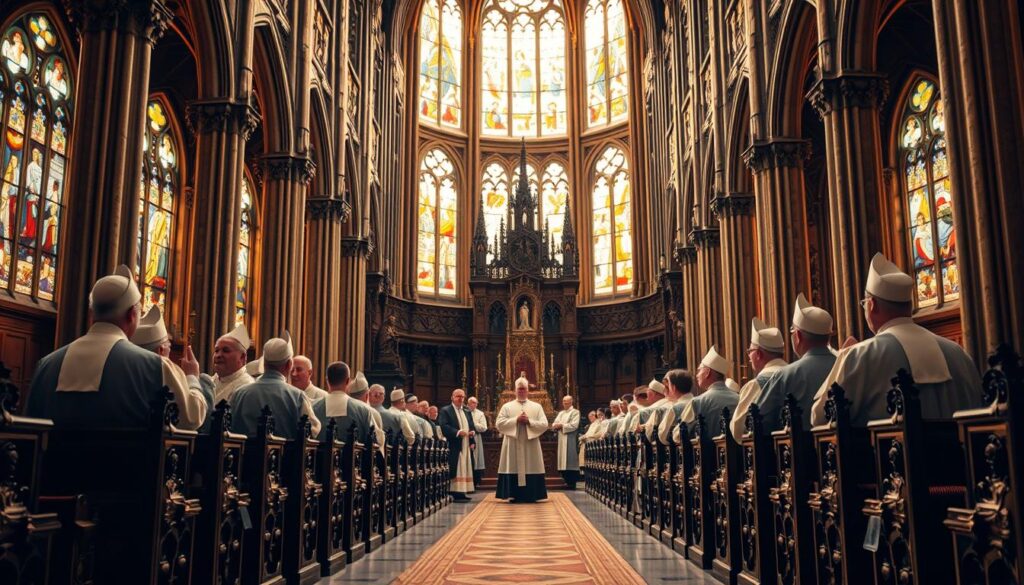
Early church groups initially relied on elders for guidance. By 200 AD, single bishops oversaw all clergy in their cities. This shift mirrored Roman governance, helping maintain unity across growing congregations.
Metropolitan bishops emerged in key cities like Antioch and Alexandria. Their authority extended to surrounding regions, creating networks resembling imperial provinces. Historian Eamon Duffy notes Rome became a doctrinal “court of appeal” by the 3rd century.
The Council of Jerusalem and Early Governance
The first major council occurred around 50 AD. Apostles and elders gathered to resolve disputes about Gentile converts. Their decision set a pattern for collective problem-solving through prayer and discussion.
Regional meetings multiplied as the church expanded. Bishops collaborated on challenges like persecution responses and resource sharing. These synods laid groundwork for today’s diocesan system while preserving local flexibility.
Influence of the Roman Empire and Early Legalization
Imperial decrees transformed a persecuted sect into a dominant faith. Roman governance provided frameworks that helped structure Christian communities across vast territories.
Constantine’s Impact and the Edict of Milan
After winning a critical battle in 312, Emperor Constantine credited his victory to divine intervention. This moment marked a turning point for Christians facing three centuries of sporadic persecution. The 313 Edict of Milan granted legal protections, allowing open worship and property ownership.
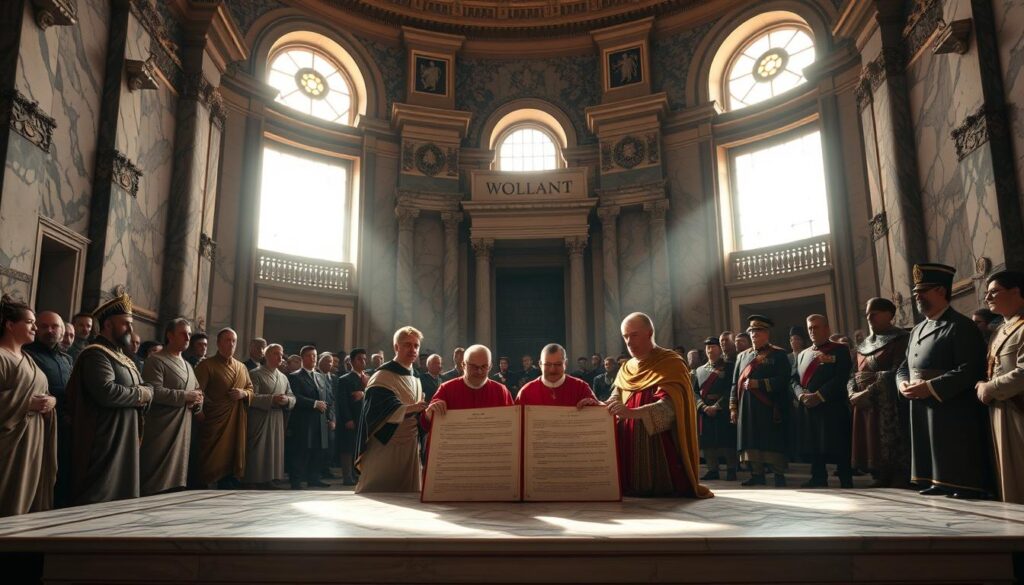
Constantine’s support brought resources like tax exemptions and grand basilicas. His call for the Council of Nicaea in 325 set a precedent for resolving doctrinal disputes through collective decision-making.
By 380, Emperor Theodosius elevated Christianity to the Roman Empire’s official religion. This shift created new challenges, blending spiritual authority with state power. The Church adopted imperial titles and administrative practices, shaping its hierarchy for centuries.
This imperial partnership established patterns of cooperation and conflict between religious and political leaders. These dynamics continue influencing how the Roman Catholic Church engages with governments across the world.
The story of this global faith shows how small sparks can ignite enduring flames. From village gatherings to worldwide ministries, believers carried forward a spiritual legacy shaped by both divine purpose and human experience.
Early communities laid foundations through shared meals and courageous witness. Their commitment created networks that weathered persecution and cultural shifts. Today’s church structure still echoes the apostles’ practical wisdom in organizing diverse followers.
Modern believers inherit rich traditions while facing new challenges. The balance between ancient practices and contemporary needs remains vital. Through centuries of change, core teachings about love and redemption continue guiding 1.3 billion members worldwide.
This journey reminds us that enduring faith thrives through adaptation. The global community built over two millennia stands as testament to spiritual resilience – a living bridge between past convictions and future possibilities.
FAQ
How did Jewish traditions shape early Catholicism?
Jewish practices like communal worship, scripture study, and ethical teachings deeply influenced early Christian communities. Many rituals, such as Passover connections to Easter, evolved into Catholic traditions over time.
What role did Saint Peter play in establishing the Church?
Catholics believe Jesus designated Peter as the foundational leader of His Church, citing Matthew 16:18. This belief supports the concept of apostolic succession and the Pope’s spiritual authority as Peter’s successor.
Why was the Council of Jerusalem significant?
This 1st-century council resolved debates about Gentile converts, setting precedents for Church governance. It showcased collaborative decision-making among apostles and elders, shaping future ecumenical councils.
How did Constantine affect Catholicism’s growth?
Constantine’s Edict of Milan (313 AD) legalized Christianity, ending persecutions. His support enabled church construction, standardized doctrines like the Nicene Creed, and strengthened institutional structures.
What distinguishes Sacred Tradition from Scripture?
Catholics view Sacred Tradition as teachings passed orally from apostles, complementing biblical texts. This includes sacraments, Marian doctrines, and papal authority, which developed through centuries of practice.
When did bishops gain centralized authority?
By the 2nd century, bishops like Ignatius of Antioch emerged as regional leaders. The title became linked to apostolic succession, with dioceses mirroring Roman administrative regions for organizational efficiency.
Did early Christians always agree on doctrines?
No—early debates over Christ’s divinity, grace, and sacraments led to ecumenical councils. Figures like Augustine and Tertullian shaped theology through their responses to controversies like Arianism and Donatism.