Imagine walking into a centuries-old ritual where simple bread and wine become something far greater. This lies at the core of Catholic worship—a moment that connects believers to something ancient yet alive. While the specifics might seem mysterious, the essence is deeply personal for millions.
At every Mass, these elements transform into what followers believe are the true presence of Christ. This isn’t symbolic. It’s a spiritual reality central to their faith. The practice traces back to Jesus’ Last Supper, where he shared bread as his “body” and wine as his “blood.”
Why does this matter today? For Catholics, it’s more than tradition. It’s a way to experience closeness with the divine. The ritual isn’t just about remembering—it’s about participating in a living connection that shapes daily spiritual journeys.
We’ll break down this profound belief without heavy jargon. Whether you’re curious or seeking deeper understanding, this guide offers clarity. You’ll learn how this practice unites communities, strengthens personal devotion, and remains relevant in modern life.
Key Takeaways
- The Eucharist centers on bread and wine becoming Christ’s body and blood during Mass.
- This belief stems directly from Jesus’ words at the Last Supper.
- It’s viewed as a spiritual reality, not just symbolic.
- The ritual fosters unity among Catholic communities worldwide.
- Understanding this practice deepens appreciation for Catholic traditions.
Introduction to Catholicism’s Transubstantiation
What if ordinary elements could hold extraordinary meaning? This question lies at the center of a sacred change occurring in churches worldwide. Through ancient words and simple offerings, believers witness what they consider the ultimate spiritual connection.
Defining the Core Concept
The real presence refers to the belief that bread and wine become Christ’s body and blood during Mass. As the Catechism explains:
“It is by the conversion of the bread and wine into Christ’s body and blood that Christ becomes present in this sacrament.”
This substance transformation defies physical laws. While appearances remain unchanged, the core reality shifts completely. St. John Chrysostom emphasized divine action: “The priest… pronounces these words, but their power and grace are God’s.”
The Significance in Catholic Worship
Every Mass becomes a bridge between heaven and earth. Receiving the Eucharist isn’t symbolic—it’s participating in a mystery that unites communities across time. This teaching shapes how believers approach communion, often with bowed heads and folded hands.
The ritual’s power comes from its simplicity. Basic bread and wine become channels for grace, reminding worshippers that sacred moments often hide in plain sight. For many, this practice isn’t just tradition—it’s the heartbeat of their spiritual lives.
Catholicism Transubstantiation: The Core Concept
At the heart of sacred rituals lies a transformation that defies the senses. While bread and wine retain their familiar appearance, their deepest reality shifts entirely during Mass. This change isn’t visible but forms the foundation of a centuries-old belief.
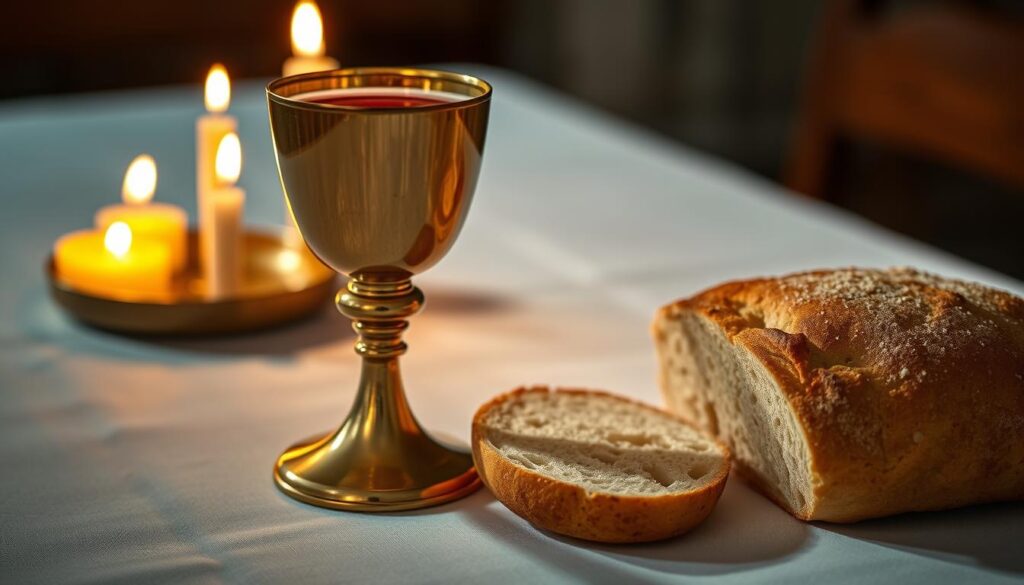
“By the consecration of the bread and wine there takes place a change of the whole substance of the bread into the substance of the body of Christ our Lord and of the whole substance of the wine into the substance of his blood.”
The term comes from Latin roots: trans (across) and substantia (essence). It describes how the core identity of elements transforms while their physical traits stay. What looks like bread becomes Christ’s body; what seems like wine becomes his blood.
This isn’t a blend or metaphor. The elements cease being ordinary and become wholly divine. Followers approach this mystery with awe, knowing their senses can’t grasp the full reality. The change creates an intimate connection, making communion more than remembrance—it’s active participation.
Historical Overview of the Eucharistic Tradition
How did ancient followers preserve a sacred meal that still resonates today? Long before grand cathedrals or formal creeds, early believers guarded a practice rooted in Jesus’ final instructions. This wasn’t about rituals—it was about carrying forward a life-changing truth.
Seeds of Sacred Practice
The apostles didn’t invent this mystery—they received it firsthand. Paul emphasizes this in his letters:
“For I received from the Lord what I also delivered to you.”
Jewish disciples trained rigorously to memorize their teachers’ words. This cultural backdrop ensured Jesus’ teaching about bread and wine survived intact. The Didache, a manual from Christianity’s earliest days, calls the Eucharist a “sacrifice” four times—proof that first-century believers saw it as more than a memorial.
Clarifying Through Challenges
As the faith spread, misunderstandings arose. Church leaders refined their language to protect the core tradition. The Fourth Lateran Council (1215) first used the term describing the change, while Trent (1545-63) solidified its definition. These councils didn’t create new beliefs—they gave precise words to what disciples had cherished for generations.
Through wars, schisms, and cultural shifts, the word of God about this sacred meal remained unbroken. What began in upper rooms and catacombs now unites billions—a testament to careful stewardship across two millennia.
Biblical Foundations for the Eucharist
What did Jesus actually say about bread and wine? The answer lies in scripture, where his direct words leave little room for metaphor. From crowded hillsides to intimate meals, these teachings shaped a practice that continues today.
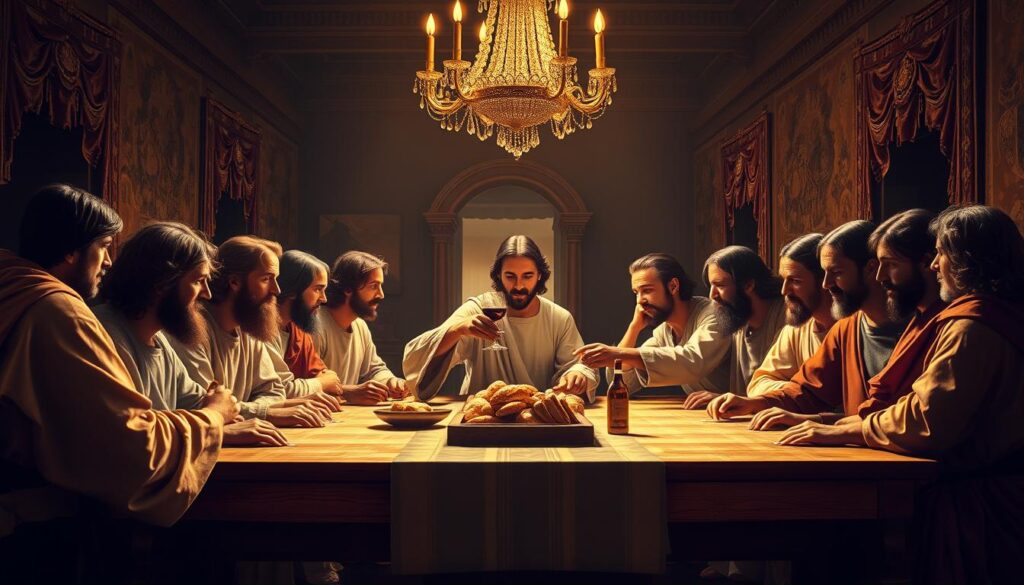
Insights from the Last Supper Accounts
During his final meal, Jesus Christ held up bread and declared: “This is my body.” No qualifiers. No symbols. The same simplicity applied to the cup: “This is my blood.” Gospel writers Matthew, Mark, and Luke all record these exact phrases—a deliberate choice emphasizing reality over representation.
“Let me solemnly assure you, unless you eat the flesh of the Son of Man and drink his blood, you have no life in you.”
When followers struggled with this teaching, Jesus didn’t soften it. Instead, he doubled down. His words weren’t negotiable—they were essential for spiritual survival.
Scriptural Emphasis on Real Presence
Paul’s letters reinforce this clarity. Writing to Corinthian believers, he stresses: “The Lord Jesus… took bread and said, ‘This is my body.’” The apostle treats this as non-debatable tradition passed straight from Christ himself.
John’s Gospel adds depth. Jesus calls himself “living bread” and links consuming his flesh blood to eternal life. These passages form an unbroken chain—from ancient upper rooms to modern altars—where simple elements carry divine truth.
Theological and Philosophical Perspectives on Change
How do we know something has changed when it looks the same? This puzzle lies at the heart of understanding sacred rituals. Ancient thinkers developed clear frameworks to explain transformations that bypass our senses.
Everyday Clues to Profound Truths
Pope Paul VI once noted that philosophical terms about substance aren’t just for scholars. They’re tools borrowed from daily life to describe universal truths. Think of a family photo album: your younger self looks different, but you haven’t been replaced. The accidents—height, hairstyle, clothing—changed, but your core identity remained.
| Aspect | Substance | Accidents |
|---|---|---|
| Definition | Essential identity | Observable traits |
| Example | Oak tree (despite losing leaves) | Color, shape, size |
| In Ritual | Christ’s body and blood | Taste, appearance of bread/wine |
This distinction clarifies how bread and wine maintain their physical properties while becoming something entirely new. The change isn’t magical—it’s a shift in reality deeper than science measures. As one medieval scholar put it: “What looks unchanged to the eye holds heaven’s signature.”
Why does this matter? It preserves both mystery and logic. Believers approach communion knowing their senses show one way, while faith reveals another. This framework bridges ancient wisdom with modern questions—proof that some truths transcend time.
Impact of Church Councils on the Doctrine
When debates threatened to fracture Christian unity, one council stood firm. Its decisions shaped how millions understand sacred rituals today. Let’s explore how clarity emerged during a turbulent era.
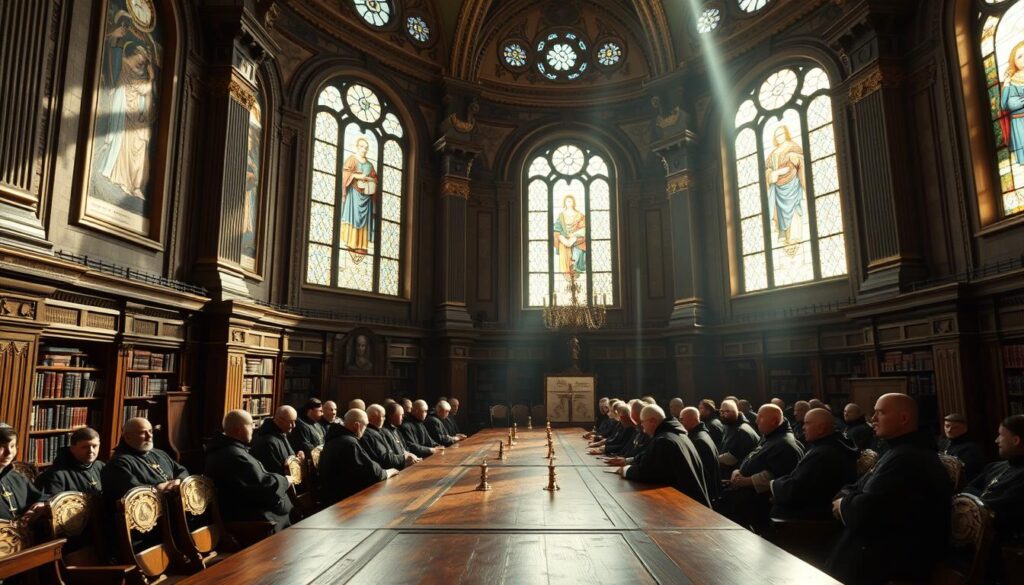
The Council of Trent and Its Decrees
In 1551, leaders gathered to address growing questions about the bread and wine’s transformation. The Council declared:
“By the consecration… the whole substance of the bread becomes Christ’s body, and the whole substance of the wine becomes his blood.”
This wasn’t new teaching—it reaffirmed beliefs held since ancient times. Reformers like Luther and Calvin had proposed different views, but Trent emphasized a complete change. The elements’ appearance stayed the same, yet their core reality shifted entirely.
Why did this matter? The Council drew clear lines to prevent confusion. Those denying this substance shift faced exclusion, ensuring unity across congregations. For over 450 years, these decrees have guided worship practices worldwide.
Imagine holding a family heirloom that never fades. That’s how Catholics view Trent’s role—preserving truth while honoring tradition. The consecration remains central, linking modern believers to a timeless mystery.
Teachings from Church Fathers and Saints
How do ancient teachings clarify modern faith practices? Early Christian leaders left behind wisdom that still guides believers today. Their words reveal a shared conviction: the Eucharist isn’t symbolic but a living mystery.
Contributions of Thomas Aquinas and Others
St. Thomas Aquinas reshaped how we understand sacred rituals. He taught that Christ’s body blood presence transcends physical senses. As he wrote:
“What God’s power achieves isn’t limited by human perception—faith alone grasps this truth.”
His poetic verse captures this idea: “Sight, touch, and taste in thee are each deceived; the ear alone most safely is believed.” St. Ambrose echoed this, stressing that Christ’s blessing holds greater power than natural laws.
Evolving Explanations from Early Patristic Writings
Second-century teacher Justin Martyr clarified the Eucharist’s uniqueness. He wrote:
“This food becomes the flesh blood of Jesus through His own words.”
St. Cyril of Jerusalem used the term metaballo (to transform) to describe the change. These leaders didn’t invent beliefs—they gave language to what communities already practiced.
Together, these voices show a timeless truth: sacred meals connect believers to divine presence. Their insights bridge ancient rituals and modern devotion, proving that some mysteries only deepen with time.
Contemporary Understandings and Catechesis
How do modern believers bridge ancient rituals with today’s questions? Current teaching emphasizes both continuity and fresh approaches. Digital resources now complement traditional catechism classes, making core concepts about the sacred meal more accessible than ever.
Parishes use interactive videos and apps to explain the Eucharist’s significance. Yet the message remains unchanged: this practice anchors faith in tangible experience. As one educator notes: “We’re not rewriting the story—we’re finding better ways to tell it.”
Young people especially engage through small group discussions linking the ritual to daily life. A 2023 study showed 68% of U.S. Catholics under 35 value understanding the spiritual journey behind traditions. Workshops often pair Scripture with personal reflection, showing how ancient words shape modern hearts.
The Catechism’s clarity—“The Eucharist is the source and summit of Christian life”—guides all methods. Whether through TikTok summaries or parish retreats, the goal stays constant: helping believers see ordinary moments as gateways to extraordinary grace.
This balance of old and new strengthens community bonds while honoring timeless truths. In our digital age, the quiet power of bread and wine still speaks volumes.
FAQ
What does the term "transubstantiation" mean in Catholic teaching?
It refers to the belief that during Mass, the bread and wine become the Body and Blood of Jesus Christ while retaining their physical appearance. This change is rooted in Christ’s words at the Last Supper: “This is my body… this is my blood.”
Why is the Eucharist considered the heart of Catholic worship?
Catholics view the Eucharist as the “source and summit” of their faith because it unites them intimately with Christ. Receiving Communion is seen as participating in His sacrifice and receiving grace for daily life.
How does the Church explain the change during consecration?
Using philosophical terms like substance and accidents, theologians like St. Thomas Aquinas taught that the essence of the bread and wine transforms, even though their taste, texture, and appearance remain unchanged.
Did early Christians believe in the Real Presence of Christ in the Eucharist?
Yes. Writings from figures like St. Ignatius of Antioch (1st century) and St. Justin Martyr (2nd century) describe the Eucharist as Christ’s true Flesh and Blood, not merely symbolic elements.
What Bible passages support the doctrine of the Real Presence?
Key texts include John 6:53–56, where Jesus says, “Unless you eat my flesh… you have no life in you,” and the Last Supper accounts in Matthew 26:26–28, Mark 14:22–24, and Luke 22:19–20.
How did the Council of Trent shape Eucharistic teaching?
In response to the Protestant Reformation, Trent (1545–1563) formally defined transubstantiation as dogma. It emphasized Christ’s literal presence and the priest’s role in consecrating the elements through Christ’s authority.
How is the Eucharist taught to modern Catholics?
The Catechism of the Catholic Church and parish catechesis stress its centrality. Many dioceses also run programs like Eucharistic Revival to deepen understanding and reverence for the sacrament.
Can non-Catholics receive Communion during Mass?
Out of respect for the Church’s teachings, only baptized Catholics in a state of grace are invited to receive. This practice reflects unity in belief about the sacrament’s sacred nature.