In places of worship worldwide, a simple posture speaks volumes. For many, kneeling during prayer isn’t just a habit—it’s a bridge between the physical and spiritual worlds. This practice, deeply rooted in tradition, reflects humility and devotion in ways words often can’t.
Kneeling has been called “the ultimate posture of surrender” in sacred spaces. It unites the body and soul, offering a tangible way to honor what many believe is the real presence of the divine. While some view it as outdated, others see it as a timeless act of reverence that connects modern worshippers to ancient faith traditions.
This gesture isn’t just symbolic. It serves practical purposes too, providing moments of rest during lengthy services. More importantly, it invites participants to engage fully—mind, heart, and body—in their spiritual journey. As debates arise about its role in contemporary settings, understanding its significance becomes key to preserving its place in communal worship.
Key Takeaways
- Kneeling symbolizes humility and devotion in spiritual practices
- Combines physical action with inward reflection during worship
- Rooted in historical traditions of reverence and submission
- Provides practical benefits alongside spiritual meaning
- Faces modern challenges but retains deep theological value
- Strengthens connection to sacred rituals and community
Understanding the Roots of Catholics Kneeling
Across centuries, physical gestures have shaped spiritual encounters. The act of lowering one’s body during sacred moments isn’t accidental—it’s woven into humanity’s oldest stories of reverence. Ancient cultures saw prostration as the ultimate way to honor divine power and earthly authority alike.
The Historical and Liturgical Context
Biblical languages reveal a clear link between worship and posture. Hebrew’s “awa” and Greek’s “proskuneo” both mean “to bow down”—actions seen when Jacob met Esau or the Magi greeted Jesus. Early believers carried this practice into gatherings, adapting it over time for communal prayer.
By the medieval era, kneeling became central to Western liturgy. The Catholic Church formalized it as part of key rituals, especially during Mass. Today, guidelines in the General Instruction of the Roman Missal remind worshippers when to adopt this posture, blending ancient tradition with modern practice.
Scriptural Foundations and Tradition
The New Testament uses proskuneo 24 times, showing its dual role in honoring God and respected leaders. This flexibility allowed the Church to preserve kneeling as both a spiritual expression and communal discipline. As one scholar notes, “Our bodies pray before our minds catch up.”
In the United States, bishops specify kneeling from the Sanctus through the Eucharistic Prayer’s closing. This rule anchors the congregation in unity during Christianity’s most sacred story—the transformation of bread and wine. Such intentional postures help believers embody their faith, not just think about it.
Exploring the Physical Postures in Catholic Worship
Movement shapes meaning in sacred spaces. Three intentional positions guide participants through different parts of the liturgy, each carrying its own spiritual weight. These postures transform the body into a living prayer book, where every gesture tells part of a greater story.
The Meaning Behind Standing, Sitting, and Kneeling
Standing marks moments of active engagement. Worshippers rise during the Gospel reading, showing respect for Christ’s words. It also unites the community when reciting shared beliefs like the Creed.
Sitting creates space for listening. This posture helps focus attention during Scripture readings and homilies. As one priest explains, “When we sit, we open our hearts to receive wisdom.”
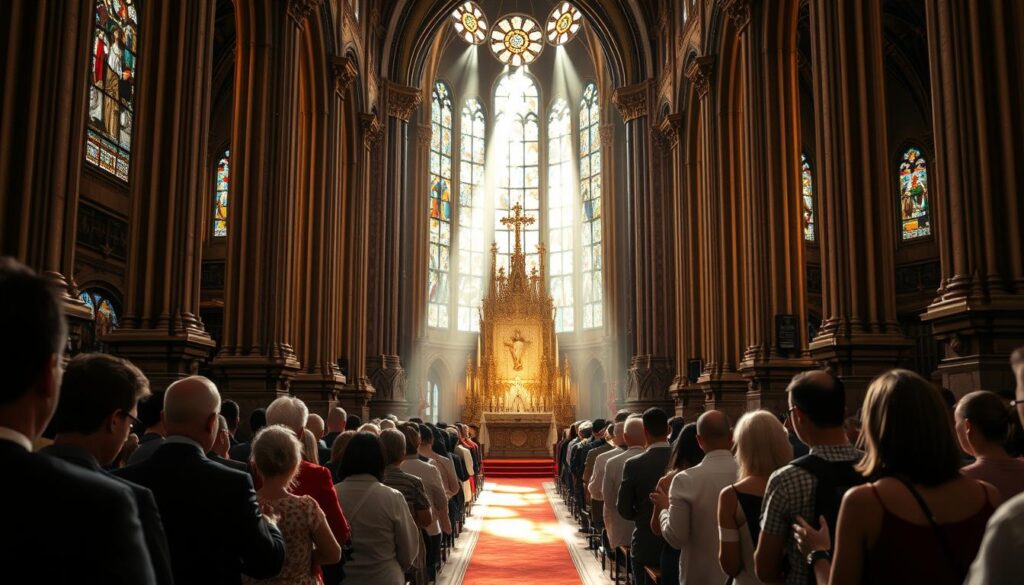
Kneeling expresses adoration, particularly during the Eucharistic Prayer. This position acknowledges the sacred moment when bread and wine become holy. The physical act of lowering oneself mirrors an inward surrender.
Genuflection as a Sign of Reverence
Touching one knee to the ground upon entering a church serves two purposes. It honors Christ’s presence in the tabernacle and prepares the mind for worship. This brief gesture acts as a spiritual “reset button” before joining communal prayer.
| Posture | Liturgical Time | Spiritual Meaning |
|---|---|---|
| Standing | Gospel reading | Active participation |
| Sitting | Scripture readings | Receptive listening |
| Kneeling | Eucharistic Prayer | Humble adoration |
These movements create a rhythm that prevents physical fatigue while deepening spiritual connection. They turn the worship space into a dance floor where faith comes alive through motion.
Liturgical Significance and Spiritual Expression
Our bodies speak a language deeper than words during sacred moments. The positions we adopt in worship aren’t just routines—they’re physical prayers that shape our inner world. Like a smile lifting spirits or folded arms showing resolve, liturgical gestures create conversations between flesh and faith.
How Posture Reflects the Heart and Faith
Standing during Gospel readings becomes a declaration of readiness to follow teachings. Sitting transforms into active listening, palms open to receive wisdom. As one theologian observes, “The pew becomes a school desk where heaven’s lessons unfold.”
Kneeling during the Eucharistic Prayer turns bones and muscles into living witnesses. This posture whispers what lips sometimes struggle to say: “You are God, and I am yours.” Churches preserving these traditions offer more than nostalgia—they provide tools for hearts to catch up with holy mysteries.
Intentionality fuels the power of these actions. Going through motions without focus is like writing love letters with empty phrases. But when mind and movement align, simple gestures become bridges between earth and eternity. As one worshiper shares, “My knees touch the floor, and suddenly my soul remembers its true home.”
Cultural Perspectives and Debates on Worship Postures
Cultural shifts reshape how communities express devotion. The way people position themselves during sacred rituals now sparks conversations about tradition versus progress. These discussions reveal deeper questions about identity, authority, and what it means to honor the divine.
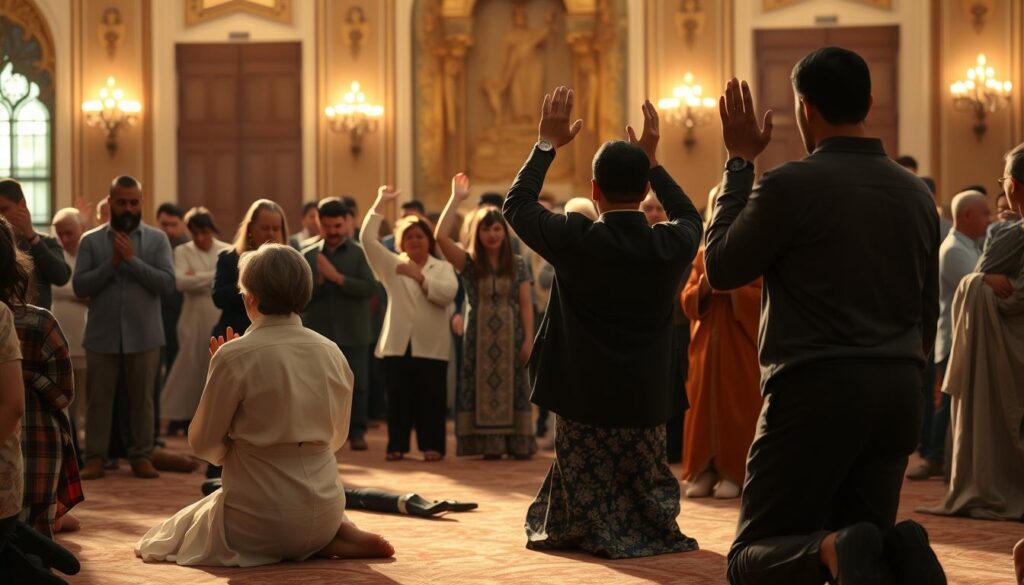
Modern Views Versus Traditional Practices
Some parishes have removed kneelers, calling the change a “refresh” for modern worshippers. Supporters argue it creates a welcoming environment for newcomers. One pastor notes, “We want our space to feel accessible, not intimidating.”
Critics see this as losing something vital. A liturgical scholar counters: “When we abandon physical expressions of reverence, we risk flattening spiritual experiences into mere intellectual exercises.” This tension shows how worship practices mirror society’s evolving values.
The Impact of Western Individualism
In the United States and similar cultures, self-expression often trumps communal traditions. Many now view acts of submission as outdated. As one commentator observes, “We’ve swapped humility for self-assertion in our search for authenticity.”
This shift creates practical challenges. Churches balancing tradition with modern expectations sometimes face divided congregations. The table below highlights key differences in approach:
| Traditional Focus | Modern Adaptation | Community Impact |
|---|---|---|
| Preserved postures | Flexible positions | Cultural relevance debates |
| Emphasis on unity | Personal comfort priority | Generational divides |
| Historical continuity | Contemporary interpretations | Worship style variations |
These differences aren’t just about physical posture. They reflect larger questions about how faith communities navigate change while honoring their roots. As debates continue, many seek middle ground that respects both tradition and personal spiritual journeys.
Practical Insights: How Catholics Kneel During Mass
Every movement in Catholic worship follows a sacred roadmap. The Roman Missal outlines specific moments when physical posture becomes a collective prayer. These guidelines help transform individual actions into a unified expression of faith.
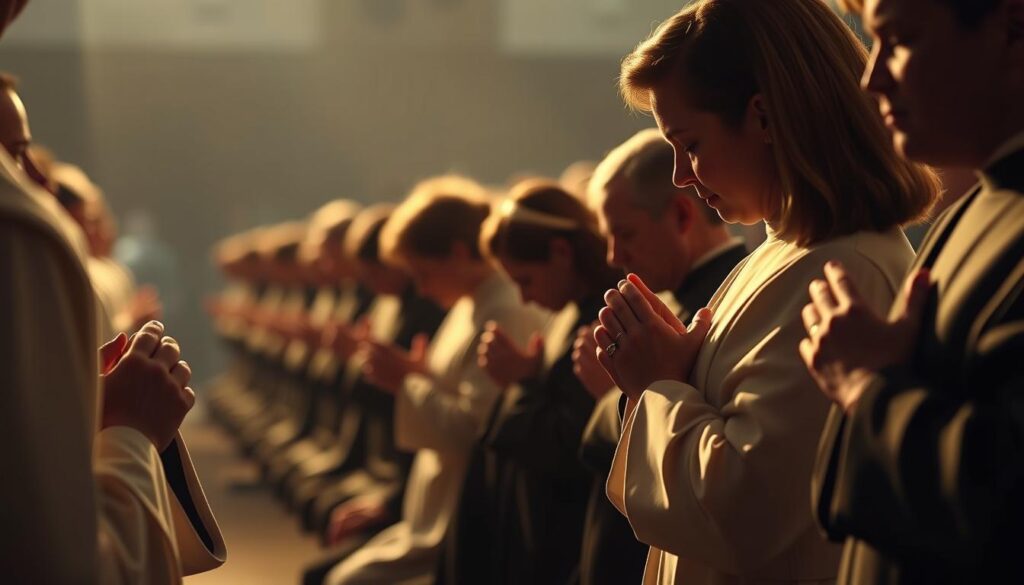
Step-by-Step Look at Postures in the Mass
When entering the sanctuary, many touch one knee to the floor—a gesture honoring the tabernacle’s sacred contents. This brief act sets the tone for what’s to come. As the Eucharistic Prayer begins, congregations kneel together, creating waves of bowed heads during the “Holy, Holy, Holy” chant.
The consecration of bread wine marks the liturgy’s peak moment. Worshippers maintain their posture until the priest’s final “Amen”. One parishioner shares: “Kneeling helps my heart catch up with the mystery happening before my eyes.”
Comparing Practices Across Different Churches
Not all sanctuaries look alike. Some feature padded kneelers, while others use simple chairs. Urban churches with limited space might shorten kneeling periods, whereas traditional parishes often preserve full postures.
Local adaptations show how communities balance practicality with reverence. A Chicago priest explains: “We keep kneelers because they remind us this isn’t just another meeting—it’s holy ground.” These variations highlight the Church’s ability to maintain core meanings while adjusting forms.
Understanding these patterns turns routine motions into meaningful dialogue. Whether through ancient gestures or modern adaptations, each posture becomes a wordless prayer written in flesh and bone.
Conclusion
Sacred gestures create bridges between heaven and earth. In worship spaces across America, physical postures like standing or kneeling become silent prayers. These actions connect individuals to greater things, blending personal devotion with shared tradition.
Some find deep meaning in familiar rituals, while others seek new expressions of faith. Both approaches honor sacred moments through intentional presence. As one worshiper notes, “How we move shapes how we encounter the divine.”
Modern challenges remind communities that reverence takes many forms. Whether through traditional postures or contemporary adaptations, the heart’s posture matters most. These practices endure as invitations to engage fully with spiritual truths.
In a changing world, such gestures offer grounding. They transform ordinary spaces into places where people meet the extraordinary, one meaningful movement at a time.
FAQ
Why do some churches emphasize kneeling more than others?
Differences often stem from cultural traditions, local guidelines, or interpretations of the Roman Missal. For example, dioceses in the United States might prioritize standing during certain prayers, while others focus on kneeling as a sign of humility.
Is there a biblical basis for kneeling during prayer?
Yes! Passages like Philippians 2:10 highlight kneeling as an act of reverence. Early Christians also adopted this posture from Jewish customs, linking it to moments of awe before God’s presence.
How does posture affect spiritual focus during Mass?
Physical gestures—like standing for the Gospel or bowing before receiving Communion—help unite the body and mind in worship. These actions remind believers to engage their whole selves, not just their thoughts.
Why do some parishes encourage standing instead of kneeling after Communion?
This practice varies by region. In places like the United States, standing is seen as a communal expression of readiness to serve. It reflects unity while still honoring the sacredness of the moment.
What’s the purpose of genuflecting before entering a pew?
Genuflecting—a quick bend of the knee—acknowledges Jesus’ presence in the tabernacle. It’s a simple yet profound way to show respect before settling into prayer or reflection.
Are debates about posture a recent issue in the Church?
Not exactly. Discussions about worship styles have existed for centuries! However, modern conversations often explore how cultural shifts, like individualism, influence communal expressions of faith.
Can personal health needs override traditional postures?
Absolutely. The Church encourages adapting gestures for physical limitations. A heartfelt intention matters more than perfect form—prayer is about the heart’s posture, too!