Welcome to the most spiritually significant period in the Christian calendar. This sacred seven-day observance unites millions around the world in reflecting on Jesus Christ’s final days and resurrection. From palm branches waved in hope to quiet moments of prayer, these traditions have shaped faith for generations.
You’ll journey through time-honored rituals that blend sorrow and joy. Each day carries unique meaning, starting with Palm Sunday’s processions and building toward Easter’s dawn. These practices aren’t just history—they’re living expressions of faith that continue to inspire.
This guide explores how communities mark this pivotal time of year. Discover the biblical roots of ceremonies like the Easter Vigil and how they connect to modern life. Whether you’re deepening your understanding or exploring these customs for the first time, you’ll find fresh ways to engage with this transformative season.
Key Takeaways
- Observed by millions globally, this period marks Christianity’s most sacred events
- Connects 40 days of Lenten preparation to Easter’s celebration
- Each day features distinct rituals, from reflective services to joyful gatherings
- Traditions draw directly from biblical accounts of Jesus’s earthly life
- Modern observances blend ancient practices with contemporary worship styles
Introduction to the Sacred Journey of Holy Week
This profound spiritual journey transforms ordinary days into sacred moments. Millions mark these seven days through ancient customs that blend joy and reflection. The experience connects believers to foundational stories of faith while renewing personal commitment.
Defining Holy Week and Its Importance
The observance begins Palm Sunday, recalling Jesus’ entry into Jerusalem. Though crowds cheered with palm branches, the celebration carried hints of coming sacrifice. As one priest notes,
“These days hold both triumph and tragedy – a paradox that defines Christian hope.”
This period completes Lent’s 40-day preparation. Each day offers unique ways to engage with core beliefs through shared rituals. From quiet prayer services to dramatic reenactments, communities relive pivotal moments together.
Overview of Catholic Traditions and Rituals
Thursday brings the Last Supper commemoration, where bread and wine take profound meaning. Friday focuses on solemn remembrance through cross-centered services. Many churches hold interactive events like living Stations of the Cross, helping people visualize biblical accounts.
These practices aren’t museum pieces – they’re living traditions. Families often create home altars with blessed palms, while parishes host meals echoing Jesus’ final teachings. Through touch, taste, and movement, the story becomes tangible.
The Significance and Historical Roots of Holy Week
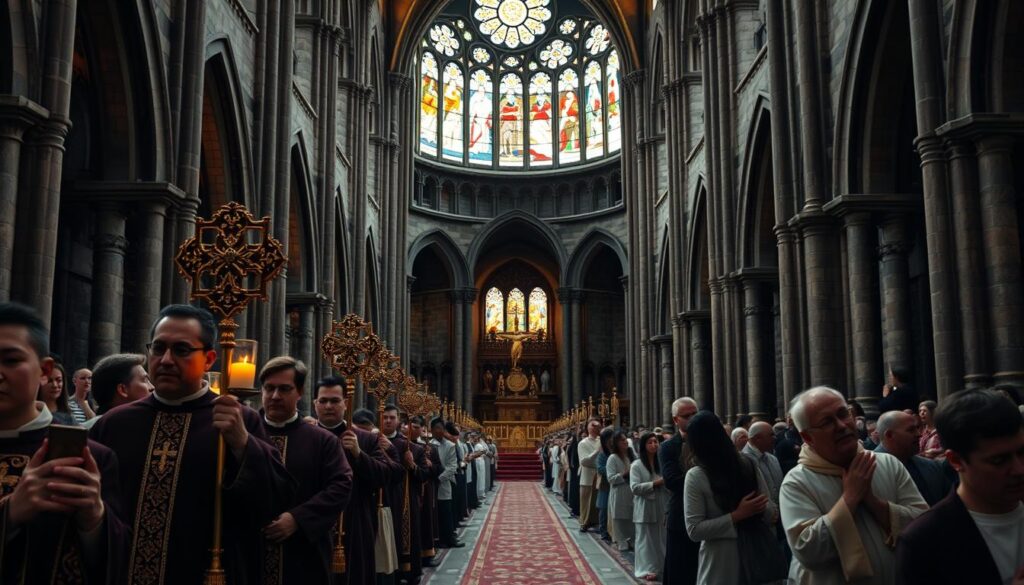
The story of these sacred days begins in ancient Jerusalem, where early believers gathered to retell Jesus’ final acts. Written accounts from St. John’s Gospel show how first-century Christians marked this period through shared meals and scripture readings.
Biblical Foundations and Early Church Practices
Four Gospel writers carefully documented events leading to Easter. Their records became the blueprint for observances. By 329 AD, St. Athanasius described six days of fasting before Easter, calling them “the symbol of creation’s renewal.”
Archaeologists found evidence of fourth-century rituals in Jerusalem. A traveler named Ætheria wrote about palm processions and nighttime vigils. These traditions helped people connect personally with biblical stories.
Evolution of Rituals from the Apostolic Era to Today
Early Christians met in homes to break bread and pray. Over time, these simple gatherings grew into elaborate services. Medieval churches added dramatic reenactments, while modern parishes use multimedia storytelling.
| Era | Practice | Significance |
|---|---|---|
| Apostolic (1st-3rd c.) | Home gatherings | Scripture sharing |
| Medieval (5th-15th c.) | Public processions | Community involvement |
| Modern (21st c.) | Interactive services | Cultural relevance |
This yearly cycle continues to adapt while keeping core meanings intact. From candlelit catacombs to streaming services, the essential message remains: hope triumphs through sacrifice.
Palm Sunday: A Triumphant Start
The rustle of palm fronds signals a sacred turning point. This celebration kicks off the most meaningful days in Christian tradition with vibrant energy. Streets fill with crowds waving branches, recreating a scene that changed history.
Jesus’ Entry into Jerusalem
Four Gospels describe how Jesus Christ approached the city on a donkey. Cheering people spread cloaks and branches along His path, shouting “Hosanna!” This humble arrival fulfilled ancient prophecies about a peaceful king. As one biblical scholar notes, “The donkey symbolized approachability, contrasting with warhorses ridden by conquerors.”
This joyful welcome held hidden depth. The same crowds would soon demand crucifixion, revealing humanity’s shifting loyalties. Yet the day remains a powerful reminder: true leadership serves others, not ego.
Symbolism of Palms and Processions
In ancient times, palm branches honored military victors and royalty. By laying them before Jesus, people acknowledged His spiritual authority. Modern churches continue this tradition through blessed palms and lively parades.
Many families weave their branches into crosses, keeping them all year. These sacramentals remind believers to welcome Christ into daily life. Whether in grand cathedrals or small chapels, the palm sunday procession connects communities across generations through shared hope.
Holy Wednesday: The Day of Preparation and Betrayal
What transforms a friend into a betrayer? This question lingers over the fourth day of sacred observance, when trust fractures and destiny unfolds. Often called Spy Wednesday, this moment in the biblical timeline reveals how calculated choices shape history.
Spy Wednesday: Understanding Judas’ Role
Scripture describes Judas Iscariot negotiating with religious leaders to arrest Jesus discreetly. Luke’s Gospel captures the chilling agreement:
“So he agreed, and sought an opportunity to betray him to them in the absence of the multitude.”
This wasn’t impulsive anger—it was cold strategy. The disciple turned informant needed to avoid public backlash while securing his payment.
Modern believers use this day to reflect on loyalty tested by temptation. Why did Judas exchange friendship for silver? The answer lies in human weakness—a warning against valuing temporary gain over lasting faith.
Churches emphasize preparation through self-examination. Some traditions encourage writing down personal struggles, then burning them as symbolic surrender. Others host discussions about repairing broken trust in relationships.
This pivotal moment in the holy week narrative teaches two lessons: betrayal often wears a familiar face, and redemption remains possible through conscious choice. Like the apostles who stayed faithful, we’re challenged to reaffirm our commitments daily.
Maundy Thursday: Remembering the Last Supper and Acts of Service
As shadows lengthen on this sacred evening, communities worldwide gather to relive foundational moments of faith. Maundy Thursday centers on two transformative acts that redefine leadership and connection. Through tangible rituals, believers step into the story of Jesus’ final hours before his crucifixion.
Institution of the Eucharist and Foot Washing
At the Last Supper, Jesus Christ transformed bread and wine into enduring symbols of sacrifice. “This is my body,” he declared, establishing a practice millions still follow today. Moments later, he knelt to wash feet—a task reserved for servants—showing true authority serves others.
John’s Gospel captures this radical humility:
“Now that I, your Lord and Teacher, have washed your feet, you also should wash one another’s feet”
. This dual legacy challenges modern believers to blend worship withservice.
Significance of the Chrism Mass and Holy Oils
Earlier on Holy Thursday, bishops consecrate oils used throughout the year. The Chrism Mass reaffirms unity across congregations, with priests renewing their vows. These blessed oils—for healing, baptism, and confirmation—become tangible signs of spiritual life.
From shared meals to anointed hands, these traditions bridge ancient faith with contemporary practice. They remind us that sacred moments aren’t confined to history—they’re lived daily through compassion and connection.
FAQ
What is Holy Week and why is it significant?
Holy Week marks the final days of Jesus’ life, leading to his resurrection. It’s a time for reflection, prayer, and reenacting events like his entry into Jerusalem and the Last Supper. For believers, it’s a spiritual journey to deepen faith and connect with Christ’s sacrifice.
How do traditions during this time reflect biblical stories?
Rituals like waving palm branches or washing feet mirror Gospel accounts. For example, Palm Sunday processions celebrate Jesus’ arrival in Jerusalem, while foot washing on Maundy Thursday honors his act of humility at the Last Supper.
Why are palms used on Palm Sunday?
Palms symbolize the crowds welcoming Jesus into Jerusalem with branches laid at his feet. Today, they’re blessed and often woven into crosses, reminding worshippers of Christ’s kingship and eventual sacrifice.
What is remembered on Holy Wednesday?
This day focuses on Judas Iscariot’s agreement to betray Jesus, earning it the name “Spy Wednesday.” It invites reflection on themes of trust, betrayal, and human weakness.
What happens during the Chrism Mass?
Held on Maundy Thursday, this Mass blesses holy oils used in sacraments like baptism and anointing. It emphasizes unity within the Church and the role of service, echoing Jesus’ teachings.
Why is foot washing part of Maundy Thursday?
This ritual reenacts Jesus washing his disciples’ feet, symbolizing humility and selfless love. It challenges participants to serve others, embodying the heart of Christian teachings.
How does Easter Vigil connect to Holy Week?
The Vigil, held after sunset on Holy Saturday, celebrates Christ’s resurrection with candlelight, Scripture readings, and baptisms. It transitions from mourning to joy, marking the climax of the week’s observances.