Every spring, millions of believers worldwide prepare for a profound seven-day observance that shapes their faith and renews their spiritual life. This sacred period marks the final stretch of Lent while building toward Christianity’s most joyous celebration. From waving palm branches to lighting candles in darkened churches, each ritual invites participants to walk alongside ancient events that still resonate today.
The journey begins with crowds cheering a humble leader’s arrival, then shifts to somber reflection on sacrifice. By week’s end, jubilant shouts of “He is risen!” echo through sanctuaries. These layered traditions—honored across generations—create a powerful rhythm that many describe as transformative.
What makes this time of year so impactful? It’s more than historical reenactment. The liturgies and personal practices help believers connect deeply with core truths about love, suffering, and hope. Whether you’re new to these observances or seeking fresh perspective, understanding their meaning can enrich your experience.
Key Takeaways
- Marks the final days of Lent and leads into Easter celebrations
- Blends ancient rituals with personal spiritual reflection
- Includes Palm Sunday, Good Friday, and Easter Vigil observances
- Offers emotional connection to foundational Christian events
- Practiced globally with cultural adaptations
Understanding Holy Week in Catholic Tradition
Across continents, communities pause their routines to relive a story that shaped faith for two millennia. This sacred period starts with palm-waving processions and builds toward candlelit vigils, blending ancient customs with personal devotion. Believers describe it as stepping into a living storybook where every ritual carries layers of meaning.
The seven-day journey mirrors Jesus’ final days in Jerusalem. It begins with cheers of welcome, shifts to shared meals, and reaches its climax in solemn remembrance. These observances aren’t just history lessons—they’re invitations to experience sacrifice and renewal firsthand.
Why does this time draw millions yearly? The answer lies in its power to unite people across generations. From reading biblical accounts to washing feet like the disciples, each act reinforces connections to spiritual roots. As one priest notes, “We don’t just watch—we join the story.”
This period also marks the finish line of Lent’s forty-day preparation. Fasting gives way to feasting, mourning transforms into joy. The emotional rollercoaster—from Good Friday’s grief to Easter’s triumph—mirrors life’s own ups and downs, making its lessons universally relatable.
Through processions, prayers, and shared meals, participants find fresh perspectives on timeless truths. Whether lighting candles or singing hymns, everyone contributes to a collective rhythm that’s lasted centuries. It’s this mix of personal reflection and communal celebration that keeps the tradition vibrant year after year.
The Significance of Palm Sunday
Church doors swing open as worshippers clutch fresh greenery, launching a sacred journey that blends celebration with solemn anticipation. This day begins Palm Sunday, where cheers of hope meet whispers of coming sacrifice.
Symbolism of Palm Branches and Triumphal Entry
Imagine dusty roads suddenly carpeted with palm branches—nature’s red carpet for a king riding a donkey. This scene from Matthew 21:1-11 wasn’t random theater. In ancient times, palms symbolized victory and peace. Roman generals received palm fronds after winning battles. Here, they honor a different kind of conqueror.
Modern processions keep this alive. “We wave palms like they did 2,000 years ago,” explains Father Michael from Chicago. “It’s our way of saying ‘You’re still our king today.’” The branches later get woven into crosses, connecting Sunday’s joy to Friday’s sorrow.
Historical and Biblical Context
Jesus’ entry into Jerusalem fulfilled Zechariah 9:9’s prophecy about a humble king arriving on a donkey. But the crowd missed the paradox—their warrior Messiah came unarmed. Biblical scholar Dr. Emily Thompson notes: “They wanted a political hero. He offered spiritual liberation.”
This tension still resonates. As palms rustle in church aisles, believers confront the same question: What kind of king will we follow? The answer shapes not just holy week, but daily lives of faith.
Catholicism Holy Week: Traditions & Celebrations
The air buzzes with anticipation as believers worldwide prepare to step into sacred traditions passed down through generations. Four pivotal ceremonies anchor this spiritual journey, each inviting active participation in age-old narratives. From Manila’s sun-baked streets to Rome’s candlelit basilicas, these days transform ancient stories into visceral experiences.
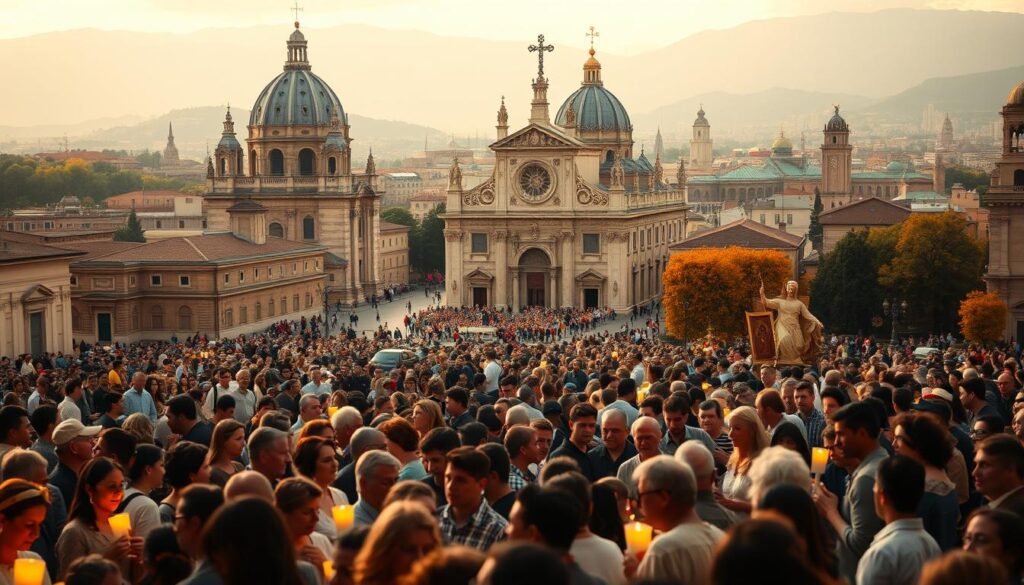
Parish communities become living theaters during this time. Dramatic readings echo through sanctuaries while fragrant incense rises with collective prayers. “We’re not spectators—we’re part of the story,” shares Maria Gonzalez, a liturgical coordinator in Texas. Her team coordinates processions where children scatter flower petals alongside adults carrying life-sized crosses.
Cultural expressions add vibrant hues to shared observances:
| Region | Tradition | Significance |
|---|---|---|
| Spain | Silent processions with hooded penitents | Emphasizes personal reflection on sacrifice |
| Philippines | Street reenactments of Christ’s Passion | Encourages community-wide engagement |
| Mexico | Palm weaving workshops | Connects families through craft and prayer |
These practices do more than retell history—they forge unbreakable bonds. Neighborhoods unite to build floral carpets in Guatemala or stage Passion Plays in Bavaria. As daylight fades on Holy Saturday, millions collectively hold their breath before the Easter fire’s spark announces renewal. Through shared rituals, the celebration becomes both deeply personal and magnificently universal.
Holy Wednesday: Preparation and Betrayal
Shadows lengthen across the spiritual journey as believers reach a pivotal midpoint. This day holds dual significance—personal reflection and a sobering reminder of human frailty.
The Story of Spy Wednesday
Scripture paints a tense scene: Judas Iscariot negotiates with religious leaders while others prepare Passover. Luke 22:6 captures the moment: “He consented and watched for an opportunity to hand Jesus over to them when no crowd was present.” This secret pact earned the day its nickname—Spy Wednesday.
Why does this event still sting? Judas wasn’t a stranger. He shared meals and miracles with Jesus. As theologian Dr. Rachel Peters observes: “The betrayal came from inside the family. That’s what makes it universally relatable.”
Churches use this time for heart-checks. Many host reconciliation services where believers:
- Reflect on personal choices
- Seek forgiveness through prayer
- Prepare spiritually for Easter Triduum
The day’s irony isn’t lost on worshippers. While Judas plotted in shadows, Mary of Bethany anointed Jesus with costly perfume—a contrast between greed and devotion. This push-pull dynamic invites self-examination: Where do our loyalties truly lie?
As sunlight fades on Wednesday, a quiet resolve builds. Altars are stripped bare. Hearts make space for what’s coming—a sacred three-day journey from darkness to dazzling light.
Maundy Thursday: Last Supper and Service
The atmosphere shifts as twilight descends on this sacred evening. Believers gather worldwide for rituals that blend intimate fellowship with profound spiritual truths. Maundy Thursday—also called Holy Thursday—centers on two revolutionary acts: sharing a final meal and performing humble service.
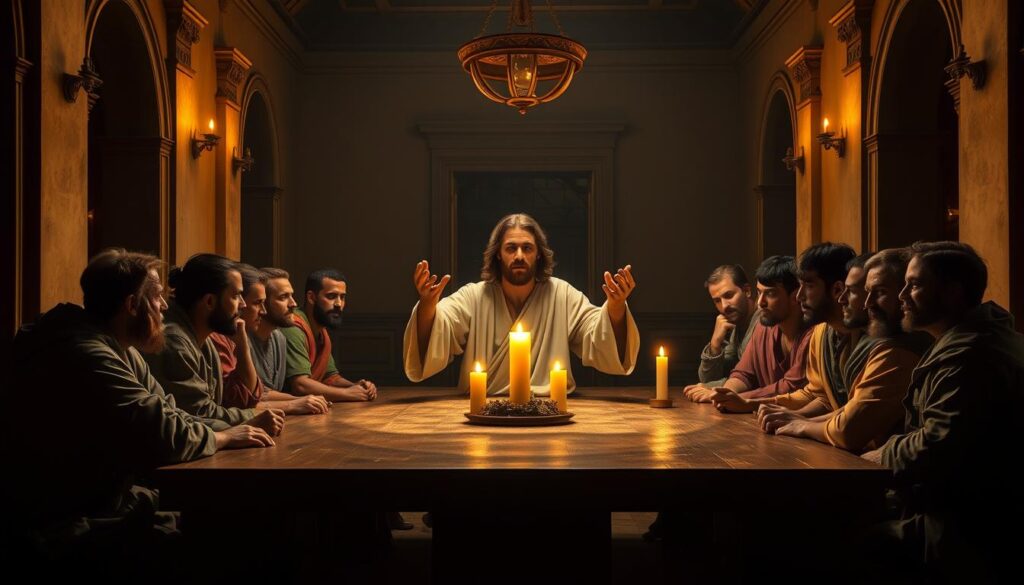
Institution of the Eucharist and Foot Washing Ceremony
At the Evening Mass of the Lord’s Supper, churches recreate history’s most transformative dinner. Jesus’ words—“This is my body… my blood”—still echo through sanctuaries as bread and wine become sacred symbols. “Every Eucharist connects us to that original supper,” explains Father Mark, a Chicago priest.
The second act stuns modern crowds as much as ancient disciples. Clergy kneel to wash congregants’ feet, mirroring Jesus’ shocking gesture. “He flipped power dynamics upside down,” notes theologian Dr. Sarah Lin. This ritual challenges everyone to lead through service, not status.
Transition into the Easter Triduum
As the Last Supper liturgy concludes, Lent officially ends. Bells fall silent. Altars stand bare—a visual cue that the journey intensifies. The Easter Triduum begins, three days focusing on sacrifice and resurrection.
Parishes prepare unique traditions:
- Blessing oils used throughout the year
- Creating “altars of repose” adorned with flowers
- Nighttime adoration prayers
These practices bridge Jesus’ final teachings to his ultimate act of love. As candles flicker in darkened churches, participants sense they’re stepping into sacred history—not just remembering it.
Good Friday: Sacrifice and Reflection
A hush falls over churches worldwide as believers confront Christianity’s most solemn day. Good Friday centers on quiet reverence, drawing millions into shared contemplation of sacrifice. Unlike other observances, altars stand bare—no Mass, no bells—just raw reflection on love’s ultimate cost.
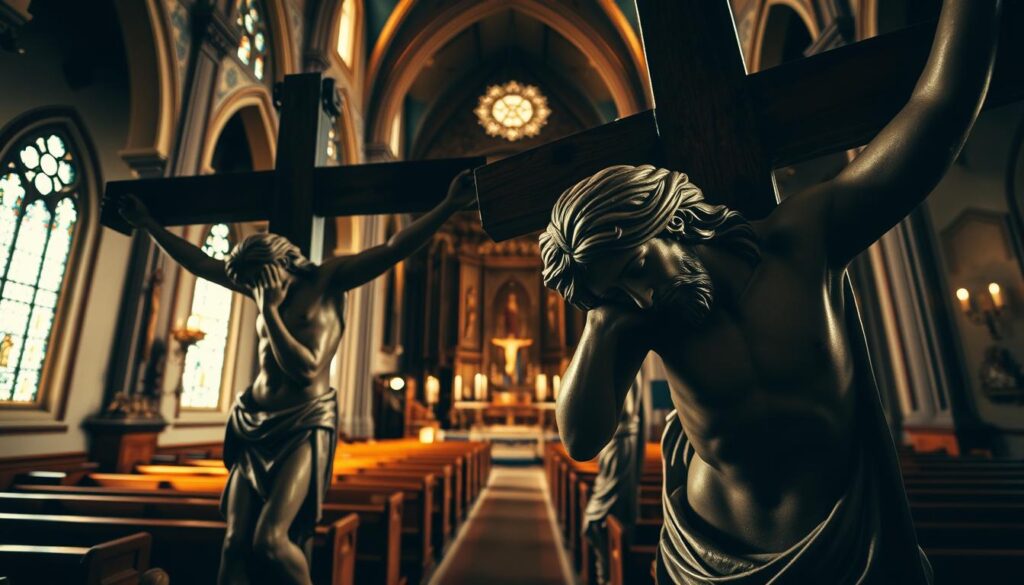
Walking the Path of Suffering
Fourteen stops. Fourteen moments to feel the weight of suffering. The Stations of the Cross transform sanctuaries into spiritual journeys, with participants retracing Jesus’ final hours. “We don’t just read about the Passion—we walk it together,” says Sister Angela from Boston.
Honoring the Cross’s Power
During the Celebration of the Passion, congregations approach a simple wooden cross—touching, kneeling, weeping. This ancient ritual, called the Veneration, turns symbols into sacred encounters. Churches distribute Communion using hosts blessed the night before, linking Thursday’s meal to Friday’s death.
Fasting traditions deepen the day’s gravity. Many skip meals, mirroring Christ’s physical suffering. Yet darkness never wins. As candles rekindle Saturday night, Friday’s grief becomes Easter’s hope—a reminder that passion always leads to renewal.
FAQ
What is the importance of Palm Sunday?
Palm Sunday marks Jesus’ entry into Jerusalem, celebrated with palm branches to honor His welcome. It begins a period of reflection on sacrifice and renewal, leading into the Easter Triduum.
Why do Catholics reenact the foot washing ceremony?
The ritual, performed during the Evening Mass of the Lord’s Supper on Maundy Thursday, mirrors Jesus’ act of humility. It emphasizes service, love, and unity among believers.
How is Good Friday observed?
Through solemn liturgies, veneration of the cross, and Stations of the Cross, Catholics commemorate Christ’s suffering. Silence and prayer mark this day of sacrifice.
What does the Easter Vigil involve?
Held after sunset on Holy Saturday, the vigil includes candlelight processions, Scripture readings, and baptisms. It culminates in celebrating Christ’s resurrection at dawn.
What is “Spy Wednesday”?
This term refers to Holy Wednesday, recalling Judas’ betrayal. Many parishes hold Tenebrae services, focusing on repentance and preparation for the Paschal Mystery.
Why is the Last Supper central to Maundy Thursday?
It commemorates Jesus instituting the Eucharist and priesthood. The Mass of the Lord’s Supper invites worshippers to reflect on community and Christ’s enduring presence.