Every generation has a chance to experience a unique spiritual milestone rooted in ancient traditions. Beginning December 24, 2024, a special holy year offers believers worldwide opportunities for renewal, forgiveness, and deeper faith. This period, lasting through January 6, 2026, invites participants to reflect, reconnect, and embrace hope through sacred practices.
The 2025 theme, “Pilgrims of Hope,” highlights Pope Francis’s vision for unity and spiritual growth. It encourages Catholics to engage in pilgrimages, prayers, and sacraments while seeking indulgences—a central aspect of this Jubilee Year. These acts aren’t just rituals; they’re pathways to personal and communal transformation.
Whether you’re planning a trip to Rome or participating locally, this guide simplifies how to prepare. Discover how centuries-old traditions meet modern needs, offering clarity and purpose in uncertain times. Let’s explore what makes this year a once-in-a-lifetime opportunity to strengthen your faith.
Key Takeaways
- Occurs every 25 years, blending ancient traditions with modern spiritual practices
- Focuses on renewal, forgiveness, and hope through sacraments and pilgrimages
- Runs from December 24, 2024, to January 6, 2026
- Theme “Pilgrims of Hope” emphasizes unity and spiritual growth
- Plenary indulgences available through specific prayers and actions
- Rome remains a key pilgrimage destination for participants
Overview of the Catholic Jubilee
Marking a quarter-century cycle, the holy year offers believers rare moments to reset their spiritual lives. These special periods, rooted in centuries-old traditions, create pathways for forgiveness and renewal. The upcoming celebration in 2025 follows a pattern last seen in 2000 – a rhythm designed to help communities grow closer to their faith.
What makes this Pilgrims of Hope theme unique? Pope Francis emphasizes its focus on unity and forward-looking faith. Unlike regular years, participants gain access to exclusive sacraments and blessings tied to ancient practices. Many will journey to sacred sites, following paths walked by generations before them.
This event also honors a historic milestone: the 1,700th anniversary of the First Council of Nicaea. That gathering shaped core beliefs about Jesus’ divine and human nature. While Extraordinary Jubilees address urgent issues, Ordinary ones like 2025 stick to the traditional 25-year schedule set by church leaders.
Key features of this spiritual season include:
- Special prayers only available during holy years
- Opportunities to receive plenary indulgences
- Pilgrimages to Rome’s four major basilicas
Biblical Origins and Historical Foundations
The foundations of sacred celebrations trace back to ancient commandments of liberation and mercy. Scripture reveals how early communities practiced radical social renewal through divinely inspired cycles.
Roots in Sacred Texts
Leviticus 25:8-55 details God’s instruction for a 50-year reset. Lands lay fallow, debts vanished, and enslaved people regained freedom. “Proclaim liberty throughout the land,” declares verse 10—a call echoing through time.

Prophecies and Practices
Isaiah 61:1-2 expands this vision, announcing “the year of the Lord’s favor.” Centuries later, Jesus quoted these words in Luke 4:18-19, linking his mission to this tradition of liberation. The ram’s horn blast (yōbēl) marked fresh starts every half-century.
Ancient observances restored balance to community life. Families reclaimed ancestral lands. Workers rested from endless labor. This rhythm reminded people that true freedom comes through divine mercy, not human effort alone.
These practices addressed both material needs and spiritual sins. By forgiving debts and freeing captives, communities embodied God’s desire for holistic restoration—a blueprint still shaping holy years today.
Evolution of Jubilee Celebrations Over the Centuries
Sacred traditions often transform to meet changing spiritual needs while preserving their core purpose. The rhythm of special religious observances has shifted dramatically since their formal organization in medieval Europe.
Historical Milestones and Shifts
In 1300, Pope Boniface VIII made history by declaring the first official Holy Year. He originally set these events every 100 years, but public enthusiasm forced quick revisions. “The faithful deserve more frequent moments of grace,” argued Roman citizens, leading Pope Clement VI to halve the interval to 50 years by 1342.
Later leaders experimented with symbolic cycles. Urban VI’s 33-year pattern (1389) honored Christ’s lifespan but proved impractical. The game-changer came in 1475 when Paul II established our modern 25-year cycle – balancing tradition with accessibility.
From Biblical Roots to Church Traditions
While ancient Hebrew practices inspired early concepts, Christian leaders added unique elements. Martin V’s 1425 opening of St. John Lateran’s holy door created a powerful new ritual. Nicholas V’s 1450 celebration marked the last 50-year cycle before Sixtus IV embraced the quarter-century pattern we know today.
This evolution shows how spiritual practices adapt without losing their essence. As one historian notes: “What began as biblical debt forgiveness became a living tradition of renewal – always changing, yet always the same.”
The Significance of the Catholic Jubilee in the Catholic Church
Spiritual rhythms shape lives like seasons shape landscapes. The holy year stands out as a unique spiritual springtime—a period when ancient practices meet modern hearts seeking transformation. Unlike ordinary years, this season unlocks special graces through sacred rituals and communal experiences.
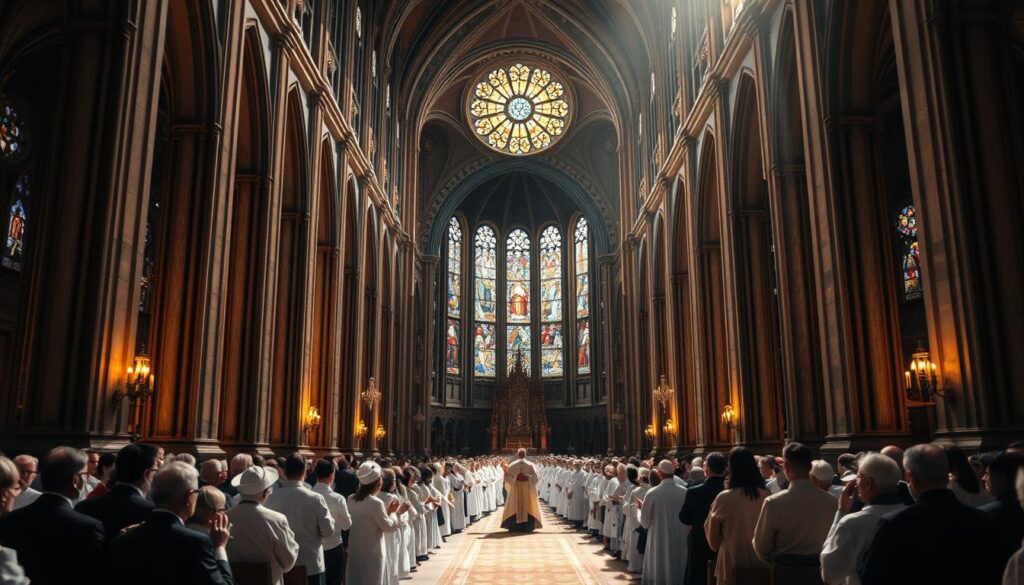
At its core, this celebration breathes life into timeless truths about mercy and second chances. Believers find fresh opportunities to release burdens through reconciliation while strengthening their bond with God. The theme “Pilgrims of Hope” reminds everyone that faith isn’t static—it’s a journey requiring trust and courage.
What makes this time extraordinary? It’s not just about personal renewal. Millions of pilgrims worldwide unite through shared prayers and traditions, creating invisible threads connecting cathedrals to kitchen tables. As one priest noted: “Hope becomes contagious when we walk together.”
This sacred season also highlights practical spirituality. Simple acts like visiting holy sites or serving others become doorways to deeper faith. These moments remind us that divine love isn’t abstract—it’s woven into daily choices and relationships.
Through intentional prayer and acts of kindness, participants rediscover their purpose. They learn to see challenges through hope’s lens, becoming living reminders that light always outshines darkness. That’s the true gift of this special year—it turns ordinary lives into extraordinary testimonies.
Pope Francis and the Vision for Jubilee 2025
Guiding the faithful through turbulent times, Pope Francis invites believers to become torchbearers of hope. His Jubilee 2025 vision centers on transforming personal faith into collective action. “May the light of Christian hope illumine every man and woman,” he urges, framing this period as a global call to share love through practical deeds.
Papal Messages and the Theme “Pilgrims of Hope”
The Pilgrims of Hope theme reimagines spiritual growth as an active journey. Unlike passive observance, Francis encourages carrying hope into workplaces, homes, and communities. This approach connects ancient traditions with modern struggles—like combating loneliness or environmental crises.
His message breaks barriers between sacred rituals and daily life. Visiting soup kitchens holds equal weight to pilgrimage walks. Sharing encouraging words becomes as vital as formal prayers. This democratized spirituality empowers everyone to participate, regardless of location or resources.
Ordinary Versus Extraordinary Jubilees
While Ordinary Jubilees follow the 25-year rhythm, Extraordinary ones address urgent needs. Francis’ 2015 Mercy Jubilee responded to global conflicts and inequality. The 2025 event, however, focuses on long-term spiritual renewal—a steady flame rather than emergency flare.
This distinction matters. Scheduled celebrations maintain tradition, while surprise ones tackle crises. Both types share core elements: reconciliation practices, door-opening ceremonies, and emphasis on charity. Yet their timing shapes how communities engage with these timeless principles.
“Hope becomes contagious when we walk together.”
Preparing for the Holy Year: A Spiritual Checklist
Ready to make this sacred season count? A thoughtful approach helps turn intentions into lasting spiritual growth. Let’s break down practical steps to align your heart with this transformative journey.
Sacramental Practices and Reconciliation
Start by embracing the Sacrament of Reconciliation. This act cleanses the soul, creating space for grace. Pair it with regular Eucharist participation—both are essential for receiving a plenary indulgence during this special year.
Remember, indulgences require more than rituals. You’ll need to pray for the Pope’s intentions and perform acts like pilgrimages or charity work. These conditions turn routine practices into powerful spiritual tools.
Embracing Acts of Mercy and Charity
Feed the hungry. Visit the lonely. Forgive old grudges. These works of mercy become spiritual superfood during the holy year. They’re not just tasks—they’re ways to mirror divine compassion in daily life.
Pair action with reflection. Spend 10 minutes daily reading Scripture or journaling. This balance between doing and being helps faith take deeper root. As one pilgrim noted: “Service without prayer burns out—prayer without service grows stale.”
Pilgrimage Routes and the Symbolism of Holy Doors
Doors aren’t just entrances—they’re invitations to deeper faith. During special spiritual seasons, certain thresholds become powerful symbols of renewal. Four Roman basilicas hold holy doors that remain sealed except during these sacred periods, drawing pilgrims seeking transformation.
Where Sacred Journeys Converge
St. Peter’s Basilica in Vatican City tops most travel lists, but three other sites matter equally. St. John Lateran’s holy door bears intricate carvings showing biblical stories of mercy. At St. Mary Major, pilgrims find mosaics depicting ancient salvation promises. St. Paul Outside the Walls completes the quartet, its bronze door framing a path walked by millions since medieval times.
More Than Physical Passage
Passing a holy door mirrors Jesus’ words: “I am the door” (John 10:9). This act symbolizes leaving old burdens behind and embracing grace. Many feel lighter afterward, as if stepping into a new chapter of their spiritual journey.
The ritual connects to plenary indulgences too. To receive this gift, pilgrims pair the physical walk with prayer and confession. It’s not about the destination—it’s about letting the door become a bridge between human longing and divine love.
FAQ
What is the Holy Year, and how often is it celebrated?
The Holy Year, also called a Jubilee, is a time of spiritual renewal. It’s typically celebrated every 25–50 years, though popes can call “extraordinary” ones for urgent needs. The tradition dates back to 1300 with Pope Boniface VIII.
What does passing through a Holy Door symbolize?
Walking through a Holy Door, like the one at St. Peter’s Basilica, represents leaving sin behind and embracing forgiveness. It’s a physical act tied to receiving a plenary indulgence when combined with prayer and sacraments.
Which basilicas are essential for pilgrims in Rome?
The four major papal basilicas are St. Peter’s, St. John Lateran, St. Paul Outside the Walls, and Santa Maria Maggiore. Visiting these sites during the Jubilee is a cherished tradition for many.
How did Pope Francis define the 2025 Jubilee theme?
The theme “Pilgrims of Hope” encourages unity and active faith. Pope Francis emphasizes reaching out to marginalized communities and fostering global solidarity through prayer and service.
What’s the difference between ordinary and extraordinary Jubilees?
Ordinary Jubilees follow a set schedule, like every 25 years. Extraordinary ones, such as the 2016 Mercy Jubilee, are called for specific reasons—often to address crises or urgent spiritual needs.
How can I prepare spiritually for the Holy Year?
Focus on sacraments like confession, attend Mass regularly, and practice acts of mercy. Many also choose to fast, donate to charity, or join pilgrimages to deepen their connection to faith.
Why is the Jubilee linked to ancient Jewish traditions?
The concept originates from Leviticus, where every 50th year involved freeing slaves, forgiving debts, and letting land rest. This idea of restoration inspired later Christian Jubilees.
What role do indulgences play during the Jubilee?
Indulgences reduce temporal punishment for sins. During the Holy Year, fulfilling specific requirements—like visiting basilicas and praying—can grant a plenary indulgence, symbolizing a fresh start.