Welcome to a fascinating exploration of sacred spaces where East meets West in breathtaking harmony. Though less than 1% of the population identifies with this faith, the country boasts over 7,700 spiritual sites spanning historic cathedrals, modernist chapels, and hidden rural sanctuaries. These architectural wonders tell stories of resilience, cultural fusion, and quiet devotion.
Many of these sacred buildings blend European-inspired designs with distinctly local touches. Stained glass might feature cherry blossoms, while wooden beams echo traditional temple craftsmanship. Visitors often marvel at how these structures feel both familiar and uniquely Japanese.
Most locations warmly welcome travelers of all backgrounds. Whether you seek quiet reflection, artistic inspiration, or historical insights, these spaces offer meaningful experiences. Their doors remain open to those curious about Japan’s complex spiritual heritage.
Key Takeaways
- Discover over 7,700 spiritual sites across the islands
- Experience stunning blends of Western and Japanese design elements
- Find welcoming spaces open to all visitors regardless of faith
- Explore both historic landmarks and contemporary architectural gems
- Gain insights into centuries of cultural exchange and perseverance
Introduction to Japan’s Christian Heritage
Beneath cherry blossom skies lies a spiritual legacy shaped by secrecy and resilience. Foreign missionaries first brought their faith to the islands in 1549, sparking both curiosity and conflict. For generations, this belief system navigated cycles of acceptance and suppression, leaving an indelible mark on the nation’s cultural tapestry.
Background and Significance
When authorities banned foreign religious practices in 1614, devoted followers became known as Kakure Kirishitans. These hidden communities preserved rituals through coded symbols and oral traditions. One elder recalls, “Our ancestors disguised saints as Buddhist deities and used everyday objects as sacred tools.”
Restrictions eased in the 19th century, first permitting worship spaces for foreign residents. Full religious freedom for locals finally arrived in 1873, ending 259 years of underground practice. This turbulent history explains why many sites carry dual cultural meanings.
The Unique Blend of East and West
Modern spiritual architecture reveals creative fusions unseen elsewhere. Carpenters trained in shrine construction incorporated sliding screens and cedar beams into chapel designs. Stained glass artists blended biblical scenes with seasonal flora like plum blossoms and maple leaves.
These spaces became more than houses of worship – they symbolize dialogue between worlds. A Nagasaki local notes, “Our community altars hold both crucifix pendants and ancestral tablets.” This harmonious coexistence defines Japan’s approach to diverse belief systems.
Historical Journey of Christianity in Japan
The story of faith in this island nation reads like a gripping novel of courage and secrecy. What began as a bold spiritual venture faced centuries of challenges before blossoming into today’s diverse communities.
Early Missionaries and Hidden Believers
In 1549, Francis Xavier landed on Kyushu’s shores, sparking rapid growth. By 1580, over 150,000 converts practiced openly. But tides turned when authorities banned foreign beliefs. One survivor’s account reveals: “We prayed to statues resembling Buddha while whispering Latin verses.”

Persecution peaked in the 1600s. Officials exiled thousands to remote regions like Tsuwano. There, 37 martyrs chose death over abandoning convictions. Their resilience inspired secret rituals – folded paper crosses and disguised prayer books kept traditions alive underground.
From Ban to Revival: A Timeline
- 1549: Francis Xavier establishes first missions
- 1614-1873: Practice driven underground
- 1865: Hidden communities rediscovered in Nagasaki
- 1873: Ban lifted after international pressure
The 19th century brought renewed freedom. Formerly hidden groups emerged, blending ancestral practices with renewed connections to global believers. This fusion created the unique spiritual identity visible in modern christianity japan communities today.
Architectural Grandeur of Japanese Churches
Japan’s spiritual architecture reveals a dance between tradition and innovation. Visionary designers reimagined sacred spaces through bold geometric forms and cultural synthesis. These structures challenge expectations while honoring deep-rooted craftsmanship.
Modern Marvels and Traditional Influences
Kenzo Tange’s St. Mary’s Cathedral exemplifies this fusion. Its stainless steel shell forms a cross silhouette visible from Tokyo skyscrapers. “We wanted light to become prayer,” the architect noted about the concrete walls guiding sunlight through narrow slits.
Builders often combine ancient techniques with new materials. Cedar joinery from shrine construction meets steel reinforcement. Sliding paper screens reinterpret Gothic arches, creating spaces that feel both timeless and futuristic.
| Feature | Traditional Influence | Modern Interpretation |
|---|---|---|
| Roof Design | Pagoda-style eaves | Angled concrete cantilevers |
| Wall Materials | Washi paper screens | Laminated glass panels |
| Symbolism | Nature motifs | Abstract geometric forms |
Stained Glass and Symbolic Designs
The country’s glass windows transform sunlight into storytelling. Artists blend biblical scenes with seasonal flora – Easter lilies merge with cherry blossoms, while autumn maples frame nativity displays. This creates living art that shifts with the time of day.
In Nagasaki, a chapel’s rose window depicts local martyrs using traditional porcelain techniques. Such details make these beautiful churches unique bridges between worlds. Visitors often describe the effect as “light speaking through color.”
Iconic Churches in Japan: A Closer Look
Japan’s spiritual landscape reveals its most captivating stories through architectural masterpieces that defy expectations. These structures serve as living archives, blending global influences with local craftsmanship while hosting active communities.

St. Mary’s Cathedral and Harajuku Protestant Church
St. Mary’s Cathedral in Tokyo stuns visitors with its soaring concrete wings forming a cross-shaped silhouette. Architect Kenzo Tange redefined sacred space here, using light as a spiritual element through strategic slits in 140-foot walls. “The building itself becomes a prayer,” remarked a caretaker during a recent tour.
Near bustling Harajuku, the Protestant Church by Ciel Rouge Creation showcases fluid curves contrasting with Tokyo’s angular skyline. Its symbolic arches frame stained glass blending biblical motifs with ukiyo-e cloud patterns, creating a dialogue between French design and Japanese aesthetics.
Yokohama Union and Kaigan Churches
Yokohama Union Church holds special status as the nation’s oldest English-speaking congregation. Since 1863, its wooden spire has welcomed international worshippers, preserving original hymnbooks signed by Meiji-era visitors. Sunday services still echo with multiple languages.
Just blocks away, Yokohama Kaigan Church made history in 1872 as the first purpose-built space for local believers. Its hybrid design features a samurai castle-inspired bell tower above Gothic arched windows – a physical manifestation of cultural integration.
These landmarks offer more than photo opportunities. They represent turning points where foreign traditions took root through architectural innovation and community resilience. Each structure invites reflection on how spiritual spaces adapt while retaining core identities.
Distinct Features and Spiritual Ambiance
Step into spaces where light and form converge to create sanctuaries of serenity and innovation. Modern spiritual architecture here transforms sunlight into sacred geometry, crafting environments that calm minds and uplift hearts. Every element serves dual purposes – functional design meets symbolic meaning.
Innovative Designs by Renowned Architects
Visionary creators reimagine traditional concepts through bold curves and strategic apertures. One Tokyo landmark features walls angled to funnel daylight like liquid gold across pews. “We wanted worshippers to feel embraced by light itself,” explains the designer behind its sweeping arches.
These spaces masterfully balance grandeur with intimacy. A main hall seating 600 feels surprisingly personal through tiered seating and acoustic engineering. Curved ceilings guide voices into harmonious resonance during worship services, creating collective moments of connection.
Artistic Interior and Worship Spaces
Musical elements elevate the sensory experience. Massive pipe organs tower beside minimalist altars, their brass pipes reflecting kaleidoscopic light patterns. Sunday melodies blend with the soft rustle of turning hymnbooks, composing a living soundtrack for place worship.
Communities prioritize accessibility without sacrificing beauty. After evening worship services, these halls transform into concert venues welcoming all. A regular visitor shares: “The warmth here isn’t just from sunlight – it’s how strangers become friends.”
Through such thoughtful design, these beautiful churches achieve something remarkable. They honor their role as place worship while serving as bridges between cultures, art forms, and generations.
Visitor Insights and Etiquette Guidelines
Exploring sacred spaces here offers rich cultural exchanges, but requires awareness of local customs. Many sites blend global traditions with uniquely Japanese practices, creating etiquette rules that honor both worlds. A little preparation ensures your visit remains respectful and rewarding.
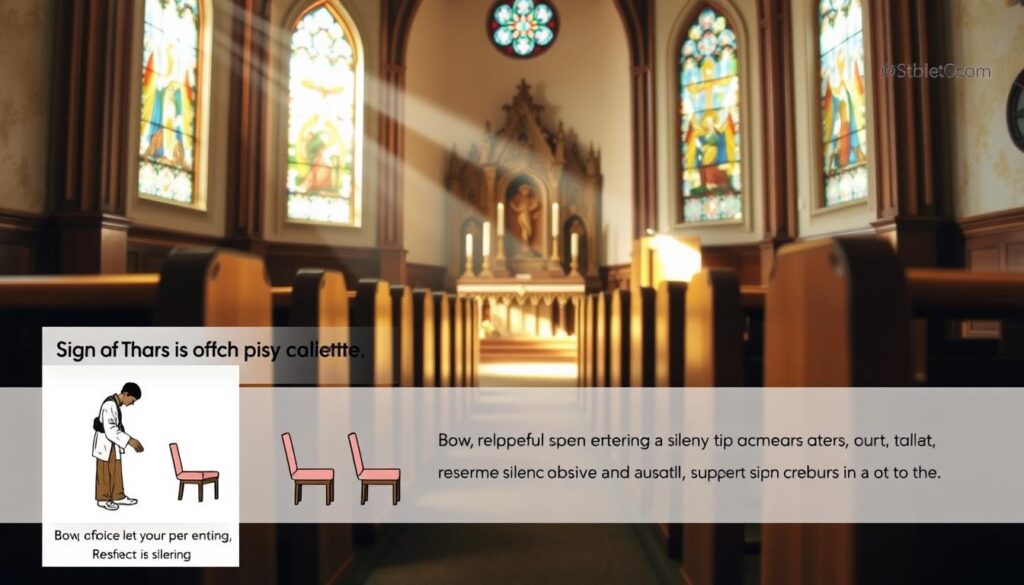
Proper Conduct and Dress Code
Modest attire shows respect in these spiritual settings. Avoid shorts or sleeveless tops, and remove hats upon entering. As one caretaker advises: “Dress like you’re meeting someone important – because you are.”
Silence phones before stepping inside. During worship services, refrain from walking around or chatting. A slight bow when entering acknowledges the space’s significance, mirroring local customs.
Photography and Respectful Behavior
Capture outdoor architecture freely, but check signage before snapping indoor shots. Flash photography often disrupts Sunday worship or private ceremonies. If unsure, ask staff – many provide multilingual guide sheets explaining rules.
Stay within marked visitor zones. Private prayer areas often lie beyond ropes or screens. Remember: these active churches japan balance tourism with their primary role as community spaces. Your mindfulness helps preserve their peaceful atmosphere for all.
Interdenominational Worship and Community Life
In the heart of bustling cities, spiritual communities thrive through linguistic bridges and cultural exchange. Over 30 nationalities gather weekly in these spaces, creating vibrant mosaics of shared faith. Union churches lead this movement, offering services that transcend language barriers while nurturing deep connections.
Multilingual Services and Global Congregations
Sunday mornings hum with the rhythm of multiple languages. A typical schedule might include English Mass at 9 AM, Vietnamese worship at noon, and Japanese Bible study by evening. “We don’t just translate words – we translate belonging,” shares a Tokyo congregation leader.
These international church communities trace their roots to 19th-century port cities. Today, they help newcomers navigate cultural transitions through:
- Bilingual parenting workshops
- Festivals blending harvest moon traditions with Easter celebrations
- Language exchange programs paired with scripture study
The Protestant church near Osaka Station exemplifies this ethos. Its century-old English Mass tradition continues alongside Korean prayer circles and Tagalog choir practices. Visitors often describe the atmosphere as “a warm embrace from the global village.”
Exploring christian churches japan: A Cultural and Spiritual Hub
Beyond their sacred purpose, these community hubs pulse with year-round energy. Seasonal festivals and creative gatherings transform quiet spaces into vibrant crossroads of culture. Visitors find unexpected connections through shared meals, music, and light-filled traditions.
Community Events and Celebrations
Spring brings Easter egg hunts with hand-painted washi paper decorations. Summer festivals feature taiko drum performances beside barbecue fundraisers. One volunteer shares: “Our autumn bazaar sells both pumpkin pies and matcha cheesecake – it’s delicious diplomacy!”
December shines brightest with illumination events that draw thousands. Forests around worship centers glow with thousands of LED lights shaped like stars and angels. Families stroll paths lined with bamboo lanterns while carols echo through frosty air.
| Event | Seasonal Feature | Cultural Blend |
|---|---|---|
| Christmas Market | December lights display | German-style stalls with origami ornaments |
| New Year Service | Bell-ringing ceremony | Prayer cards + traditional mochi offering |
| Harvest Festival | Autumn produce sale | Pumpkin carving meets ikebana workshops |
January 1st offers a peaceful alternative to crowded shrines. Morning services include tea ceremonies and hymn singing. New year visitors receive handwritten blessings – a tradition blending calligraphy art with spiritual well-wishes.
These gatherings create natural friendship opportunities. Language exchange tables form during coffee hours. International students often find holiday homes through community networks. As one regular attender notes: “You come for the stained glass, but stay for the people.”
Transportation, Accessibility, and Local Guides
Navigating Japan’s spiritual landmarks becomes effortless with smart travel planning. Most sites sit within walking distance of major transit hubs, letting you combine cultural exploration with efficient movement. Public transport here runs like clockwork – your best ally for discovering hidden gems.
Plan Your Route by Train or Bus
Key locations cluster near Tokyo’s Yurakucho Line and JR Yamanote Line stations. From Edogawabashi Station, a 5-minute stroll leads to architectural marvels. In Yokohama, walk 10 minutes from Ishikawa-cho Station to reach historic sites blending East-West design.
Regional connections shine too. Ride the Hokuriku Shinkansen from Tokyo for 1 hour to access mountain-ringed sanctuaries. From Kyoto, a 2-hour train journey reveals coastal spiritual sites. Nagasaki’s tram system delivers visitors to symbolic landmarks in minutes.
Local Tips for First-Time Visitors
Download transit apps like Google Maps or JapanTravel for real-time updates. Morning hours offer quieter visits before tour groups arrive. “Check local event calendars,” advises a Tokyo-based guide. “Some sites adjust access during special services.”
Comfortable shoes prove essential – cobblestone paths and hilltop locations abound. Many spots provide English pamphlets, but consider hiring a certified guide for deeper historical insights. Their stories transform stone walls and stained glass into living history books.
Remember: entry policies vary. While most welcome respectful visitors, some active worship sites request limited photography. A quick bow at the entrance shows appreciation for these sacred spaces and their communities.
FAQ
What makes Japan’s spiritual sites blend Eastern and Western influences?
Many historic sites, like St. Mary’s Cathedral in Tokyo, combine modernist designs with traditional Japanese craftsmanship. This fusion reflects the country’s adaptation of foreign faiths while honoring local aesthetics.
How did communities practice their faith during Christianity’s ban in Japan?
“Hidden Christians” preserved rituals secretly for centuries, often disguising symbols as Buddhist imagery. The Ōura Church in Nagasaki stands as a tribute to their resilience after the ban lifted in 1873.
Are there multilingual worship services available?
Yes! Yokohama Union Church and Karuizawa Kogen Church offer services in English, catering to international visitors. Some locations provide translated materials or bilingual staff for guidance.
Can visitors attend events like Christmas illuminations?
Absolutely. Annual events, such as the Nagasaki Lantern Festival or Kyoto’s Miyazu Catholic Church illumination, blend festive lights with cultural celebrations. Check local schedules for seasonal activities.
What should I wear when visiting sacred spaces?
Modest attire is recommended. Avoid shorts or sleeveless tops, especially during services. Photography rules vary—always ask permission before capturing stained glass or interiors.
How accessible are these sites by public transit?
Most are near train stations. For example, Tokyo’s Harajuku Protestant Church is a short walk from JR Harajuku Station. Local buses often connect rural locations like Tōno’s Kogen Church.
Which architectural styles stand out in these buildings?
Kenzo Tange’s St. Mary’s Cathedral features bold concrete curves, while Yokohama Kaigan Church showcases Gothic Revival arches. Many integrate woodwork or shoji-inspired elements for a local touch.
Do any locations host community activities beyond worship?
Yes! Places like Nagasaki’s Ōura Church hold concerts, while Kyoto’s St. Philip Church organizes cultural workshops. Seasonal markets and volunteer events are also common.