Walking through the ancient streets of this storied city, visitors encounter sacred spaces where faith and heritage intertwine. Jerusalem’s spiritual landscape has drawn believers for centuries, offering a tangible connection to foundational moments of religious tradition. The Church of the Holy Sepulchre stands as a cornerstone, revered as the site of Jesus’ crucifixion and resurrection since the 300s.
From Byzantine-era structures to 19th-century chapels, these sacred sites reflect diverse traditions. Eastern Orthodox, Catholic, Armenian, and Protestant communities all maintain vibrant worship spaces here. Each building tells a story through intricate mosaics, soaring arches, and whispered prayers.
Pilgrims today follow paths walked by countless generations before them. The air hums with devotion, whether during crowded holiday services or quiet moments of reflection. Many visitors describe feeling a profound sense of connection to the past within these walls.
Beyond their religious significance, these landmarks showcase architectural marvels spanning 1,600 years. They’ve survived conflicts, renovations, and cultural shifts while remaining active centers of worship. This blend of living tradition and historical preservation makes them unique.
Key Takeaways
- The Church of the Holy Sepulchre is among the oldest and most revered Christian sites globally
- Jerusalem hosts churches representing multiple denominations and architectural styles
- Some structures date back to the 4th century, offering a physical link to early Christianity
- The city remains a major pilgrimage destination for spiritual seekers worldwide
- These sacred spaces blend religious practice with historical preservation
Overview of Christian Heritage in Jerusalem
At the heart of the Old City, the Church of the Holy Sepulchre anchors a spiritual legacy stretching back millennia. Built on coordinates 31°46′42″N 35°13′47″E, this sacred complex marks where ancient traditions say Jesus was crucified and resurrected. Its weathered stones have witnessed countless prayers since the 300s.
For over 1,700 years, the holy sepulchre has drawn pilgrims seeking connection to foundational moments of faith. As the Greek Orthodox Patriarchate’s headquarters, it remains a living symbol of devotion. Visitors today touch the same limestone slab where believers say Jesus’ body was prepared for burial.
The surrounding area reveals layers of history through architecture. Byzantine mosaics sit beside Crusader-era arches, while Ottoman repairs blend with modern restorations. Six denominations share custody of the church holy sepulchre, a rare example of cooperation across faith traditions.
These sites endure as more than relics—they pulse with daily worship. Chanting priests, flickering candles, and whispered prayers create a tapestry of lived spirituality. As one pilgrim noted, “You don’t just see history here—you feel it breathing.”
Exploring christian churches jerusalem: History and Faith
Stone walls whisper tales of devotion at the holy sepulchre, where history began with Emperor Constantine’s 4th-century vision. Consecrated in 335 CE, this church holy site became Christianity’s beating heart—until Caliph al-Hakim’s forces leveled it in 1009. Yet like faith itself, the structure rose again by 1048 through determined rebuilding efforts.
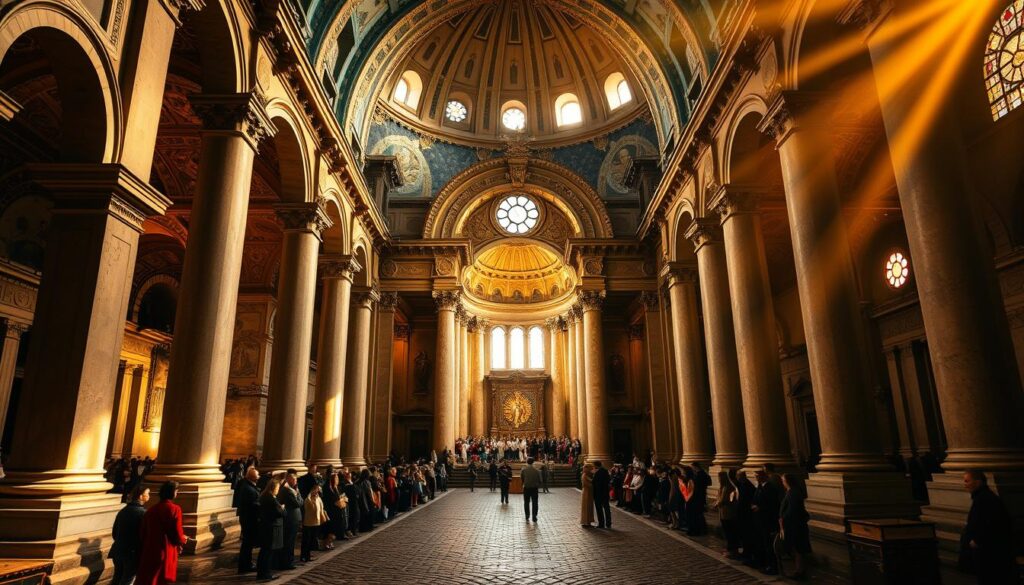
What makes this site extraordinary isn’t just its survival, but its living presence. Six denominations share custody, their rituals unfolding daily amid ancient stones. As historian Miriam Feinberg notes, “The true miracle isn’t the building—it’s the unbroken chain of worship spanning 17 centuries.”
| Century | Event | Impact |
|---|---|---|
| 4th | Original construction | Established pilgrimage tradition |
| 11th | Post-destruction rebuild | Created current layout foundations |
| 21st | 2016 restoration | Revealed original limestone slab |
Modern visitors encounter a timeline carved in marble. Crusader graffiti sits beside Byzantine mosaics, while Ottoman lamps illuminate Armenian altars. This layering shows how each era left spiritual fingerprints.
Today’s pilgrims often describe unexpected moments—a nun’s hymn echoing through the Edicule, or sunlight filtering through medieval windows. These experiences bridge past and present, making the church holy complex feel vibrantly alive despite its age.
The Enduring Significance of the Church of the Holy Sepulchre
Time itself seems to bend within this sacred space, where every stone holds echoes of devotion. The church holy sepulchre has weathered 17 centuries of history while maintaining its role as Christianity’s spiritual compass. Its three domes shelter the tomb venerated as Christ’s burial place, drawing 8,000 worshippers during peak services.
Historical Background and Renovations
Six major renovations have reshaped the holy sepulchre since its 4th-century founding. The 2016 restoration revealed original limestone beneath medieval plaster, proving how each era left its mark. Architectural styles blend Paleochristian simplicity with Romanesque grandeur, creating a living timeline of faith.
| Year | Change | Significance |
|---|---|---|
| 335 CE | Initial construction | Established pilgrimage routes |
| 1048 | Crusader rebuild | Created current floor plan |
| 2020 | Dome restoration | Preserved 12th-century mosaics |
Pilgrimage and Shared Control
Six denominations maintain the church holy through a unique 1757 agreement. Greek Orthodox priests light lamps beside Coptic altars, while Armenian chants mix with Latin prayers. “This site teaches us harmony through shared purpose,” notes caretaker Elias Khoury.
Pilgrims trace the Via Dolorosa’s final stations here, touching the Stone of Anointing where tradition says Jesus’ body was prepared. The tomb chamber remains the focal point, its marble slab worn smooth by centuries of reverent hands.
The Architectural Marvels of Jerusalem’s Christian Sites
Stone arches and domes rise like prayers frozen in time across these sacred structures. The church holy sepulchre exemplifies this blend, where 4th-century foundations meet medieval expansions. Architect Zenobius’ original plan combined Roman civic design with spiritual symbolism, creating spaces that feel both grand and intimate.
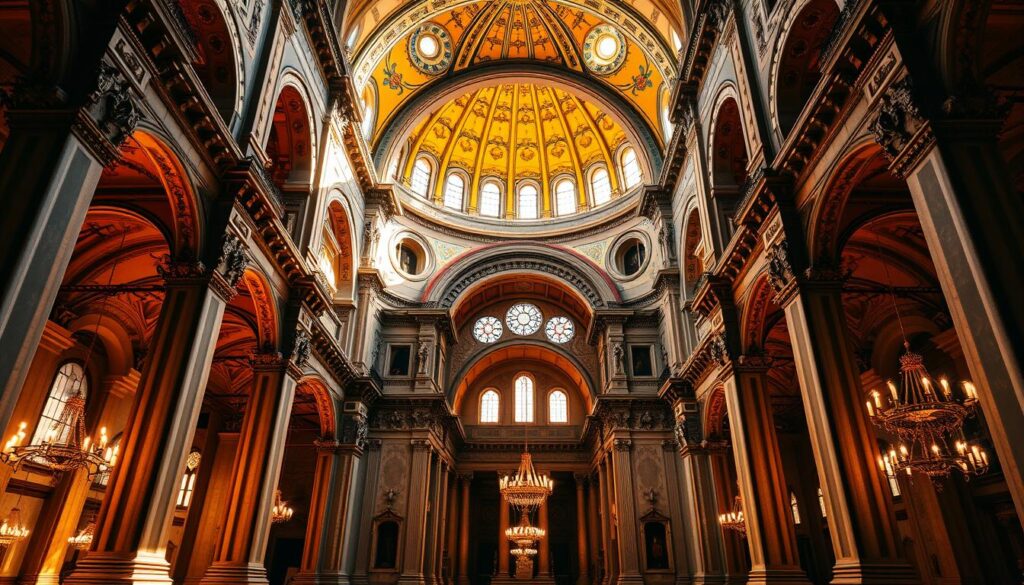
Paleochristian and Romanesque Influences
Walk beneath the Anastasis rotunda’s towering dome, and you’ll witness Paleochristian simplicity meeting Romanesque drama. The circular layout honors Christ’s resurrection, while thick walls and rounded arches reflect later medieval styles. “These buildings weren’t just constructed—they were choreographed,” notes architectural historian Dr. Leah Goldberg.
Key features reveal centuries of layered work:
- The 12th-century bell tower added vertical emphasis
- Ottoman-era renovations introduced ornate Baroque flourishes
- Local limestone gives walls their warm golden glow
Modern restorers face unique challenges. During the 2016 holy sepulchre project, experts used 3D mapping to preserve original stonework while reinforcing structures. This delicate balance keeps ancient buildings both stable and spiritually resonant.
Sunlight filters through arched windows, illuminating mosaics that have watched over pilgrims for 1,700 years. In this area, every column and carving whispers stories of faith enduring through time.
The Basilica of Agony: A Testament to Passion
Golden light filters through alabaster windows at this sacred spot, casting patterns across a rock where countless pilgrims have knelt. The Basilica of Agony—also called the Church of All Nations—stands where olive trees once shaded biblical prayers. Completed in 1924, this church unites architectural brilliance with raw spiritual emotion.
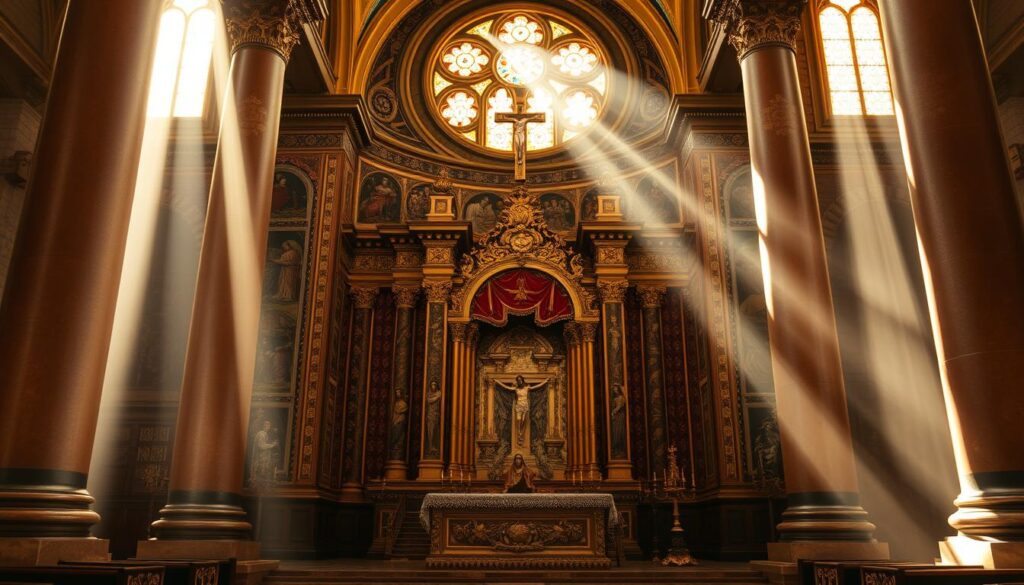
Architectural Inspiration and Design
Italian architect Antonio Barluzzi blended Byzantine grandeur with Romanesque simplicity. The facade’s towering columns frame a mosaic showing Christ as humanity’s bridge to God. Inside, dim lighting and star-patterned domes mirror the night sky of Gethsemane. “Every curve directs attention to the altar,” explains art historian Marco Ricci.
Key features include:
- A rock beneath the main altar, visible through protective glass
- Twelve donated domes representing contributing nations
- Deep blue ceiling mosaics symbolizing spiritual darkness
Spiritual Atmosphere and Symbolism
Visitors often pause at the exposed stone where tradition says Jesus prayed. Flickering lamps and hushed voices create an atmosphere thick with reverence. One pilgrim shared: “You feel the weight of divine struggle here—it’s faith made tangible.”
The site’s power lies in its duality. Ornate gold accents contrast with rough-hewn walls, mirroring the tension between divinity and human suffering. Modern worshippers leave handwritten prayers in crevices between ancient stones, continuing a tradition as old as the area itself.
Christ Church: Embracing Jewish Roots and Modern Worship
A golden cross stands watch over stone walls that blend ancient heritage with living faith. Founded in 1849, Christ Church holds distinction as the Middle East’s oldest Protestant place of worship. Nestled 200 meters from Jaffa Gate, its Old City location bridges historic traditions with contemporary spiritual needs.
Historical Foundations and Growth
The church began as a bold experiment—integrating Hebrew scriptures into Christian practice decades before modern interfaith dialogues. Its limestone complex has expanded across centuries while maintaining original architectural features. Weekly services now draw worshippers from six continents, united by shared liturgy honoring Judeo-Christian roots.
Diverse Community and Service Traditions
Sunday mornings buzz with multiple languages as expatriates, local families, and travelers gather. The community celebrates both Passover and Easter, finding unity through shared spiritual ancestry. Arab melodies mingle with Hebrew prayers during Wednesday evening worship, creating a tapestry of devotion unique to this sacred quarter.
Visitors often remark how sunlight filters through stained glass depicting biblical scenes, illuminating a space where ancient texts feel vibrantly alive. This church doesn’t just host services—it nurtures connections across cultures, proving faith’s power to transcend boundaries.
FAQ
Why is the Church of the Holy Sepulchre considered so significant?
It’s widely believed to house the tomb of Jesus and the site of His crucifixion. Its history spans centuries, with renovations like the 2016 restoration project highlighting its enduring role as a focal point for faith and pilgrimage.
How do different religious groups share control of the Holy Sepulchre?
A unique agreement called the Status Quo, established in 1853, divides management among the Greek Orthodox Patriarchate, Armenian Apostolic Church, and Roman Catholic Church. Each oversees specific sections and schedules worship times.
What architectural styles define Jerusalem’s oldest churches?
Many blend Paleochristian layouts with Romanesque elements like thick walls and rounded arches. The Basilica of Agony, for example, features mosaics depicting biblical scenes, reflecting Byzantine and medieval influences.
What makes the Basilica of Agony spiritually meaningful?
Built on the spot where Jesus is said to have prayed before His arrest, its dim lighting, ancient olive trees, and vivid stained glass create a reflective atmosphere. The altar stone symbolizes His final moments of anguish.
How does Christ Church connect to Jerusalem’s Jewish heritage?
Founded in 1849, it blends Anglican traditions with Hebrew liturgy and Jewish cultural practices. Its location near the Jaffa Gate and outreach programs foster a diverse community bridging modern worship and historical roots.
Are there ongoing preservation efforts for these sacred sites?
Yes! Organizations like the World Monuments Fund collaborate with local authorities to restore fragile structures. Projects often balance historical accuracy with the needs of active worship spaces.