For centuries, two influential branches of Christianity have shaped spiritual lives across the globe. Though sharing ancient roots, their journeys diverged through history, theology, and practice. This exploration will help clarify how these traditions developed unique identities while maintaining core connections.
The English Reformation sparked lasting debates about identity and belief. Some faith communities blend historical continuity with reform, creating a distinctive spiritual path that honors tradition while embracing change. This balance raises important questions about authority, worship, and community life.
Many wonder how these traditions differ in their approach to scripture, leadership, and sacraments. By examining their historical foundations and modern practices, we uncover both shared values and meaningful contrasts. Whether you’re exploring personal beliefs or simply curious, this comparison offers fresh perspectives on Christian diversity.
Key Takeaways
- Both traditions share ancient Christian roots but diverged during historical reforms
- Leadership structures differ significantly in their view of authority
- Approaches to sacraments reveal distinct theological emphases
- Cultural adaptation plays unique roles in each tradition’s development
- Modern expressions balance heritage with contemporary challenges
Historical Foundations of Anglicanism and Catholicism
Long before kings and councils shaped religious identity, ancient communities laid spiritual foundations that still echo today. Both traditions draw from deep wells of history, though their paths diverged through pivotal moments.
Shared Beginnings, Separate Journeys
Christian worship in Britain dates to the second century – centuries before Rome’s full influence. Early believers built local practices around core teachings, creating a distinct spiritual identity. By medieval times, these communities gradually adopted Roman customs while retaining unique elements.
Reformation: Revival More Than Revolution
Henry VIII’s 1530s break from papal authority began as political maneuvering but unlocked lasting change. The Church of England restored its pre-Roman independence, revising ancient liturgies and reducing monastic power. Leaders like Elizabeth I later blended Protestant ideas with Catholic structures, crafting a middle path.
Three key reforms defined this era:
- Vernacular Bibles replaced Latin texts
- Traditional ministries continued with local oversight
- Historic church calendars adapted to new theology
This wasn’t a new church but a renewed version of England’s ancient faith. Parish networks and educational systems remained intact, preserving centuries of tradition while embracing fresh perspectives.
Core Doctrinal Differences between the Two Traditions
At the heart of Christian belief systems lie distinct approaches to theological authority. While sharing foundational faith in Christ, these traditions diverge in how they define essential teachings and interpret divine revelation.

Scripture as the Ultimate Guide
The Roman Catholic Church maintains a comprehensive doctrinal framework. Its detailed catechism spans thousands of pages, addressing everything from moral principles to specific Marian beliefs. Church councils and papal authority shape this evolving system, declaring new dogmas like Mary’s Assumption as binding truths.
Anglican theology takes a different path. The Articles of Religion state clearly: “Holy Scripture contains all things necessary to salvation.” This principle limits required beliefs to biblical foundations and early church creeds. Questions beyond scripture remain open for discussion rather than official decree.
This contrast appears in their teaching materials. Anglican churches use a 20-page catechism focusing on core Christian doctrine, while Roman Catholic resources provide exhaustive guidance. The difference reflects deeper views about tradition’s role – one sees it as developing revelation, the other as secondary to biblical authority.
Both traditions value ancient theology, but their approaches create distinct spiritual identities. Where one establishes detailed systems, the other preserves flexibility, trusting believers to explore unanswered questions through scripture and reason.
Anglicanism vs Catholicism: Exploring Worship and Liturgy
Worship practices breathe life into ancient traditions while reflecting modern priorities. Both communities cherish structured liturgy but approach sacred rituals with distinct flavors. This difference becomes clearest when comparing their primary worship guides.
Two Guides for Sacred Gatherings
The Book of Common Prayer shapes Anglican services with poetic flexibility. First published in 1549, it provides prayers and rites while allowing local adaptation. As one priest noted: “Our strength lies in unity through diversity – same prayers, different expressions.”
Roman Catholics follow the Roman Missal’s precise instructions. This detailed manual ensures identical Mass structures worldwide. From gestures to vestments, every element follows centuries-old patterns refined by Vatican councils.
| Element | Catholic Practice | Anglican Approach |
|---|---|---|
| Liturgical Guide | Roman Missal (strict rubrics) | Book of Common Prayer (flexible framework) |
| Language Use | Latin until 1960s, now vernacular | Always in local language |
| Eucharistic Focus | Sacrificial reenactment | Communal remembrance |
When Words Shape Worship
Language choices reveal deeper theological values. While both traditions now use vernacular, the common prayer tradition began with Cranmer’s insistence that “people should understand what they pray.” This principle fuels Anglican services featuring extended scripture readings and congregational responses.
Modern churches showcase surprising diversity. Some Anglican parishes use incense and chant like Catholic neighbors, while others adopt contemporary music. Catholic Mass maintains greater uniformity, though charismatic movements add new expressions within official guidelines.
Both traditions honor ancient rhythms through liturgical calendars. Advent candles glow and Lenten fasts continue, but local practice determines how communities mark these seasons. This balance between structure and adaptation keeps worship alive across generations.
The Role of Authority and Tradition in Shaping Beliefs
How communities decide what to believe reveals deep differences in spiritual leadership. These choices shape worship practices, moral guidance, and how people connect with sacred texts.
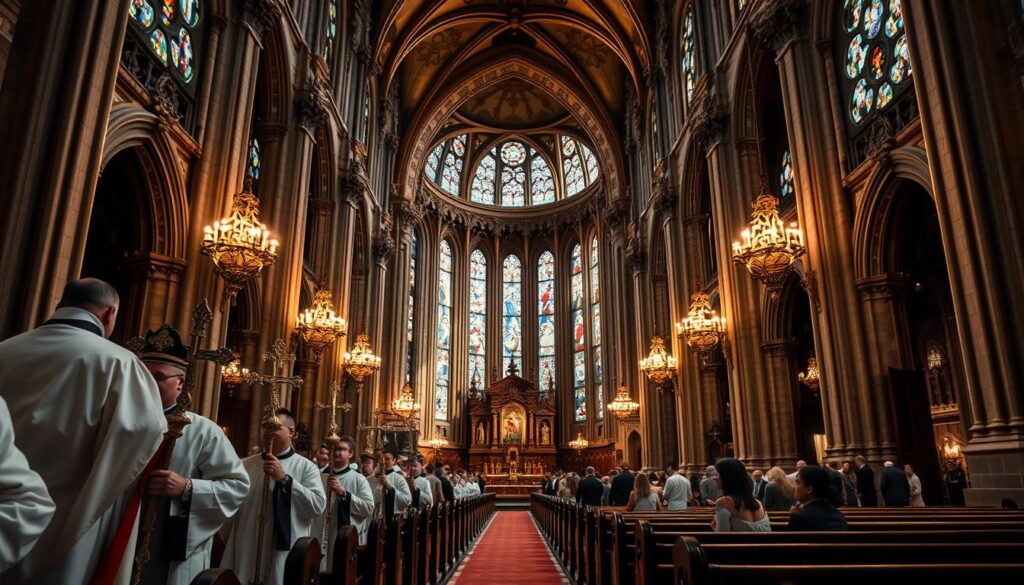
Scripture as the Sole Rule vs. Magisterial Tradition
The Roman Catholic Church views itself as the guardian of divine truth through its teaching office. Leaders claim authority to define doctrines beyond scripture, like Mary’s Assumption. As one bishop explained: “Our tradition grows through prayerful reflection guided by the Holy Spirit.”
Anglicans take a different approach. Their Articles of Religion state clearly:
“The Church cannot enforce beliefs unnecessary for salvation.”
This principle limits official teachings to biblical foundations and early church consensus.
| Aspect | Roman Catholic Practice | Anglican Approach |
|---|---|---|
| Decision-Making | Pope and bishops declare binding doctrines | Local churches consult scripture collectively |
| Tradition’s Role | Equal to scripture as revelation source | Guided by scripture, open to reform |
| Believer’s Role | Accept all church teachings | Interpret non-essentials personally |
This contrast affects daily spiritual life. Catholic teachings require agreement on all doctrines, while Anglican communities allow diverse views on issues like saints’ intercession. Both value ancient wisdom but apply it differently in modern contexts.
Early church leaders like Augustine shaped these approaches. Their debates about biblical authority still influence how churches balance tradition with contemporary challenges today.
Differences in Sacramental Practices: The Eucharist and Communion
At the heart of Christian worship lies a sacred meal that unites believers across generations. While sharing this ancient practice, communities developed distinct understandings of what happens during communion services. These differences shape everything from worship styles to personal preparation.
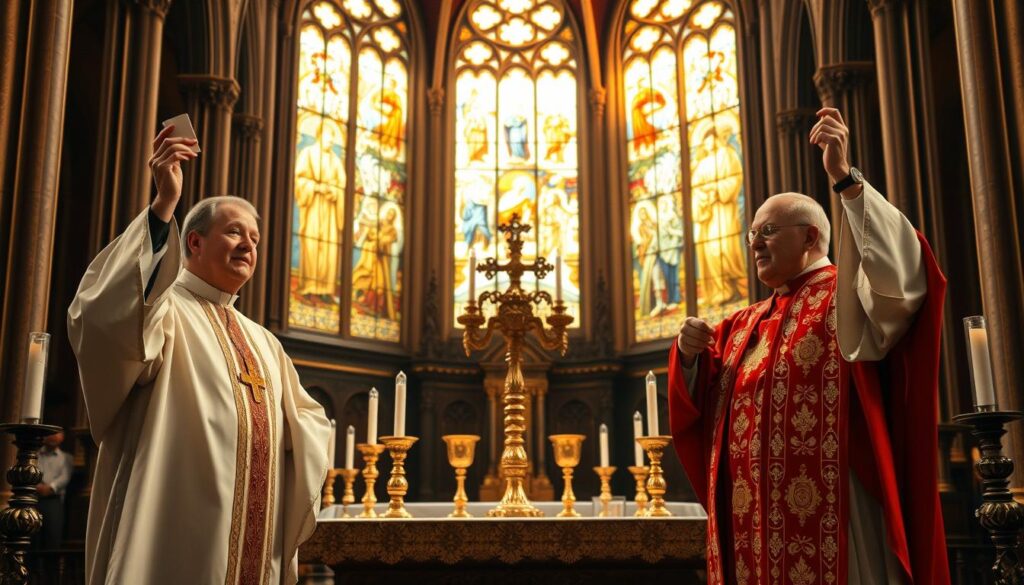
Spiritual Nourishment Through Different Lenses
The Roman Catholic Church teaches that communion involves transubstantiation – bread and wine becoming Christ’s actual body and blood. This belief leads to practices like Eucharistic adoration, where consecrated elements receive special reverence. As one catechism states: “The Eucharist is ‘the source and summit of Christian life.'”
Anglican teachings take a different approach. Their Articles of Religion clarify:
“The body of Christ is given, taken, and eaten only after a heavenly and spiritual manner.”
Here, thefaithof participants matters more than physical changes to the elements.
| Aspect | Catholic Practice | Anglican Approach |
|---|---|---|
| Eucharistic Belief | Literal transformation | Spiritual reception |
| Preparation | Confession required for mortal sins | Living faith emphasized |
| Elements After Consecration | Worthy of worship | Remain ordinary bread/wine |
| Worship Practices | Adoration ceremonies | Communal remembrance focus |
Both traditions agree communion connects believers to Christ. But where one sees fact in transformed elements, the other finds promise in shared obedience. These views influence how often people participate – weekly Mass obligations for Catholics versus personal choice in many Anglican churches.
Ultimately, both paths affirm that sacred things happen when communities gather around the table. The differences lie in explaining how grace works, not whether it’s present.
Clergy and Priesthood: Marriage, Ordination, and Ministry
Religious leadership takes different forms across Christian communities, reflecting deep convictions about sacred service. While both traditions value ordained ministry, their approaches to clergy life reveal contrasting priorities.
Historical Perspectives on Married Priesthood
Roman Catholic priests typically commit to lifelong celibacy, a practice formalized in the 12th century. Exceptions exist in Eastern Catholic churches, where married men can become priests. However, Latin Rite clergy follow strict rules – once ordained, marriage isn’t permitted.
Anglican leaders take a different path. Their Articles of Religion state:
“Bishops, priests, and deacons aren’t commanded to remain unmarried.”
This principle allows clergy to marry, seeing family life as compatible with spiritual leadership.
These differences shape how churches serve their people. Roman Catholics maintain centralized authority through celibate bishops, while Anglican communities often emphasize shared decision-making. Both systems aim to support believers but through distinct models of ministry.
Modern debates continue about these traditions. Some people see celibacy as a sacred commitment, others view marriage as a practical way to connect with congregations. The fact remains: these choices profoundly impact how clergy live and serve.
FAQ
How did the English Reformation shape Anglican traditions?
The English Reformation, starting under Henry VIII in the 16th century, broke ties with the Roman Catholic Church. This led to the creation of the Church of England, which blended Protestant ideas with older liturgical practices. Over time, this movement emphasized scripture and local governance while retaining elements like bishops and sacraments.
What distinguishes Catholic and Anglican views on salvation?
Catholic teaching emphasizes sacraments and good works as pathways to grace, guided by the Magisterium. The Anglican tradition, influenced by the Reformation, often highlights scripture’s authority and justification by faith, though practices vary across its global communion.
How do worship styles differ between these traditions?
Catholic services often use the Roman Missal with structured Latin Mass elements, even in local languages. Anglicans rely on the Book of Common Prayer, which allows flexibility in liturgy while maintaining traditional creeds and prayers. Both value ritual but approach language and local adaptation differently.
Why does the Catholic Church prioritize papal authority?
Catholics believe the Pope, as St. Peter’s successor, holds ultimate teaching authority under the Magisterium. Anglicans, however, view scripture as the primary guide, with bishops and synods making decisions collectively—a structure rooted in the Elizabethan Settlement’s balance of tradition and reform.
Do both groups believe in the Real Presence during Communion?
Yes, but interpretations differ. Catholicism teaches transubstantiation, where bread and wine become Christ’s body and blood. Anglicans often describe the Eucharist as a spiritual presence, avoiding strict doctrinal definitions to accommodate diverse theological perspectives within their communion.
Can Anglican priests marry, unlike Catholic clergy?
Yes. After the Reformation, Anglican clergy were permitted to marry, reflecting Protestant reforms. The Catholic Church maintains celibacy for priests, viewing it as a commitment to serving God and the Church wholeheartedly, though exceptions exist for certain rites.
How do these traditions approach modern social issues?
The Roman Catholic Church often upholds traditional teachings on topics like marriage and gender roles, guided by papal encyclicals. Anglican churches, however, vary widely—some dioceses ordain women or bless same-sex unions, reflecting decentralized governance and cultural context.
Are Anglican services more flexible than Catholic Mass?
Generally, yes. The Book of Common Prayer provides structure but allows regional adaptations, including contemporary language or music. Catholic liturgy follows stricter rubrics, though post-Vatican II reforms introduced vernacular languages while preserving core rituals.
Do Anglicans recognize saints like Catholics do?
Anglicans honor saints as examples of faith but don’t emphasize intercessory prayer to them as strongly. Catholic tradition includes canonization processes and veneration of saints as mediators, supported by centuries of doctrinal development and papal authority.
Can Anglicans and Catholics receive Communion in each other’s churches?
Officially, the Catholic Church restricts Communion to its members except in rare cases. Anglicans often invite baptized Christians to participate, but practices vary. Dialogue continues, with some local agreements promoting unity while respecting doctrinal differences.