Discovering a spiritual home often begins with unexpected questions. For many, the path to embracing a new belief system isn’t sudden—it’s a journey shaped by study, relationships, and moments of clarity. Take Scott Hahn, once a devoted Presbyterian minister who spent years teaching theology. His story reveals how earnest exploration can lead to profound truths.
This article isn’t just about changing labels. It’s about transformative experiences that reshape how people see themselves and the world. Some, like Hahn, start as critics of Catholic teachings. Through prayer and deep scriptural analysis, they uncover connections they never imagined.
You’ll meet individuals from all walks of life—teachers, parents, artists—who found answers in ancient traditions. Their stories aren’t about quick fixes but years of seeking. They show how intellectual curiosity and personal struggles often intersect with timeless wisdom.
What unites these journeys? A shared realization that truth isn’t confined to one perspective. Whether through academic study or heartfelt prayer, each path highlights the richness of a faith rooted in both Scripture and community. Let’s explore how ordinary lives become extraordinary testimonies.
Key Takeaways
- Spiritual transformation often begins with curiosity and personal inquiry
- Many converts initially held misconceptions about Catholic teachings
- Study and prayer play central roles in deepening understanding
- Conversion stories span diverse professions and backgrounds
- Scriptural analysis frequently reveals unexpected connections to tradition
- The journey often involves years of reflection and growth
Understanding conversion catholicism: A Path to Renewal
A shift in belief isn’t just about doctrine—it’s about the heart’s deepest yearnings. As Professor Stacy Davis notes, this process reshapes how people view life’s purpose and their connection to the divine. Some deepen existing commitments, like monks choosing service in war zones, while others rebuild their spiritual foundation entirely.
This journey often begins with programs like the Rite of Christian Initiation, guiding adults through sacraments and community integration. But it’s not a checkbox exercise. “True transformation,” one catechist explains, “requires wrestling with ancient truths until they become your own.”
Consider two paths: a lifelong believer rediscovering faith through volunteer work, and a skeptic finding peace in Eucharistic traditions. Both experiences blend study with lived practice—prayer habits shift, priorities realign, and old assumptions dissolve over time.
Renewal thrives in shared spaces, whether parish study groups or family rituals. It’s why many describe their awakening as “coming home,” even if they’ve never left their geographic roots. The process isn’t linear; seasons of doubt often precede breakthroughs.
Faith isn’t a destination—it’s a daily choice to grow.
Inspiring Personal Testimonials of Conversion
Personal stories light the way for others seeking spiritual truth. Scott Hahn’s journey stands out—a tale of passionate pursuit turned upside down. Once a fiery critic of Rome, he now champions its teachings worldwide.
Remarkable Journeys of Faith
Hahn’s teenage zeal for Scripture grew under mentor Jack’s guidance. By 18, he’d read the Bible cover-to-cover multiple times. But his studies led him down a surprising path—he became convinced traditional practices were corrupt. “I saw myself as rescuing people from error,” he recalls.
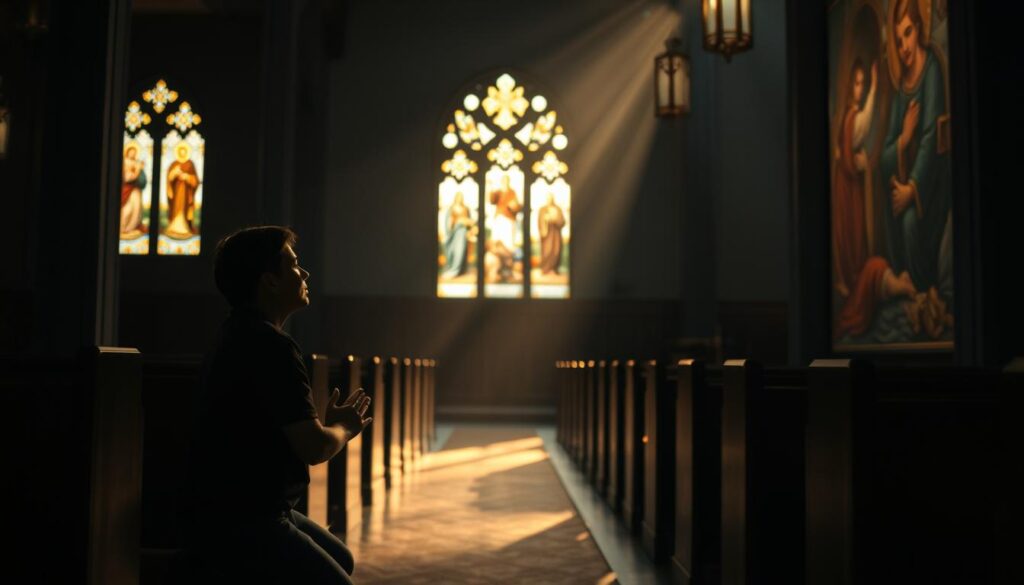
Stories of Transformation
His crusade took personal turns. When dating a Catholic woman, Hahn gifted her a thick anti-Church book. It worked—she stopped attending Mass. Yet his grandmother’s quiet devotion haunted him. Destroying her rosary “felt like breaking chains,” he later admitted, “but left emptiness too.”
Decades of study reshaped his views. “Truth dismantled my defenses,” Hahn explains. What began as efforts to guide others became his own awakening. Family ties played key roles—through conflicts and eventual understanding.
“You don’t choose the truth—it chooses you when you’re ready to listen.”
Like many, Hahn’s shift took years. His story mirrors countless others where love for family and encounters with steadfast believers plant seeds of change. These narratives prove no heart remains closed forever to light.
The Role of Scripture and Covenant in Conversion
Ancient texts hold keys to modern spiritual journeys. Scott Hahn’s exploration of biblical covenants reveals how divine relationships differ radically from human transactions.
Biblical Foundations and Covenant Relationships
Hahn discovered something revolutionary in his studies. Contracts exchange goods, but covenants exchange lives. Like marriage vows, biblical promises bind people as family. The Hebrew ‘Am’—meaning blood relative—shapes God’s promise: “I will be your God, and you will be my people.”
This insight upended his Protestant training. Faith alone began feeling incomplete compared to Scripture’s family-focused language. Through Hebrew analysis, he saw God inviting kinship, not just legal agreements.
Insights from Theologians and Apologists
Academic rigor often leads to surprises. A Presbyterian professor once told Hahn: “Truth doesn’t care about your traditions.” Years of wrestling with Paul’s letters revealed connections to Catholic teachings about Jesus Christ as bridegroom.
“The Word became flesh not to sign a deal, but to start a family.”
Hahn’s story shows how deep study can challenge assumptions. What begins as intellectual curiosity often becomes heart transformation—one sacred word at a time.
Early Encounters with Faith and Spiritual Awakening
Teenage years often become turning points where big questions meet life-changing answers. For countless individuals, faith journeys ignite during this season of self-discovery. These moments shape futures in ways no one anticipates.
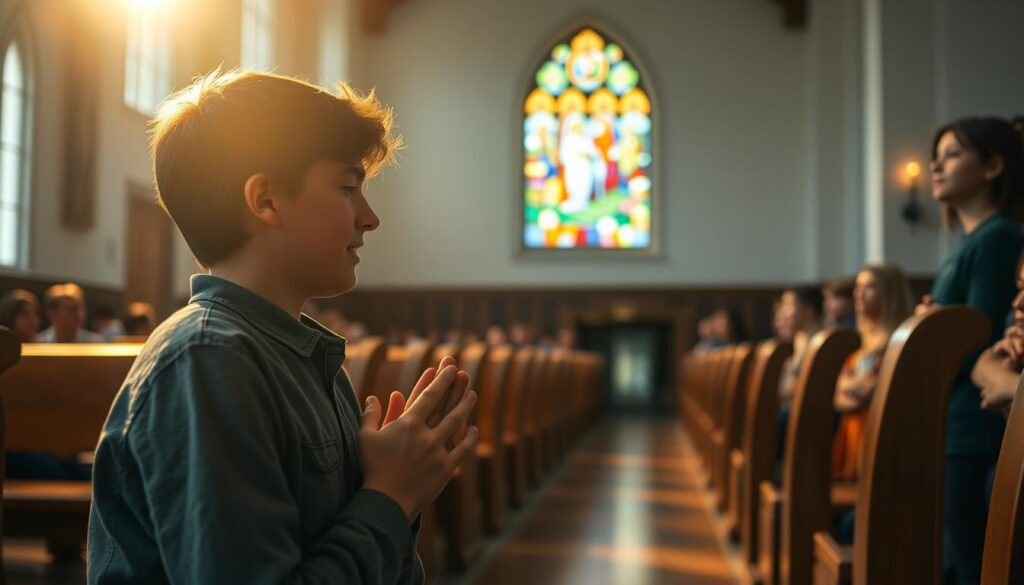
High School Conversion Experiences
Scott Hahn’s story began at a locker-lined crossroads. A Young Life leader named Jack noticed the restless sophomore. Instead of preaching, Jack offered friendship—weekend hikes, honest talks, and patience.
Over time, their bond opened Hahn to Scripture’s power. At 16, he prayed to welcome Jesus Christ as Lord. “It felt like coming alive,” he later shared. But this choice carried costs—old friends drifted away as his priorities shifted.
Jack’s mentorship proved vital. He gifted Hahn a Bible, urging daily study. By graduation, the teen had read it cover-to-cover four times. This foundation prepared him for future theological depths.
“Invest in young hearts—you’re planting oaks, not flowers.”
Many discover faith through such selfless guides. Early awakenings, even when incomplete, often spark lifelong quests for truth. Lost friendships get replaced by spiritual kinship—a trade Hahn calls “painful but priceless.”
These years prove formative. What begins as teenage curiosity can grow into unshakable conviction. Like Hahn, countless believers trace their roots to mentors who took time to walk beside them.
Academic and Theological Transformation
Sometimes the classroom becomes holy ground. At Gordon-Conwell Seminary, Scott and Kimberly Hahn discovered their Protestant assumptions crumbling under academic scrutiny. For three years, Scott devoured Scripture and theological works, often studying 18 hours daily. His intensity earned top honors—but also unexpected questions.
Seminary Years and Deep Study
Kimberly’s ethics class sparked a pivotal moment. A small-group project on contraception led her to early church writings opposing birth control. “The historical record didn’t match what we’d been taught,” she recalled. Meanwhile, Scott’s research revealed inconsistencies in Protestant interpretations of covenant theology.
Influences of Professors and Mentors
Though their professor aimed to strengthen Protestant convictions, assigned texts often pointed elsewhere. One mentor warned: “Truth isn’t a buffet—you can’t pick only comfortable parts.” Their marriage deepened the journey, as late-night debates became shared quests for answers.
Rigorous scholarship didn’t weaken faith—it demanded intellectual honesty. As Scott noted: “When evidence reshapes your beliefs, that’s not betrayal. It’s growth.” Their story shows how academic passion can lead seekers down paths they never planned to walk.
Family Influence and Spiritual Heritage
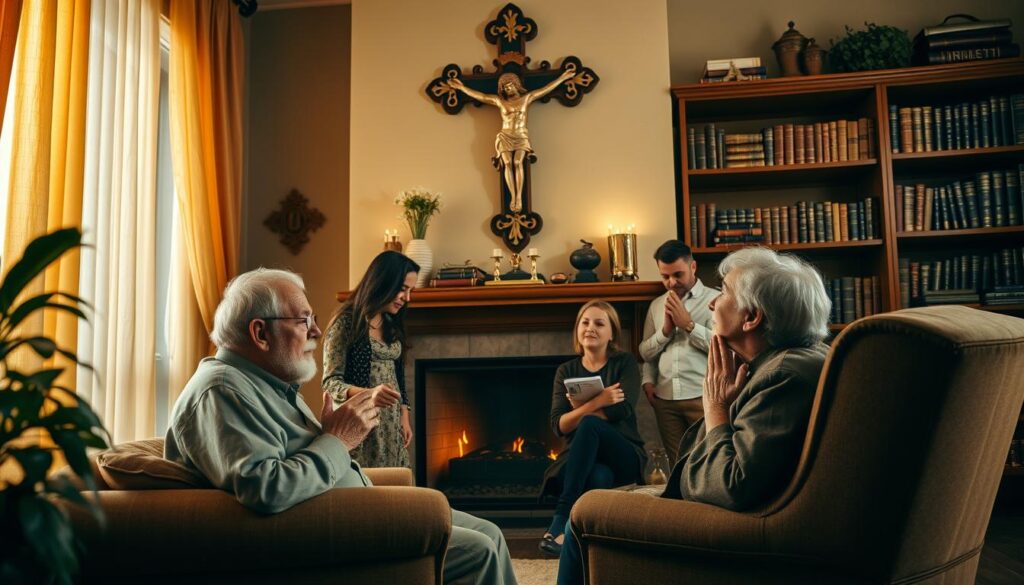
Hidden treasures often lie within family histories. Scott Hahn’s grandmother quietly carried her faith through decades, becoming the only Catholic relative on both sides of his family. Her prayer book and rosary beads seemed like foreign objects to her teenage grandson—until years later.
When she passed away, Hahn inherited her religious items. At the time, he saw them as shackles. “I ripped apart her rosary,” he admits. “Thought I was freeing her memory.” Yet her gentle witness lingered, challenging his anti-Church views.
“Holiness speaks loudest when it isn’t shouting.”
Many people discover this truth through older relatives. A grandparent’s steadfast habits or a parent’s worn Bible often plant seeds that take years to grow. These family connections become anchors during spiritual storms.
Hahn’s story mirrors countless others. Items once rejected—a cousin’s crucifix, an aunt’s hymnbook—later gain profound meaning. What begins as confusion about loved ones’ practices often matures into respect.
Children especially absorb these quiet examples. Studies show 68% of people credit grandparents with shaping early spiritual curiosity in their children. Though young minds might misinterpret rituals, the home remains faith’s first classroom.
Cultural and Social Dynamics in Faith Conversion
Spiritual journeys don’t happen in isolation. Across the United States, cultural narratives shape how people perceive religious traditions. Professor Stacy Davis observes: “Many reject what they think the Church teaches, not what it actually teaches.” This gap between perception and reality creates unique challenges—and opportunities.
Community Traditions and National Trends
Door-to-door evangelization often fails because modern seekers crave connection over lectures. Studies show 73% of newcomers join faith groups through personal relationships. Shared meals, volunteer projects, and honest conversations break down stereotypes faster than theological debates.
Cultural myths persist in American society. Some assume the Church opposes science or modern values. Yet data reveals surprising alignments—many parishes now host climate action groups and tech ethics forums. Bridging this awareness gap requires creative language that resonates with contemporary concerns.
| Effective Outreach | Common Missteps | Impact Factor |
|---|---|---|
| Shared service projects | Impersonal pamphlets | 4x engagement |
| Interfaith dialogues | Defensive debates | 68% trust boost |
| Story-based witness | Doctrine lectures | 3x retention |
Social media trends reveal a global pattern. Young adults worldwide increasingly value ancient rituals amid digital chaos. In the United States, this manifests as renewed interest in communal prayer and seasonal traditions. Authenticity matters most—87% of seekers report leaving communities that felt performative rather than genuine.
“We don’t need perfect ambassadors, just honest ones walking the journey together.”
As cultural divides widen, faith communities offering stability and radical hospitality become beacons. Their light shines brightest when actions match words—a lesson for our fractured world.
Conversion Experiences Across the United States
From baseball fields to governor’s offices, spiritual awakenings reshape lives nationwide. Hank Aaron swung for faith before breaking records—the MLB legend joined the Church in 1959, finding strength beyond stadium lights. His story mirrors countless others where success meets deeper hunger.
Political leaders across party lines show this pattern. Texas Governor Greg Abbott and Michigan’s former leader Jennifer Granholm found common ground in ancient traditions. Even former Speaker Newt Gingrich, once critical of Church teachings, later embraced its wisdom. “Truth doesn’t fit neatly into left or right boxes,” notes a Georgetown researcher.
Entertainment figures add surprising chapters. Actors and musicians quietly join parishes, trading red carpets for quiet prayer. One Grammy winner shared: “Fame felt empty until I discovered sacred rhythms.” Academic giants follow too—philosophers and scientists cite Catholic intellectual history as their “final puzzle piece.”
This movement spans geography as much as profession. Urban professionals in New York walk the same path as Kansas farmers. Sam Brownback’s rural roots didn’t hinder his spiritual growth—they enriched it. Coastal cities and Midwest towns alike host vibrant communities where people from all backgrounds gather.
“The Church speaks every language—even the silent ones of the heart.”
What unites this diverse list? A shared recognition that some questions need answers deeper than worldly success. From Hollywood to Harvard, the United States brims with stories proving spiritual hunger knows no boundaries.
Testimonies of Notable Public Figures
Unexpected icons across industries share a common thread—their search for meaning led them home. From baseball legends to comedy stars, their paths reveal how spiritual hunger transcends fame and status.
From Sports to Politics: Diverse Journeys
Hank Aaron’s locker held more than gloves. Alongside his bat lay Thomas à Kempis’ The Imitation of Christ, gifted by a priest who guided him and his wife after their child’s birth. The MLB legend’s 1959 choice wasn’t about publicity—it shaped his work ethic and private reflections.
Comedian Stephen Colbert’s return to faith after years away mirrors this quiet persistence. Like Supreme Court nominee Robert Bork—whose marriage to a former nun deepened his interest—these people found truth through relationships, not debates.
Actress Susan Hayward took a hands-on approach, co-founding a parish that still thrives. Their stories prove spiritual seeking isn’t confined to any one man or profession. Whether through books, mentors, or service, each journey reflects the universal pull toward belonging.
FAQ
What draws people to explore the Catholic faith later in life?
Many find Jesus Christ’s teachings resonate deeply during life transitions, offering purpose and connection. Others seek the Church’s rich traditions, sacraments, or intellectual heritage. Figures like Pope John Paul II also inspire curiosity through their writings on love and human dignity.
How does family background influence spiritual journeys?
Families often shape early beliefs, whether through shared rituals or quiet examples of service. Some discover Catholicism while reconciling mixed-faith marriages, while others rebuild relationships through shared prayer. Stories like Scott Hahn’s highlight how faith can unite generations.
Are there unique challenges for converts in the United States?
Cultural differences, like navigating Roman Catholic Church teachings in a pluralistic society, can be tricky. However, parishes often provide community support. The rise of digital ministries, such as Ascension Presents, also helps address modern questions about theology and practice.
Why do some public figures openly share their faith stories?
Celebrities like G.K. Chesterton or Edith Stein use their platforms to normalize spiritual seeking. Their transparency about struggles with doubt or moral issues encourages others to explore faith without fear of judgment.
How do scripture and tradition work together in Catholic belief?
The Bible is seen as God’s living Word, interpreted through the Church’s 2,000-year history. Scholars like Dr. Brant Pitre emphasize how covenants—like Abraham’s or David’s—prefigure Christ’s sacrifice, creating a cohesive narrative of redemption.
Can academic study deepen one’s spiritual life?
Absolutely! Many converts, such as Jennifer Fulwiler, credit rigorous study with resolving doubts. Seminaries and programs like Word on Fire blend philosophy, history, and prayer, showing how faith and reason coexist.
What role do communities play in sustaining faith?
Groups like FOCUS (Fellowship of Catholic University Students) or local parishes offer fellowship, especially during crises. Shared traditions—like Eucharistic adoration or feast days—anchor individuals in a global family rooted in timeless truths.