Choosing a faith isn’t like picking a new hobby. For me, it meant wrestling with questions bigger than myself. This story isn’t just about joining a church—it’s about how a nine-month OCIA program reshaped my understanding of community, purpose, and grace.
While many assume religious shifts happen overnight, Catholic conversion demands patience. Unlike some Protestant traditions, where decisions can feel immediate, the Church requires deep study and reflection. Think of it as a marathon, not a sprint—and that’s exactly what makes it transformative.
You might wonder why anyone would commit to such a rigorous path today. Yet figures like JD Vance and Tammy Peterson show this journey isn’t just for lifelong believers. Even as Catholic numbers dip nationwide, those who complete OCIA stick around 84% of the time. Why? Because true change takes roots slowly.
This isn’t a sugarcoated tale. I’ll share the doubts, the late-night Google searches about sacraments, and the moments that made everything click. Whether you’re curious about faith or just love a good life overhaul, there’s something here for you.
Key Takeaways
- Catholic conversion involves a structured 9-month OCIA program, unlike quicker Protestant processes
- 84% of OCIA participants remain active Catholics long-term despite broader membership declines
- High-profile conversions reflect growing interest in traditional faith structures
- The process emphasizes education and personal reflection over emotional decisions
- Modern converts often balance ancient traditions with contemporary questions
Discovering My Spiritual Roots
The foundation of my spiritual journey was laid long before I could articulate what faith meant. Like many raised in Protestant homes, my earliest lessons blended heartfelt devotion with unspoken boundaries. Our family Bible sat prominently on the coffee table, its pages worn from years of nightly readings.
Childhood Faith Formation and Early Experiences
Sunday school felt like a second home. I memorized Psalms alongside multiplication tables and learned to distrust anything labeled “Catholic.” My father once described the Catholic Church as “the Great Idolater” during a heated dinner discussion. Yet those same years taught me to love Scripture and value community prayer.
Our small-town church reinforced these views. Coloring books depicted saints as suspicious figures, while sermons warned against “worshipping bread.” Still, the vibrant hymns and potluck gatherings nurtured genuine joy in Christian fellowship.
Influences from Family and Community
Three forces shaped my early worldview:
- My grandmother’s lap, where she read Bible stories with theatrical voices
- Youth group leaders who equated Catholicism with paganism
- Neighbors from different denominations who somehow all claimed “truth”
This environment created quiet tensions. I adored my family’s passion for Jesus but sensed gaps in their critiques. Why did Catholics cross themselves? What really happened during Mass? These unanswered questions later became doorways.
Questioning Beliefs and Seeking Truth
My spiritual foundation began trembling during a college statistics class. As the professor charted global Christian denominations, I froze. If 45,000 Protestant groups existed, how could truth belong to just one?
Confronting Prejudices and Early Doubts
Walking into St. Patrick’s Cathedral months later shattered my assumptions. Sunlight streamed through rose windows as tourists whispered. If this church was “wrong,” why did it feel holier than any sermon I’d heard?
Three discoveries upended my worldview:
- Reading St. John of the Cross’ mystical writings revealed spiritual depth I’d never encountered
- Historical records showed early Christians practicing rituals my childhood church condemned
- Meeting Catholic people who loved Scripture as fiercely as my family
Late-night debates with friends exposed contradictions. “If tradition matters,” one asked, “why dismiss 2,000 years of time-tested beliefs?” My stomach churned—they weren’t attacking faith, but my inherited biases.
Each question felt like disloyalty. Yet ignoring them meant clinging to fear over facts. That tension birthed something unexpected: the courage to seek answers beyond familiar walls.
Encountering the Realities of OCIA
Joining the Catholic Church isn’t like signing up for a gym membership. The OCIA program unfolds over nine months minimum—a timeline that often stretches into years based on personal readiness. My first class felt like drinking from a firehose: sacraments, saints, and centuries of tradition all demanding equal attention.
Navigating the Process of Conversion
The structured classes revealed why Catholic conversion differs from Protestant models. While some churches offer instant baptism, Rome requires wrestling with complex teachings. Our catechist put it bluntly: “This isn’t a year-long Bible study. We’re forming souls, not filling notebooks.”
Three non-negotiable requirements emerged:
- Annulments for previous marriages
- Commitment to raise children Catholic
- Full acceptance of doctrines like transubstantiation
Delays, Discernment, and Spiritual Trials
My journey hit a wall during Easter 2022. Though ready for confirmation, my annulment paperwork stalled. The pastor’s words still sting: “God’s time isn’t Amazon Prime.” That extra year of waiting taught me more about humility than any class.
Friends dropped out over Mary’s role or birth control rules. Others quit when required to break cohabitation habits. The process doesn’t bend—it asks you to change. Yet this rigor explains why those finishing OCIA tend to stay. Becoming Catholic means shedding old skin, not just acquiring new rituals.
Converted to Catholicism: Embracing a New Faith
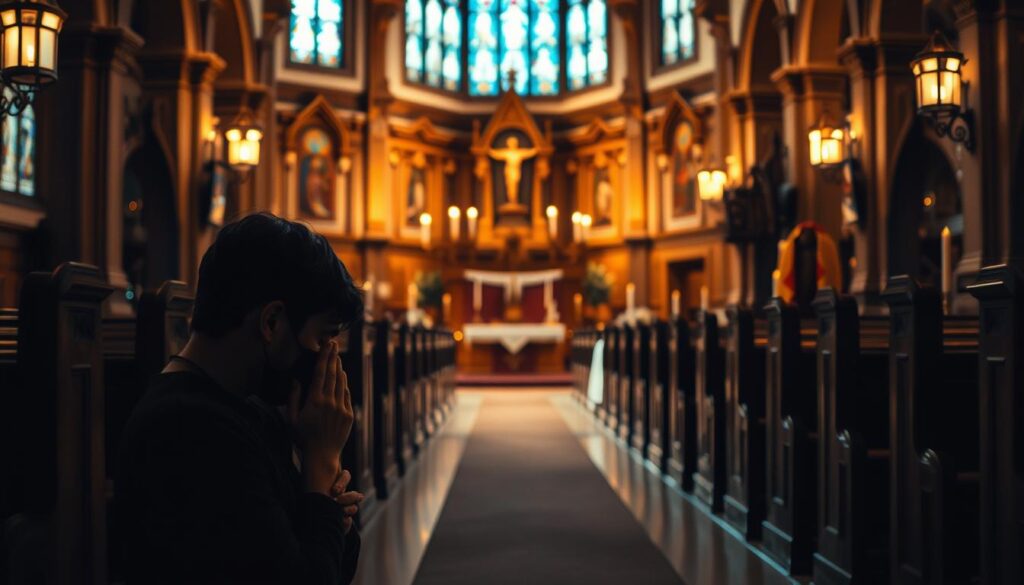
The final step toward embracing a new spiritual identity arrives like sunrise—inevitable yet astonishing. After years of study and prayer, my journey reached its tipping point during a quiet Thursday Mass. Kneeling in the same pew I’d occupied for months, something shifted. The scent of incense mixed with whispered Latin prayers as light filtered through stained glass.
The Critical Moment of Decision
Surrender came unexpectedly. One moment I was mentally rehearsing arguments about papal authority. The next, a wave of clarity washed over me. My catechist’s words echoed: “Let grace carry what effort cannot.” Tears blurred the altar as years of resistance dissolved.
Three truths anchored my choice:
- The Catholic Church’s unbroken lineage to early Christians
- A tangible sense of the Holy Spirit during Eucharistic adoration
- Peace replacing former anxieties about “wrong” worship
Declaring “I want to become Catholic” felt less like a leap than coming home. Previous worries about family reactions paled against this conviction. Years of OCIA had sanded down doubts, leaving bedrock certainty.
That decisive Mass became my bridge between worlds. Protestant hymns still comfort, but now they harmonize with ancient liturgy. The way forward finally made sense—not as rejection, but fulfillment.
Exploring Catholic Traditions and Community
I never expected to find chicken feathers in a Guatemalan chapel during Mass. This moment crystallized Catholicism’s unique blend of universal faith and cultural expression. The Catholic Church spans the world, yet each community stitches its traditions into the fabric of worship.
Meeting Diverse Catholic Cultures
My first parish picnic revealed unexpected divisions. A Sicilian grandmother insisted her statue of St. Lucy held special powers, while Polish members debated Vatican II reforms. Three discoveries reshaped my understanding:
- Irish Catholic parishes prioritizing social justice over Latin Mass
- Mexican American churches blending mariachi with Gregorian chant
- Filipino communities incorporating ancestral healing rituals into prayer
At a Guatemalan mission, indigenous families left wax figurines near the altar—a practice older than Columbus. The priest smiled: “Faith grows where it’s planted.”
Finding a Spiritual Tribe
Without cultural roots, I felt like a tourist in others’ traditions. Then I discovered a young adult group mixing ancient liturgy with modern questions. Our shared worldview bridged ethnic divides—we were all becoming Catholic anew.
Sunday potlucks became my home. A Lebanese deacon’s baklava sat beside a Texan’s brisket, united by Eucharistic joy. This messy, beautiful family finally helped me belong.
Overcoming Challenges and Internal Conflict
Adopting a new faith feels like learning a foreign language in real-time. Every teaching clashes with muscle memory from past beliefs. My father’s voice echoed during Mass: “Why pray to saints when Jesus is enough?”
Struggles with Church Doctrines and Personal Doubts
Mary’s role became my first hurdle. Veneration felt like betrayal until I read early church writings about her significance. Then came tougher questions—natural family planning rules collided with modern views on marriage.
Three teachings tested me most:
- The Eucharist’s literal interpretation
- Same-sex union restrictions
- Papal authority over personal conscience
Losing friends hurt more than theological debates. One snapped: “You’re joining the oppressors.” Media attacks painted converts as backward—but my RCIA stories revealed nuanced believers.
Late-night journaling helped bridge gaps. I wrote letters to Protestant mentors, explaining why ancient practices felt liberating. Slowly, fear of “wrongness” faded. As my catechist advised: “Doubt isn’t failure—it’s fuel.”
Now, when doctrines chafe, I lean into prayer instead of panic. The church’s stability anchors me, even when my mind races. Surrender, I’ve learned, isn’t about having all answers—it’s trusting the journey.
Reflecting on Lessons and Lasting Insights
Time reveals what quick decisions often miss. The slow burn of spiritual formation taught me truths no instant conversion could provide. Patience became more than virtue—it was survival gear for the soul.
Wisdom Gained Through Trials and Transformation
Three discoveries reshaped my understanding of faith’s timeline:
- Early Christians wrote about the Eucharist as literal flesh—not symbols—for 1,000 years
- Grace works with human nature, not against it
- Historical continuity matters more than modern convenience
My experience with annulment delays felt frustrating then. Now I see how waiting purified my intentions. Spiritual growth thrives in seasons of uncertainty.
| Protestant Assumption | Catholic Reality | Historical Proof |
|---|---|---|
| Symbolic communion | Real Presence | Ignatius of Antioch (110 AD) |
| Sola Scriptura | Apostolic Tradition | Irenaeus’ writings (180 AD) |
| Faith vs. Works | Grace perfects nature | Augustine’s sermons |
This journey taught me to value roots. Like an oak needing years to anchor deeply, faith matures through tested traditions. What once seemed rigid now feels reassuringly stable.
The greatest lesson? True home isn’t found in comfort but in shared struggle. As the author of this story, I’ve learned to embrace questions as companions, not enemies. Faith grows brightest when we stop running from the dark.
Conclusion
True transformation unfolds in seasons, not days. The OCIA program’s 84% retention rate proves what time teaches: lasting change grows through patient roots. Across years of study and prayer, I discovered faith isn’t a checkbox—it’s a lifelong conversation.
Those nine months of classes were just the start. Like many converts, I’ve found spiritual growth accelerates after confirmation. The Church’s global tapestry—from bustling urban churches to remote mission chapels—shows how ancient truth adapts to every culture.
To anyone considering this way: your questions matter more than quick answers. My friends who doubted now see how this journey deepened my life’s purpose. Our stories, woven together, strengthen the Church’s heartbeat worldwide.
Gratitude remains my compass—for mentors who challenged me, moments that broke me, and grace that rebuilt me stronger. Here’s to the messy, glorious work of becoming.
FAQ
How did family influence your decision to join the Catholic Church?
While my family wasn’t Catholic, their emphasis on service and community values shaped my understanding of faith. Their support during my spiritual exploration gave me courage to pursue deeper truths, even when it led me down an unexpected path.
What challenges did you face during the OCIA process?
The OCIA journey involved unexpected delays, like classes being postponed due to limited resources. These pauses tested my patience but also deepened my discernment, helping me reflect on whether this faith truly aligned with my heart’s calling.
How did New York City’s diversity shape your Catholic experience?
Attending Mass in neighborhoods like Harlem and the Bronx exposed me to vibrant cultural expressions of Catholicism. From gospel choirs to multilingual prayers, the city’s eclectic communities showed me how universal the Church truly is.
Were there doctrines you struggled to accept initially?
Yes—teachings on topics like confession and Marian devotion felt unfamiliar at first. Open dialogue with mentors and studying Church history helped me grasp their spiritual significance over time, turning uncertainty into reverence.
How did you find your “spiritual tribe” after becoming Catholic?
Volunteering at parish events and joining small faith groups connected me with others who shared my hunger for authenticity. These relationships provided encouragement during moments of doubt and celebrated milestones in my journey.
What advice would you give someone considering this path?
Embrace curiosity and ask hard questions—both to others and yourself. The process isn’t about having all the answers but trusting that grace meets you where you are. Find a parish that feels like home, and let community guide you forward.