Many seekers today crave meaningful ways to connect with ancient wisdom. A prominent voice in contemporary religious thought offers fresh perspectives through written works that blend scholarly insight with practical spirituality.
This influential leader combines decades of ministerial experience with advanced theological training. Ordained in Chicago and educated at institutions like the Institut Catholique de Paris, he brings rare depth to discussions about spiritual growth. His approach makes complex ideas feel relatable, whether discussing sacraments or sacred art.
What sets these writings apart is their ability to bridge intellectual rigor and heartfelt devotion. Readers discover how timeless truths intersect with modern life through clear explanations and cultural references. The materials serve as valuable tools for both newcomers and lifelong practitioners seeking renewed understanding.
Key Takeaways
- Modern spiritual guides merge academic expertise with real-world application
- Complex theological concepts become accessible through relatable language
- Cultural connections deepen engagement with traditional practices
- Written works support personal growth at every faith journey stage
- Multimedia resources complement textual study for holistic learning
A Journey into Catholicism with Robert Barron
Rooted in Midwestern values, a spiritual guide emerged to reshape modern faith outreach. His life path unfolded through cities that shaped his worldview—Chicago’s neighborhoods, Detroit’s resilience, and Paris’ intellectual rigor.
https://www.youtube.com/watch?v=NuZBc3M5pao
From Humble Beginnings to Global Impact
Early years studying with Dominican educators laid the groundwork for a unique calling. Academic pursuits at Notre Dame and Paris’ Institut Catholique sharpened his ability to translate ancient truths into modern language. Mentors like Cardinal George recognized his gift for bridging tradition and innovation.
The Evolution of a Ministry Icon
What began as local seminary teaching blossomed into a worldwide mission. Collaborations with thinkers like Fr. Steve Grunow sparked creative approaches to sharing faith. By blending theology with digital tools, Bishop Barron’s work now reaches millions through documentaries and online platforms.
This journey heart of service shows how ordinary roots can yield extraordinary fruit. Through shifting from parish work to multimedia ministry, he proves timeless messages thrive in new formats when delivered with clarity and passion.
Spotlight on the catholicism book robert barron
Exploring faith through a global lens transforms abstract ideas into vivid experiences. This multimedia project combines written and visual storytelling to reveal timeless truths across continents and cultures.
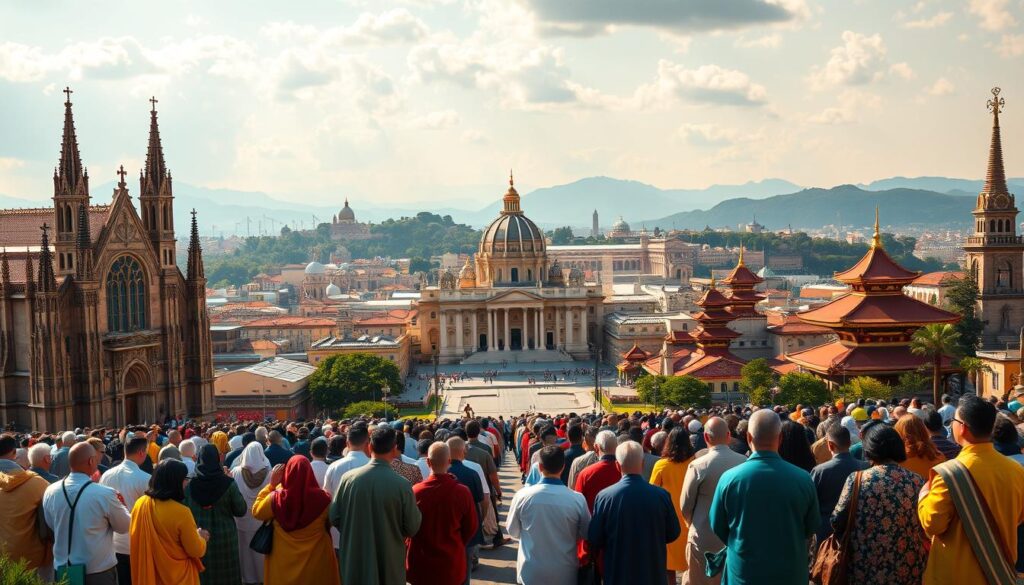
Overview of the Book’s Purpose and Vision
The acclaimed documentary series serves as both travelogue and theological compass. Viewers journey from Mexican shrines to Italian cathedrals, discovering how sacred spaces shape spiritual understanding. Core teachings come alive through masterpieces by Michelangelo and stories of modern saints.
Rather than persuasive arguments, the work lets beauty speak first. Ancient rituals and modern worship practices appear side by side, showing continuity across generations. This approach makes complex doctrines feel as natural as sunlight through stained glass.
As a standalone guide, the text helps readers connect historical roots to personal faith. Chapters explore how sacraments intersect with daily life and why tradition remains vital in our fast-paced world. Cultural examples from six continents prove spiritual hunger exists everywhere.
The project’s success lies in its balance of depth and accessibility. Whether discussing medieval philosophy or Ugandan martyrs, it maintains a conversational tone that welcomes curious explorers. This blend of intellectual rigor and visual wonder creates new pathways for spiritual discovery.
Unpacking the Themes and Theology
Faith and reason often seem at odds in modern discussions—but what if they’re meant to dance together? This section explores how spiritual wisdom thrives when paired with thoughtful reflection.
Integrating Faith with Intellectual Inquiry
A groundbreaking work like Vibrant Paradoxes shows why truth-seeking needs both heart and mind. Through themes like Mercy vs. Sin and Freedom vs. Discipline, readers discover how ancient teachings solve modern puzzles. Did you know Thomas Aquinas’ ideas about matter still influence debates about artificial intelligence?
The real magic happens when complex ideas become practical tools. For example, the book links medieval philosophy to workplace ethics or family dynamics. This approach helps anyone exploring Catholic teachings see their relevance in today’s tech-driven world.
| Theological Theme | Historical Root | Modern Application |
|---|---|---|
| Reason & Faith | 13th-century scholasticism | Navigating science-religion conflicts |
| Suffering & Joy | Early martyr stories | Coping with chronic illness |
| Freedom & Discipline | Monastic traditions | Digital detox strategies |
What makes this theology stand out? It never shies from tough questions about pain or doubt. Instead, it frames them as stepping stones to deeper faith. The writing style feels like chatting with a wise friend—clear, warm, and occasionally surprising.
By connecting classic wisdom to current issues, these teachings become living guides rather than dusty rules. Whether you’re wrestling with ethical dilemmas or seeking purpose, the ideas here offer fresh lenses for viewing life’s complexities.
The Intersection of Faith, Art, and Tradition
Beauty has always been the Church’s silent ambassador—a universal language that transcends time. Creative masterpieces and sacred rituals work together to make spiritual truths tangible. This fusion of aesthetics and belief forms a bridge between ancient practices and modern seekers.
Sacraments, Saints, and Aesthetics
Sacred rituals like baptism or communion transform ordinary moments into divine encounters. Through physical elements—water, bread, oil—participants experience grace in everyday life. This is faith made visible, connecting our world to something greater.
Historic figures like Francis of Assisi or Teresa of Ávila show how holiness takes shape in action. Their stories inspire through courage and compassion, not just abstract ideals. Artistic treasures—from Gothic cathedrals to Mozart’s masses—echo this pattern of making truth beautiful.
| Sacred Art Form | Historical Purpose | Contemporary Impact |
|---|---|---|
| Stained Glass | Teach Bible stories | Inspire digital media visuals |
| Gregorian Chant | Enhance worship | Shape modern hymn melodies |
| Iconography | Visual theology | Guide meditation practices |
The Role of Church Tradition in Modern Evangelization
Ancient practices gain new life through technology and fresh perspectives. A 14th-century hymn might soundtrack a viral video, while Renaissance paintings inform app designs. This blend honors roots while speaking to today’s needs.
Young adults especially resonate with this approach. They crave authenticity but distrust empty trends. By presenting timeless truths through art and music, the faith meets them where they are—without compromise.
Insights into Bishop Barron’s Evangelization Approach
In an age where screens dominate daily life, one spiritual leader reimagines ancient practices for the digital frontier. Bishop Barron’s team at Word Fire launched a groundbreaking strategy that honors tradition while embracing innovation. Their work spans early-morning TV slots to viral social campaigns, proving faith thrives in modern spaces.
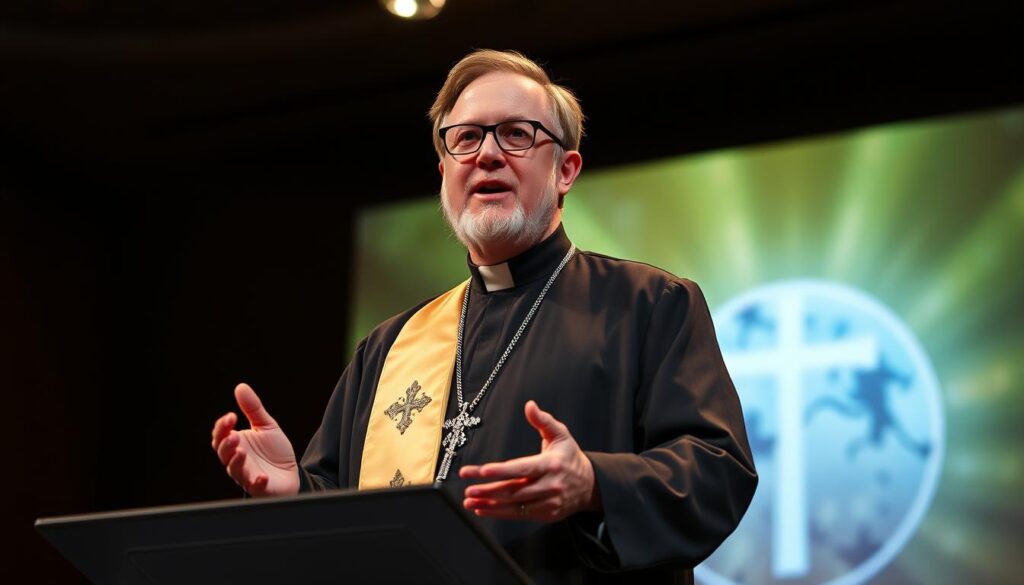
Digital Outreach and Multimedia Engagement
What began as a 15-minute morning program on WGN exploded into a cross-platform revolution. The team harnessed YouTube debates, Instagram stories, and documentary films to spark global conversations. By blending Aquinas’ wisdom with meme culture, they meet people where they scroll.
Collaborators like Brandon Vogt and Jared Zimmerer helped craft content that feels both smart and relatable. From analyzing Marvel movies to discussing AI ethics, the approach makes theology accessible. This isn’t about watering down ideas—it’s about creative translation.
Television and Documentary Influence
Bishop Barron’s documentaries continue Fulton Sheen’s legacy with a 21st-century twist. High-production films explore faith through art, history, and personal stories. These projects don’t preach—they invite viewers to wonder.
| Platform | Traditional Use | Modern Adaptation |
|---|---|---|
| Television | Sermon broadcasts | Cinematic documentaries |
| Social Media | Announcements | Interactive Q&As |
| Live Events | Church services | Virtual conferences |
The strategy works because it respects both the message and the medium. Whether through a smartphone screen or a theater projector, the focus remains on beauty and truth. It’s evangelization that feels less like a lecture and more like a shared discovery.
Comparing Catholic Literature: Word on Fire vs. Classic Works
Religious writing evolves like a living conversation—honoring roots while embracing new voices. The Word on Fire initiative reimagines sacred texts for smartphone-toting seekers, blending time-tested truths with modern storytelling. Think of it as a bridge between Augustine’s Confessions and today’s faith explorers.
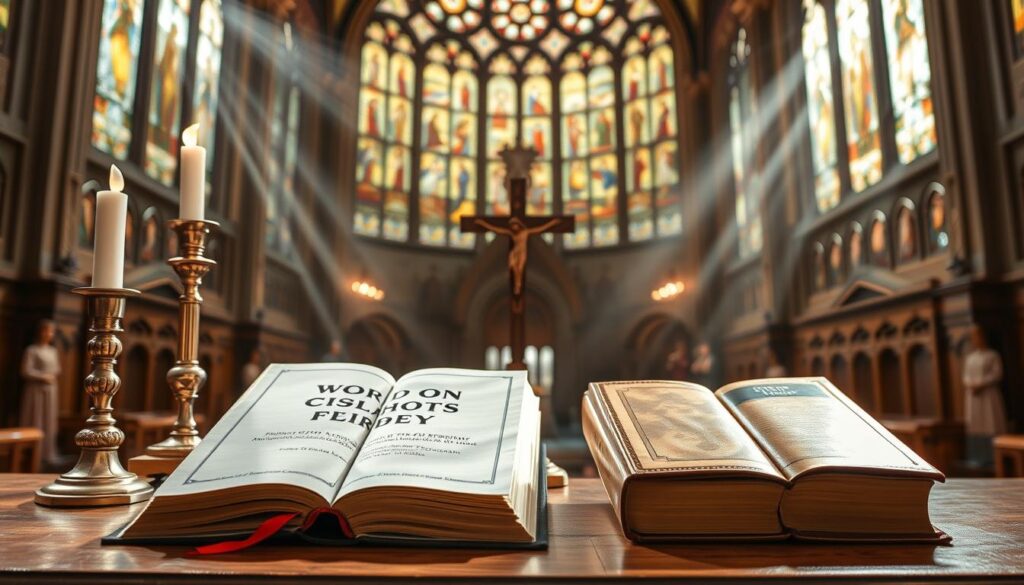
Classic works laid the groundwork with deep theological insights, but some feel like museum pieces to modern readers. Books like Vibrant Paradoxes keep the richness while using relatable examples—comparing sacraments to family meals or linking saints’ lives to workplace ethics. This approach makes ancient wisdom feel like a friend’s advice over coffee.
Collaborative projects show the Catholic Church’s adaptive spirit. Take To Light a Fire on Earth, where diverse perspectives unite under shared truths. Unlike older texts that often spoke from solitary scholars, these works thrive on dialogue—like a group chat across centuries.
“Truth isn’t fragile—it can handle new packaging.”
What truly sets this work apart? It respects readers’ intelligence without drowning them in jargon. Digital extras like video discussions or interactive guides complement the text, proving books aren’t relics but launchpads for deeper exploration. The result? A bookshelf that speaks both to the mind and the Instagram generation.
Narrative Structure and Engaging Storytelling
Stories shape souls long before arguments convince minds. John Allen’s work masterfully weaves lived experiences with spiritual truths, showing how ordinary moments become chapters in a greater story. This approach turns abstract ideas into relatable journeys anyone can follow.
Biographical Elements and Anecdotal Narratives
The biography format reveals how divine guidance works through human imperfection. Readers encounter a relatable figure who stumbles, questions, and grows—not a flawless hero. Childhood memories blend with pivotal career choices, proving holiness thrives in everyday life.
One chapter might explore a tense seminary debate, while another shares quiet prayer moments. These snapshots make theology feel like shared memories rather than textbook lessons. Through this lens, even complex concepts like grace become as tangible as a friend’s advice.
Personal Touches that Bridge Faith and Life
What makes these narratives stick? Heart-centered details—like describing morning coffee rituals before writing sermons. Such glimpses show how spiritual practices anchor busy lives without demanding perfection.
“God’s fingerprints appear clearest in life’s messy drafts, not just the final masterpiece.”
The text time-travels between past struggles and present wisdom, inviting readers to see their own journeys differently. It’s not about copying someone else’s path—it’s recognizing sacred sparks in your own ordinary days.
The Role of Tradition in Shaping Catholic Faith
Ancient practices aren’t relics—they’re living bridges connecting past wisdom to present needs. The Catholic Church thrives by anchoring modern spiritual journeys in time-tested rituals. This balance preserves identity while inviting fresh understanding.
Historical Context and Sacramental Foundations
Sacraments act like spiritual fingerprints—unique markers shaping individual and communal faith. Baptism’s water or communion’s bread aren’t symbols but encounters. They transform ordinary moments into divine conversations.
When exploring Catholic heritage, we find answers to modern questions in ancient patterns. Early believers faced similar struggles with doubt and cultural shifts. Their solutions—prayer rhythms, service traditions—still guide today’s seekers.
The beauty of tradition lies in its flexibility within faithfulness. Like a river deepening its bed over centuries, practices adapt while carrying timeless grace. This dynamic continuity helps believers navigate moral complexities without losing their compass.
FAQ
How does Bishop Barron’s work blend faith with intellectual exploration?
His writing invites readers to connect spiritual teachings with philosophy, science, and culture, fostering a deeper understanding of divine truth through reasoned dialogue.
What role do art and beauty play in communicating theological ideas?
Visual masterpieces, sacred music, and architectural wonders serve as gateways to encountering God’s presence, making complex doctrines accessible and emotionally resonant.
Why is digital outreach central to modern evangelization efforts?
Platforms like podcasts, social media, and documentaries allow timeless messages to reach global audiences, meeting people where they already engage spiritually.
How does this publication differ from classic Catholic literature?
While honoring foundational texts, it emphasizes contemporary language and multimedia integration, bridging ancient wisdom with today’s cultural questions.
Can you explain the importance of sacraments in daily spiritual life?
Sacraments like the Eucharist act as tangible encounters with grace, grounding believers in Christ’s love through rituals that transcend time and culture.
What makes storytelling vital for sharing religious experiences?
Personal anecdotes and historical narratives humanize theology, helping readers see their own journeys reflected in the lives of saints and everyday faithful.
How does tradition remain relevant in a rapidly changing world?
By rooting practices in historical continuity, the Church offers stability while adapting methods to address modern challenges without compromising core truths.
What impact have documentaries had on spreading spiritual teachings?
Films and series visually unpack complex ideas, making theology engaging for viewers who might not connect with traditional written formats alone.