For centuries, religious communities have played a central role in shaping the nation’s identity. From colonial meeting houses to sprawling modern campuses, these faith groups reflect both tradition and innovation. Once representing nearly three-quarters of the population, their influence remains woven into the fabric of daily life despite shifting membership trends.
Recent surveys reveal a fascinating evolution. While some groups have seen gradual declines, others maintain strong participation rates. Regional differences add depth to this story—think fiery revivals in Southern towns or quiet hymn-singing in Midwestern farm communities. Each tradition carries its own customs, yet all share a common thread of spiritual connection.
This guide explores how these communities adapted to societal changes while preserving core values. You’ll learn about growth patterns in different denominations and the rise of contemporary worship styles. We’ll also uncover why certain areas became hubs for specific traditions and how modern congregations address today’s challenges.
Key Takeaways
- Mainline groups have declined since 2012, while others remain steady
- Cultural impact spans from colonial times to modern social initiatives
- Regional worship styles mirror local traditions and values
- 21st-century innovations attract younger generations
- Membership diversity reflects broader societal shifts
Understanding the Historical Roots of American Protestantism
European settlers planted the seeds of diverse spiritual traditions in the 16th and 17th centuries. These pioneers established colonies where faith shaped laws, education, and community life. Their practices laid the groundwork for a religious landscape unlike any in Europe.
Early Colonial Influences and Settler Faith
Northern European groups brought Anglican, Reformed, and other traditions to colonies like Massachusetts Bay and Virginia. Puritans built tight-knit communities emphasizing moral discipline, while Quakers promoted equality and pacifism. This era birthed America’s first experiment in religious diversity, though tensions often arose between different belief systems.
The Impact of Revival Movements
The 1730s sparked a spiritual wildfire known as the Great Awakening. Preachers like George Whitefield drew massive crowds with passionate sermons about personal salvation. This movement reshaped worship styles, prioritizing emotional connection over formal rituals.
| Revival Period | Key Figures | Focus | Lasting Influence |
|---|---|---|---|
| First Great Awakening (1730s-40s) | Jonathan Edwards | Personal conversion | Evangelical traditions |
| Second Great Awakening (1800-1830s) | Charles Finney | Social reform | New denominations |
Later revivals addressed frontier settlers and urban workers, creating camp meetings and new religious groups. These movements proved faith could thrive in America’s changing social state while maintaining core values.
Evolution of Church Membership and Denominational Trends
Membership patterns in religious groups tell a story of transformation. While traditional metrics show decline, new measures of engagement paint a nuanced picture. A 2023 study reveals only one major denomination saw growth—a modest 0.5% increase.
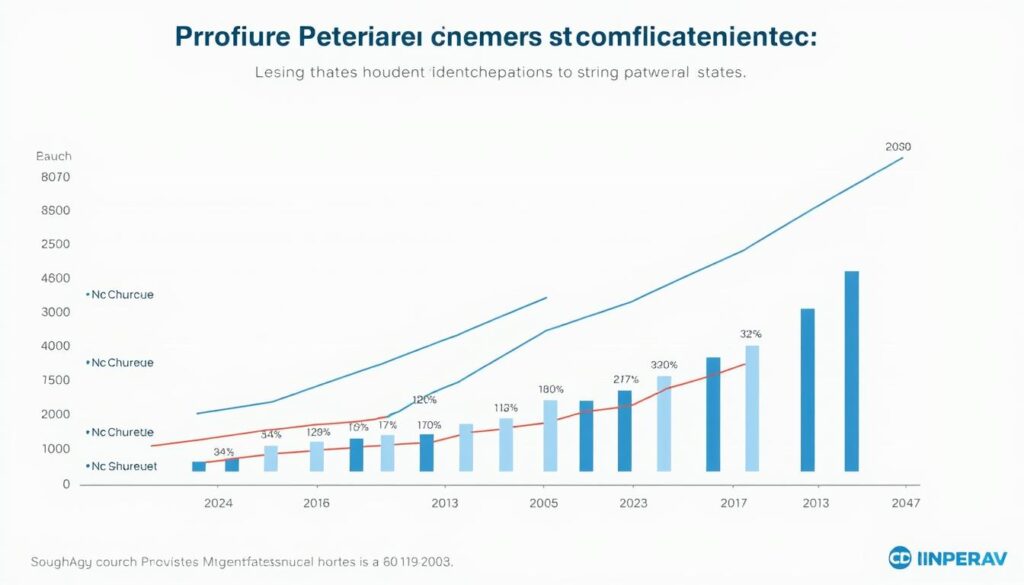
Key Membership Data and Growth Patterns
Mainline groups face steepest declines, with some losing 20% membership since 2010. Yet others buck the trend. Historically Black congregations maintain steady participation, blending spiritual traditions with community action. Younger members often prefer flexible involvement over formal enrollment.
Shifts in Mainline and Evangelical Congregations
Three factors explain diverging paths:
- Cultural relevance in worship styles
- Local outreach programs
- Digital ministry adaptations
Evangelical groups show resilience through decentralized structures. Their focus on personal faith experiences resonates in southern and midwestern states. Meanwhile, mainline denominations grapple with aging memberships and shifting societal values.
As one researcher notes: “Numbers don’t capture spiritual vitality. A small, active congregation often impacts its community more deeply than a large, disconnected one.” This evolving landscape suggests success now means fostering meaningful connections rather than counting members.
Highlighting Major Protestant Denominations
From sprawling congregations to neighborhood chapels, the United States hosts a mosaic of Christian traditions. These groups shape spiritual practices, community values, and even regional identities. Let’s explore the key players shaping this vibrant landscape.
Southern Baptist Convention and Its Influence
The Southern Baptist Convention leads with 16.2 million members, making it the nation’s largest Protestant denomination. Rooted in Southern culture, its decentralized structure allows local congregations to tailor outreach programs. Mission trips and youth ministries keep younger generations engaged. “Our strength lies in unity, not uniformity,” notes a Texas-based pastor.
Other Leading Denominations in America
Beyond the Baptist tradition, diverse groups thrive:
- United Methodist Church (7.8 million): Combines historic liturgy with social justice initiatives
- Church of God in Christ (5.5 million): A cornerstone of African American religious life
- Evangelical Lutheran Church (4.5 million): Blends European heritage with modern U.S. culture
Smaller denominations like the Assemblies of God (2.9 million) emphasize charismatic worship, while the Episcopal Church (2 million) balances tradition and progressive theology. Together, they create a rich tapestry of belief systems across the country.
Local Megachurches: America’s Dynamic Church Landscape
Modern spiritual communities are rewriting the rulebook for large-scale worship. Over 1,750 congregations now draw 2,000+ attendees weekly, blending cutting-edge technology with timeless traditions. These hubs of faith demonstrate how spiritual connection thrives in contemporary settings.
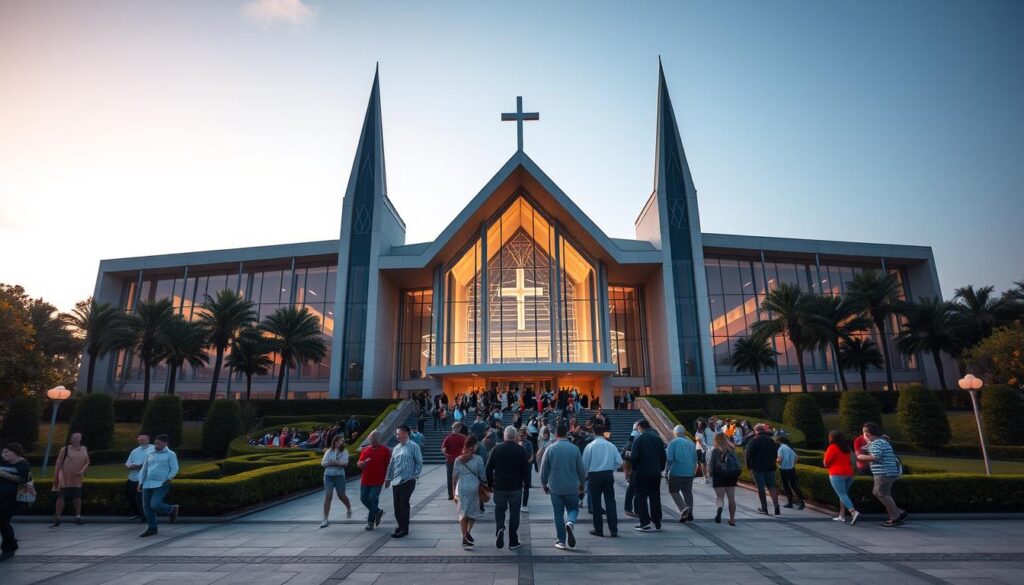
Case Studies of Notable Megachurches
Life Church in Oklahoma leads the pack, welcoming 85,000 people across multiple locations each weekend. Their secret? Innovative small-group models within massive gatherings. Alabama’s Church of the Highlands uses similar strategies, serving 60,000 attendees through localized outreach programs.
Houston’s Lakewood Church transformed a sports arena into a worship space for 45,000 weekly visitors. “Our goal isn’t just size,” explains a staff member. “It’s creating meaningful touchpoints in a crowd.” These examples show how leadership adapts traditional formats for modern crowds.
The Role of Nondenominational Movements
Flexibility drives success for 44,000 independent congregations nationwide. Forty percent of megachurches avoid formal denominational ties, allowing quick responses to community needs. Crossroads Church in Ohio exemplifies this approach, running 35 locations that share resources while tailoring local services.
- Multi-site models expand reach without losing intimacy
- Contemporary music and visual storytelling engage younger crowds
- Local leaders make decisions without bureaucratic delays
This movement proves that spiritual communities can grow exponentially while maintaining core values. As attendance patterns shift, these adaptable structures point toward faith’s evolving future.
Diverse Protestant Traditions and Their Social Impact
Spiritual communities nationwide are discovering strength in teamwork. Different denominations now combine resources to tackle big challenges, proving unity amplifies their impact. This shift reflects a growing focus on practical service over doctrinal debates.
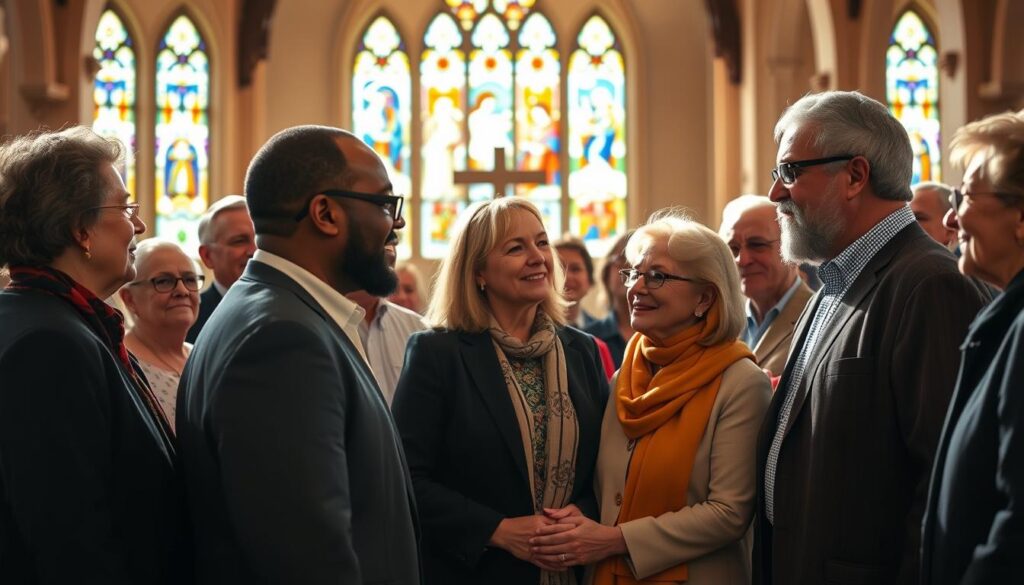
When Faith Groups Join Forces
A Hartford Institute study shows 66% of large congregations helped start new sister groups recently. This partnership approach spreads effective outreach models while maintaining local flavor. Baptist food banks team with Methodist job programs, while Presbyterian health clinics share space with Lutheran tutoring centers.
Three key trends drive this movement:
- Multiracial congregations grew to 58% among large faith groups
- 63% avoid political discussions to focus on common goals
- Only 18% engage in voter campaigns
“Our differences matter less than our shared mission,” explains a pastor from Texas. This mindset helps groups address poverty and education gaps more effectively. Disaster response teams now blend volunteers from various traditions, creating faster relief networks.
These collaborations foster peace through practical action. Neighborhoods see tangible benefits when diverse believers unite behind soup kitchens or mentorship programs. As one volunteer notes: “We’re writing a new story—one where helping hands matter more than theological labels.”
Data-Driven Insights Into Protestant Congregations
Modern congregations reveal surprising trends when viewed through a statistical lens. Recent analyses show how spiritual communities adapt while maintaining core traditions, offering fresh perspectives on participation patterns.
Statistical Overviews from Recent Studies
The Hartford Institute’s latest survey highlights dramatic growth among large gatherings. Megachurches now report 4,092 weekly attendees on average—a 33% jump since 2018. Regular participants total nearly 6,000 per location, proving scale doesn’t hinder engagement.
Historical comparisons deepen understanding. Colonial records show 75% attendance rates in the 1730s, plummeting to 20% after independence. Today’s landscape balances this legacy with new expressions: 44,319 independent groups now serve 21 million people nationwide.
Three key shifts emerge:
- Nondenominational movements outpace traditional structures
- Urban centers host 60% of fastest-growing congregations
- Digital tools help track spiritual participation metrics
“Numbers tell half the story,” notes a researcher. True impact lies in how communities use this data to strengthen local connections while honoring shared values. From colonial meeting houses to streaming services, the quest for meaningful belonging continues evolving.
FAQ
How did the Great Awakenings shape faith communities in the U.S.?
The Great Awakenings sparked widespread revivalism, emphasizing personal faith and grassroots preaching. These movements led to new denominations, increased missionary work, and a lasting focus on individual spiritual experiences.
Why have some denominations grown while others declined?
Cultural shifts, outreach strategies, and theological adaptability play roles. Groups like the Southern Baptist Convention grew through evangelism, while others faced challenges aligning with modern social values.
What makes the Southern Baptist Convention influential today?
With over 13 million members, it’s the largest U.S. Protestant group. Its emphasis on missionary work, conservative theology, and nationwide networks solidify its cultural and religious impact.
How do megachurches redefine worship experiences?
Megachurches like Lakewood Church blend large-scale services, multimedia, and community programs. Their focus on inclusivity and practical teachings attracts diverse, younger crowds seeking connection.
Are nondenominational movements changing American Christianity?
Yes! Nondenominational groups prioritize flexibility over tradition, often drawing younger members. Their growth reflects a shift toward personalized faith and decentralized leadership structures.
How do Protestant traditions address social issues locally?
Many collaborate on food drives, disaster relief, and advocacy. For example, the Evangelical Lutheran Church partners with charities to address poverty and racial justice.
What recent trends define U.S. congregational life?
Studies show rising digital engagement, multiethnic congregations, and younger leaders prioritizing mental health and environmental stewardship alongside traditional ministries.