Nestled in the heart of San Francisco, a historic spiritual landmark has welcomed families for over 175 years. This vibrant congregation holds the distinction of being the oldest Lutheran community in the western United States, blending rich traditions with modern faith practices.
Designed by German-American architect Henry Geilfuss in 1894, the red brick structure stands as an architectural marvel. Its Romanesque Revival exterior contrasts beautifully with intricate Gothic Revival details inside, creating a sacred space that inspires awe. The building has weathered earthquakes and fires, symbolizing the resilience of its members.
Two distinct worship experiences cater to diverse preferences: a lively contemporary service at 8:45 AM and a traditional liturgy at 11:15 AM. Both gatherings occur in the sunlit sanctuary, where stained glass windows cast colorful patterns across wooden pews.
More than just a place of worship, this community actively fosters connections through outreach programs and fellowship events. Visitors often remark on the warm atmosphere that makes everyone feel like part of an extended family.
Key Takeaways
- Historic spiritual hub in San Francisco serving families since 1849
- Unique architectural blend of Romanesque and Gothic styles
- Offers both contemporary and traditional worship services
- Survived major earthquakes while maintaining structural integrity
- Active community programs fostering meaningful relationships
History and Heritage of St. Mark Lutheran Church
The story begins amidst the chaos of the California Gold Rush. In 1849, German newcomers arrived in San Francisco seeking spiritual connection alongside economic opportunity. Their determination to preserve cultural traditions planted seeds for what would become a landmark of faith.
Founding Roots and Immigrant Vision
Rev. Frederick Mooshake journeyed from Germany’s Goettingen University that same year. He held services in homes and makeshift spaces, nurturing a community through shared language and customs. For 30 years, these families saved funds and rallied support to construct a permanent home for their beliefs.
Architectural Triumphs and Civic Survival
When completed in 1895, Henry Geilfuss’ red brick masterpiece blended Romanesque strength with Gothic elegance. Just 11 years later, the 1906 earthquake tested its resilience. Though nearby fires raged, the structure sheltered displaced families for weeks, its spire standing tall above the ruined city.
| Year | Event | Impact |
|---|---|---|
| 1849 | First German settlers arrive | Laid spiritual foundation |
| 1895 | Current building dedicated | Architectural milestone |
| 1906 | Earthquake & fire survival | Community refuge role |
| 2006 | Safety renovations completed | Modernized historic spaces |
Recent $11 million upgrades honor original craftsmanship while meeting seismic codes. Original stained glass and woodwork now shine beside earthquake-resistant supports – a perfect balance of past and present.
Experience st mark lutheran church Community Spirit
San Francisco’s spiritual tapestry owes much to a pioneering congregation established during the Gold Rush era. This community became a blueprint for intergenerational faith preservation, blending European traditions with Californian innovation.
Shaping Spiritual Identity
For 88 years, worship echoed in German within these walls. “Our ancestors carried their faith like precious cargo across oceans,” notes a 1940s parish record. The 1938 shift to English services mirrored the city’s evolving identity while maintaining core Lutheran practices.
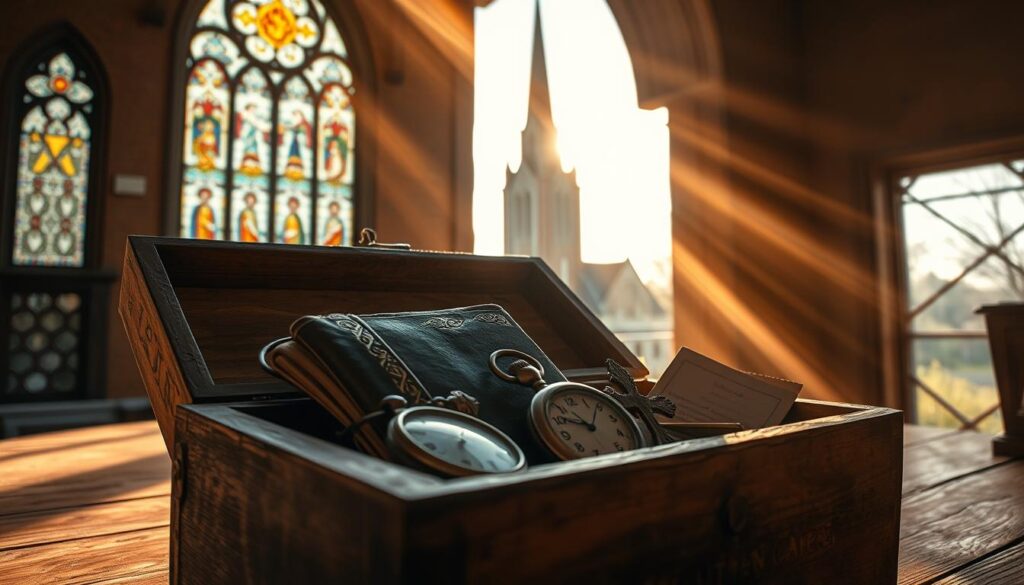
Architectural Time Travelers
Builders uncovered hidden treasures during the 2005 upgrades. A copper box buried in 1895 contained:
| Item | Origin | Significance |
|---|---|---|
| German hymnal | 1863 | Cultural touchstone |
| Bilingual newspapers | Gold Rush era | Immigrant perspectives |
| Silver half-dollar | SF mint | Economic history link |
Windows to the Past
The sanctuary’s stained glass tells dual stories. One panel shows Moses with stone tablets beside a Christian cross – visual harmony of shared roots. Modern lighting enhancements make these 19th-century artworks glow brighter than ever.
Through careful updates, the structure maintains its 1895 character while meeting 21st-century needs. Original brickwork now partners with seismic reinforcements, ensuring this landmark shelters future generations.
Worship Services and Community Programs
This vibrant community offers diverse ways to connect through meaningful worship and educational opportunities. Whether attending in person or joining online, visitors find engaging programs tailored for all ages.
On-Campus Worship and Family-Friendly Gatherings
The sunlit sanctuary welcomes families with two distinct Sunday experiences. At 8:45 AM, a contemporary service features interactive Kids’ Chat moments where children gather at the altar for age-appropriate lessons. Parents appreciate how these activities make spiritual concepts relatable for young minds.
Traditional worshippers favor the 11:15 AM liturgy featuring classic hymns accompanied by a magnificent tracker organ. Crafted by Taylor & Boody Organbuilders, this instrument fills the space with rich tones that enhance time-honored rituals. Both services offer communion twice monthly, following Lutheran traditions.
| Service | Highlights | Best For |
|---|---|---|
| 8:45 AM | Modern music Kids’ Chat Casual atmosphere |
Young families First-time visitors |
| 11:15 AM | Pipe organ hymns Formal liturgy Historical elements |
Traditionalists Longtime members |
Online Services and Sunday School Offerings
Those unable to attend physically can join live-streamed worship every Sunday morning. The broadcast captures both services in full detail, available later on YouTube for flexible viewing. Virtual participants still feel connected through shared prayers and familiar hymns.
Educational programs thrive across multiple spaces:
| Age Group | Location | Features |
|---|---|---|
| Children | Youth Rooms | Interactive Bible stories |
| Teens | Media Lounge | Faith discussions |
| Adults | Heritage Hall | Historical theology lessons |
Safety remains paramount with updated facilities and trained staff. After the early service, Heritage Hall buzzes with conversation over coffee and fresh pastries – perfect for building new friendships while kids play in supervised areas.
Conclusion
From Gold Rush-era gatherings to modern community initiatives, St. Mark Lutheran Church remains a beacon of resilience. Its story spans 175 years of nurturing faith while adapting to urban challenges. The striking red brick exterior stands as a testament to generations who rebuilt after earthquakes and fires.
Recent upgrades blend historical preservation with forward-thinking service. The 2024 groundbreaking for Ella Rohlffs Place—95 affordable senior homes—shows this heritage congregation’s commitment to civic care. Vibrant worship still echoes through renovated spaces, highlighted by anniversary organ performances.
Visitors discover more than architectural beauty here. They find a family embracing tradition and progress alike. Whether admiring century-old craftsmanship or joining outreach efforts, all contribute to an enduring legacy.
Come experience how San Francisco’s oldest Lutheran community honors its past while shaping tomorrow. Share in meaningful connections that transcend time, anchored in faith that withstands life’s tremors.
FAQ
When was the congregation established?
The faith community traces its roots to 1877, founded by German immigrants seeking to preserve their cultural and spiritual traditions in San Francisco.
How did earthquakes impact the building?
The red-brick structure survived the 1906 earthquake but required major renovations after the 1989 Loma Prieta quake to meet modern safety standards while retaining historic charm.
What community programs are available?
From weekly food pantry initiatives in Heritage Hall to seasonal family gatherings, the congregation fosters connection through outreach, worship, and intergenerational activities.
Are virtual services offered?
Yes! Alongside in-person Sunday worship, the church provides online streaming and interactive Sunday School sessions for remote participants.
Was anything found during renovations?
Workers discovered a 1954 time capsule during updates, containing artifacts that celebrate the congregation’s mid-century milestones and vision.
How does the church honor its heritage?
Original features like stained glass, Gothic arches, and the 1914 pipe organ blend with events highlighting German traditions, creating a bridge between past and present.
Is the sanctuary earthquake-safe today?
Absolutely. Post-renovation upgrades include reinforced masonry, steel supports, and seismic retrofitting to protect both visitors and historic architecture.
Can Heritage Hall be rented for events?
The space hosts community gatherings, from concerts to lectures. Contact staff for details on hosting private functions in this versatile historic venue.
Are services multilingual?
While English is now primary, occasional German-language hymns and events nod to founding traditions, welcoming diverse backgrounds.