Step into the world of ordinary men who became extraordinary messengers. Chosen by Jesus Christ, these individuals—fishermen, tax collectors, and even political activists—formed the bedrock of early Christianity. Their stories, rooted in the New Testament, reveal how faith can transform lives and shape history.
Though diverse in backgrounds, each shared a singular purpose: spreading teachings that would birth a global movement. From impulsive personalities like Peter to skeptics like Thomas, their humanity makes their journeys relatable. What united them was a divine mission to heal, forgive, and build communities grounded in love.
Central to this group was Peter, entrusted with symbolic keys representing spiritual authority. His leadership laid the foundation for what would become a 2,000-year tradition of guidance within the Church. This legacy continues today through leaders who trace their spiritual lineage back to these pioneering figures.
Key Takeaways
- Twelve men from humble professions became foundational leaders of early Christianity
- Peter’s role as chief disciple established continuity in church leadership
- Divine authority to heal and forgive shaped their missionary work
- Personal flaws made their transformations particularly impactful
- Apostolic traditions remain central to modern religious practices
Historical Foundations of the Apostolic Tradition
The roots of early Christian leadership stretch deep into both sacred texts and lived experiences. Ancient records reveal how spiritual authority intertwined with real-world challenges to shape lasting traditions.
Scriptural Insights into the Apostolic Calling
The New Testament shows Jesus handpicking followers from diverse walks of life. Acts of the Apostles details their post-resurrection work—healing the sick and establishing communities. One striking account describes Peter’s prison escape through divine intervention (Acts 12:6-11).
Pentecost marked a dramatic shift. Once timid disciples began speaking boldly in foreign tongues, their courage fueled by the Holy Spirit. This transformation turned fishermen into global messengers.
Early Church Testimonies and Traditions
Historical records from Eusebius and Josephus confirm key events. James (the Greater) faced martyrdom under Herod Agrippa I, while Peter and Paul met similar fates in Rome years later. Tradition holds that James (the Lesser), relative of Jesus, led Jerusalem’s church before being stoned.
Scholars still debate identities like “James son of Alphaeus” versus “brother of the Lord.” As Benedict XVI noted: “The question…is disputed among experts.” Yet these discussions highlight how carefully communities preserved oral histories.
Three key methods ensured continuity:
- Written accounts of miracles and teachings
- Direct succession of leadership roles
- Shared rituals commemorating pivotal events
Understanding the catholic 12 apostles
These early followers left fingerprints across continents through acts of courage and devotion. Their stories blend human vulnerability with unshakable conviction, creating legacies that still inspire millions today.
Apostolic Profiles: Lives, Martyrdoms, and Miracles
Simon Peter, a fisherman turned leader, faced death in Rome through upside-down crucifixion. His brother Andrew brought Christianity to Greece, dying on an X-shaped cross now called St. Andrew’s Cross. Meanwhile, Thomas traveled farthest—establishing churches in India before his martyrdom near Madras. As Pope John Paul II noted during his 1986 visit:
“St. Thomas’s witness in India remains a bridge between ancient faith and modern devotion.”
Philip preached in Asia Minor, possibly martyred in Hierapolis. Matthew, once a tax collector, transformed into a Gospel writer before meeting a disputed violent end. Even lesser-known figures like Simon the Zealot spread teachings across Persia, documented in the Roman Martyrology.
Symbols and Cultural Significance
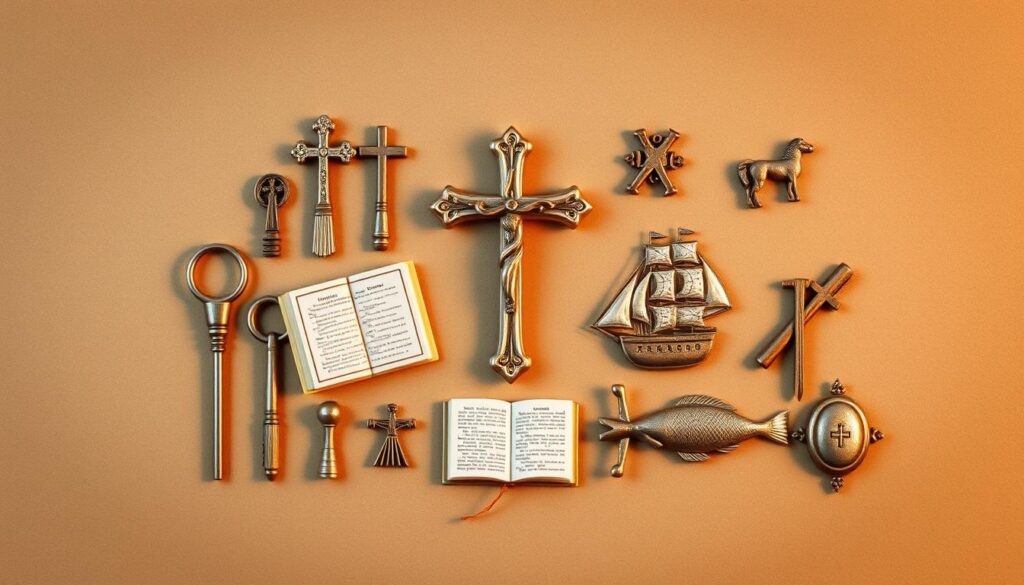
Visual markers keep their memories alive. Here’s how traditions honor them:
| Apostle | Symbol | Meaning |
|---|---|---|
| Peter | Crossed Keys | Spiritual authority |
| Andrew | X-shaped cross | Sacrificial courage |
| James the Greater | Three shells | Pilgrimage legacy |
| John | Chalice with snake | Divine protection |
| Bartholomew | Knives | Martyrdom by flaying |
These icons appear in art, jewelry, and architecture worldwide. From Spain’s Santiago de Compostela (linked to James the Greater) to India’s St. Thomas Cross, they turn history into tangible reminders of faith’s enduring power.
The Apostolic Impact on Church History and Modern Tradition
Foundations laid centuries ago still shape how communities gather and grow today. From leadership models to everyday names, these pioneers left patterns that endure across generations and borders.
Influence on Early Church Leadership and Structure
St. Peter’s three-step journey—establishing the church in Jerusalem, moving his seat to Antioch, then Rome—created a blueprint for spiritual authority. This unbroken chain, called apostolic succession, ensures every modern bishop traces their role to original messengers. As one historian notes:
“Rome became the heart of Christianity because Peter made it his final home.”
St. Paul, though not among the original group, reshaped the faith’s reach. His fourteen letters and missions to Asia Minor turned Christianity into a global movement. Together, these leaders set practices still used today, from Eucharist rituals to regional dioceses.
Namesakes, Global Traditions, and Lasting Legacy
Walk through any city and you’ll hear echoes of their names. Giovanni, Sean, and Ivan all stem from John. Diego and Jaime honor James—a testament to how deeply their stories resonate.
Pilgrims still flock to tomb sites like St. Peter’s beneath Vatican City. In Spain, the Camino de Santiago leads millions to St. James’s shrine. Even skeptics like St. Thomas left marks—ancient Indian churches still bear his name.
Their courage in facing martyrdom set a standard for faithfulness. Yet their greatest gift might be showing how ordinary people can build something eternal.
Conclusion
Ordinary lives, extraordinary impact—these men’s journeys show how divine purpose transforms human frailty. Before receiving the Holy Spirit, they stumbled through doubt and fear. Yet after Pentecost, fishermen became foundation stones of a movement that changed the world.
Scripture paints their legacy in eternal terms: “The wall of the New Jerusalem had twelve foundation stones, bearing the names of Christ’s messengers” (Revelation 21:14). Their spiritual growth—from abandoning Jesus to facing martyrdom—proves that courage blooms where faith takes root.
Today, their stories still spark hope. Just as they came from tax booths and fishing boats, modern believers carry forward their mission. The keys Peter held and the roads Paul traveled remind us: greatness begins when ordinary people answer an extraordinary call.
Let their transformation inspire yours. Whether through small acts of kindness or bold stands for truth, everyone can help build something lasting.
FAQ
Why isn’t St. Paul listed among the original Twelve Apostles?
Though St. Paul played a pivotal role in spreading Christianity, he wasn’t part of the original group chosen by Jesus. He became known as the “Apostle to the Gentiles” after his conversion, dedicating his life to missionary work and authoring several New Testament epistles.
How did St. James the Greater and St. James the Less differ?
St. James the Greater, brother of St. John, was martyred under Herod Agrippa. St. James the Less, often identified as the son of Alphaeus, led the early Church in Jerusalem and authored the Epistle of James. Their titles reflect their distinct roles and historical contexts.
What symbols are linked to St. Peter and St. Thomas?
St. Peter is often symbolized by keys, representing Christ’s promise to grant him authority. St. Thomas, known for his initial doubt about the Resurrection, is associated with a builder’s square, reflecting traditions of his missionary work in India.
Which Apostles are connected to martyrdom traditions?
St. Peter was crucified upside down in Rome, while St. Andrew faced an X-shaped cross. St. Bartholomew was flayed alive, and St. James the Greater was beheaded. These accounts are rooted in early Church writings like the Roman Martyrology.
How did the Apostles shape early Church leadership?
Figures like St. Peter and St. James the Less established foundational structures, such as the Council of Jerusalem. Their teachings and governance models influenced roles like bishops and deacons, ensuring doctrinal unity across growing Christian communities.
Why is St. Jude often invoked in desperate situations?
St. Jude, also called Thaddeus, is celebrated as the patron of lost causes. This stems from his New Testament letter urging perseverance in faith during trials. Devotion to him grew globally through relics and intercessory traditions.
What regions did St. Philip and St. Simon evangelize?
Early traditions suggest St. Philip preached in Greece and Asia Minor, while St. Simon (the Zealot) journeyed to Persia. Both are believed to have faced martyrdom, reinforcing their dedication to spreading the Gospel beyond Judea.
How do modern traditions honor the Apostles?
Cities like Rome and Santiago de Compostela house major shrines, such as St. Peter’s Basilica and the tomb of St. James. Feast days, like St. John’s on December 27th, celebrate their spiritual legacies through liturgy, art, and pilgrimage.