Christianity in the United States thrives through diverse traditions that shape communities and inspire millions. This guide highlights impactful faith groups rooted in Protestant principles, offering insight into their histories, values, and roles in modern society.
From coast to coast, these denominations have cultivated unique worship styles and community-focused missions. The Southern Baptist Convention, for example, stands out for its emphasis on local congregation autonomy and evangelism. Meanwhile, Methodist traditions prioritize social justice and global outreach.
Understanding these groups helps explain their enduring influence. Each brings distinct approaches to scripture, fellowship, and service—reflecting the adaptability of Protestant beliefs across generations. Their shared commitment to faith unites them, even as practices vary.
Key Takeaways
- Protestant traditions form the backbone of America’s religious landscape
- Denominations differ in worship styles, governance, and community priorities
- Historical roots shape modern practices and outreach efforts
- Local congregations often drive charitable initiatives and social programs
- Core beliefs center on biblical authority and personal spiritual growth
Whether you’re deepening your spiritual journey or studying religious trends, this overview illuminates how these churches continue to evolve while staying true to their foundations.
Introduction to Protestant Churches in the United States
In the United States, Protestant Christianity’s branches reflect a mosaic of beliefs and practices impacting millions. Researchers classify these groups into three primary traditions: evangelical, mainline, and historically Black Protestant. This framework helps explain how diverse worship styles and community priorities coexist under one broad faith umbrella.
Scope and Purpose of the Llisticle
This study focuses on major Protestant denominations that shaped America’s spiritual identity. Over a third of believers (36%) don’t identify with specific labels, leading experts to categorize them by cultural factors. By exploring key examples, we highlight how these faith communities adapt while preserving core values.
Understanding the American Religious Landscape
Immigration and cultural shifts created a unique environment for churches to evolve. From fiery revivals to quiet hymn-singing, practices vary widely across regions. Yet all share a commitment to biblical teachings and community service—a thread connecting colonial meetinghouses to modern megachurches.
These denominations thrive by addressing local needs while maintaining global outreach. Their stories reveal how faith adapts without losing its essence, offering lessons in resilience and cultural relevance.
Historical Development and Key Milestones of Protestantism
America’s spiritual identity grew from radical 16th-century reforms that reshaped Christianity forever. What began as theological debates in Europe became the foundation for diverse faith communities across new frontiers.
Roots in the Reformation Era
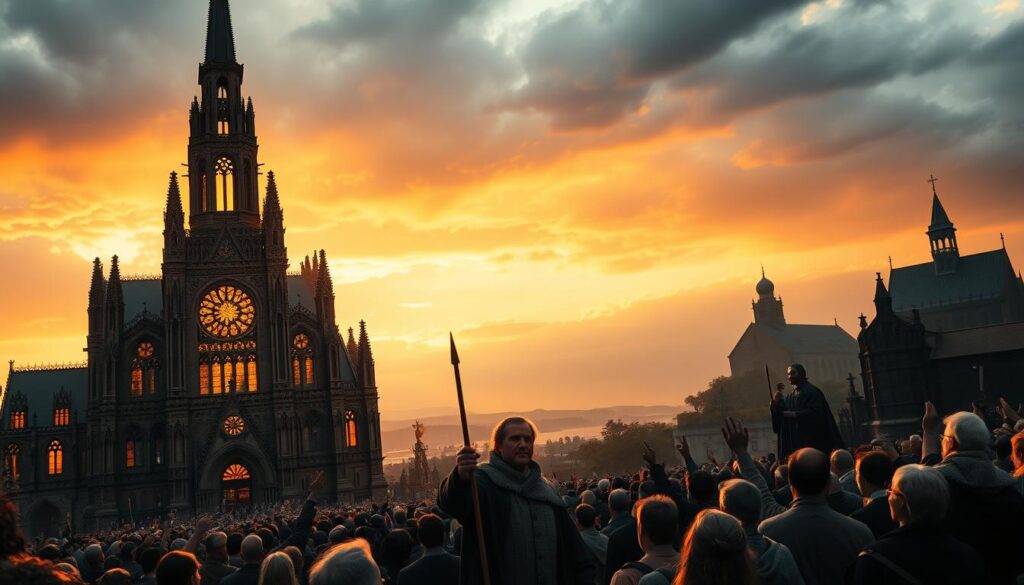
In 1517, Martin Luther’s bold actions sparked a religious revolution. His emphasis on personal scripture study challenged centralized authority, creating space for new interpretations. This “priesthood of all believers” concept became central to emerging groups.
Evolution in North America
Early settlers brought Reformed theology across the Atlantic, adapting it to frontier life. By the 1700s, revivals like the Great Awakening helped form unique regional identities. These movements prioritized emotional worship and grassroots organization.
Four key developments shaped North American religious life:
| Event | Timeframe | Impact |
|---|---|---|
| 95 Theses Publication | 1517 | Broke Catholic monopoly |
| English Reformation | 1530s | Created Anglican tradition |
| Great Awakenings | 1730s-1840s | Spread revivalist practices |
| Modern Ecumenism | 20th Century | Fostered interdenominational cooperation |
Today’s landscape reflects centuries of adaptation. Articles of faith written in Geneva now guide congregations from Texas to Toronto. This ongoing evolution proves how historical roots continue bearing new fruit.
Understanding Core Beliefs and Worship Practices
At the heart of these faith communities lies a shared commitment to principles forged during the Reformation. The Five Solae—scripture alone, faith alone, grace alone, Christ alone, and God’s glory alone—serve as theological anchors. These ideas shape how believers approach prayer, scripture study, and daily life.
Baptist traditions make baptism a conscious choice, reserving full immersion for those old enough to declare personal faith. “We see it as an outward sign of inward transformation,” explains a pastor from Texas. Their services often feature spirited hymn singing and spontaneous prayer requests from congregation members.
Methodist worship blends structure with social action. Weekly gatherings might include liturgical readings alongside volunteer sign-ups for food drives. This dual focus reflects John Wesley’s vision: personal spiritual growth paired with community service.
Lutheran practices showcase historical continuity through:
- Infant baptism emphasizing God’s grace
- Communion rituals affirming Christ’s presence
- Hymn-based services connecting modern believers to Reformation-era teachings
Presbyterian governance models demonstrate another approach. Elected elders guide congregations, reflecting a belief that shared leadership strengthens community life. This system encourages deep theological discussion while addressing practical needs.
Though worship styles vary, all these groups prioritize direct connection with God Christ through scripture and sacraments. Their evolving practices prove ancient truths can find fresh expression in changing times.
Exploring Denominational Diversity in American Protestantism
America’s religious tapestry features distinct threads of belief woven through nine denominational families. Each group preserves unique Protestant traditions while adapting to modern spiritual needs. This variety shows how shared roots can branch into diverse expressions of faith.
Major Denominational Families
The Baptist family champions local church control, with congregations deciding their own policies. Some groups focus on traditional values, while others embrace progressive views on social issues. Their shared commitment to adult baptism unites them across these differences.
Anglican churches blend formal liturgy with flexible theology. This form of worship connects English heritage to American cultural contexts. Many parishes now incorporate contemporary music while keeping centuries-old prayer structures.
| Family | Key Practices | Cultural Impact |
|---|---|---|
| Anabaptist | Adult baptism, pacifism | Simple living communities |
| Methodist | Social justice programs | Community outreach networks |
| Lutheran | Liturgical worship | Education-focused ministries |
| Reformed | Predestination theology | Urban church planting |
Within the Methodist family, United Methodist and African Methodist Episcopal churches showcase different approaches to scriptural interpretation. Both maintain Wesley’s emphasis on personal spiritual growth through disciplined prayer and service.
These denominational families prove that unity doesn’t require uniformity. Their ability to maintain core beliefs while addressing changing needs helps Protestant traditions stay relevant across generations.
List 5 Protestant Churches: An In-Depth Look
America’s faith communities demonstrate their influence through membership numbers and cultural impact. These organizations blend theological heritage with modern approaches to spiritual growth and social engagement.
Spotlight on Southern Baptist and Methodist Traditions
The Southern Baptist Convention leads with 16.2 million members, reflecting its focus on local decision-making and evangelism. Its structure allows congregations to address community needs while maintaining shared beliefs. “Our strength lies in unified purpose, not uniformity,” notes a Texas pastor.
Meanwhile, the United Methodist Church serves 7.8 million through its balance of tradition and activism. From disaster relief to racial justice initiatives, their work shows how faith inspires practical change. Membership trends reveal urban growth despite national declines.
Insights from Membership Data and Trends
Three other groups shape America’s spiritual landscape:
- Church of God in Christ (5.5 million) blends Pentecostal worship with African American cultural traditions
- National Baptist Convention (5 million) highlights diverse ethnic ministries within Baptist frameworks
- Evangelical Lutheran Church U.S.A. (4.5 million) adapts Reformation teachings to modern social concerns
Only the Assemblies of God reported growth (+0.5%), suggesting shifting preferences in worship styles. These numbers reveal how historical roots meet contemporary challenges in America’s evolving religious ecosystem.
Comparative Analysis of Membership and Growth Trends
Recent studies reveal a seismic shift in how Americans engage with faith communities. While traditional metrics once defined success, experts like Dr. Thom Rainer argue that “membership numbers now tell only part of the story.” This change reflects evolving attitudes toward organized religion and new forms of spiritual connection.
Interpreting Recent Statistical Data
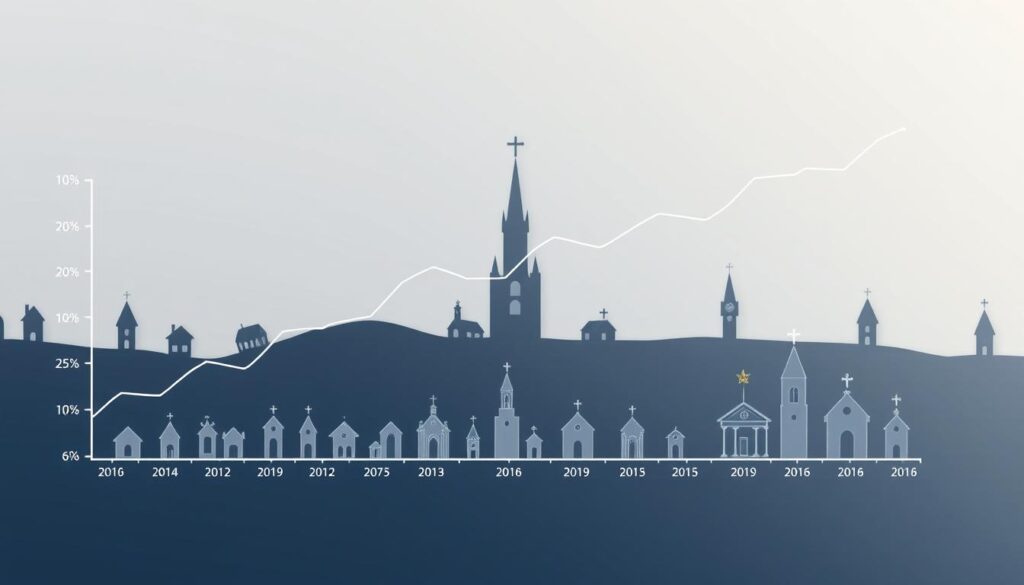
Current figures show most major denominations face declining participation. The Assemblies of God stands alone with 0.5% growth among top groups. Others like the Presbyterian Church USA (2.8 million) and Episcopal Church (2 million) maintain cultural influence despite shrinking numbers.
Key factors driving these trends include:
- Younger generations prioritizing flexible spiritual practices
- Rise of non-denominational congregations
- Shift toward community impact over institutional loyalty
| Denomination Name | Membership | Trend |
|---|---|---|
| National Baptist Convention | 3.5M | Declining |
| Assemblies of God | 2.9M | +0.5% |
| African Methodist Episcopal | 2.5M | Stable |
| Lutheran Church-Missouri Synod | 2.3M | Declining |
Historically Black congregations demonstrate enduring relevance through cultural specificity. Their ability to blend faith with social justice keeps communities engaged, even as overall numbers fluctuate.
These patterns suggest a redefinition of religious success. Many congregations now focus on service projects and personal connections rather than membership rosters. As cultural priorities evolve, so do measures of spiritual vitality.
The Role of Culture and Community in Shaping Church Practices
Local flavors shape spiritual life in surprising ways. Across America, congregations mirror their neighborhoods through worship styles that mix tradition with innovation. Like chefs tweaking family recipes, faith communities blend cultural ingredients with timeless truths.
Impact of Local Traditions on Worship
Methodist groups weave social justice into Sunday services, living out John Wesley’s vision of personal and social holiness. Their food drives and advocacy work show faith in action. Meanwhile, Baptist congregations adapt freely—a Texas church might swap hymns for country gospel, while a Brooklyn parish hosts pop-up job fairs.
Pentecostal gatherings crackle with energy. Hands rise during prayer, and worship bands pulse with rhythms familiar to local youth. In contrast, Lutheran services honor ancient liturgy while adding modern touches like podcast sermons. Both approaches honor heritage while speaking to today’s seekers.
African American congregations showcase resilience through gospel music and call-and-response preaching. These traditions build cultural pride alongside spiritual growth. Such adaptations prove faith thrives when rooted in real life—where shared views meet unique community needs.
FAQ
What distinguishes the Southern Baptist Convention from the National Baptist Convention?
The Southern Baptist Convention (SBC) and National Baptist Convention (NBC) both belong to the Baptist tradition but differ in history and cultural focus. The SBC, founded in 1845, emphasizes local church autonomy and evangelism, while the NBC—a historically African American denomination—prioritizes social justice and community empowerment alongside theological teachings.
How do Methodist denominations like the United Methodist Church structure their leadership?
The United Methodist Church uses a connectional system with bishops overseeing regional conferences. Congregations are grouped into districts, and major decisions are made at General Conference meetings. This contrasts with Baptist churches, which typically operate with more congregational independence.
What core beliefs define Lutheran churches like the Evangelical Lutheran Church in America?
Lutheran traditions emphasize salvation through faith alone, scripture as the ultimate authority, and sacraments like baptism and communion. The Evangelical Lutheran Church in America (ELCA) also prioritizes social outreach and ecumenical partnerships, reflecting its progressive stance on issues like ordination and interfaith dialogue.
Why have some Protestant denominations seen membership declines in recent years?
Factors include generational shifts in spiritual practices, reduced participation among younger adults, and evolving views on social issues. For example, the Presbyterian Church (USA) and United Methodist Church have faced challenges balancing traditional doctrines with modern cultural expectations, impacting retention and growth.
How do African Methodist Episcopal Zion churches incorporate cultural traditions into worship?
The AME Zion Church blends Protestant theology with African American heritage through gospel music, vibrant preaching styles, and community activism. Services often emphasize liberation theology, reflecting historical ties to abolitionism and the Civil Rights Movement, while maintaining Methodist practices like sacraments and class meetings.
What role do Reformed churches play in American Protestantism today?
Reformed churches, including the Presbyterian Church (USA) and Christian Reformed Church, emphasize God’s sovereignty and covenantal theology. Many engage in education and social justice initiatives, while newer movements like the Acts 29 Network adapt Reformed principles to contemporary church-planting strategies.