Throughout history, spiritual traditions have honored heavenly beings who serve as divine messengers and protectors. Among these, three revered figures stand out in sacred texts: Michael, Gabriel, and Raphael. Their roles as warriors, healers, and guides have shaped religious practices for centuries.
The Church formally recognized these three names during the Council of Rome in 745 AD. Biblical accounts in Tobit and Revelation reference their celestial duties, while Isaiah highlights their connection to divine intervention. Though Scripture confirms there are seven such beings, only Michael, Gabriel, and Raphael appear by name in approved texts.
Four additional figures—Uriel, Raguel, Zerachiel, and Remiel—appear in ancient writings outside canonical Scripture. These powerful entities complete the group often called the Seven Spirits before God’s throne. Their influence extends beyond theology into art, literature, and personal devotion.
This guide explores their unique responsibilities and lasting impact. You’ll learn how Michael defends against evil, Gabriel delivers pivotal messages, and Raphael brings healing. We’ll also examine how these celestial guardians continue inspiring faith communities today.
Key Takeaways
- Three archangels are officially recognized in Church tradition: Michael, Gabriel, and Raphael
- The Council of Rome (745 AD) established their formal veneration
- Biblical books like Tobit and Revelation reference their divine roles
- Four additional names appear in non-canonical ancient texts
- These beings influence worship practices and spiritual symbolism
- Their stories remain relevant in modern religious life
Introduction to the Heavenly Hierarchy
Angelic hierarchies reveal a meticulously structured universe governed by spiritual beings. These pure spirits, as described by St. Thomas Aquinas, exist without physical form yet profoundly influence earthly affairs. Their organization into nine distinct groups—called choirs—reflects their unique roles in divine plans.
Overview of Angelic Beings in Tradition
The highest choir, Seraphim, burns with love for God. Lower ranks like Angels deliver messages to men on earth. This structure bridges celestial realms and human experiences.
Each spirit’s nature differs based on likeness to the Holy Spirit. Dominions oversee divine laws, while Virtues manifest miracles. Archangels stand among the lower choirs, directly interacting with creation.
Purpose of This Ultimate Guide
Our focus illuminates how specific seven archangels operate within this framework. You’ll discover their missions across time—from guiding nations to healing individuals.
Why does this matter today? Understanding these beings clarifies their ongoing role in spiritual journeys. We’ll explore connections between ancient wisdom and modern faith practices.
Historical Roots and Biblical Foundations
Sacred texts and ancient traditions offer fascinating glimpses into celestial guardians. Early believers carefully documented encounters with these divine messengers, creating a bridge between heavenly realms and human experience.
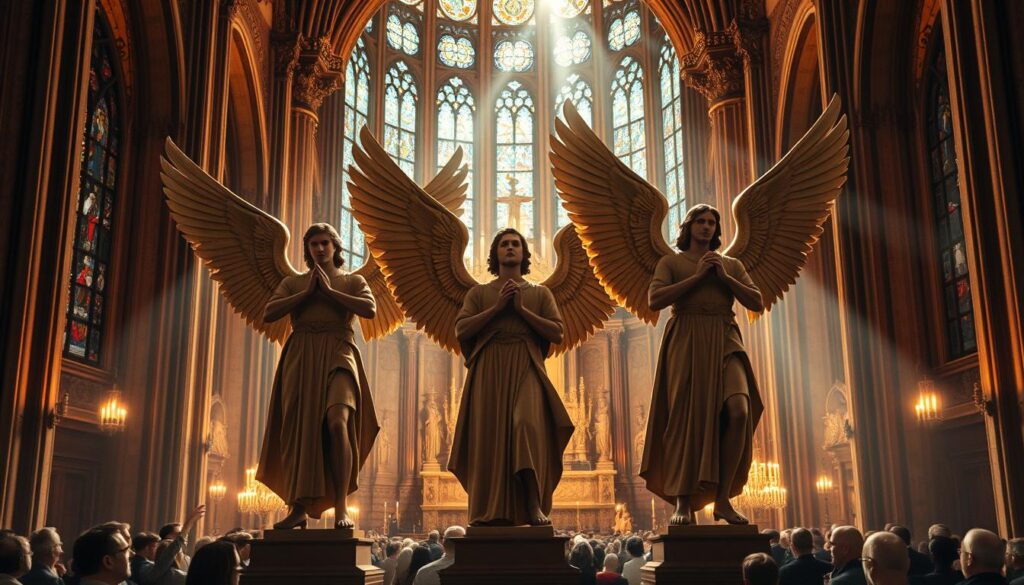
Scriptural References and Ancient Texts
The Book of Tobit gives Raphael’s famous declaration: “I am one of seven who stand before the Lord.” This passage became foundational for understanding their sacred number. St. John’s visions in Revelation mention seven spirits and trumpet-bearing messengers, reinforcing their role in divine plans.
Isaiah’s writings describe a protector who delivers God’s people, later linked to these celestial beings. While Scripture names only three, extra-biblical texts like the Book of Enoch reveal four additional figures. These writings shaped early Christian thought despite not being officially recognized.
The Council of Rome and Early Church Teachings
In 745 AD, Church leaders gathered under Pope Saint Zachary to address growing superstitions. They affirmed only Michael, Gabriel, and Raphael—names directly tied to sacred texts. This decision protected believers from misguided practices while honoring biblical authority.
Centuries later, Pope Leo XIII’s dramatic vision inspired new prayers for spiritual protection. St. Thomas Aquinas wisely noted that angelic knowledge remains incomplete, reminding us mysteries still surround these heavenly servants. Through Scripture and tradition, their legacy continues guiding faith communities today.
Exploring the Roles and Significance of the catholic 7 archangels
Celestial guardians bridge the gap between divine realms and human existence. Though rooted in sacred scripture, their stories extend beyond written texts into lived spiritual experiences. This duality shapes how believers understand their protective and guiding roles.
Canonical and Non-Canonical Insights
Three messengers stand confirmed in official teachings: Michael as defender, Gabriel as truth-bearer, and Raphael as healer. Their missions reflect direct involvement in human struggles. As one ancient text states: “Flames of devotion become tools of transformation when heaven touches earth.”
Four additional spirits appear in historical writings outside approved texts. These beings complete the sacred group often depicted in art and prayer. Their roles vary from guiding souls to overseeing cosmic balance, though not formally recognized by all traditions.
| Aspect | Canonical Sources | Non-Canonical Texts |
|---|---|---|
| Primary Focus | Salvation history events | Spiritual warfare details |
| Divine Missions | Annunciation, healing | Soul guidance, justice |
| Recognition | Church-approved | Traditional devotion |
| Representation | Scriptural narratives | Artistic symbolism |
These powerful spirits operate through two key ways: contemplative worship and active intervention. Their burning love fuels both eternal praise and practical help for men facing earthly challenges. This balance makes them unique among heavenly beings.
Sacred scripture reveals their connection to pivotal moments, while other texts explore daily spiritual support. Together, these sources paint a complete picture of divine care through celestial messengers.
In-Depth Profile: Saint Michael
Warriors of light need champions, and few figures embody divine protection like Saint Michael. His name meaning “Who is like God?” reflects unwavering loyalty to divine authority. Revered as patron of first responders and spiritual warriors, his legacy spans millennia.
Sacred Scripture and Traditional Narratives
Sacred scripture depicts Michael leading celestial armies against rebellious forces. As prince heavenly hosts, he shields communities from harm. Early traditions honored him as Israel’s protector, later becoming the Church’s guardian.
Defender Against Evil and Patronage
Pope Leo XIII’s 1884 vision inspired the famous prayer seeking Michael’s protection against evil. For decades, congregations recited it after Mass. Though less common today, it remains vital in traditional latin mass services.
From medieval art to modern badges, Michael’s sword symbolizes truth triumphing over darkness. His enduring appeal shows how ancient symbols still defend people seeking spiritual strength.
FAQ
How many archangels are officially recognized in Church teachings?
While tradition references several celestial beings, only three—Michael, Gabriel, and Raphael—are named in Scripture and affirmed by doctrines like the Council of Rome (745 AD). Other figures, such as Uriel, appear in non-canonical texts.
What role does St. Michael play in spiritual warfare?
Known as the “Prince of Heavenly Hosts,” St. Michael is invoked for protection against evil. His battles against dark forces, described in Revelation 12:7–12 and the Prayer to St. Michael by Pope Leo XIII, highlight his role as a defender of faith.
Why is St. Gabriel associated with divine communication?
St. Gabriel delivered pivotal messages, like the Annunciation to Mary (Luke 1:26–38). This connection to revelation and prophecy makes him a symbol of God’s guidance during uncertain times.
How does St. Raphael’s ministry differ from other archangels?
Described in the Book of Tobit, Raphael serves as a healer and companion. He’s often linked to physical and emotional restoration, making him a patron for travelers, medical workers, and those seeking reconciliation.
Are there approved devotions to archangels outside the Bible?
Writings like St. Gregory the Great’s homilies and St. Thomas Aquinas’ theological works explore angelic roles. However, practices should align with Church-approved prayers, such as the Litany of the Saints or the Traditional Latin Mass invocations.
What did St. Thomas Aquinas say about angelic hierarchies?
In Summa Theologica, Aquinas describes nine choirs of angels, with archangels serving as messengers. He emphasizes their role in executing divine will while respecting human free will.
How does Pope Leo XIII tie into modern veneration of St. Michael?
After a prophetic vision of evil’s rise, Pope Leo XIII composed the Prayer to St. Michael in 1884. This prayer remains a cornerstone of spiritual defense, especially promoted during the papacy of St. John Paul II.