When the 16th-century religious movement reshaped Europe, creativity found unexpected paths to thrive. Reformers sought to simplify worship, but this didn’t erase beauty—it redefined it. Instead of grand church sculptures, artists turned to everyday life, nature, and personal spirituality to reflect their deepened connection to faith.
This shift began with Martin Luther’s bold critiques in 1517. His ideas sparked debates about idolatry, pushing creators to explore new subjects. Portraits, landscapes, and even household objects became canvases for expressing devotion. Northern European painters like Rembrandt mastered light and emotion, proving sacred stories could live beyond ornate altarpieces.
Contrary to myths, this era didn’t reject artistry—it expanded its horizons. Writers like John Milton wove biblical themes into epic poetry, while composers like Bach transformed hymns into timeless masterpieces. These works bridged ancient traditions with fresh perspectives, showing how belief could inspire innovation.
Key Takeaways
- The Reformation challenged artists to rethink sacred storytelling without traditional religious imagery
- Everyday scenes and personal faith became central themes in Protestant-inspired works
- Master creators like Rembrandt and Bach redefined spiritual expression through their mediums
- Literary achievements complemented visual arts in shaping Protestant cultural identity
- This movement broadened artistic scope rather than limiting creative output
Introduction: Unveiling the Fusion of Faith and Creativity
Creativity found new life through radical religious transformations. The Reformation didn’t just change church practices—it rewrote society’s relationship with imagination. Personal spirituality became the canvas for expressing devotion, blending ancient traditions with fresh perspectives.
The Purpose and Scope of This Ultimate Guide
This guide walks you through five centuries of cultural evolution. We’ll explore how beliefs shaped paintings, literature, and music across continents. From Luther’s revolutionary ideas to modern worship songs, discover how creators balanced divine inspiration with human expression.
| Aspect | Medieval Art | Protestant Art |
|---|---|---|
| Primary Focus | Church authority | Personal faith |
| Subject Matter | Saints & miracles | Daily life & nature |
| Audience | Clergy & nobility | Common people |
Understanding the Intersection of Art and Belief
Religion once dictated every creative choice. After the Reformation, artists painted ordinary moments as sacred. A family meal could symbolize communion, while landscapes reflected God’s craftsmanship.
This shift required clever problem-solving. How do you show spiritual depth without angels or saints? The answer lay in cultural adaptation—using familiar scenes to convey timeless truths. Writers turned parables into poems, while musicians crafted hymns anyone could sing.
Historical Context of the Protestant Reformation and Its Artistic Impact
Northwestern Europe became the epicenter of a religious revolution in the 16th century. The Catholic Church faced growing criticism over practices like selling indulgences—certificates promising reduced punishment for sins. This system, active since the 3rd century, had turned into a profitable business that fueled public outrage.
Origins and Religious Shifts
Martin Luther’s 1517 protests ignited the Protestant Reformation, challenging centuries of tradition. Reformers demanded simpler worship and direct access to scripture. Artists suddenly lost their main patron when Protestant leaders stopped commissioning church altarpieces.
The Printing Press Revolution
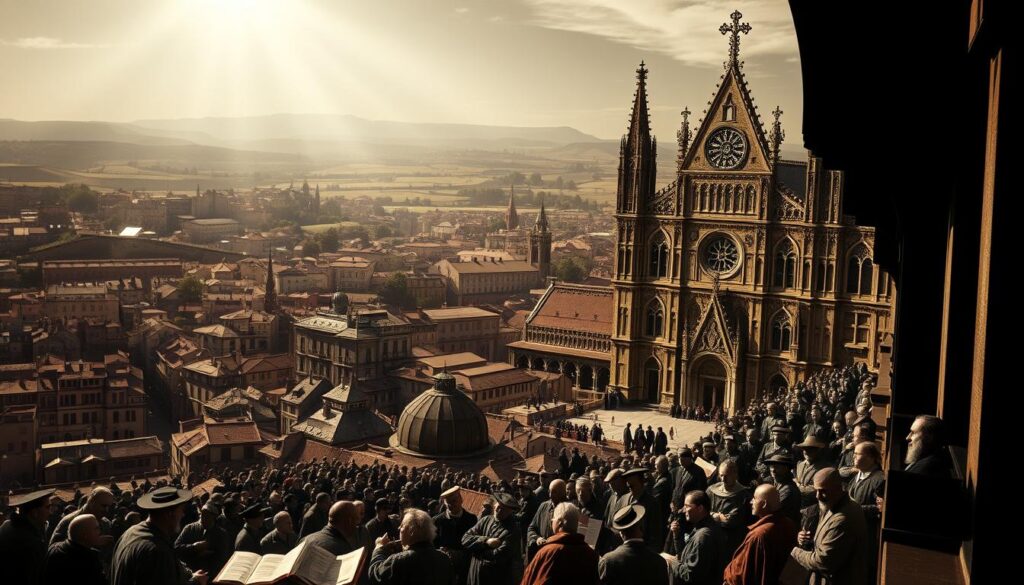
Gutenberg’s invention supercharged the movement. Luther’s German Bible translation spread like wildfire across the Holy Roman Empire. For the first time, ordinary people could read scripture themselves—no Latin required.
| Medieval Tradition | Reformation Shift |
|---|---|
| Art funded by church | Patrons became merchants |
| Latin-only texts | Vernacular translations |
| Saints as subjects | Everyday life scenes |
This cultural earthquake forced artists to adapt. Some turned to portrait painting, while others illustrated mass-printed Bibles. The development of new art forms showed how creativity thrives even in times of upheaval.
Understanding Protestantism Art: Themes, Styles, and Techniques
Sixteenth-century creators faced a puzzle: how to visualize faith without traditional religious symbols. Their solution transformed storytelling through everyday scenes and symbolic details. A basket of bread might hint at communion, while sunlight through windows symbolized divine presence.
Core Themes and Visual Narratives
Painters swapped golden halos for kitchen tables. Biblical stories appeared in humble settings—fishermen mending nets became disciples, and village gatherings mirrored the Last Supper. This shift made sacred stories feel immediate and relatable.
| Aspect | Traditional Approach | Reformed Innovation |
|---|---|---|
| Key Subjects | Saints & miracles | Family life & nature |
| Symbolism | Obvious icons | Hidden meanings |
| Audience | Church elites | Working families |
Innovative Techniques and Cultural Relevance
Artists developed clever workarounds to satisfy both theological rules and creative ambitions. Rembrandt used light to spotlight moral choices in tavern scenes. Dutch still-life painters turned flowers into reminders of life’s brevity.
These techniques served dual purposes. They taught scripture through visual parables while celebrating ordinary beauty. A portrait of a merchant’s wife might showcase modesty—a virtue prized by reformers—through her simple dress and posture.
This approach changed who engaged with creative works. Now farmers could discuss a painting’s message as easily as scholars. Art became a shared language for exploring faith’s role in daily living.
Influential Artists and Their Legacies
Amidst Europe’s religious turbulence, two painters redefined creative expression through skill and adaptability. Their journeys show how talent thrived when church commissions dwindled, proving artistry could flourish in unexpected ways.
Hans Holbein the Younger: Portraits of Change
Born into a family of artists, Holbein mastered both Northern precision and Italian flair. When Protestant reforms reduced religious commissions in Basel, he pivoted to portraits. His detailed paintings captured England’s royal court, including Henry VIII’s imposing figure.
| Aspect | Early Work | Protestant Era |
|---|---|---|
| Primary Subjects | Altarpieces | Royal portraits |
| Technique | Gold leaf details | Realistic textures |
| Symbolism | Biblical scenes | Hidden meanings |
Holbein’s genius lay in showing human complexity beyond religious labels. A Catholic merchant and Protestant reformer could both appear dignified through his brushstrokes.
Lucas Cranach the Elder: Propagating New Doctrines
Martin Luther’s close friend became Protestantism’s visual storyteller. Cranach designed woodcuts that simplified complex ideas for everyday people. His Bible illustrations made scripture accessible to farmers and shopkeepers alike.
These painters proved creativity adapts to survive. Holbein navigated political shifts while Cranach shaped cultural narratives. Their work established blueprints for artists balancing belief with practical demands.
Iconoclasm and the Transformation of Religious Visuals
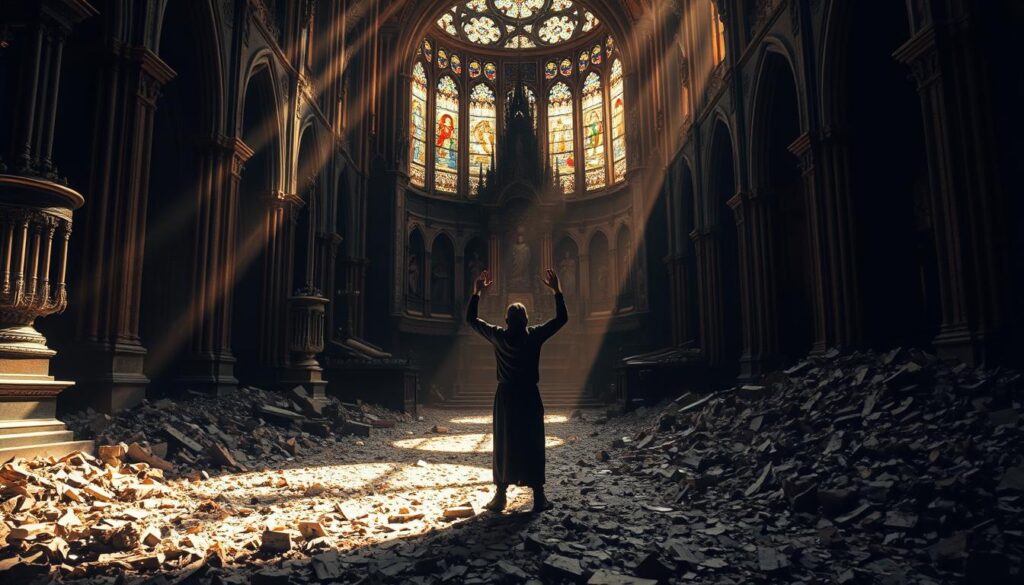
In 1566, a wave of destruction swept through churches across the Low Countries. Crowds stripped altars and smashed statues, believing elaborate religious art distracted from true worship. This radical cleansing reshaped how communities engaged with sacred spaces.
Protestant Iconoclasm: Destruction and Redefinition
Reformers saw images in Catholic churches as dangerous idols. They pointed to Exodus 20:4—”You shall not make any graven image”—as divine command. The Beeldenstorm (“Image Storm”) of 1566 saw mobs destroy:
- Carved saints in Dutch cathedrals
- Painted altarpieces in French chapels
- Gilded relics across German towns
| Pre-Iconoclasm Church | Post-Iconoclasm Space |
|---|---|
| Colorful frescoes | Whitewashed walls |
| Golden statues | Plain wooden pulpits |
| Scented incense | Open Bibles |
The Shift from Decorative to Didactic Imagery
Surviving artworks gained new purposes. Dutch families used printed Bible illustrations as teaching tools. A 1573 Geneva Psalter showed King David playing harp—not for veneration, but to spark discussions about worship through music.
Even destruction had surprises. When radicals targeted the Ghent Altarpiece in 1566, local guards hid Van Eyck’s masterpiece behind a false wall. This act preserved one of Europe’s most complex depictions of biblical narratives for future generations.
| Decorative Art | Didactic Art |
|---|---|
| Inspire awe | Teach scripture |
| Show saints | Illustrate parables |
| Promote donations | Encourage literacy |
Beyond the Sacred: Secularization and Daily Life in Art
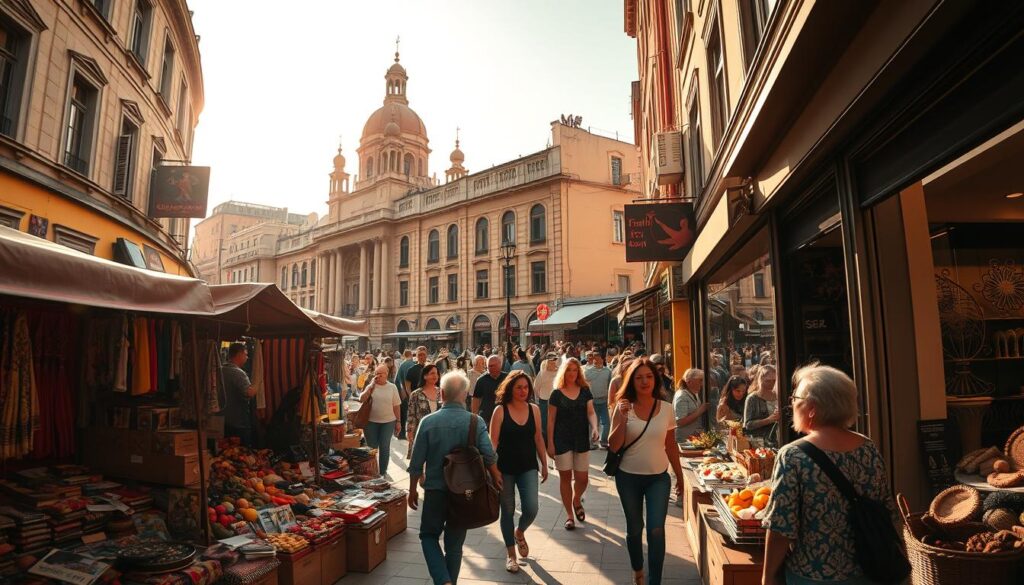
A quiet revolution unfolded in 17th-century Dutch kitchens and German marketplaces. Painters began framing ordinary moments—a mother peeling potatoes or blacksmiths shaping iron—as windows into divine purpose. This shift turned daily routines into subjects worthy of canvas and contemplation.
Depiction of Everyday Scenes and Cultural Mandates
Reformed thinkers taught that all work honors God when done with integrity. Artists responded by capturing bakers, seamstresses, and fishermen mid-task. A 1635 painting of a Haarlem weaver didn’t just show labor—it celebrated human partnership in creation’s ongoing story.
| Catholic Tradition | Protestant Innovation |
|---|---|
| Saints in golden light | Farmers in field sunlight |
| Church-funded altarpieces | Home-displayed genre scenes |
| Miracles as focus | Meals as sacred acts |
Still lifes held hidden sermons. A lavish table might feature rotting fruit beside fresh bread—a reminder that earthly wealth fades. Artists tucked symbols like hourglasses into compositions to whisper about life’s brevity without preaching.
Portraits gained new depth. A 1612 family scene showed children playing with a spinning top, their laughter echoing Protestant beliefs about childhood’s innocence. Landscapes flourished too, with rolling hills painted as God’s unsigned masterpiece.
This artistic democratization made every home a gallery. Shopkeepers could now own works that mirrored their lives, finding spiritual meaning in shared human experiences rather than distant saints.
Conclusion
From soaring hymns to gripping literature, the Reformation’s creative spirit reshaped how we experience faith in daily life. Visionaries like Bach turned church music into soul-stirring conversations, while Milton’s poetry gave biblical stories new wings. These makers proved sacred expression thrives beyond stone cathedrals.
Luther’s Bible translation did more than spread ideas—it sparked a cultural quake. By valuing ordinary people as divine image-bearers, this movement empowered farmers and queens alike to find holiness in humble moments. Rembrandt’s light-dappled paintings and Bunyan’s allegories became mirrors reflecting shared human struggles.
This legacy endures wherever creativity honors both tradition and innovation. Whether through vibrant worship songs or community murals, the Reformation reminds us that true religious art isn’t about perfection—it’s about connection. Its greatest masterpiece? A world where beauty serves everyone, not just the privileged few.
FAQ
How did the Protestant Reformation influence artistic themes?
The Reformation shifted focus from elaborate religious visuals to simpler, narrative-driven works. Artists emphasized biblical stories and moral lessons, reflecting new beliefs about faith and worship. This led to fewer saints in paintings and more scenes of everyday life tied to spiritual values.
What role did iconoclasm play in reshaping religious imagery?
Iconoclasm—the rejection of ornate church decorations—pushed creators to prioritize teaching over decoration. Statues and stained glass were replaced with woodcuts and prints that made ideas accessible. This movement redefined how communities engaged with visual expressions of belief.
Which artists were pivotal in spreading Reformation ideas through their work?
Hans Holbein the Younger’s detailed portraits humanized leaders like Henry VIII, blending realism with symbolism. Lucas Cranach the Elder collaborated with Martin Luther, creating bold imagery that simplified complex doctrines for wider audiences. Both shaped how new beliefs were visually communicated.
How did secular themes emerge in Protestant-inspired creations?
As emphasis moved away from saints, everyday moments became central. Families, labor, and community interactions were depicted to highlight virtues like humility and charity. This shift mirrored the belief that faith should permeate daily life, not just rituals.
Why did the printing press matter for Protestant visual culture?
The press allowed mass production of illustrated pamphlets, Bibles, and woodcuts. This democratized access to religious texts and imagery, spreading Reformation ideals rapidly. Artists adapted by designing clear, impactful visuals that worked well in print formats.
How did Protestant and Catholic artistic styles differ during this period?
Catholic works often featured grand altarpieces and symbolic icons to inspire awe. Protestant pieces leaned toward subdued colors and relatable scenes, avoiding idolatry. The contrast highlighted differing views on worship, with one prioritizing grandeur and the other practicality.