Step into vibrant centers where ancient traditions meet modern American life. These sacred spaces, called Mandir, Devasthanam, or Kovil, serve as cultural anchors for millions. Their ornate designs and spiritual energy create welcoming environments for both devotees and curious explorers.
The Swaminarayan Akshardham in New Jersey stands as a marvel of craftsmanship. Opened in 2014, its 10,000 carved figures and 136 golden-spired domes showcase architectural brilliance. Located between New York and Philadelphia, this landmark draws visitors seeking peace and artistic inspiration.
Daily rituals here blend ancient practices with contemporary community needs. From dawn prayers to colorful festivals like Diwali, these spaces pulse with life. They host language classes, yoga sessions, and cultural workshops alongside traditional ceremonies.
Key Takeaways
- Sacred sites preserve cultural heritage through art and rituals
- Modern architectural wonders combine tradition with innovation
- Community events welcome people of all backgrounds
- Festivals create year-round opportunities for cultural exchange
- Spiritual centers serve as educational hubs for younger generations
Introduction to Hinduism Temples in America
America’s spiritual landscape transformed as diverse communities planted roots across the nation. Early Hindu immigrants carried sacred traditions in their hearts, determined to recreate spiritual homes far from ancestral lands. These spaces became vital for preserving rituals, languages, and cultural identity.
Cultural Diversity and Religious Heritage
From San Francisco’s colorful Ganesh festivals to Texas meditation halls, these centers celebrate regional traditions. Many blend architectural styles – South Indian gopurams stand beside modern eco-friendly designs. This fusion reflects both innovation and respect for ancient practices.
The Journey of Migration and Establishment
Pioneering communities faced unique challenges. Early 20th-century workers often converted homes into prayer rooms. By the 1970s, groups pooled funds to build proper structures. The Venkateswara Temple in Pittsburgh became North America’s first traditional stone-carved temple in 1976.
| Country | First Major Temple | Notable Feature |
|---|---|---|
| United States | Pittsburgh Venkateswara (1976) | Dravidian architecture |
| Canada | Toronto Vishnu (1984) | Largest in North America |
| Australia | Sydney Murugan (1979) | First in Southern Hemisphere |
| UK | London Neasden (1995) | Hand-carved limestone |
Modern hindu temples serve multiple roles. They host language classes, youth programs, and interfaith dialogues. Sunday services often mix Sanskrit chants with English explanations, helping younger generations connect with heritage.
The Rich History and Spiritual Evolution
Centuries before skyscrapers dotted skylines, sacred stone structures reshaped spiritual landscapes. Early Hindu temple construction gained momentum around the 5th century CE in North India and spread southward. These spaces replaced temporary Vedic ritual sites with permanent homes for divine connection.
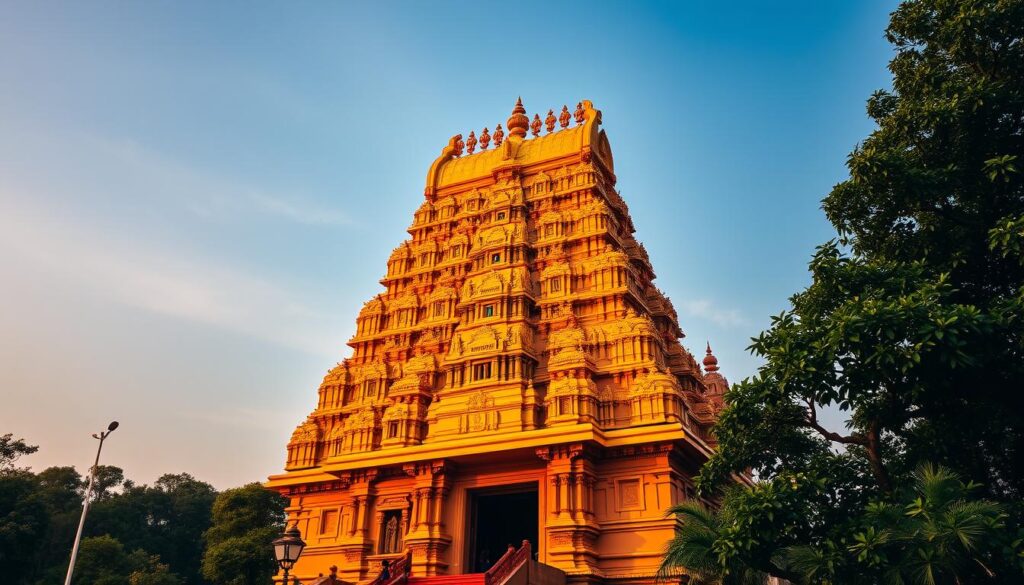
A monumental shift occurred as devotional practices replaced fire sacrifices. The rise of bhakti movements between the 8th-10th centuries CE transformed worship. People began seeking personal relationships with deities through songs, prayers, and temple rituals.
This evolution crossed oceans when immigrants brought traditions to American soil. Modern communities blend ancient designs with local materials. Carved stone pillars now stand beside energy-efficient lighting, showing how sacred spaces adapt without losing their essence.
Key developments shaped today’s spiritual hubs:
- Transition from open-air rituals to iconic shrine architecture
- Integration of Puranic stories into temple art and ceremonies
- Creation of community-focused spaces for cultural preservation
Early builders couldn’t have imagined their work inspiring global centers. Yet the core purpose remains unchanged – creating bridges between earthly life and eternal truths. These sacred structures continue evolving, just like the communities they serve.
Architectural Brilliance of Hindu Temple Design
Sacred geometry transforms stone into spiritual maps where every angle whispers cosmic secrets. Architects follow ancient texts called Shilpa Shastras, using precise ratios to create spaces that mirror universal patterns. These designs turn buildings into 3D yantras – geometric tools for meditation.
Symbolism and Geometric Principles
Floor plans often begin with a perfect square, representing earthly stability. Circles within these squares symbolize infinite cosmic cycles. This mandala-based layout guides visitors from outer courtyards to the inner sanctuary, mirroring the soul’s journey toward enlightenment.
Towering spires called shikharas stretch skyward like stone mountains. These aren’t just decorations – they map constellations and solstice alignments. “The temple becomes a bridge between human and divine realms,” explains architect Priya Desai, “through calculated proportions in every carving.”
Regional Variations and Traditional Styles
North and South India developed distinct styles over centuries. Northern designs feature curved shikhara towers resembling Himalayan peaks. Southern builders created pyramidal vimanas topped with carved stone disks. Both styles reached American shores, adapting to local materials and climate.
| Region | Style | Key Feature | Modern Adaptation |
|---|---|---|---|
| North India | Nagara | Curved shikhara tower | Fiberglass accents in Texas temples |
| South India | Dravida | Pyramidal vimana | Earthquake-resistant designs in California |
| America | Fusion | Energy-efficient gopurams | Solar-powered sanctums in Chicago |
Modern architects face exciting challenges. They blend traditional stone carving with steel reinforcements and eco-friendly materials. The result? Spaces that honor ancient wisdom while meeting 21st-century needs – proving sacred design can evolve without losing its soul.
Understanding Sacred Spaces and Cosmic Layouts
Sacred spaces act as bridges between earthly existence and cosmic truths. Every corner follows precise geometric patterns that mirror universal order. These designs help visitors experience spiritual concepts through physical surroundings.
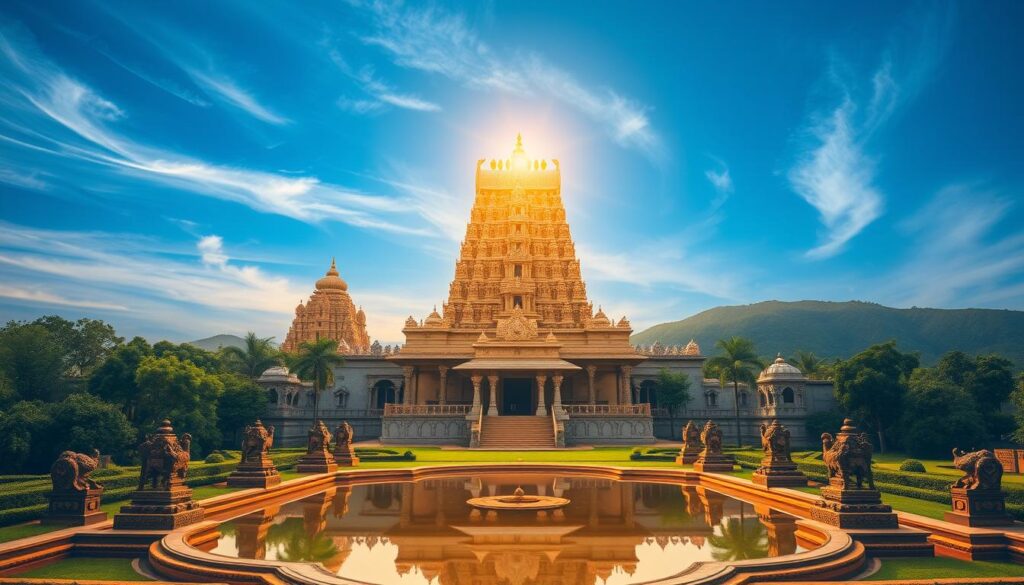
Cosmological Significance and Divine Geometry
Ancient builders used mandala blueprints to map the universe in stone. Concentric squares represent different planes of existence – outer layers for daily life, inner zones for enlightenment. The central garbhagriha (sanctuary) forms the axis connecting earth to celestial realms.
Four key elements shape these layouts:
| Temple Element | Cosmic Principle | Human Connection |
|---|---|---|
| Outer Walls | Material World | Dharma (Duty) |
| Pillared Halls | Social Order | Artha (Purpose) |
| Inner Sanctum | Divine Essence | Moksha (Liberation) |
| Spire | Cosmic Axis | Karma (Action) |
Modern adaptations preserve this sacred space philosophy. Architects adjust proportions for smaller lots while keeping cosmic ratios intact. “We use local materials but maintain the divine geometry,” shares designer Ravi Patel.
Light patterns during solstices highlight alignment with stars. These features turn worship into multisensory journeys. Visitors often describe feeling part of something larger while walking through these thoughtfully planned spaces.
The Role of Tradition in Daily Devotional Practices
Morning bells echo through corridors fragrant with jasmine as priests begin sacred cycles that have pulsed through generations. These living traditions transform spiritual centers into dynamic hubs where timeless customs meet contemporary life. Every gesture and chant carries centuries of meaning, creating bridges between ancient wisdom and modern seekers.
Rhythms of Reverence and Connection
Dawn marks the first act of devotion – awakening deities with tender care. Priests bathe marble figures in milk and honey, draping them in vibrant silks as devotional songs fill the air. “We don’t just maintain statues,” explains priest Arun Sharma. “We honor living embodiments of divine energy through daily rituals.”
The heart of temple worship revolves around darshan – that powerful moment when eyes meet across sacred space. Devotees offer flowers and fruits while whispering personal prayers. In return, they receive blessed sweets, completing a symbolic exchange of love and grace.
Weekly gatherings burst with communal energy:
- Children practice traditional dance steps in sunlit courtyards
- Volunteers prepare community meals using ancestral recipes
- Elders share folk stories beneath ancient bodhi tree replicas
Festivals transform these spaces into cultural kaleidoscopes. Drummers lead processions as families create intricate flower arrangements honoring divine forms. Through these shared experiences, traditions breathe and grow, nurturing both personal faith and collective identity.
Inspiration from Ancient Vedic Texts and Manuals
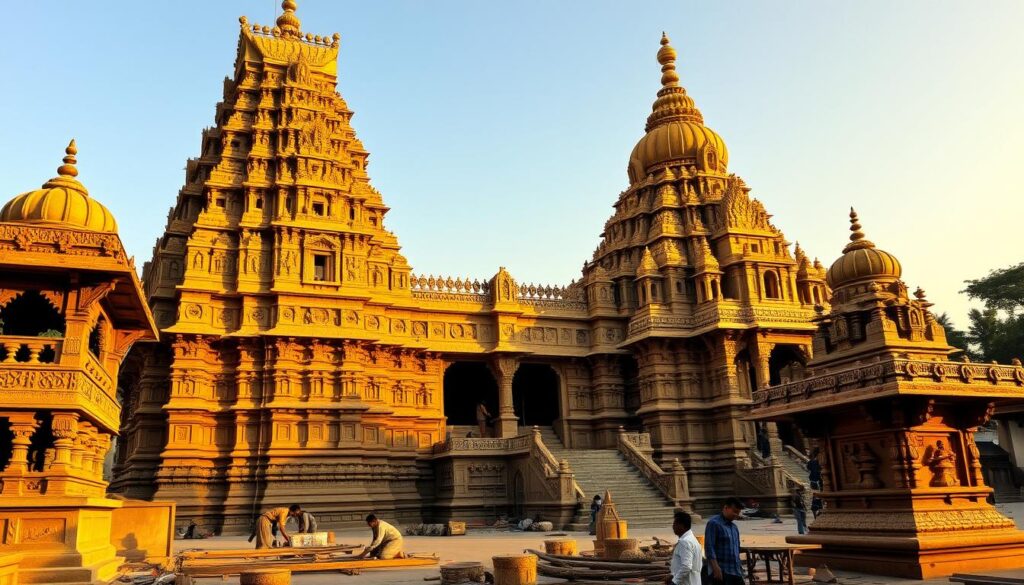
Ancient blueprints whisper secrets through stone, guiding modern builders with timeless wisdom. The Vastu-Sastra manuals reveal precise formulas for creating sacred spaces that balance cosmic energies. These 1,500-year-old texts outline everything from land surveys to decorative details, ensuring harmony between nature and human-made structures.
| Ancient Rule | Modern Application | Purpose |
|---|---|---|
| East-facing entrances | Solar alignment studies | Maximize morning light |
| 5:4 proportion ratios | 3D modeling software | Maintain sacred geometry |
| Local material use | Eco-friendly composites | Reduce carbon footprint |
| Water placement | Rainwater systems | Enhance energy flow |
The 10th-century Silpa Prakasa text still shapes temple construction today. Its instructions for carving deities help artists maintain traditional forms while using modern tools. Architects blend these rules with seismic safety standards in earthquake-prone areas.
Recent projects showcase this fusion. A Texas Indian temple uses geothermal cooling beneath hand-carved pillars. California designers combine steel frames with sandstone façades from Rajasthan. These innovations prove ancient wisdom adapts beautifully to new challenges.
The Intersection of Art, Music, and Spiritual Expression in Temples
Stone walls hum with timeless stories where artistry and devotion become one. These spiritual centers burst with creative energy, blending visual marvels with soul-stirring performances. Every corner offers a doorway to cultural treasures passed down through generations.
Rhythms That Connect Earth and Sky
The music of sacred spaces ranges from whispered mantras to joyful bhajan singalongs. Skilled artists play the veena’s haunting melodies or the mridangam’s heartbeat rhythms during evening ceremonies. Dance forms like Bharatanatyam turn courtyards into stages, where footwork patterns mirror cosmic cycles.
American indian temples keep these traditions vibrant. Sunday workshops teach children classical ragas while concert series introduce new audiences to Carnatic vocals. The clang of ceremonial bells often mixes with jazz-inspired flute improvisations in creative cultural fusions.
Stories Carved in Stone and Spirit
Look closely at any pillar or doorway. Intricate carvings show Krishna lifting mountains or Durga battling darkness. These image-filled narratives serve as visual textbooks, teaching values through epic tales. Modern artists add contemporary touches while preserving ancient techniques.
Festivals transform spaces into living art galleries. Floral designs carpet floors while oil lamps cast dancing shadows on deity statues. Through art and music, these sacred spaces become bridges – connecting past to present, earth to divine, and heart to community.
FAQ
What makes Hindu temple architecture unique in America?
Hindu temples in America blend traditional Indian styles like Dravidian (gopuram towers) and Nagara (curved shikharas) with local materials. Designs follow Vedic principles of sacred geometry, aligning spaces to cosmic energy. For example, the BAPS Shri Swaminarayan Mandir in New Jersey features hand-carved marble from India.
How do Hindu temples serve the community beyond worship?
They act as cultural hubs, hosting festivals like Diwali, language classes, and yoga sessions. The Sri Venkateswara Temple in Pennsylvania, one of the oldest, also runs charity drives and interfaith dialogues to foster unity.
Are non-Hindus allowed to visit these sacred spaces?
Yes! Most temples welcome visitors of all faiths. Guests can observe rituals, admire art like stone carvings of deities, or attend events. Modest attire and removing shoes before entering sanctums are common courtesies.
What role do ancient texts play in temple construction?
The Agamas and Shilpa Shastras guide everything from site selection to sculpture poses. For instance, the Dakshineswar Kali Temple’s layout mirrors descriptions in the Devi Mahatmya, ensuring alignment with divine symbolism.
How do American temples differ from those in India?
While core rituals remain unchanged, U.S. temples often adapt to smaller spaces. The Malibu Hindu Temple in California mixes South Indian architecture with modern facilities for youth programs, reflecting diaspora needs.
Why are dance and music integral to temple activities?
Classical arts like Bharatanatyam or Carnatic music are offerings to deities, rooted in Natya Shastra traditions. Events at places like the Shiva-Vishnu Temple in Maryland use these arts to share Hindu epics like the Ramayana.
What’s the significance of temple towers like vimanas?
Vimanas symbolize Mount Meru, the cosmic axis in Hindu cosmology. Their intricate carvings, seen in temples like Angkor Wat, represent the connection between earthly and divine realms.