Many congregations are rediscovering the power of traditional sacred music. A recent conversation between a pastor and seminary professor highlights this shift—church leaders increasingly seek ways to blend classic songs with modern worship styles. These melodies, rooted in rich theological truths, connect believers across generations.
Why do certain pieces remain beloved for centuries? Their lyrics often express core Christian doctrines with poetic clarity, while their memorable tunes invite collective participation. Research shows most churchgoers recognize between 50-200 spiritual songs, making careful selection vital for meaningful worship experiences.
This guide explores sacred music that resonates with Presbyterian, Baptist, Anglican, and Congregational traditions. You’ll learn how these works strengthen faith through lyrical depth and cultural endurance. Whether you’re planning services or deepening personal devotion, these time-tested compositions offer fresh relevance.
Key Takeaways
- Churches are blending traditional and contemporary worship music
- Lyrical theology remains central to song selection
- Melodic accessibility increases congregational engagement
- Most believers know fewer than 200 spiritual songs
- Historic works bridge generational gaps in faith communities
- Practical guidance helps leaders implement classic pieces
Understanding the History and Significance
Sacred songs have shaped spiritual practices longer than most realize. Ancient Greek philosophers wrote about religious chants, but it wasn’t until the 16th-century Reformation that congregational singing took its modern form. Leaders like Martin Luther championed music as a tool for teaching Scripture to everyday believers.
Origins and Evolution in Worship
Early reformers transformed worship by replacing Latin chants with lyrics people understood. This shift let entire congregations participate—not just trained choirs. The Trinity Hymnal, first published in 1961, became a landmark collection. Its revised “Red” edition reflects collaboration between Presbyterian groups, ensuring lyrics align with historic confessions like the Westminster Standards.
Hymnody in the American Protestant Tradition
When European settlers arrived in the New World, they brought psalters filled with metrical psalms. Over time, these evolved into distinctively American songs. Revival meetings and frontier churches favored simple melodies that taught core doctrines. By the 19th century, classics like “Amazing Grace” crossed denominational lines, uniting believers through shared musical language.
These timeless works didn’t just survive—they thrived. Their ability to adapt while maintaining theological depth explains why churches still treasure them today. From small country chapels to urban megachurches, these songs continue shaping worship worldwide.
Top Selections for Every Worship Occasion
Certain melodies have become the heartbeat of worship services across America. These timeless works fit seamlessly into baptisms, holidays, or ordinary Sundays, offering spiritual anchors for diverse moments. Their enduring popularity stems from universal themes that speak to both joy and struggle.
Hymns of Praise, Salvation, and Thanksgiving
“Great is Thy Faithfulness” (#32) comforts worshippers with its reminder of God’s unchanging nature. Many find strength in lines like “Morning by morning, new mercies I see” during life’s storms. 
“How Great Thou Art” (#44) turns ordinary sanctuaries into spaces of awe. Its Swedish roots blend with English lyrics to create moments of wonder. One music director notes: “This song makes congregations feel small yet deeply loved.”
Iconic Tunes That Shaped Congregational Singing
Martin Luther’s “A Mighty Fortress” (#92) remains a Reformation battle cry. Its bold melody mirrors the lyrics’ confidence in divine protection. Churches often use it during Reformation Sunday or times of uncertainty.
“Amazing Grace” (#460) continues to redefine redemption’s power. Written by a former slave trader, its message crosses cultural divides. Recent surveys show 89% of churchgoers recognize its opening notes within three seconds.
Triumphant pieces like “Crown Him with Many Crowns” (#295) close services with resounding hope. Their ascending melodies visually lift hands and hearts upward, embodying the joy of eternal promise.
Modern Adaptations and New Hymn Tunes
A fresh wave of creativity is reshaping how congregations engage with timeless truths through song. Artists blend ancient lyrics with modern instrumentation, proving theological depth and musical innovation aren’t mutually exclusive.
Contemporary Arrangements and Digital Resources
Keith Getty and Stuart Townend’s “In Christ Alone” shows how new compositions can achieve classic status quickly. Its soaring melody carries weighty doctrines about redemption, making it a popular Christian favorite since 2001. Similarly, Matt Merker’s “He Will Hold Me Fast” refreshes biblical assurance with a warm, folk-inspired hymn tune.
Digital platforms like Hymnary.org and Indelible Grace Music offer instant access to sheet music and recordings. Sovereign Grace Music updates older texts—Vikki Cook’s “Before the Throne” pairs Charles Wesley’s words with a haunting new melody. One worship leader notes: “These tools help us honor the past while speaking to today’s listeners.”
Kevin Twit’s work with Reformed University Fellowship demonstrates creative flexibility. His reimagined “Arise, My Soul, Arise” keeps the 18th-century text but adds a driving rhythm section. This approach bridges generational gaps without diluting content.
As churches embrace both old and new, these resources ensure time-tested truths remain central. From streaming services to chord charts, technology amplifies congregational singing rather than replacing it—a harmony of heritage and innovation.
Theological Themes and Inspirational Lyrics
Sacred songs become timeless when their words touch both mind and heart. The best works weave doctrine into poetry, creating lyrics that guide believers through life’s complexities while pointing to eternal truths.
Exploring Worship and Deep Beliefs
Classic compositions like “When I Survey the Wondrous Cross” turn theology into visceral worship. Its lyrics ask singers to ponder Christ’s sacrifice: “See from His head, His hands, His feet, sorrow and love flow mingled down.” This reflective approach helps worshippers connect doctrine with personal gratitude.
| Hymn | Core Theme | Biblical Anchor | Modern Relevance |
|---|---|---|---|
| Be Thou My Vision | Divine guidance | Psalm 119:105 | Clarity in uncertainty |
| Come, Thou Fount | God’s provision | 1 Samuel 7:12 | Gratitude practices |
| Great Is Thy Faithfulness | God’s constancy | Lamentations 3:22-23 | Anxiety reduction |
Reflecting on Life, Faith, and Grace
“Come, Thou Fount of Every Blessing” acknowledges our human struggle to stay faithful. The line “Prone to wander, Lord, I feel it” resonates deeply in a culture valuing authenticity over perfection. These songs don’t shy away from life’s messiness—they frame it within God’s unshakable peace.
Many find the phrase “Thou my best thought by day or night” from “Be Thou My Vision” becomes a daily mantra. Its ancient Irish roots remind us that seeking divine perspective transcends eras and cultures. Through such lyrics, ordinary moments become opportunities for spiritual growth.
Practical Tips for Integrating Hymns into Worship
Blending timeless songs with modern worship styles requires intentional strategies. Start with melodies that feel familiar yet fresh—tracks like “The Lord’s My Shepherd” work well because their flowing rhythms adapt easily to guitars or pianos. These musical anchors help congregations transition smoothly between old and new expressions of faith.
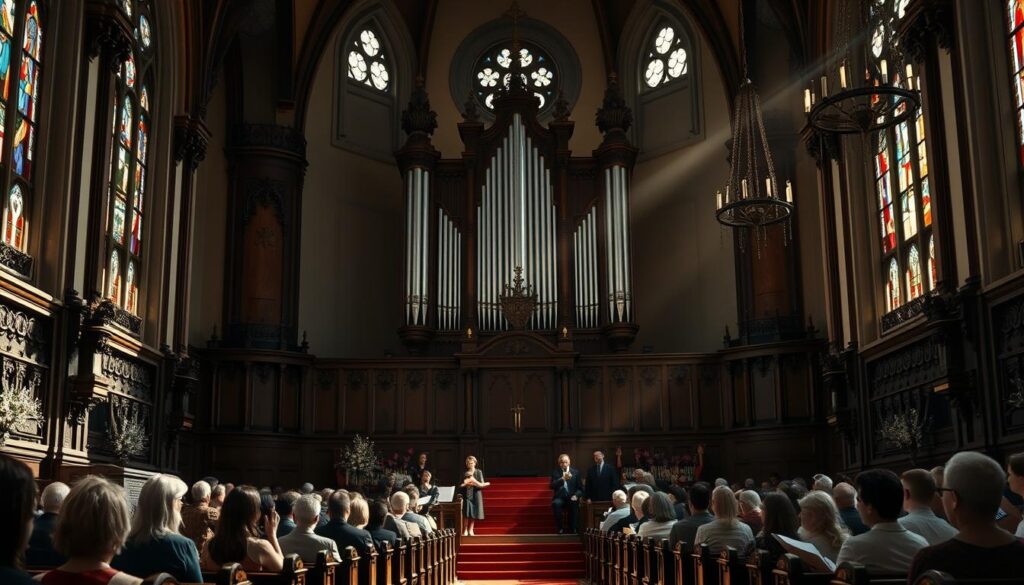
Guidance for Pastors and Worship Leaders
Build your setlist around sturdy classics before introducing lesser-known pieces. Research shows most church members connect best with 15-20 core songs. Pastor Mike Campbell notes: “We mix shared favorites from different hymnals to honor our diverse community.” This approach helps multiethnic congregations find common ground through art that spans cultures.
Consider these practical things when planning services:
- Project lyrics clearly—60% of worshippers rely on screens over printed books
- Use keys that allow strong congregational singing (D to F major often work best)
- Pair one historic hymn with a psalm setting to maintain biblical balance
| Hymnal | Shared Songs | Cultural Roots |
|---|---|---|
| Trinity Hymnal | 32 | Presbyterian/Reformed |
| African American Heritage | 28 | Black Church Tradition |
| Baptist Hymnal | 24 | Evangelical |
Songs like “How Firm a Foundation” thrive in modern arrangements because their messages remain urgent. By honoring tradition while embracing innovation, churches create worship experiences that resonate across generations.
protestant hymns: Their Enduring Impact on Faith
Melodies that once echoed in 19th-century chapels now fill modern stadiums and concert halls. These sacred songs carry timeless messages of hope that transcend cultural shifts, creating shared moments where grandparents and children sing the same truths.
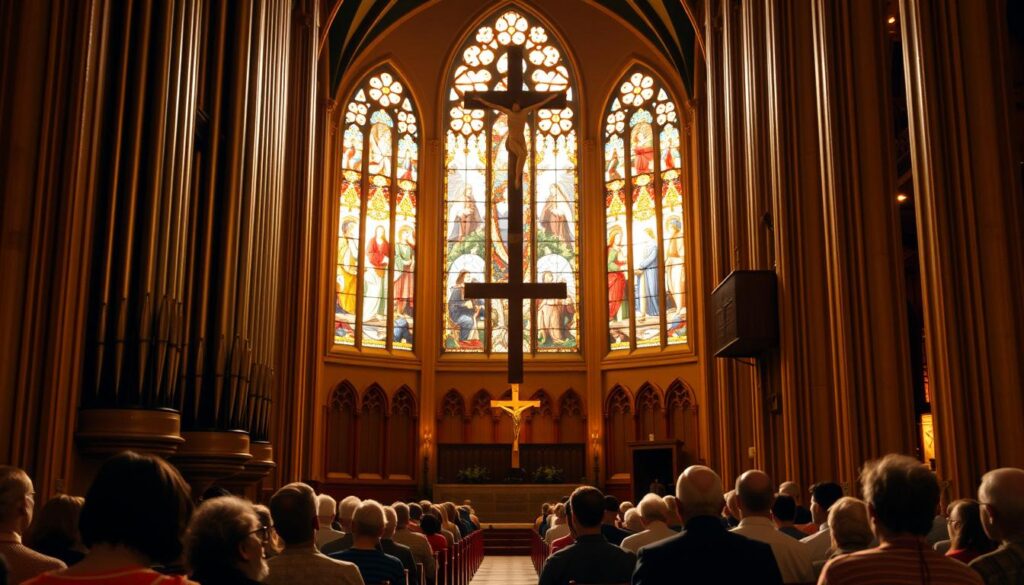
Hymns as a Bridge Across Generations
“Abide with Me” has united crowds at British soccer finals since 1927. Its plea for divine presence resonates as strongly at sports events as in church services. Similarly, “I Vow to Thee My Country” marked both Princess Diana’s wedding and funeral, showing how hymns frame life’s pivotal chapters.
Three factors explain their lasting power:
| Context | Hymn Example | Cultural Role |
|---|---|---|
| National Events | O God Our Help | Fosters unity |
| Personal Milestones | Great Is Thy Faithfulness | Provides comfort |
| Modern Worship | Be Thou My Vision | Blends traditions |
Even churches favoring contemporary music report stronger participation when introducing classic pieces. Their poetic simplicity cuts through noise, offering peace in anxious times. As one music director observed: “These songs turn strangers into a community singing with one voice.”
Conclusion
These cherished songs remain vital across generations, bridging past and present through shared worship. Classics like “Amazing Grace” and “Be Thou My Vision” continue to shape spiritual journeys, their words offering comfort in life’s challenges. Their ability to unite voices in praise proves music’s unique power to strengthen faith communities.
Time-tested lyrics carry profound messages of hope and divine blessing. Whether sung in small chapels or modern churches, they anchor believers to core truths while adapting to new musical styles. This balance ensures their relevance for personal devotion and collective worship alike.
As you explore these works, let their depth enrich your spiritual walk. Their legacy thrives not just in books, but in every heart that finds joy, peace, and connection through song. Great melodies truly stand the test of time—echoing eternal truths for all who listen.
FAQ
What makes hymns like “Amazing Grace” timeless in worship?
Their universal themes of grace, redemption, and divine love resonate across cultures and eras. Lyrics rooted in Scripture and memorable melodies create emotional connections, fostering unity in congregations.
How can I choose hymns that align with modern worship styles?
Blend classic tunes with contemporary arrangements. Many artists reimagine traditional songs using instruments like guitars or synths while preserving lyrical depth. Digital platforms like Spotify offer curated playlists for inspiration.
Why are hymns like “Great Is Thy Faithfulness” central to American church traditions?
These songs reflect historical struggles, triumphs, and theological truths that shaped communities. Their messages of hope and God’s unchanging nature provide comfort and continuity in changing times.
Can hymns still engage younger generations?
Absolutely! Updated versions with fresh instrumentation or multimedia elements appeal to youth. Lyrics addressing doubt, purpose, and grace also meet modern spiritual questions, bridging generational gaps.
What role do hymns play in teaching theology?
They simplify complex doctrines through storytelling and metaphor. Songs like “A Mighty Fortress” convey themes of God’s sovereignty, while “How Great Thou Art” inspires awe through creation-based praise.
How do I introduce lesser-known hymns to a congregation?
Start by pairing them with familiar tunes or explaining their historical context. Worship leaders can share brief stories about the hymn’s origin or tie its message to sermons for deeper relevance.
Are there resources for finding hymns suited to specific themes?
Yes! Hymnals like Lift Every Voice or online databases categorize songs by topic, season, or Scripture. Apps like Hymnary.org allow searches by meter, key, or lyrical content.