Step into a world where faith meets form, and spiritual values shape stone and space. For centuries, religious buildings have reflected theological priorities through their design. Protestant structures stand apart, favoring clean lines and open layouts that emphasize community and clarity.
The 16th-century Reformation sparked dramatic changes in worship spaces. Unlike earlier traditions, these designs prioritized practical needs over ornamentation. Pulpit placement became central, while natural light and acoustics supported congregational participation.
Modern interpretations continue evolving while honoring core principles. Architects now blend traditional symbolism with contemporary materials, creating spaces that feel both timeless and relevant. From Scandinavia’s minimalist chapels to America’s innovative megachurches, each structure tells a story of belief made visible.
Key Takeaways
- Reformation-era designs broke from ornate Catholic traditions
- Functional layouts enhance communal worship experiences
- Pulpit centrality reflects focus on biblical teachings
- Modern designs balance tradition with innovation
- Architectural choices reveal theological priorities
- Global examples showcase cultural adaptations
Introduction to Protestant Churches Architecture
The story of sacred spaces changed forever during the 1500s. Religious reformers like Martin Luther and John Calvin sparked a movement that reshaped not just beliefs, but the physical spaces where people gathered. Their ideas about direct connection with scripture led to radical changes in how communities designed their places of worship.
What This Guide Reveals
You’ll discover how 16th-century revolutionaries transformed existing Roman Catholic buildings into simpler spaces. We’ll explore how these changes weren’t just about looks—they reflected new priorities like communal singing and accessible preaching. The journey spans from makeshift meeting halls to today’s bold modern structures.
Roots in Cultural Upheaval
The Reformation wasn’t just theological—it was visual. As conflicts between Catholics and reformers intensified, architectural choices became declarations of identity. Stained glass gave way to clear windows, letting natural light symbolize spiritual clarity. Ornate altars were replaced by central pulpits, putting biblical teaching at the heart of gatherings.
This shift created spaces where everyone could see and hear equally. It wasn’t about removing beauty, but about making worship participatory rather than observational. These principles still guide designers today, proving good architecture can shape community as much as doctrine does.
Historical Foundations of Protestant Churches in the 16th Century
Protestant communities in France faced a practical problem during the Reformation: where to gather? As their numbers grew, private homes became inadequate. This need sparked one of history’s most dramatic makeovers of sacred spaces.
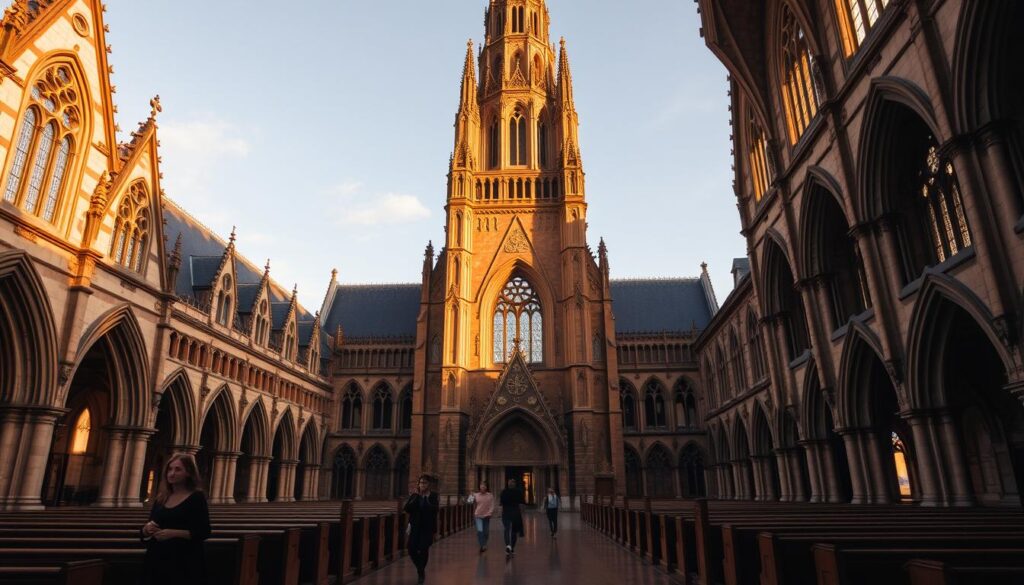
Reformation Origins and Early Adaptations
By the mid-1500s, groups began repurposing existing structures. Abandoned abbeys and Catholic buildings became blank canvases. The St Jacques church in Montauban shows how reformers removed altars and added simple wooden benches facing a central pulpit.
Three key changes defined these conversions:
- Communion tables replaced elaborate altars
- Clear windows flooded rooms with natural light
- Acoustic improvements ensured everyone heard sermons
Iconoclasm: More Than Destruction
The removal of statues and paintings wasn’t random vandalism. As one historian notes: “Empty walls became sermons in plaster—a visual rejection of intermediary symbols.” In Nîmes, entire convents were stripped of religious images to create focused environments for scripture study.
| Feature | Catholic Church | Reformed Space |
|---|---|---|
| Visual Focus | Stained glass & statues | Plain walls & text |
| Central Element | Altar | Pulpit |
| Seating Arrangement | Random/standing | Concentric benches |
These transformations went beyond aesthetics. They physically demonstrated new beliefs about direct access to divine truth. The Jacobine convent in Agen still shows original whitewashed walls where frescoes once told biblical stories—now space for the spoken word to resonate.
Core Elements of Protestant Churches Architecture
Imagine entering a 16th-century worship space where every architectural choice tells a story of theological revolution. The reformers didn’t just rearrange furniture—they rebuilt spiritual experiences through deliberate design choices.
The Centrality of the Pulpit and the Word
Where Catholic buildings once drew eyes to golden altars, reformed spaces placed the pulpit front and center. This wasn’t just practical—it shouted that scripture held ultimate authority. Elevated platforms and angled seating ensured every voice carried clearly, making biblical teachings accessible to all.
As one reformer noted: “The spoken Word became our living altar.” Acoustics shaped stone walls and wooden ceilings, turning buildings into resonance chambers for sermons. This focus on hearing and understanding changed how communities engaged with faith.
Redefining Altars and Interior Layouts
The traditional altar didn’t disappear—it transformed. Communion tables became simpler, often moved to the side. This shift visually prioritized teaching over ritual. Circular seating patterns emerged, creating equality among worshippers.
Three key changes defined these spaces:
- Benches faced the pulpit rather than religious art
- Clear sightlines replaced visual distractions
- Open floor plans encouraged collective participation
These interior changes made theology tangible. Barriers between leaders and congregations dissolved, reflecting the belief that all believers could approach divine truth directly. The architecture itself became a teacher, reinforcing reformed principles through spatial relationships.
The Impact of the Reformation on Church Interiors
Imagine walking into a sacred space where every corner whispers a theological revolution. The 16th-century shift in spiritual priorities didn’t just change beliefs—it redesigned entire rooms to shout new truths. Visual hierarchies crumbled as communities reimagined what worship could look like.

From Altar-Centric to Pulpit-Focused Spaces
Gone were the days when priests stood elevated behind golden altars. Reformers moved the pulpit to the room’s heart, making scripture the star. “We built spaces where ears matter more than eyes,” wrote one designer. Clear sightlines and angled seating let everyone engage equally with teachings.
This wasn’t just furniture rearrangement. It declared that divine authority lived in shared understanding, not rituals. Simple communion tables replaced elaborate altars, reflecting the belief that grace comes through faith—not human works.
Incorporating Community and Public Worship
Circular seating patterns turned spectators into participants. Benches faced inward, creating circles of shared prayer and song. These layouts dissolved barriers between leaders and congregations, mirroring the idea of spiritual freedom for all.
New designs also served practical needs. Wider aisles accommodated growing crowds during this transformative time. Acoustics were fine-tuned for group singing, turning stone walls into amplifiers for collective voices. Every architectural choice whispered: “You belong here.”
Architectural Adaptations: Reusing and Repurposing Catholic Structures
When sacred spaces changed hands, they gained new voices. Reformed communities transformed existing buildings with practical creativity, turning ornate structures into functional gathering places. This wasn’t just renovation—it was spiritual reinvention.
Conversion of Abbeys, Convents, and Chapels
Abandoned monasteries became unlikely heroes of this transformation. In Valence, the former St Ruf abbey got a second life through government redistribution. Its vaulted ceilings now amplified sermons instead of chants. Similar changes swept the region, with Nîmes’ Ursuline convent chapel becoming a hub for scripture study.
Wealthy converts played key roles too. The Chamerolles estate’s private chapel shows how nobles blended personal faith with community service. These spaces often kept original stonework but added simple wooden benches—proof that beauty could serve new purposes.
Three patterns emerged in these adaptations:
- Whitewashed walls replacing frescoes
- Central pulpits installed where altars stood
- Acoustic adjustments for clear speech
Local funding made many projects possible. Communities in Lyon and Rouen pooled resources to build original works from scratch. Each modification whispered the same truth: spaces shape faith as much as faith shapes spaces.
Revival and New Constructions in the 17th and 18th Centuries

The 17th century dawned with shadows over reformist worship spaces. Following Henry IV’s death in 1610, protections dissolved like morning mist. Authorities systematically destroyed temples built after 1598, leaving communities without permanent gathering places for nearly two centuries.
Secret Assemblies and the Era of the Désert
From 1685 to 1787, believers practiced their faith in hidden corners of France. Caves became cathedrals, forests turned into sanctuaries. One account describes “prayers whispered beneath oak boughs, Bibles hidden in bread baskets.” Portable communion sets and collapsible pulpits allowed quick dispersal if soldiers approached.
This underground period reshaped spiritual practices:
- Stone walls replaced by living canopies
- Central pulpits became traveling lecterns
- Hymnbooks memorized rather than printed
The Edict of Tolerance and the Birth of New Temples
Louis XVI’s 1787 decree sparked dramatic change. After decades of hiding, communities rushed to build visible worship spaces. The first new chapels featured:
| Feature | Désert Era | Post-1787 Design |
|---|---|---|
| Location | Remote natural sites | Urban centers |
| Structure | Temporary setups | Permanent stone buildings |
| Focal Point | Portable Bible stand | Fixed central pulpit |
These new spaces balanced freedom with caution. Windows stayed clear rather than stained, reflecting hard-won transparency. Seating arrangements maintained the circular patterns perfected in secret gatherings, preserving that sense of shared participation.
19th Century: Diversity in Protestant Church Design
The 1800s brought a fresh wave of creativity to spiritual spaces across France. Communities began blending historical inspiration with practical needs, creating buildings that whispered both tradition and progress.
Classical Roots Meet Reformed Values
Early 19th-century designs often nodded to ancient Rome. Circular layouts with columned porticos appeared in cities like Orléans and Bordeaux. The Temple des Chartrons (1832) stood out with its dignified symmetry—proving classical elements could honor both history and reformed simplicity.
Local Flavors Shape Sacred Spaces
As the century progressed, regional tastes emerged. Builders in Nantes chose pointed arches and stained glass, while Paris’ Temple de l’Etoile (1874) mixed Gothic drama with clear sightlines. These choices showed how communities adapted shared beliefs to local landscapes.
From Rochefort’s sturdy columns to Sancerre’s delicate stonework, each structure told a dual story. They celebrated hard-won religious freedom while proving sacred spaces could evolve without losing their soul. This era’s legacy? Beauty and belief walking hand in hand.
FAQ
How did 16th-century reforms alter traditional religious spaces?
During the Reformation, many communities shifted focus from visual symbolism to scripture. This led to simpler interiors, with pulpits placed centrally to emphasize preaching. Altars were often replaced by communion tables to reflect new theological priorities.
Why do some older structures lack decorative artwork?
Iconoclasm—the rejection of religious images—was common during early reforms. Followers removed statues, paintings, and stained glass to avoid distractions during worship, prioritizing plain designs that highlighted communal participation.
Were existing Catholic buildings repurposed after the Reformation?
Yes! Abbeys, chapels, and convents were frequently adapted for new congregations. Modifications included removing side altars, adding larger seating areas, and redesigning layouts to accommodate group gatherings rather than private rituals.
What role did regional styles play in later designs?
By the 1800s, architects blended local traditions with revival trends. For example, Neo-Gothic elements appeared in urban areas, while rural regions used simpler forms. Materials like brick or stone often reflected geographical influences.
How did secret worship affect architectural choices?
Before legal tolerance, groups met discreetly in homes or barns. These spaces prioritized functionality over grandeur, fostering intimate settings that later influenced the emphasis on community-focused layouts in formal temples.
Do modern congregations still use these historical features?
Absolutely. Many contemporary designs retain elements like elevated pulpits, flexible seating, and minimal ornamentation. These features continue to reflect core values of accessibility and collective engagement in services.