Understanding the core beliefs of Anglicans can be a fascinating journey, especially when guided by an expert like Sam Wells. As a leading authority on Anglicanism, Wells has written extensively on the subject, including his insightful book “What Anglicans Believe.”
With Sam Wells’ expertise, readers can gain a deeper understanding of Anglican theology and its significance. This article aims to explore the fundamental principles of Anglican beliefs, providing readers with a comprehensive overview of this rich and diverse faith tradition.
Key Takeaways
- Understanding the core beliefs of Anglicans
- Exploring the significance of Anglican theology
- Gaining insights from Sam Wells’ expertise
- Discovering the diversity within Anglicanism
- Learning about the key principles of Anglican faith
Introduction to Anglicanism and Sam Wells
Sam Wells, a prominent figure in Anglicanism, offers insights into the faith’s traditions and values. As the vicar of St. Martin-in-the-Fields Anglican Church at Trafalgar Square in London, and having previously served as dean of the chapel and research professor of Christian ethics at Duke University, Wells brings a wealth of knowledge and experience to the discussion on Anglican beliefs.
Who is Sam Wells?
Sam Wells is a theologian and author who has made significant contributions to the understanding of Anglican faith and practices. His background in teaching and leading a prominent Anglican congregation positions him as a key voice in contemporary Anglican thought. Wells’ work often explores the intersection of faith, ethics, and community, providing a comprehensive view of Anglican tradition.
Overview of Anglicanism
Anglicanism is a Christian tradition that originated from the Church of England. It is characterized by a balance between scripture, tradition, and reason. Anglicans believe in the authority of the Bible, the importance of sacraments, and the value of a rich liturgical life. The Anglican faith is practiced in various forms around the world, united by a common heritage and a commitment to serving the global community.
Importance of Faith in Community
The Anglican tradition places a strong emphasis on the importance of faith being lived out in community. Anglicans believe that being part of a faith community is essential for spiritual growth and for serving others. This communal aspect of faith is reflected in the church’s liturgy, its social justice initiatives, and its mission work around the world. Through community, Anglicans aim to embody the teachings of Christ and to make a positive impact in their societies.
Fundamental Beliefs of Anglicans
The beliefs of Anglicans are rooted in a deep understanding of faith and practice, guided by several core principles.
The Authority of Scripture
Anglicans place a high value on the authority of Scripture. The Bible is considered the primary source of guidance for faith and practice. This belief is central to Anglican doctrine, influencing how Anglicans understand God’s will and live out their faith.
Key aspects of the authority of Scripture include:
- The Bible as the inspired word of God
- The importance of biblical teachings in guiding faith and practice
- The role of Scripture in shaping Anglican theology and worship
Tradition and Reason in Faith
In addition to the authority of Scripture, Anglicans also emphasize the importance of tradition and reason in understanding their faith. This approach allows for a balanced perspective that incorporates historical teachings, rational thought, and spiritual experience.
The interplay between tradition and reason is crucial:
- Tradition provides a link to the historical and cultural context of faith
- Reason enables Anglicans to interpret and apply their beliefs in contemporary contexts
- Together, tradition and reason foster a rich and nuanced understanding of Anglican theology
The Role of the Church
The Church plays a vital role in the lives of Anglicans, serving as a community of believers who support and guide one another. The Church is seen as a body that embodies the teachings of Christ and provides a framework for worship, service, and spiritual growth.
The Church’s role includes:
- Guiding believers through worship and sacraments
- Providing a community for mutual support and service
- Interpreting and applying Anglican doctrine in various contexts
The Anglican Understanding of God
At the heart of Anglican theology lies a profound understanding of God’s nature, which is deeply rooted in the concept of the Trinity. This foundational belief shapes the Anglican perception of God’s interaction with the world and humanity.

Anglican doctrine emphasizes the significance of understanding God as a triune being—Father, Son, and Holy Spirit. This understanding is not merely a theological abstraction but a living reality that informs every aspect of Anglican faith and practice.
The Nature of the Trinity
The concept of the Trinity is central to Anglican theology. It signifies that God is one being in three distinct persons: the Father, the Son (Jesus Christ), and the Holy Spirit. This triune nature of God is seen as a mystery that is both revealed in Scripture and experienced in the life of the Church.
The Trinity is not just a doctrine; it is a framework for understanding God’s relationship with humanity. It highlights God’s love and grace, as seen in the Father’s creation, the Son’s redemption, and the Holy Spirit’s sanctification.
God’s Love and Grace
In Anglican spirituality, God’s love and grace are fundamental themes. Anglicans believe that God’s love is not distant or abstract but is actively engaged in the world. This love is manifested through the life, death, and resurrection of Jesus Christ, who embodied God’s grace in human history.
God’s grace is understood as the unmerited favor that God shows to humanity. It is through this grace that individuals are called to faith and transformed into the likeness of Christ. The experience of God’s grace is a cornerstone of Anglican devotion and practice.
The Role of the Holy Spirit
The Holy Spirit plays a vital role in Anglican theology and spirituality. The Spirit is seen as the presence of God within the believer and the Church, guiding, empowering, and sanctifying. The work of the Holy Spirit is essential for understanding the Christian life and the sacraments.
In Anglican doctrine, the Holy Spirit is the agent of spiritual growth and renewal. Through the Spirit, believers are enabled to live out their faith in practical ways, demonstrating God’s love and grace in the world.
The Sacraments in Anglican Worship
Sacraments are fundamental to Anglican worship, serving as a tangible expression of faith. They are considered essential elements that connect believers with God and with each other. The Anglican tradition emphasizes the importance of these sacred rites in nurturing the spiritual life of the community.
Baptism: A Sign of Faith
Baptism is recognized as a sacrament of initiation into the Christian faith. It symbolizes the cleansing of sin and the beginning of a new life in Christ. In the Anglican tradition, baptism is seen as a rite of passage that welcomes individuals into the community of believers. The sacrament is typically performed with water, symbolizing purification and renewal.
The significance of baptism lies in its representation of a person’s commitment to follow Jesus Christ. It is a public declaration of faith, often accompanied by the support of the community. In Anglican worship, baptism is considered a vital sacrament that marks the beginning of a person’s journey in faith.
Eucharist: The Heart of Worship
The Eucharist, also known as Holy Communion, is another sacrament central to Anglican worship. It involves the consecration of bread and wine, which are believed to become the body and blood of Christ. The Eucharist is seen as a means of grace, where believers participate in the life of Christ through the reception of the consecrated elements.
In Anglican practice, the Eucharist is not only a remembrance of Christ’s Last Supper but also a celebration of the presence of Christ among the worshiping community. It is considered a source of spiritual nourishment and unity among believers.
Other Sacraments and Their Significance
While baptism and the Eucharist are the two primary sacraments in Anglicanism, other rites are also recognized for their spiritual significance. These include confirmation, ordination, marriage, reconciliation of a penitent, and anointing of the sick. Each of these sacraments plays a unique role in the spiritual journey of believers.
These sacraments are integral to the Anglican worship tradition, providing a framework for understanding and experiencing God’s grace. They are seen as a means of connecting with the divine and with the community, fostering a deeper sense of faith and commitment.
Ethical and Moral Teachings of Anglicans
At the heart of Anglicanism lies a deep commitment to living out one’s faith in practical ways. This commitment is reflected in the ethical and moral teachings that guide Anglicans in their daily lives.
The Call to Social Justice
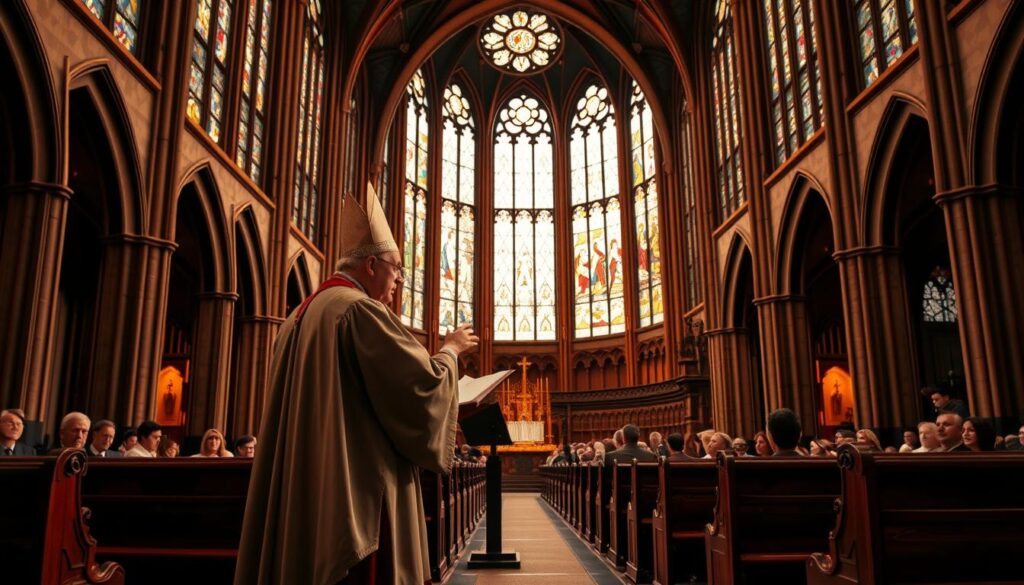
One of the core ethical teachings of Anglicans is the call to social justice. Anglicans are encouraged to work towards creating a more just and equitable society. This involves advocating for the rights of the marginalized and standing against injustice. As Sam Wells notes, “Faith is not just about personal salvation, but about being part of a community that seeks to make a difference in the world.”
The Anglican commitment to social justice is reflected in their involvement in various community and global initiatives. From advocating for environmental protection to supporting human rights, Anglicans are called to be active participants in creating positive change.
Stewardship of Creation
Another important aspect of Anglican ethics is the stewardship of creation. Anglicans believe in caring for the earth and its resources, recognizing that they have been entrusted to humanity. This involves adopting sustainable practices and working to mitigate the impact of human activity on the environment.
As the Anglican Communion has stated, “Caring for creation is not just an environmental issue, but a deeply theological one.” This perspective underscores the importance of integrating faith with action to protect the planet for future generations.
Relationships and Family Life
Anglican ethical teachings also place a strong emphasis on the importance of relationships and family life. Anglicans are encouraged to nurture healthy, loving relationships within their families and communities. This includes promoting understanding, respect, and compassion in all interactions.
In the words of a prominent Anglican leader, “The family is the first school of love and compassion, where we learn to live with others and to care for one another.” This highlights the critical role that family and relationships play in shaping Anglican values and practices.
The Role of Liturgy in Anglicanism
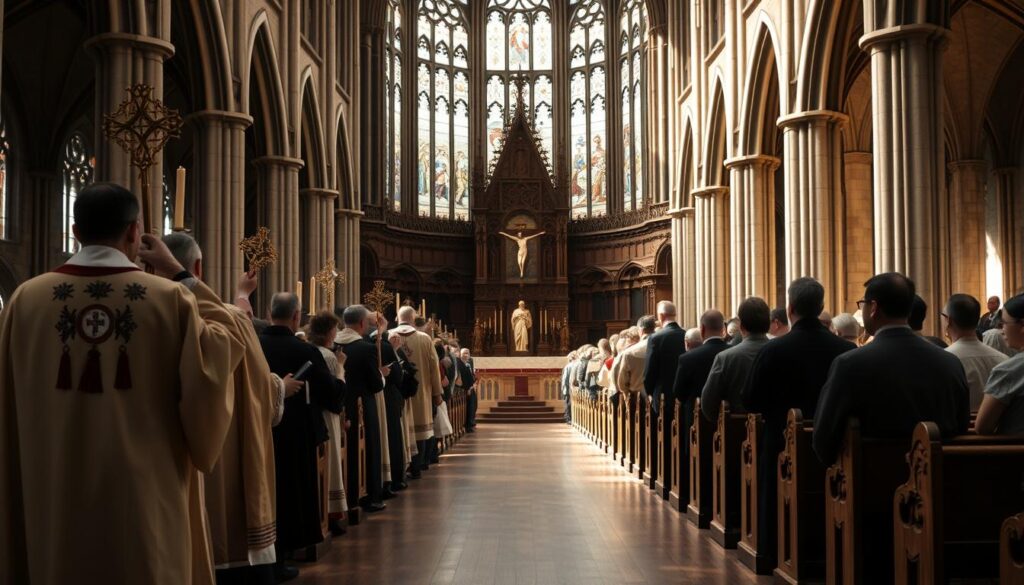
Anglicans place a significant emphasis on liturgy, which is viewed as a means of participating in the story of God’s people. This practice is not just about following a set of rituals; it’s about connecting with the divine and with each other on a deeper level.
Structure and Significance of Liturgy
The structure of Anglican liturgy is rooted in tradition, yet it is flexible enough to accommodate various cultural and contextual expressions. At its core, Anglican liturgy is characterized by a balance between scripture, reason, and tradition. This balance ensures that worship is both grounded in biblical teachings and open to contemporary understanding and expression.
The significance of liturgy in Anglicanism lies in its ability to convey the richness of Christian faith through a structured yet inclusive form of worship. It encompasses various elements such as prayers, sacraments, and readings from the Bible, all of which contribute to a holistic worship experience.
The Importance of Music and Arts
Music and the arts play a vital role in Anglican liturgy, enhancing the worship experience and facilitating a deeper engagement with the divine. Music, in particular, is seen as a powerful medium for expressing faith and emotions, with hymns and chants being integral parts of the liturgical service.
The incorporation of arts in liturgy not only beautifies the worship environment but also serves as a means of communicating the Christian message in a multifaceted way. It invites participants to engage their senses and imagination, thereby enriching their spiritual experience.
Seasonal Observances
Anglican liturgy is also characterized by its observance of the liturgical calendar, which commemorates the life of Christ and significant events in the Christian faith. Seasonal observances such as Advent, Christmas, Lent, and Easter are marked with specific liturgies and rituals, providing a rhythm to the worship life of Anglican communities.
These seasonal observances serve to deepen the understanding of Christian doctrine and to foster a sense of unity among Anglicans worldwide. They remind believers of the core beliefs and narratives of their faith, connecting them to the broader Christian tradition.
The Anglican Communion and Global Perspectives
The Anglican Communion represents a global network of churches united in their heritage and commitment to mission and service. As a worldwide family of churches, it embodies a rich diversity of cultures, languages, and theological perspectives.
Diversity within Anglicanism is one of its defining characteristics. From the historic churches in England to the vibrant congregations in Africa, Asia, and the Americas, the Anglican Communion encompasses a broad spectrum of worship styles and theological emphases. This diversity is celebrated as a strength, enriching the communion’s witness and service to the world.
Diversity within Anglicanism
The Anglican Communion’s diversity is reflected in its membership, which includes churches from various cultural and geographical contexts. This diversity brings a wealth of perspectives to the communion’s deliberations and decisions.
As Rowan Williams, a former Archbishop of Canterbury, once noted, “The Anglican Communion is a community that is constantly seeking to balance the universal and the particular, the global and the local.” This balance is crucial in maintaining unity amidst diversity.
Ecumenical Dialogues
The Anglican Communion is actively engaged in ecumenical dialogues with other Christian denominations. These dialogues aim to promote understanding, cooperation, and ultimately, the unity of Christians worldwide.
“We are called to be one, so that the world may believe.” This quote, often referenced in ecumenical discussions, underscores the importance of unity among Christians. The Anglican Communion’s participation in ecumenical dialogues is a significant step towards achieving this goal.
Global Anglican Challenges
Despite its strengths, the Anglican Communion faces several global challenges. These include theological disagreements, cultural differences, and the need for more effective coordination among its global membership.
Addressing these challenges requires a commitment to mutual understanding, respect, and cooperation. By working together and embracing their diversity, Anglican churches can navigate these challenges and continue to thrive as a global communion.
The Importance of Community in Anglican Belief
The importance of community in Anglican belief cannot be overstated, as it forms the basis of a vibrant and inclusive faith life. Anglicans believe that being part of a community is essential to living out one’s faith, as it provides a supportive environment for spiritual growth and development.
Building a Supportive Faith Community
Building a supportive faith community is a key aspect of Anglican belief. This involves creating an environment where individuals feel welcomed and supported in their spiritual journeys. Small groups and Bible studies are examples of how Anglican communities foster deeper connections among members.
These community activities not only enhance individual faith but also promote a sense of belonging and unity within the congregation.
Outreach and Mission Work
Outreach and mission work are integral to the Anglican understanding of community. Anglicans are called to serve others, both within their local communities and globally. This can involve a range of activities, from social justice initiatives to overseas mission trips.
By engaging in outreach and mission work, Anglicans demonstrate their commitment to living out their faith in practical ways, making a positive impact on the world around them.
Engaging with Local and Global Issues
Anglicans are encouraged to engage with both local and global issues, using their faith as a guide for understanding and addressing these challenges. This might involve participating in community service projects or advocating for social justice causes.
By doing so, Anglicans demonstrate their commitment to being a positive force in the world, working towards creating a more just and compassionate society.
Sam Wells’ Contributions to Anglican Thought
Sam Wells, a prominent figure in Anglicanism, has significantly influenced contemporary Anglican thought through his extensive writings and public speeches. His work has addressed various aspects of Anglican belief and practice, offering insights that are both relevant to traditional teachings and responsive to modern needs.
Key Themes in Wells’ Works
Wells’ writings often explore the intersection of faith and daily life, emphasizing the importance of living out one’s beliefs in practical ways. He has written extensively on the role of the church in contemporary society, advocating for a community that is both rooted in tradition and open to change.
One of the key themes in Wells’ work is the concept of community. He argues that the church should be a place where individuals come together to support one another, both spiritually and practically. This emphasis on community is seen as a vital aspect of Anglican identity and practice.
Influence on Modern Anglicanism
Sam Wells’ influence on modern Anglicanism is evident in several areas. His writings have helped shape the discourse around issues such as social justice, the role of women in the church, and the church’s engagement with contemporary culture.
Wells’ work has also been influential in encouraging a more nuanced understanding of Anglican identity, one that balances tradition with a willingness to adapt to changing circumstances. This approach has resonated with many within the Anglican Communion, contributing to a more diverse and vibrant global community.
Notable Writings and Speeches
Among Wells’ notable writings are books that address the practical implications of faith, such as how to live a meaningful life in the context of Christian teachings. His speeches often focus on the challenges facing the church in the modern world, offering guidance on how to navigate these challenges while remaining true to Anglican principles.
Some of his notable works include detailed explorations of liturgy and sacraments, areas in which Wells has made significant contributions to Anglican thought. His ability to communicate complex theological concepts in an accessible way has made his work widely appreciated.
Current Trends and Future of Anglicanism
Anglicanism is at a crossroads, facing modern challenges while seeking to remain relevant in a changing world. As Sam Wells and other Anglican leaders suggest, the path forward involves embracing change while staying true to core beliefs.
Engaging Younger Generations
One of the significant challenges Anglicanism faces is engaging younger generations. According to recent studies, many younger individuals are drawn to spiritual communities that are inclusive, socially conscious, and adaptable to contemporary issues. As Sam Wells notes, “The church must be willing to listen to and learn from younger voices.” This involves creating spaces where young people can explore their faith and contribute to the community.
The use of technology, such as online worship services and social media engagement, has become increasingly important. “The digital age offers the church new opportunities to connect with younger generations,” says the Journal of Anglican Studies. By leveraging these tools, Anglican communities can reach a broader audience and make their services more accessible.
Modern Challenges and Opportunities
Anglicanism is not alone in facing modern challenges; many religious communities are grappling with similar issues. However, the Anglican Communion’s diverse global presence offers both challenges and opportunities. As
“The Anglican Communion is a worldwide family of churches, each with its own cultural context and challenges,”
highlights the complexity of navigating global issues while maintaining unity.
Some of the modern challenges include social justice issues, environmental concerns, and internal debates on doctrine. Despite these challenges, the Anglican Communion is well-positioned to make a positive impact globally. By fostering ecumenical dialogue and cooperation, Anglicans can work together with other faith communities to address pressing global issues.
The Future of Anglican Beliefs
As Anglicanism moves forward, its beliefs will continue to evolve in response to contemporary issues and the needs of its adherents. The future of Anglican beliefs will be shaped by its ability to balance tradition with innovation. This may involve re-examining traditional practices and doctrines in light of modern understandings and societal changes.
The Anglican Communion’s commitment to reason, tradition, and scripture provides a foundation for navigating these changes. By continuing to engage in thoughtful dialogue and reflection, Anglicans can ensure that their beliefs remain relevant and meaningful to future generations.
Conclusion: The Heart of Anglican Belief
The Anglican faith, as explored through the lens of Sam Wells’ contributions, is a rich tapestry of tradition, scripture, and community. At its core, Anglican belief is about embracing a journey of faith that is deeply rooted in the authority of scripture, the importance of tradition, and the role of reason in understanding God’s love and grace.
Recapitulating the Essentials
A summary of the key concepts reveals the significance of sacraments, liturgy, and community in Anglican worship and practice. The sacraments, particularly baptism and the Eucharist, are central to Anglican belief, symbolizing spiritual growth and communion with God. The liturgical structure provides a framework for worship, incorporating music, arts, and seasonal observances that enrich the faith experience.
Delving Deeper into Faith
For those interested in exploration, delving deeper into Anglican belief offers a pathway to understanding the complexities of faith in community. Engaging with the faith involves embracing its call to social justice, stewardship of creation, and the importance of relationships within the community. As the Anglican Communion continues to evolve, its global perspectives and ecumenical dialogues present opportunities for growth and service.
By exploring Anglican belief, individuals can discover a faith that is both rooted in tradition and responsive to contemporary challenges. This journey invites all to engage more deeply with the faith, fostering a community that is inclusive, compassionate, and vibrant.
FAQ
What are the core beliefs of Anglicans?
Anglicans believe in the authority of Scripture, the importance of tradition and reason in faith, and the role of the Church in guiding their beliefs and practices.
What is the significance of the sacraments in Anglican worship?
The sacraments, particularly baptism and the Eucharist, are central to Anglican worship, representing key moments of spiritual growth and connection with God.
How does Anglicanism understand the nature of God?
Anglicans believe in the Trinity, understanding God as a loving and gracious being who is actively involved in the world, guided by the Holy Spirit.
What is the role of liturgy in Anglicanism?
Liturgy is a vital part of Anglican worship, providing a structured and meaningful way to connect with God, and incorporating elements like music, arts, and seasonal observances.
How does Anglicanism approach social justice and stewardship of creation?
Anglicans are called to social justice, caring for the vulnerable, and being good stewards of the earth, reflecting their commitment to living out their faith in practical ways.
What is the significance of community in Anglican belief?
Community is essential in Anglicanism, with a focus on building supportive faith communities, outreach, mission work, and engaging with local and global issues.
Who is Sam Wells and what are his contributions to Anglican thought?
Sam Wells is a prominent Anglican theologian who has written extensively on Anglican beliefs and practices, influencing modern Anglicanism through his works and speeches.
What are some of the current trends and challenges facing Anglicanism?
Anglicanism is facing challenges related to engaging younger generations, addressing modern issues, and navigating global perspectives, all while staying true to its core beliefs.
How does Anglicanism relate to other Christian denominations?
Anglicanism is part of the broader Christian tradition, engaging in ecumenical dialogues with other denominations, and seeking to build bridges and foster understanding.
What is the future of Anglican beliefs?
The future of Anglican beliefs will be shaped by its ability to adapt to changing circumstances, while remaining faithful to its core principles and traditions.