Step into a spiritual tradition that has shaped lives for over 4,000 years. Hinduism, known as Sanatana Dharma (eternal law), began in the Indus Valley region of ancient India. Archaeological discoveries from this civilization reveal early practices still meaningful to millions today.
Unlike most major religions, this philosophy evolved without a single founder or central doctrine. Its teachings grew through sacred texts, cultural traditions, and regional customs. This organic growth created a vibrant tapestry of ideas about life’s purpose and humanity’s connection to the divine.
Nearly one billion people worldwide now follow aspects of Hindu teachings. The term “Hindu” itself comes from Sindhu, the Sanskrit name for the Indus River. What began as a geographic identifier transformed into a label for diverse spiritual practices shared across generations.
From yoga’s global popularity to Diwali festivals lighting up cities worldwide, Hindu traditions remain deeply relevant. This guide explores core principles, historical roots, and modern expressions of a faith that continues to inspire seekers and scholars alike.
Key Takeaways
- Originated over 4,000 years ago in the Indus Valley region
- Evolved organically without a single founder or central authority
- Third-largest religion globally with nearly one billion followers
- Name derives from the Sanskrit term for the Indus River
- Combines spiritual practices with philosophical exploration
- Remains a living tradition adapting to modern contexts
Introduction to Hinduism: Ancient Roots and Modern Relevance
Picture a spiritual framework older than the pyramids yet thriving in modern cities. This way of living connects morning rituals with cosmic principles, blending tradition with personal growth. Unlike rigid systems, it adapts while keeping core values intact.
Defining Hinduism as a Way of Life
More than a religion, this tradition shapes diets, art, and social structures. The Vedas, ancient texts from 1500 BCE, outline practices still used today. Farmers chant Vedic verses while planting crops. Office workers meditate during lunch breaks.
The Eternal Spirit of Sanatana Dharma
Meaning “eternal law,” Sanatana Dharma emphasizes universal truths over dogma. A 2023 Pew Research study found 63% of Hindus view their faith as a collection of life philosophies rather than strict rules.
| Aspect | Western Religion | Hindu Dharma |
|---|---|---|
| Scope | Weekly worship | 24/7 lifestyle |
| Authority | Centralized doctrine | Personal interpretation |
| Practice | Fixed rituals | Adaptable methods |
| Flexibility | Limited variations | 8.4 million paths* |
*Based on traditional teachings about spiritual approaches. This diversity lets a New York banker and Indian farmer share core values while practicing differently. Through dharma, both maintain balance in their unique worlds.
Historical Evolution: From the Indus Valley to Contemporary Life
From the banks of the Indus River to global cities, explore Hinduism’s enduring legacy. Archaeologists have uncovered 5,000-year-old seals in the Indus Valley depicting yogic postures and ritual fires. These artifacts connect modern practices to one of humanity’s earliest urban cultures.
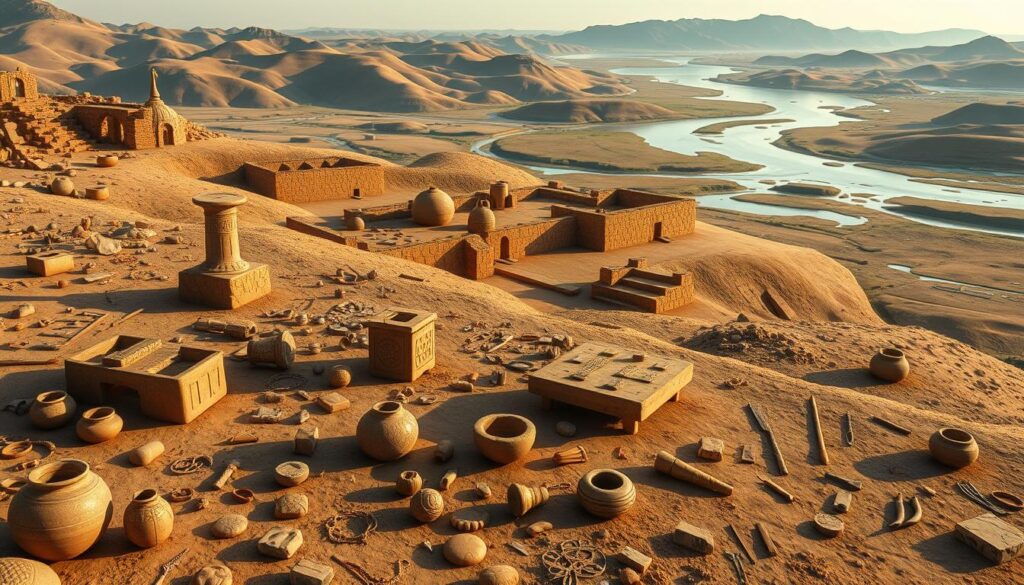
The Vedic period (1500-500 BCE) transformed oral teachings into structured philosophies. Rigveda hymns became cornerstones for spiritual exploration, blending nature worship with cosmic principles. By 300 CE, epic tales like the Mahabharata emerged, making wisdom accessible through storytelling.
| Period | Development | Cultural Impact |
|---|---|---|
| 3300–1300 BCE | Indus Valley settlements | Early ritual practices |
| 1500–500 BCE | Vedic texts systematized | Foundation for philosophy |
| 500 BCE–300 CE | Epics & Puranas created | Moral guidance for all |
| 300–1500 CE | Temple architecture flourishes | Community worship centers |
Medieval temples became hubs for art and religion, blending local traditions with Sanskrit teachings. Today, over 1.2 billion people engage with these evolving practices – from Mumbai tech workers to California yoga studios. The tradition’s 4,000-year journey shows how spiritual systems adapt while keeping core truths alive.
Modern Hinduism thrives through digital platforms and eco-conscious rituals. Ancient river festivals now include climate change awareness, proving this living tradition continually reinvents itself for new generations.
Understanding Belief in Hinduism
At the core of Hindu teachings lies a revolutionary idea: divinity dwells within every living being. This spiritual essence – called atman – connects individuals to universal consciousness. It’s like finding a sunbeam that’s both part of sunlight and the sun itself.
This philosophy isn’t about blind faith. Ancient texts compare spiritual practice to training muscles – consistent effort reveals inner strength. A 2023 Yoga Journal survey found 68% of American practitioners experience this connection during meditation.
The Bhagavad Gita explains: “The soul never dies, just as light persists when a lamp breaks.” This eternal spark exists in ants, trees, and strangers alike. It’s why many Hindus greet others with folded hands – honoring the divine in every form.
Spiritual awakening isn’t reserved for monks. Office workers might find it through mindful work, parents through selfless care. As the Vedas state: “Dharma appears differently, but truth remains one.”
Modern science echoes this wisdom. Quantum physics reveals interconnected energy patterns, while neuroscience studies meditation’s brain benefits. These discoveries make ancient teachings feel freshly relevant for today’s seekers.
The Sacred Texts of Hinduism: Vedas, Upanishads, and More
Imagine holding a library where every book contains wisdom from different millennia. Hindu sacred texts span poetry, philosophy, and practical guidance, forming a 3,000-year conversation about existence. These works weren’t just written – they were lived, chanted, and debated across generations.
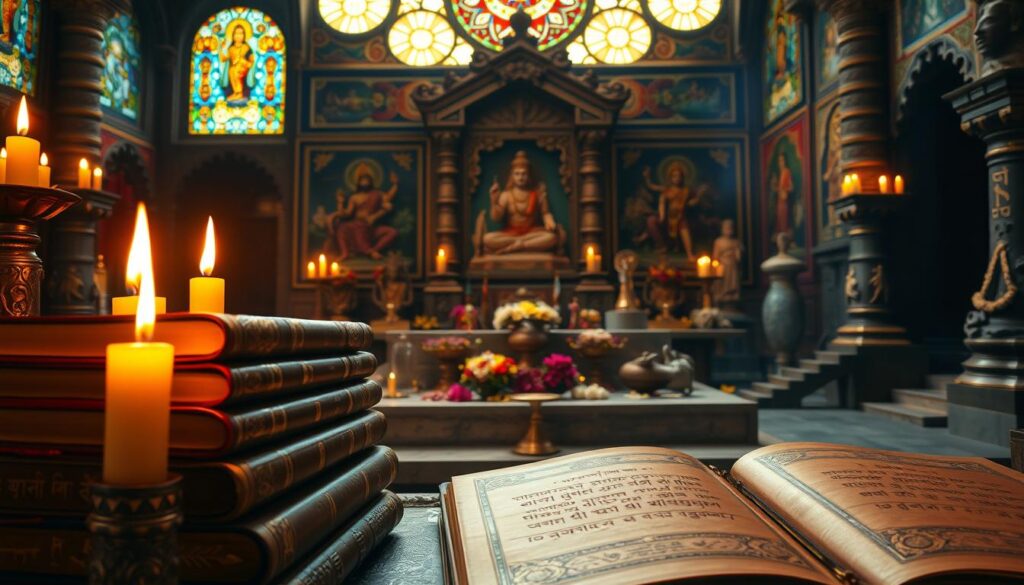
The Vedas and Their Oral Tradition
The Rigveda, oldest of the four Vedas, preserves hymns older than the pyramids. Priests memorized entire texts using rhythmic patterns – a living hard drive of spiritual knowledge. Modern linguists marvel at how this oral tradition maintained accuracy for 40+ generations before being written down.
Vedic collections include:
- Poetic invocations to natural forces
- Ritual instructions for fire ceremonies
- Early explorations of cosmic order
Scholars compare their structure to Russian nesting dolls – layers of meaning within meaning.
Exploring the Upanishads and Vedanta
Where the Vedas outline rituals, the Upanishads ask bold questions: “What happens after death?” “What is the soul’s true nature?” These dialogues between teachers and students form Vedanta (“end of the Vedas”), focusing on inner realization over external rites.
The Bhagavad Gita later made these ideas accessible through Arjuna’s battlefield crisis. Krishna’s advice – “You have the right to work, but never to its fruits” – remains quoted in boardrooms and yoga studios alike.
Texts like the Puranas keep teachings alive through vivid stories. As one scholar notes: “Hindu religion doesn’t just have scriptures – it’s a conversation across time.” From palm-leaf manuscripts to e-books, this language of wisdom keeps evolving.
Exploring the Four Paths: Karma, Bhakti, Jnana, and Raja Yoga
Discover four dynamic pathways that make spiritual growth accessible to everyone. These approaches – action, devotion, knowledge, and discipline – adapt to modern lifestyles while honoring ancient wisdom. Whether you’re a busy parent or CEO, there’s a practice that fits your nature.
The Practical Aspects of Karma Yoga
Karma Yoga turns daily tasks into spiritual exercises. A nurse caring for patients or a teacher grading papers can practice selfless service. The key? Focus on intention over outcomes. This approach transforms ordinary work into soul-nourishing rituals.
Delving into Bhakti and Devotional Practices
Bhakti Yoga celebrates connection through love and gratitude. Morning meditation, singing sacred songs, or lighting lamps during festivals all count. A 2023 Pew study found 58% of US followers blend these practices with their local religion or culture.
These paths aren’t mutually exclusive. Many combine mindful action with heartfelt devotion. What matters is finding methods that resonate personally. As global interest grows, these timeless strategies help people worldwide build meaning beyond material success.
FAQ
What is the central philosophy of Sanatana Dharma?
Sanatana Dharma, often called Hinduism, emphasizes living in harmony with dharma (moral order) and pursuing moksha (liberation). It focuses on universal truths, self-realization, and respecting diverse paths to spiritual growth.
How do the Vedas shape Hindu practices today?
The Vedas, passed down orally for millennia, form Hinduism’s foundation. They include hymns, rituals, and teachings that inspire modern worship, festivals, and ethical values like truthfulness and compassion.
What connects the Indus Valley civilization to modern Hinduism?
Archaeological finds from the Indus Valley (3300–1300 BCE) reveal early practices like ritual baths and deity worship. These traditions evolved into core customs seen in temples and home rituals today.
Can someone follow multiple yogic paths at once?
Absolutely! Many blend karma yoga (selfless action), bhakti (devotion), jnana (wisdom), and raja yoga (meditation). For example, serving others while chanting prayers combines karma and bhakti paths seamlessly.
Why is the Bhagavad Gita significant?
This 700-verse text, part of the Mahabharata, offers practical guidance on duty, ethics, and spirituality. It’s cherished for its dialogue on balancing action and detachment in daily life.
How does reincarnation influence Hindu lifestyles?
The cycle of rebirth encourages living ethically to improve one’s karma. This belief fosters respect for all life, environmental stewardship, and striving for personal growth across lifetimes.
Are Hindu rituals the same worldwide?
While core principles like puja (worship) remain, rituals vary by region. For instance, Diwali celebrations differ between North India (lights for Rama’s return) and South India (marking Krishna’s victory).
What’s the role of gurus in spiritual growth?
Gurus guide seekers through teachings, meditation, and personalized advice. They help decode ancient texts like the Upanishads and empower students to deepen their practice.