With nearly four million members nationwide, this mainline Protestant denomination stands as a unifying force in modern Christianity. Born from a groundbreaking 1988 merger of three historic organizations, it represents one of the most impactful faith communities in the United States.
The structure combines local connection with national reach. Over 8,900 congregations work through 65 regional groups, creating both grassroots impact and coordinated initiatives. This balance helps address community needs while maintaining a cohesive identity.
At its core lies the powerful motto: “God’s work; our hands.” This philosophy drives active social engagement, blending spiritual growth with practical service. Members participate in hunger relief, disaster response, and education programs nationwide.
What makes this denomination unique? It successfully bridges traditional teachings with contemporary issues. From environmental stewardship to racial justice, the community addresses modern challenges while preserving rich liturgical traditions. This approach attracts diverse members seeking meaningful worship and tangible social impact.
Key Takeaways
- Formed through a historic 1988 merger of three Lutheran groups
- Serves nearly four million members across the United States
- Organized into 8,900 local congregations and 65 regional networks
- Motto emphasizes hands-on service: “God’s work; our hands”
- Balances traditional worship with modern social initiatives
- Participates in global religious partnerships and dialogues
History and Formation of the Evangelical Lutheran Church in America
Our story begins with a monk’s bold stand in 1517 Germany. Martin Luther’s Ninety-Five Theses sparked reforms that reshaped European Christianity, planting seeds for a movement that would cross oceans centuries later.
From Europe to New Shores
Early believers carried their faith to North America with Dutch traders and Swedish settlers. By the mid-1700s, German immigrants established vibrant communities in Pennsylvania. Scandinavian arrivals later shaped the upper Midwest’s spiritual landscape, creating regional hubs that still thrive today.
The Great Unification
Twentieth-century efforts to consolidate bore fruit on January 1, 1988. Three major groups merged:
- The Lutheran Church in America (est. 1962)
- The American Lutheran Church (est. 1961)
- Association of Evangelical Lutheran Churches (est. 1976)
This historic union blended German, Scandinavian, and modern theological traditions. As one leader noted: “Our strength lies in honoring diverse histories while building shared purpose.”
Pillars of Unity
Key documents like the 1530 Augsburg Confession provided common ground. The 1580 Book of Concord became essential reading for maintaining doctrinal consistency across merging organizations. These texts helped bridge cultural differences during consolidation talks that spanned nearly two decades.
Theological Beliefs and Worship Practices
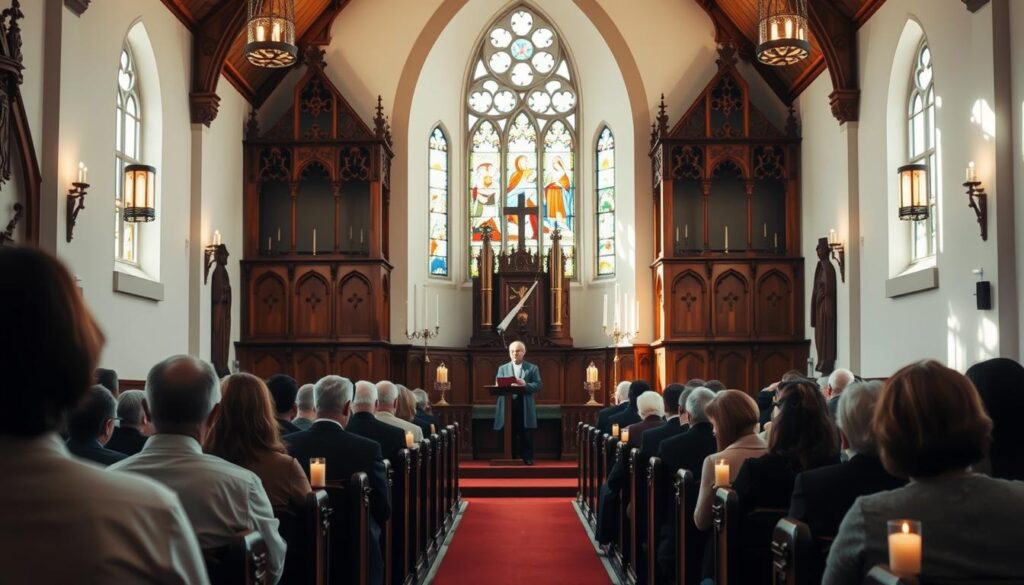
At the heart of this denomination’s identity lies a rich tapestry of spiritual traditions and shared convictions. Rooted in the Christian Trinity, members view Scripture as God’s living word guiding daily life. Three ancient creeds—Apostles’, Nicene, and Athanasian—serve as compass points for worship and teaching.
Core Creeds, Confessions, and the Book of Concord
These historic statements unite communities across generations. The 1580 Book of Concord remains essential reading, blending Luther’s catechisms with the Augsburg Confession. “These texts aren’t relics,” one theologian notes, “but conversation starters for modern believers.”
This collection shapes how congregations interpret Scripture while allowing flexibility in practice. It helps maintain doctrinal unity across diverse regions without stifling local expression.
Sacraments: Baptism and Communion Explained
Two sacred rituals anchor Lutheran spirituality. Infant baptism welcomes newborns into the faith family during regular services, with the whole assembly pledging support. Unlike Catholic teachings about transubstantiation, communion focuses on communal remembrance of Jesus’ last meal.
Both practices use physical elements—water, bread, wine—to connect believers with divine promises. This approach has fostered partnerships with Presbyterian, Methodist, and Episcopal groups, enabling shared worship experiences across traditions.
Community Involvement and Social Engagement
Progressive social action defines this faith community’s approach to modern challenges. Through bold policy decisions and grassroots programs, it addresses pressing societal needs while fostering inclusive spaces for diverse populations.
Breaking Barriers in Faith Spaces
In 1991, the denomination’s governing body made history by affirming LGBTQ+ participation in congregational life. A landmark 2009 social statement titled “Human Sexuality: Gift and Trust” expanded this commitment, addressing same-sex relationships and gender identity. By 2013, this inclusive vision reached new heights with the election of the first openly gay bishop.
These decisions created ripple effects across religious organizations. Today, over 200 clergy members from the LGBTQ+ community serve congregations nationwide. “We’re called to mirror God’s boundless love,” explains a pastor from Minnesota.
Nurturing Minds, Serving Globally
The denomination operates one of America’s largest faith-based education networks:
| Institution Type | Quantity | Students Served |
|---|---|---|
| Colleges/Universities | 26 | 90,000+ |
| Seminaries | 7 | 3,500+ |
| Early Learning Centers | 1,400 | 120,000+ |
Global partnerships through the Lutheran World Federation amplify its humanitarian impact. Missionaries collaborate with 150 groups across 100 countries on projects ranging from clean water access to disaster relief. This international network demonstrates how local values can drive global change.
evangelical lutheran church in america: Membership Trends and Contemporary Challenges
Modern faith communities face evolving landscapes, and this denomination navigates shifting dynamics while staying true to its mission. Recent decades reveal both resilience and complex hurdles as members balance tradition with progressive values.
Demographic Shifts and Membership Declines
Numbers tell a story of change. From 5 million baptized members in 2003 to under 4 million today, the group reflects broader trends in religious participation. Aging populations and younger generations’ changing priorities contribute to this shift. Regional strongholds in the upper Midwest maintain stronger ties, while coastal areas see faster declines.
Debates on Social Issues and Impact on Church Unity
Landmark decisions on human sexuality sparked intense discussions. The 2009 social statement supporting same-sex relationships led over 200 congregations to leave. Recent leadership choices, like the 2021 transgender bishop appointment, further tested unity. Yet many members celebrate these steps as vital to creating inclusive spaces.
Despite challenges, the denomination continues adapting. New outreach programs and interfaith partnerships aim to reconnect with younger audiences while honoring core values. As one leader shared: “Growth isn’t just about numbers—it’s about deepening our shared purpose.”
FAQ
How did the denomination come to exist?
It formed in 1988 through a merger of three groups: the Lutheran Church in America, the American Lutheran Church, and the Association of Evangelical Lutheran Churches. This union aimed to strengthen shared values and collaborative ministry.
What role does the Book of Concord play in worship?
The Book of Concord serves as a foundational text, containing historic creeds and Reformation-era confessions. These documents guide teachings on grace, scripture, and sacraments while allowing flexibility in modern practice.
How does the community address LGBTQ+ inclusion?
In 2009, the denomination adopted a social statement supporting committed same-gender relationships. Many congregations now ordain LGBTQ+ clergy and host same-sex weddings, though some members disagree with this policy.
Are baptism and communion viewed differently than in other traditions?
Both sacraments are central to faith life. Baptism is seen as God’s gift of grace, while communion emphasizes Christ’s real presence “in, with, and under” the bread and wine, following Lutheran theological principles.
What challenges does the group face today?
Declining membership and debates over social issues like racial justice and climate change create tensions. However, initiatives like youth programs and interfaith partnerships aim to foster renewal and relevance.
How does the denomination support education and missions?
It operates 26 colleges and universities across the U.S. and partners with global organizations for disaster relief, healthcare, and sustainable development. Local congregations often sponsor food pantries and housing projects too.