For over 1,500 years, spiritual traditions have shaped Ireland’s culture in remarkable ways. Today, 69% of the Republic’s population identifies with this ancient faith, while Northern Ireland’s 2021 census shows 42.3% maintain these beliefs. These numbers reveal more than statistics—they represent living connections to a heritage that survived Viking raids, political upheavals, and cultural shifts.
The story of this faith community blends Celtic spirituality with organized religious practices in unexpected ways. Early monasteries became centers of learning, preserving knowledge through Europe’s Dark Ages. Later generations transformed persecution into resilience, creating a distinct identity that traveled globally through emigration.
Modern followers balance centuries-old rituals with contemporary values. From vibrant parish festivals to quiet personal devotions, traditions adapt while maintaining core principles. This dynamic relationship between past and present makes Ireland’s spiritual journey uniquely compelling.
Key Takeaways
- Over two-thirds of Ireland’s population maintains ties to this ancient faith tradition
- Historical blend of Celtic spirituality and organized religion created unique practices
- Communities preserved traditions through persecution and political changes
- Modern believers adapt rituals while honoring core values
- Global diaspora spreads cultural influences worldwide
Historical Foundations of Irish Catholicism
The 5th century brought transformative changes to the island’s belief systems. Missionaries like Palladius arrived first in 431, sent by Pope Celestine I. But it was Saint Patrick—a former captive turned spiritual leader—who reshaped the landscape through strategic conversions of Gaelic royalty.
From Druids to Divine Worship
Patrick’s approach blended practicality with symbolism. He used three-leaf shamrocks to explain the Trinity and targeted sacred pagan sites for church construction. This clever adaptation helped Gaelic communities embrace the new faith while preserving cultural identity.
Early monasteries became powerhouses of creativity and learning. Monks produced stunning works like the Book of Kells—its intricate designs still dazzle viewers today. These centers also developed unique practices:
| Celtic Feature | Roman Influence | Lasting Impact |
|---|---|---|
| Spiral stone crosses | Latin liturgy | Fusion art styles |
| Nature-based prayers | Diocesan structure | Ecological theology |
| Peripheral tonsure | Roman haircut | Distinct identity |
Scholarship Meets Spirituality
By the 6th century, Irish monasteries attracted students from across Europe. They preserved not only religious texts but also classical Greek philosophy. This dual focus on spiritual and intellectual growth earned the island its “Land of Saints and Scholars” title—a legacy that shaped education systems worldwide.
The early Irish approach created a distinctive version of Christianity. It valued community rituals as much as personal mysticism, leaving patterns in worship that still resonate today.
Evolution through Gregorian Reform and Norman Influence
A seismic shift reshaped religious structures between the 11th and 12th centuries. Three landmark synods brought Rome’s influence directly to local communities, forever altering how spiritual life was organized.
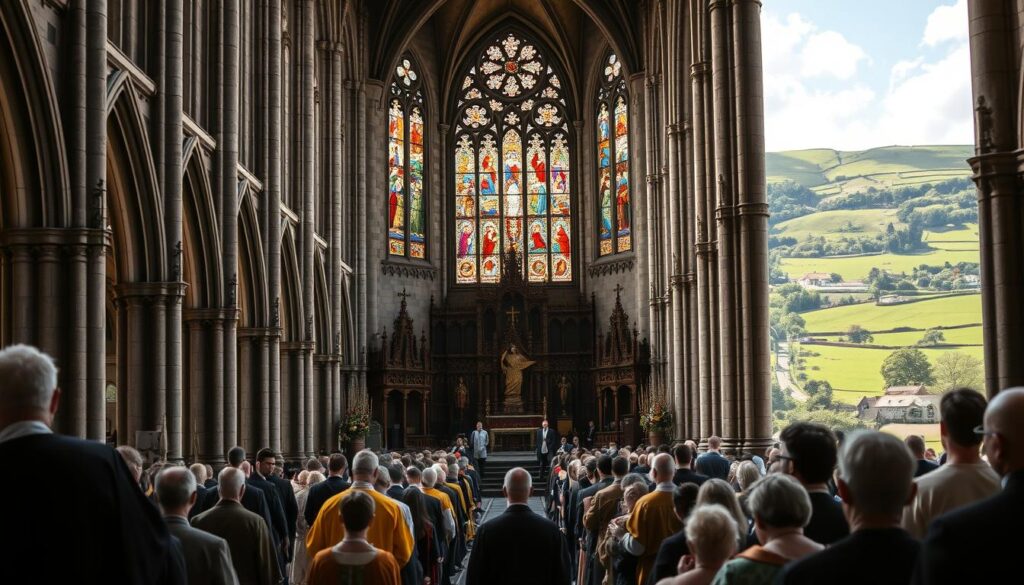
Synods, Reforms, and the Diocesan Transition
The Synod of Ráth Breasail (1111) proved revolutionary. It replaced monastery-based leadership with a diocesan system mirroring European models. Cardinal Giovanni Paparoni ensured these changes rejected English control, asserting direct papal authority.
Saint Malachy became the reform movement’s driving force. His partnership with Bernard of Clairvaux introduced Cistercian monasteries like Mellifont Abbey. This 1142 foundation blended European rigor with Gaelic spirituality through its stonework and communal practices.
| Gaelic Customs | Roman Practices | Cultural Outcomes |
|---|---|---|
| Monastic leadership | Diocesan hierarchy | Centralized administration |
| Nature-based rituals | Standardized liturgy | Hybrid worship styles |
| Local saint veneration | Papal authority | Global church connections |
Norman arrivals after 1169 accelerated changes. They built continental-style cathedrals and imported new religious orders. These developments strengthened ties to Rome but sparked tensions with traditional customs.
The reforms created a resilient framework that later helped communities endure hardship. Though challenging at first, this process ultimately preserved spiritual traditions through evolving political landscapes.
Impact of Penal Laws and Catholic Emancipation
When legal barriers arose, Irish believers crafted ingenious solutions to preserve their traditions. Between 1695 and 1829, strict laws denied basic rights like land ownership and public worship. Communities responded with secret gatherings that kept their identity alive.
Underground Education and Hidden Rituals
Hedge schools became vital centers for passing on knowledge. Teachers held classes behind stone walls or in open fields, teaching subjects from math to Gaelic poetry. This defiance protected cultural heritage while British authorities banned formal education.
| Legal Restrictions | Community Response | Lasting Effects |
|---|---|---|
| No land ownership | Shared tenant farming | Strengthened cooperation |
| Banned public worship | Mass rocks in nature | Outdoor ritual traditions |
| Barred from voting | O’Connell’s peaceful campaigns | Political empowerment |
Daniel O’Connell changed history through organized activism. His 1829 victory restored voting rights and inspired future movements. This success linked faith with Irish nationalism, showing how unity could overcome oppression.
Mass rocks still dot the landscape today—quiet reminders of resilience. These sites symbolize how communities turned limitations into lasting symbols of hope.
Cultural Identity and Nationalism in Irish Catholic Tradition
The intertwining of faith and heritage has long defined what it means to be part of this community. By the 1500s, spiritual devotion became inseparable from cultural pride, forging a dual identity that united religious practice with ethnic belonging. This fusion shaped everything from family traditions to political movements.
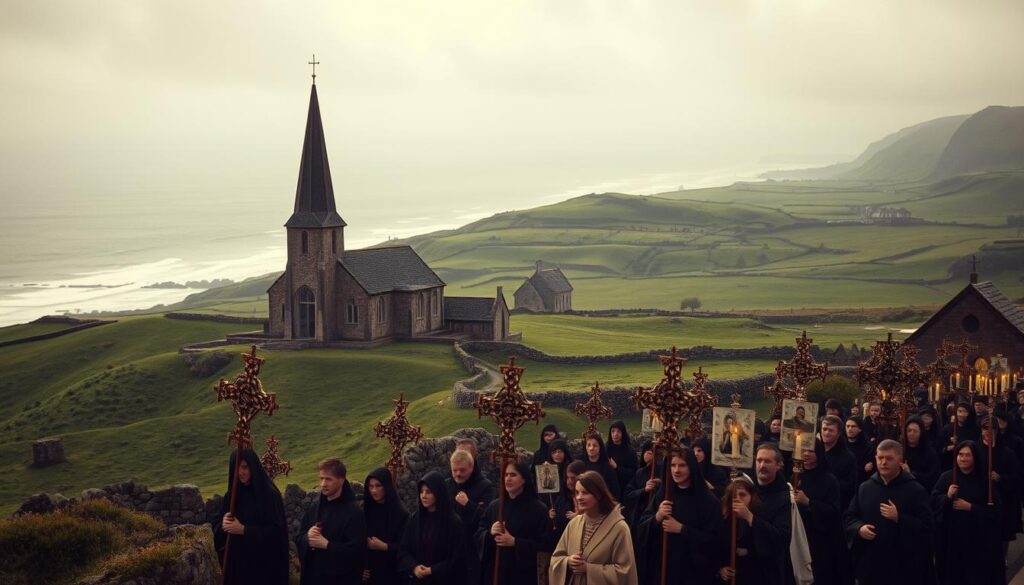
The Dual Role of Faith and Ethnic Identity
For generations, followers maintained their way of life through creative resistance. The Church safeguarded Gaelic customs when authorities banned native languages and celebrations. “Our prayers became our protest,” noted one 19th-century diary, capturing how rituals doubled as acts of cultural preservation.
Clergy often led both congregations and independence movements. This unique role created a blueprint where spiritual guidance and national aspirations walked hand in hand. Communities celebrated saints’ days with the same fervor they reserved for political milestones.
The Church’s Influence on Irish National Identity
Persecution transformed religious affiliation into a badge of authentic heritage. The table below shows key elements of this ethnoreligious identity:
| Cultural Element | Religious Connection | National Impact |
|---|---|---|
| Gaelic language | Latin Mass translations | Symbol of resistance |
| Traditional music | Church hymn adaptations | Cultural continuity |
| Local folklore | Saintly miracles | Shared history |
Emigrants carried this blended identity worldwide, establishing parishes that served as hubs for both worship and Irish cultural exchange. Today, debates about social issues still reveal how deeply these roots run in modern consciousness.
Modern Transformation and Shifting Trends in the Church
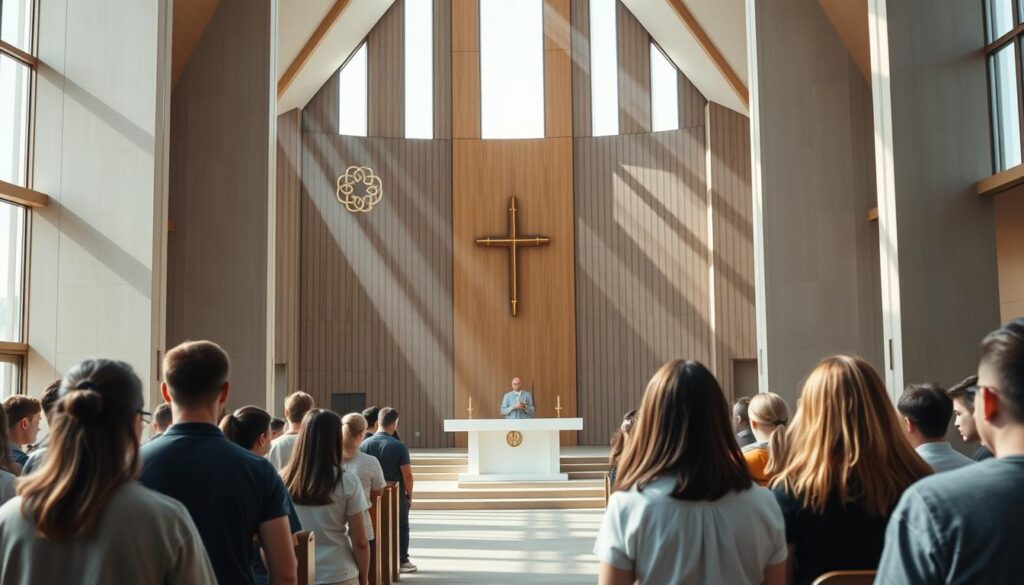
Ireland’s spiritual landscape has undergone dramatic shifts in recent decades, mirroring broader societal changes across Europe. Fifty years ago, over 14,000 nuns served communities nationwide. Today, fewer than 4,000 remain, with most approaching their 80s. This aging population marks the sunset of an era where religious sisters shaped education and healthcare.
Seminary numbers tell a similar story. Maynooth once trained 500 future priests annually. Now, barely 20 students prepare for ordination. These declines reflect transformed priorities over time, as younger generations blend cultural pride with personal spirituality. “We honor traditions but ask new questions,” explains a Dublin parish volunteer.
Three key changes define this evolution:
- Sunday attendance remains Europe’s highest, though 15% fewer identify with the faith since 2008
- Lay leaders now manage sacramental prep and community outreach
- Parishes share priests across multiple locations
Young adults increasingly embrace cultural connections over strict doctrine. They light candles at holy wells but challenge teachings on social issues. This pattern mirrors trends in Spain and Italy, making Ireland’s journey a case study for global faith communities.
The church adapts by empowering everyday believers. From music ministries to food banks, active participation replaces passive observance. While uncertain, this new chapter reveals resilience through reinvention.
Demographic Shifts and Diaspora Influence
The story of Irish faith extends far beyond the island’s shores, woven into diverse cultures worldwide. Over 30 million individuals globally claim heritage from this tradition, creating a living network that thrives from Boston to Buenos Aires.
Migration Patterns and Global Communities
Historic crises sparked lasting change. The Great Famine (1845–1852) sent 2 million refugees across oceans. These families built new roots while preserving old customs through:
- Neighborhood parishes serving as cultural hubs
- Adapted feast day celebrations
- Intergenerational storytelling traditions
Today, the United States hosts 20 million people with these roots—more than four times Ireland’s current population. Australian communities (7.2 million) reshaped education systems, while Argentina’s half-million maintain unique Gaelic-Spanish fusion traditions.
Statistical Insights from Census Data
Recent numbers reveal surprising trends. Northern Ireland’s Catholic population grew to 42.3% in 2021—a shift with potential political implications. Meanwhile, the Republic’s identification rates dropped from 84% to 69%, though absolute figures remain significant.
| Region | Population | Cultural Impact |
|---|---|---|
| United States | 20 million | Leadership in Catholic institutions |
| Australia | 7.2 million | Labor movement foundations |
| Northern Ireland | 820,000 | Cross-community dialogue |
| Argentina | 500,000 | Gaelic-Spanish festivals |
These patterns influence global culture through literature, music, and the world’s favorite March celebration. As one New York historian notes: “Wherever they settled, they brought both their faith and their flair for community.”
Changing Roles within the Clergy and Religious Leadership
Ireland’s religious leadership faces unprecedented challenges as roles transform. A local in Kenmare, County Kerry, recalls: “Three priests once served our parish alone—now one handles six towns.” This shift reflects a nationwide clergy shortage reshaping community structures.
Decline in Clergy and Women Religious
Recent reports reveal stark numbers. Since 1970, priestly vocations dropped 89%, leaving aging clergy managing multiple parishes. Women religious—once education and healthcare pillars—now number under 4,000 nationwide. Their absence forces schools and hospitals to adapt or close.
Rural areas face unique hurdles. One 78-year-old priest travels 90 miles weekly to celebrate Mass in four villages. “We’re not just shepherds anymore—we’re administrators,” he explains, highlighting expanded clerical duties.
| Past Model | Current Reality | Innovation |
|---|---|---|
| 1 parish per priest | 6 parishes per priest | Lay ministers lead services |
| Local seminaries | Regional training centers | Online theology courses |
| Irish-born clergy | 35% foreign-born priests | Cultural exchange programs |
Communities respond creatively. Permanent deacons now handle baptisms and weddings, while faith-sharing groups maintain traditions. Though challenging, these changes foster new forms of spiritual connection. As one Dublin lay leader notes: “Our role isn’t replacing priests—it’s reimagining community.”
Community Engagement and Emerging Cultural Catholicism
A fresh wave of energy pulses through parishes as young believers reshape ancient traditions. At St. Francis Xavier Church in Dublin, Sunday evenings buzz with youth-led liturgies featuring modern music and interactive prayers. Jesuit priest Fr. Niall Leahy observes: “Our young members don’t just attend—they create.”
New Voices in Sacred Spaces
This generation blends cultural pride with critical thinking. Many maintain spiritual connections while reimagining traditional structures. Irish Catholic teens now lead scripture discussions and design eco-friendly parish gardens, proving faith remains vibrant through active participation.
Digital tools amplify their impact. Social media groups coordinate food drives while streaming retreats globally. Young adults organize climate marches through church networks, merging Gospel values with modern activism.
Lay ministry expansion marks this shift. Volunteers manage religious education and outreach programs once handled solely by clergy. This partnership model empowers communities to address homelessness and immigration issues directly.
FAQ
How did Saint Patrick shape early Christian traditions in Ireland?
Saint Patrick introduced organized Christianity in the 5th century, blending local Gaelic customs with new teachings. His use of shamrocks to explain the Trinity and efforts to build churches laid the groundwork for Ireland’s spiritual identity.
What role did monasteries play in medieval Irish society?
Monasteries became centers of learning, art, and faith. Monks preserved ancient texts, created illuminated manuscripts like the Book of Kells, and spread Gaelic spirituality across Europe during the “Golden Age” of Irish Christianity.
How did the Gregorian Reform change the church’s structure?
The 12th-century reforms centralized authority under Rome, replacing localized monastic systems with dioceses. This shift aligned Ireland more closely with broader European Catholic practices while clashing with Gaelic traditions.
How did Catholics resist persecution under Penal Laws?
Despite bans on education and worship, communities held secret “hedge school” classes and masses in hidden locations. This defiance kept the faith alive and fueled cultural pride during centuries of British rule.
Why was the church tied to Irish nationalism?
After centuries of colonial rule, Catholicism became a marker of Irish identity. Leaders like Daniel O’Connell linked religious freedom to self-governance, making faith central to the independence movement in the 19th and 20th centuries.
What caused the decline in clergy numbers today?
Scandals, secularization, and changing social values led to fewer vocations. Since the 1990s, the number of priests and nuns has dropped sharply, forcing parishes to adapt with lay leadership and new outreach strategies.
How has migration affected Irish Catholic communities?
Emigrants spread traditions globally, while recent immigration diversified local parishes. Census data shows younger generations increasingly identify as non-religious, though cultural ties to rituals like baptism remain strong.
Are younger people still engaged with the church?
Many participate in milestones like First Communion but prioritize social justice over traditional doctrine. Groups focus on climate action or inclusivity, reflecting a shift toward “cultural Catholicism” rather than strict practice.
How did the church influence Ireland’s education system?
For decades, religious orders ran most schools. Recent reforms aim to reduce their control, but over 90% of primary schools still have Catholic patronage, sparking debates about diversity and secularization.