Welcome to a journey through one of history’s most dynamic cultural shifts. In the 1500s, Europe experienced groundbreaking changes that reshaped religion, society, and creative expression. A German monk’s bold critique of church practices ignited a movement that challenged traditions and inspired new ways of thinking.
As religious institutions transformed, artists faced a critical question: How do you create meaningful work when your main patron disappears? The answer led to remarkable innovation. Painters began focusing on intimate portraits, detailed landscapes, and scenes from daily life—subjects that felt personal and accessible.
Visionaries like Lucas Cranach and Hans Holbein redefined their craft during this era. Their works balanced technical mastery with emotional depth, capturing both the struggles and hopes of their time. Even today, these pieces feel fresh and relatable, proving creativity thrives in times of change.
Key Takeaways
- A 16th-century religious movement sparked lasting changes in European culture
- Artists shifted from church-focused works to everyday subjects and portraits
- The printing press helped spread new ideas across Northwestern Europe
- Creative pioneers developed styles that still influence modern art
- Masterpieces from this era reveal deep connections between faith and human experience
Overview of the Protestant Reformation’s Impact on Art
Northern Europe’s creators faced a dilemma: adapt or vanish. When religious reforms swept through the region, centuries-old traditions crumbled. Churches that once commissioned altarpieces and statues now rejected visual displays of faith. This left skilled makers of sacred works scrambling for new opportunities.
Southern creators had it easier. They built on Renaissance giants like Da Vinci, exploring mythology and anatomy. But their northern peers faced a survival challenge. One observer noted: “The brush became both weapon and lifeline” as they pivoted to portraits and book illustrations.
Check out how creative approaches diverged:
| Region | Primary Challenges | Solutions | Legacy |
|---|---|---|---|
| Northwestern Europe | Lost church commissions | Portraiture, genre scenes | Personal storytelling |
| Southern Europe | Renaissance competition | Mythological themes | Technical mastery |
This upheaval sparked unexpected creativity. Without wealthy religious patrons, makers turned to middle-class buyers. They captured everyday moments and individual personalities in ways that still feel modern. What began as crisis birthed a new artistic language – one that valued human experience over grand symbolism.
Historical Context of the Protestant Reformation
A single act of defiance in 1517 changed Europe forever. Martin Luther, a German monk, nailed his 95 Theses to a church door in Wittenberg. He challenged the Catholic Church’s sale of indulgences—documents claiming to reduce punishment for sins. “Why does the pope not empty purgatory for love’s sake?” Luther asked, exposing how wealth shaped spiritual access.
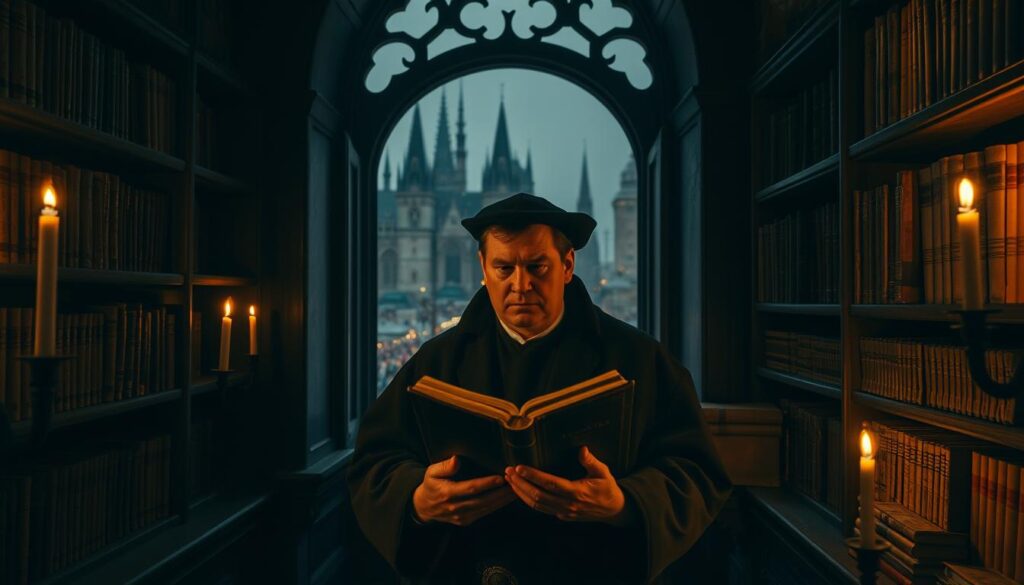
Rich mercenaries bought forgiveness after brutal acts, while poor families faced eternal fear. This system turned faith into a marketplace. Soon, voices like Huldrych Zwingli in Zurich and John Calvin in Geneva amplified Luther’s call for change. Together, these reformers sparked debates that reached kitchens and castles alike.
The printing press became their megaphone. Pamphlets spread new ideas faster than ever, fueling what we now call the Protestant Reformation. Check how key figures shaped this movement:
| Reformer | Region | Key Contribution | Impact |
|---|---|---|---|
| Martin Luther | Germany | 95 Theses critique | Broke church authority |
| Huldrych Zwingli | Switzerland | Scripture-focused reforms | Localized worship |
| John Calvin | France/Geneva | Predestination theory | Shaped Protestant ethics |
Within decades, theological arguments reshaped governments and daily life. What began as a protest against corruption became a cultural earthquake—one that still echoes in modern beliefs about power and personal faith.
Evolution of Protestant Reformation Art in Northwestern Europe
With church doors closing to artists, new avenues of creativity burst open in the North. The 16th-century religious upheaval forced makers to rethink their craft entirely. No longer funded by religious institutions, they turned to subjects that resonated with everyday life—transforming how we view beauty and meaning.
Portraits became the era’s breakout success. Wealthy merchants and thinkers wanted their stories told through brushstrokes, not stained glass. “A face reveals more truth than any sermon,” one observer noted, capturing the shift toward personal expression.
Four genres dominated this creative rebirth:
| Genre | Key Features | Cultural Impact |
|---|---|---|
| Portraiture | Detailed facial expressions, symbolic objects | Celebrated individual identity |
| Still Life | Everyday items like fruit or books | Highlighted simplicity and reflection |
| Landscape | Natural scenes without human figures | Emphasized divine creation |
| Genre Painting | Market scenes, family moments | Found holiness in ordinary life |
This wasn’t just about new subjects—it was a revolution in perspective. A baker’s hands kneading dough could carry as much weight as biblical scenes. By focusing on relatable experiences, painters built bridges between the spiritual and the mundane.
The changes still influence how we create today. Next time you snap a photo of your morning coffee, thank those 16th-century innovators who taught us to find magic in the everyday.
Iconoclasm and the Transformation of Religious Imagery
What happens when faith demands the destruction of beauty? This question haunted 16th-century Europe as religious reformers targeted sacred visuals. Leaders like Huldrych Zwingli argued that “even cherished images become idols if we worship the creation over the Creator.” Their followers took this message to extremes, seeing physical representations of divinity as dangerous distractions.
The year 1566 brought explosive consequences. Angry crowds stormed churches across the Low Countries during the Beeldenstorm—Dutch for “image storm.” They tore down statues, burned altar pieces, and threw manuscripts into rivers. Centuries of craftsmanship vanished in days, leaving hollowed-out buildings where gold-leafed saints once glowed.
Why such violence? Reformers feared idolatry had corrupted worship. They believed people prayed to paintings rather than through them. A surviving account describes how “even the poor gave their last coins to kiss relics, thinking magic lived in bones and wood.”
Amid the chaos, quick thinkers saved treasures like Jan Van Eyck’s Ghent Altarpiece by hiding them in attics. This destruction forced creators to rethink their purpose. Could meaningful works exist without traditional symbols? The answer reshaped visual culture, pushing artists toward scenes of home life and nature that still feel relatable today.
Though brutal, this period taught a lasting lesson: true meaning lives not in objects, but in how we engage with them. The empty church walls became canvases for new ideas about spirituality and community.
Impact on Church Art and the Shift to Secular Subjects
When sacred imagery faced restrictions, everyday life became the artist’s canvas. Places of worship underwent dramatic makeovers, removing visual elements that once defined spiritual experiences. This pivot sparked a creative revolution that changed how people saw themselves and their world.
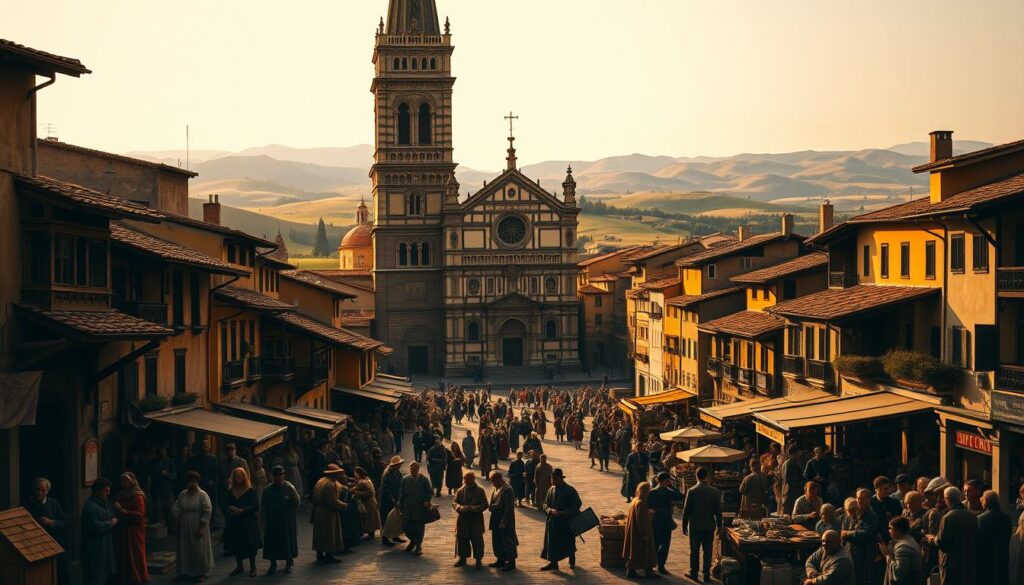
The Vanishing Act of Sacred Decor
Churches transformed into blank slates almost overnight. Gold-leaf altarpieces and carved saints disappeared, replaced by plain walls and functional furniture. “We worshipped the work of human hands more than the divine,” wrote one reformer, explaining why visual splendor fell out of favor.
Creators faced a stark choice: adapt or fade into obscurity. Those who embraced change discovered fresh opportunities in:
- Middle-class patrons seeking personal mementos
- Print shops needing book illustrations
- Urban councils commissioning civic portraits
Human Stories Take Center Stage
Portrait painting became the era’s social media. Wealthy families and shopkeepers alike wanted their likenesses preserved. Artists like Lucas Cranach captured personalities through subtle details—a merchant’s ink-stained fingers or a child’s mischievous smile.
Check how creative focus shifted:
| Old Focus | New Focus | Impact |
|---|---|---|
| Saints & angels | Family gatherings | Celebrated ordinary life |
| Biblical events | Marketplace scenes | Documented social change |
| Church commissions | Home decorations | Democratized creativity |
Farmers tending fields and mothers teaching children became worthy subjects. These scenes revealed hidden poetry in daily routines, proving meaning could exist without grand religious themes. The brush became a tool for celebrating humanity itself.
Hans Holbein the Younger – Master Portraitist of the Reformation
A German artist redefined portraiture during Europe’s religious upheaval. Hans Holbein the Younger became famous for capturing personalities with startling realism. His work bridged divides between faiths and social classes, proving creativity could thrive in turbulent times.
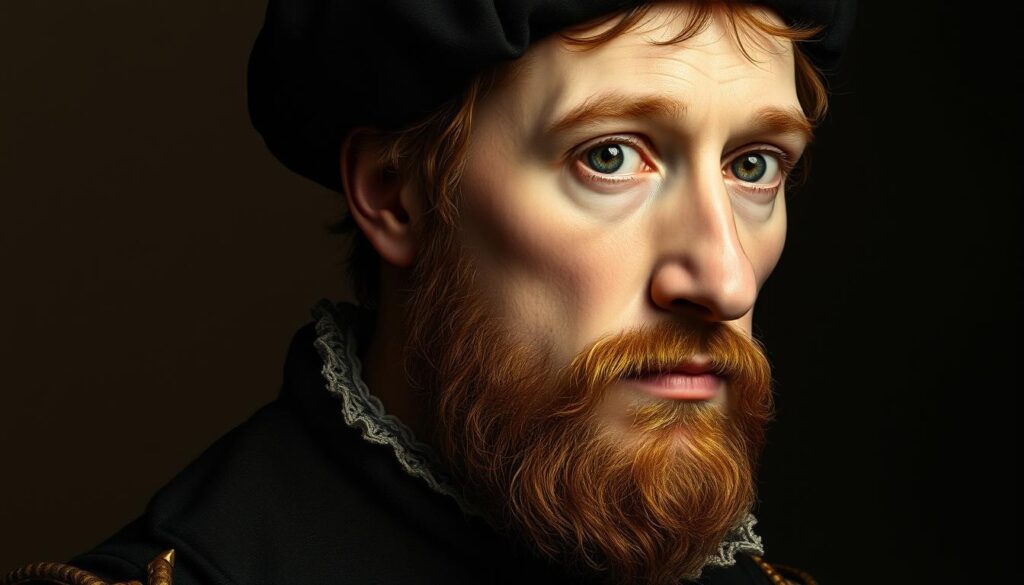
From Altarpieces to Personal Stories
Early in his career, Holbein painted religious scenes for churches. By the 1520s, shifting priorities forced him to adapt. He began focusing on individual portraits that revealed character through precise details—a scholar’s furrowed brow or a merchant’s confident stance.
Shaping Royal Identity
As court painter to Henry VIII, Holbein crafted images that boosted the king’s power. His portraits displayed wealth and authority through rich fabrics and symbolic objects. One advisor noted: “Holbein’s brush made monarchs immortal before cameras existed.”
Explore key aspects of his career evolution:
| Early Work | Later Innovations | Key Patrons |
|---|---|---|
| Church murals | Lifelike portraits | Erasmus of Rotterdam |
| Book illustrations | Political imagery | Henry VIII |
| Biblical themes | Domestic scenes | London merchants |
Holbein’s legacy lives on in modern photography and media. His ability to capture truth in faces set a standard artists still follow today. Whether painting reformers or royalty, he showed humanity’s complexity through a brushstroke.
Lucas Cranach the Elder and the Power of Reformist Portrayals
A painter’s brush became a revolutionary tool in 16th-century Germany. Lucas Cranach the Elder transformed visual storytelling during Europe’s religious upheaval, blending technical brilliance with bold messaging. His workshop buzzed with activity, producing works that shaped public opinion across divided territories.
Friendship with Martin Luther and Propaganda Art
Cranach and Luther formed history’s most impactful creative partnership. The artist first met the fiery thinker in Wittenberg, where both men challenged traditional power structures. “We paint truth with pigments and words,” Luther reportedly declared during their collaborations.
Over three decades, Cranach created 26 portraits documenting Luther’s journey from monk to movement leader. Each painting subtly adjusted features—adding weight lines, softening hair—to humanize the reformer. These images became visual milestones marking the growth of new religious ideas.
The painter’s genius shone brightest in woodcut designs. Cranach crafted striking black-and-white scenes that mocked church corruption. Simple enough for mass printing, these works spread reformist messages to markets and taverns. A farmer could grasp the meaning through bold imagery alone.
As court painter to Saxon rulers, Cranach enjoyed unique protection. This position let him experiment with symbolic storytelling that bypassed traditional religious imagery. His workshop produced altarpieces showing Christ surrounded by ordinary people—a radical shift from golden saints.
Through portraits and prints, Cranach built a visual language for change. His legacy proves creativity thrives when artists engage with society’s pressing debates. Even today, political cartoons owe a debt to this Renaissance master’s innovative spirit.
Lucas Cranach the Younger – Advancing Artistic Techniques
Talent often skips a generation, but the Cranach family proved otherwise. Lucas Cranach the Younger didn’t just inherit his father’s workshop—he transformed it into a creative powerhouse. While managing daily operations, this skilled painter developed techniques that pushed Renaissance craftsmanship into new territory.
Unlike his father, Cranach the Younger never sought royal titles. Instead, he built trust with Wittenberg’s rising middle class. Local merchants and council members flocked to his studio for portraits that blended precision with personality. His political savvy as a town councilman gave him unique insight into clients’ aspirations.
The workshop buzzed with innovation under his leadership. Lucas Cranach introduced bolder colors and intricate patterns, turning simple fabrics into visual stories. Details like jewelry engravings or folded letters hinted at hidden narratives, inviting viewers to look closer.
Three key improvements defined his legacy:
- Experimental color combinations that challenged traditional palettes
- Streamlined production methods without sacrificing quality
- Stylized facial features creating instantly recognizable portraits
Through these changes, Cranach the Younger proved creative evolution thrives in collaborative spaces. His workshop’s output shaped visual culture for decades, showing how artistic vision adapts to serve changing communities.
FAQ
How did religious conflicts reshape European art traditions?
The Reformation challenged traditional Catholic imagery, leading artists like Lucas Cranach the Elder to create works supporting Reformist ideas. Churches shifted from ornate religious scenes to simpler designs, while portraiture and everyday life themes gained popularity.
Why did some artists stop painting saints and biblical stories?
Reformers like Martin Luther opposed what they saw as idolatry in religious art. This led to iconoclasm—the destruction of church artworks—and pushed painters like Hans Holbein the Younger to focus on secular subjects, including portraits for royalty and wealthy patrons.
What made Lucas Cranach the Elder’s work politically significant?
As Martin Luther’s close friend, Cranach created bold woodcuts and paintings that visually promoted Reformation ideals. His portraits of Luther became powerful symbols, spreading the movement’s message through accessible imagery.
How did Hans Holbein become influential beyond religious art?
Holbein’s detailed portraits of figures like Henry VIII redefined court painting. By capturing personalities and status rather than religious themes, he helped establish portraiture as a respected art form during societal changes.
What techniques did Lucas Cranach the Younger develop?
Building on his father’s style, Cranach the Younger refined color use and composition in altarpieces. His workshop produced standardized religious images that balanced Reformist simplicity with visual impact, influencing Northern European art.
Why did everyday scenes replace saints in some artworks?
As churches restricted religious displays, artists like Pieter Bruegel the Elder turned to genre painting. Scenes of peasant life and moral lessons filled the demand for art that reflected human experiences rather than doctrine.
How did royal courts shape artistic trends during this period?
Monarchs like Henry VIII employed artists as cultural ambassadors. Holbein’s portraits, for example, combined technical skill with political messaging, elevating secular art’s status while reducing reliance on church commissions.