What shaped one of the largest branches of the Christian faith? This movement began in 16th-century Europe as reformers sought to rethink traditional practices. Their ideas sparked changes that reshaped spiritual life across continents, creating a new form of Christianity.
The term itself comes from historical protests in 1529, when leaders demanded religious freedom. Today, this tradition includes countless groups, from Baptists to Lutherans, each with unique theology. Over 30% of Christians worldwide identify with these communities.
Why does this matter now? From music to social justice efforts, its influence appears in daily life and global news. Modern believers continue adapting ancient teachings to address current issues. This blend of old and new keeps the movement vibrant.
Key Takeaways
- Originated in 16th-century Europe as a reform movement
- Represents one of three major branches of Christianity
- Includes diverse denominations with shared core principles
- Accounts for nearly 1 billion followers globally
- Continues evolving to address contemporary challenges
- Rooted in scripture-centered beliefs and personal faith
Introduction to Protestantism
How did a 16th-century spiritual revolution create lasting change? The answer lies in bold ideas that reshaped religious thought. Central to this transformation was a focus on personal connection with faith rather than rigid structures.
A New Approach to Spiritual Connection
At its core, the movement emphasized direct relationships with God through Scripture. Five key principles – known as the Five Solae – became its foundation. These ideas challenged old systems by putting sacred texts and personal faith first.
| Principle | Latin Term | Core Idea |
|---|---|---|
| Scripture Alone | Sola Scriptura | Bible as ultimate truth |
| Faith Alone | Sola Fide | Belief as path to salvation |
| Grace Alone | Sola Gratia | Divine mercy over human effort |
Reformation’s Lasting Impact on Beliefs
The push for reform created space for diverse interpretations of Christian teachings. This freedom led to new denominations, each adapting core doctrines to their context. Today, these groups share common ground in valuing individual Bible study and faith-driven lives.
Modern communities continue balancing tradition with fresh perspectives. From worship styles to social outreach, this blend keeps teachings relevant. The movement’s legacy shows how ancient truths can meet modern needs.
Historical Background and Early Reform Efforts
The roots of religious reform stretch back centuries before the 1500s. By the 14th century, many Europeans grew uneasy with spiritual leaders prioritizing wealth over faith. This tension created a perfect storm for change.
Late Medieval Church Context
In the 1400s, the roman catholic church faced growing criticism. Papal scandals and expensive indulgences angered both rulers and commoners. National church england leaders increasingly clashed with Rome’s central control.
Financial abuses became widespread. Monks sold forgiveness certificates, while bishops lived like princes. These practices made many question the authority of religious institutions.
Pre-Reformation Critiques
Early reformers laid groundwork long before Luther. John Wycliffe translated the Bible into English, arguing scripture should guide faith. Jan Hus challenged communion rules in Bohemia, while William of Ockham debated papal power.
| Reformer | Time Period | Key Challenge | Lasting Impact |
|---|---|---|---|
| John Wycliffe | 14th century | Bible accessibility | First English translation |
| Jan Hus | 15th century | Communion practices | Hussite movement |
| William of Ockham | 14th century | Papal authority | Philosophical framework |
These efforts show reform wasn’t sudden. For 200 years, thinkers across Europe planted seeds of change. Their work explains why Protestant ideas spread quickly when the time came.
The Protestant Reformation: Catalysts and Key Moments
Two explosive events changed religious history forever. In 1517, a bold monk’s critique ignited debates that would split Western Christianity. Twelve years later, political defiance gave this movement its enduring name.
The 95 Theses and the Diet of Speyer
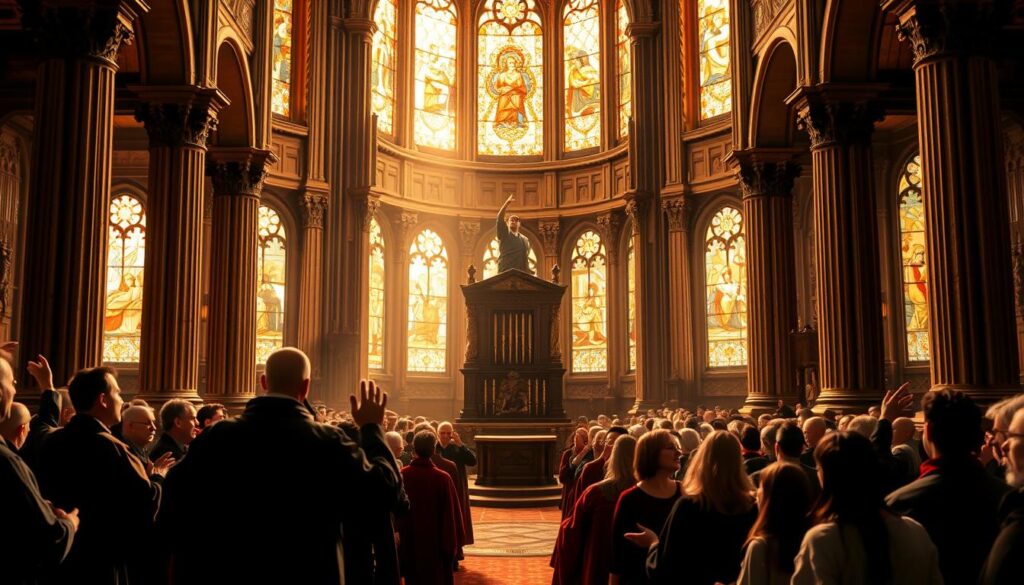
Martin Luther’s 95 Theses weren’t just theological arguments – they were social media of their day. His challenge to indulgences spread like wildfire through German towns. By 1529, this debate reached boiling point at the Diet of Speyer.
Six princes and fourteen cities made history that April. Their protest against imperial religious laws coined the term Protestant. “We must obey God rather than men,” they declared, creating a blueprint for freedom of conscience.
Impact of the Printing Press
Gutenberg’s invention became the Reformation’s secret weapon. Luther’s writings reached more readers in two months than previous reformers achieved in decades. Pamphlets, Bibles, and cartoons spread reformed teachings to ordinary people.
This tech revolution changed everything:
- Mass-produced texts bypassed traditional authority
- Local language Bibles empowered personal faith
- Debates reached from universities to village squares
The Diet’s legal precedents still echo today, showing how courage and innovation can reshape society. From pamphlets to protests, these moments prove ideas truly can change the world.
Influential Figures of the Reformation
Visionary leaders sparked transformations that still shape spiritual practices centuries later. Their bold ideas about faith and divine connection created ripples across nations.
Martin Luther and His Legacy
This German monk’s quest for truth reshaped Christianity. He famously declared, “Scripture alone reveals God’s grace,” challenging systems that required human intermediaries. His 95 Theses became a manifesto for spiritual independence.
Luther’s translation of the Bible into everyday German let ordinary people explore teachings directly. This act dismantled barriers between believers and sacred texts. His emphasis on salvation through faith alone remains foundational in many communities.
John Calvin and the Reformed Tradition
While Luther ignited change, Calvin built frameworks. His writings explored God’s ultimate authority in human affairs. The concept of predestination became central to his theology, though often misunderstood.
Geneva transformed under Calvin’s leadership into a hub for education and civic reform. Churches adopted his structured approach to worship and governance. Today, his influence appears in denominations valuing disciplined spiritual growth.
| Reformer | Key Contribution | Modern Impact |
|---|---|---|
| Martin Luther | Salvation through faith alone | Lutheran traditions worldwide |
| John Calvin | Doctrine of predestination | Reformed church governance |
| Both Leaders | Bible accessibility | Personal scripture study |
These pioneers proved ideas could outlive institutions. Their good news about direct connection to the divine continues inspiring seekers. Modern believers still debate their complex legacies while benefiting from their courage.
Core Doctrines and the Five Solae
At the heart of this spiritual tradition lies a set of guiding truths that transformed how millions connect with the divine. These principles answer life’s biggest questions: How do we know truth? What brings lasting peace? The answers form a framework still shaping communities today.

Scriptural Authority and Justification by Faith
Sola Scriptura changed everything. By making the Bible the ultimate authority, reformers empowered ordinary people to explore truth directly. “The Word stands above human traditions,” declared early leaders, sparking widespread literacy efforts.
Sola Fide offered radical hope. This principle teaches that faith—not rituals or deeds—unlocks spiritual freedom. A farmer in 1520s Germany put it simply: “Trusting Christ’s promise feels like sunrise after endless night.”
The Principles of Salvation and Grace
Three more solae complete the picture. Sola Gratia reminds us that divine love can’t be earned—only received. Solus Christus centers on Jesus as humanity’s sole bridge to God, while Soli Deo Gloria directs all praise upward.
| Principle | Latin Term | Core Belief |
|---|---|---|
| Grace Alone | Sola Gratia | God’s unmerited favor |
| Christ Alone | Solus Christus | Jesus as only mediator |
| God’s Glory Alone | Soli Deo Gloria | Divine-centered worship |
Together, these doctrines form a compass for christian faith. They answer how we find truth, receive salvation, and honor the sacred—questions as vital now as five centuries ago.
Diversification: Denominations and Movements
From humble beginnings to global movements, spiritual communities branched into distinct traditions while sharing core values. This rich tapestry of beliefs shows how shared foundations can inspire diverse expressions of faith.
Lutheran, Anglican, and Baptist Traditions
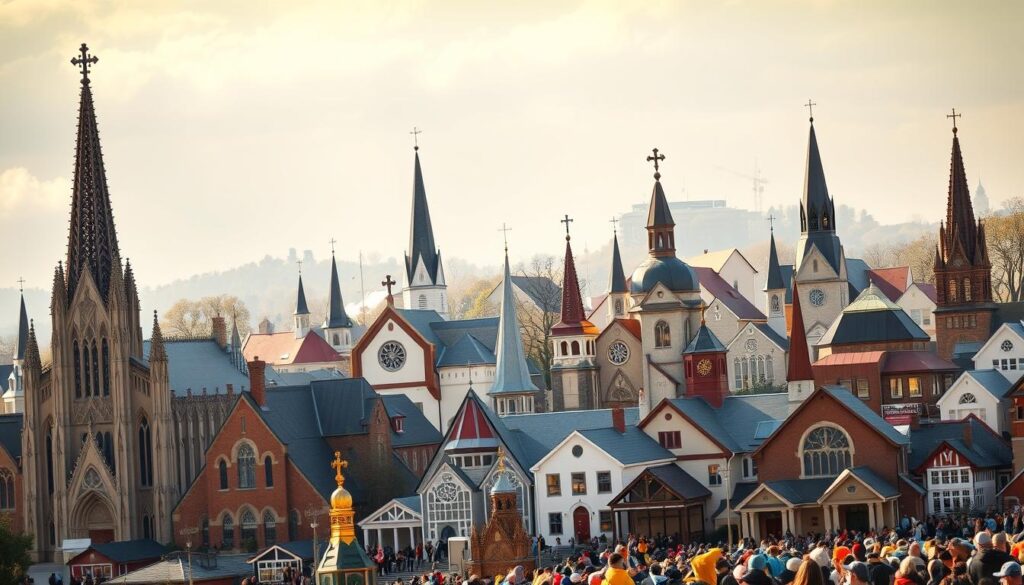
Three major groups illustrate this diversity. Lutheran communities, with 80 million members worldwide, blend Martin Luther’s teachings with local customs. Their focus on grace and scripture remains central across 150 countries.
Anglican traditions trace their roots to England’s spiritual shift in the 16th century. Today, 70 million followers appreciate their mix of formal liturgy and flexible theology. Many value ancient rituals while addressing modern social issues.
Baptist groups took a different path. Starting in 1609 Amsterdam, they championed adult baptism and self-governed congregations. The Southern Baptist Convention now leads U.S. membership charts with 30 million adherents.
| Tradition | Key Feature | Global Membership |
|---|---|---|
| Lutheran | Grace-centered theology | 80 million |
| Anglican | Liturgical flexibility | 70 million |
| Baptist | Congregational autonomy | 40 million |
| Southern Baptist | Local church emphasis | 30 million (U.S.) |
The Emergence of Anabaptist and Methodist Streams
New movements kept reshaping spiritual landscapes. Anabaptists prioritized peace and simple living, inspiring groups like Mennonites. Their radical 16th-century ideas about community still resonate today.
Methodism brought energetic renewal in the 1700s. John Wesley’s focus on personal holiness and social action created a global network. Modern Methodist churches balance vibrant worship with education programs and outreach efforts.
These varied groups prove spiritual traditions can grow while staying rooted. From quiet meetings to lively revivals, they show faith’s power to adapt without losing its heart.
The protestantism church: Evolution and Modern Impact
From candlelit chapels to digital congregations, spiritual communities have transformed while holding fast to their core values. Over five centuries, these groups adapted to cultural shifts without losing their foundational beliefs. This balance of tradition and innovation keeps their message relevant across generations.
Historical Roots to Present-Day Practice
Modern gatherings look different than 16th-century meetings, yet share key elements. Many churches now blend ancient rituals with livestreamed services and social media outreach. These updates help teachings resonate in a fast-paced world while honoring centuries-old principles.
Education remains central to community life. Schools and universities founded by early believers still thrive today, often expanding their missions to address current needs. Literacy programs and interfaith dialogues continue this legacy of accessible learning.
Influence on American Faith and Society
In the U.S., these traditions shaped national identity through social justice movements and community service. Civil rights leaders drew inspiration from reformers’ courage to challenge unjust systems. Food banks and mentorship programs run by local churches demonstrate faith in action.
Creative approaches keep communities engaged. Podcast discussions replace pulpit lectures, while volunteer projects tackle modern issues like climate change. This adaptability ensures ancient wisdom meets 21st-century life, proving timeless ideas can find fresh expressions.
FAQ
What sparked the Protestant Reformation?
The Reformation began in 1517 when Martin Luther challenged Roman Catholic teachings, notably with his 95 Theses. Issues like indulgences, authority, and salvation practices fueled critiques that reshaped Christianity.
How did John Calvin influence Protestant beliefs?
Calvin emphasized God’s sovereignty and grace, shaping Reformed theology. His teachings on predestination and church governance inspired traditions like Presbyterianism and influenced Baptist doctrines.
What are the Five Solae?
These core principles define Protestant theology: Scripture alone (sola Scriptura), faith alone (sola fide), grace alone (sola gratia), Christ alone (solus Christus), and glory to God alone (soli Deo gloria).
How did the printing press help the Reformation?
It spread ideas rapidly. Luther’s writings, translated into local languages, reached wider audiences. This democratized access to Scripture and weakened the Roman Catholic Church’s control over information.
What distinguishes Lutheran from Baptist traditions?
Lutherans focus on sacraments like infant baptism and Christ’s presence in communion. Baptists prioritize believer’s baptism, congregational governance, and personal faith decisions.
How does Protestantism impact American society today?
It shaped values like individualism and religious freedom. Denominations like the Southern Baptist Convention influence culture, politics, and education, while movements like evangelicalism drive social engagement.
Why did Anabaptists face persecution?
They rejected infant baptism and state-church ties, advocating radical reforms. Their pacifism and communal living clashed with both Catholic and emerging Protestant authorities.
How do Protestants view salvation differently?
They emphasize justification by faith alone, contrasting with Catholic teachings on sacraments and works. This idea centers on God’s grace rather than human effort.