What happens when ancient spiritual traditions meet modern democratic ideals? This question defined a groundbreaking movement that reshaped religious thought in 19th-century Europe. Rooted in France and Belgium, this approach sought to harmonize deep spiritual commitment with progressive social values.
Visionaries like Felicité de Lamennais sparked debates still relevant today. They championed freedom of conscience and education reforms while honoring sacred rituals. Their ideas created ripples beyond church walls, influencing voting rights and civic responsibility.
These thinkers faced fierce opposition for advocating church-state separation. Yet their legacy shows how faith communities can engage with shifting cultural landscapes. Their story isn’t just history – it’s a roadmap for balancing tradition with societal progress.
Key Takeaways
- 19th-century movement blending spiritual traditions with democratic values
- Pioneered church-state separation and religious freedom concepts
- Key figures included French thinkers like Lamennais and Lacordaire
- Advocated for expanded voting rights and public education
- Shaped modern discussions about faith’s role in civic life
- Demonstrated tensions between institutional authority and reform
Historical Context and Foundations
Amidst political upheaval, a spiritual revolution took root in France. Hugues Felicité Robert de Lamennais, a fiery thinker, gathered supporters like Henri Lacordaire to challenge rigid structures. Their mission? To unite sacred practices with emerging democratic values.
The French and Belgian Beginnings
In 1830 Paris, Lamennais launched L’Ami de l’Ordre newspaper. Its banner declared “God and Liberty” – a daring fusion of faith and progress. The author demanded voting reforms, church-state separation, and free education through print.
Belgium answered this call first. By 1831, their new constitution guaranteed freedoms these reformers championed. This fact proved ancient tradition could blend with modern liberalism without losing identity.
| Country | Key Figure | Achievement | Year |
|---|---|---|---|
| France | Lamennais | Founded reform newspaper | 1830 |
| Belgium | National Congress | Adopted progressive constitution | 1831 |
| Rome | Gregory XVI | Issued condemnation | 1832 |
Papal Responses and Doctrinal Debates
Rome struck back hard. Pope Gregory XVI’s 1832 Mirari vos encyclical denounced these ideas as dangerous. Bishops warned priests against mixing faith with democratic politics.
Yet Lamennais’ movement kept growing. Supporters argued true faith required addressing social needs. This clash between reform and authority would shape religious debates for decades.
Core Doctrines and Theological Shifts
How do ancient beliefs adapt to modern governance? This question fueled groundbreaking theological reforms. Thinkers reimagined faith’s role in public life while preserving sacred traditions.
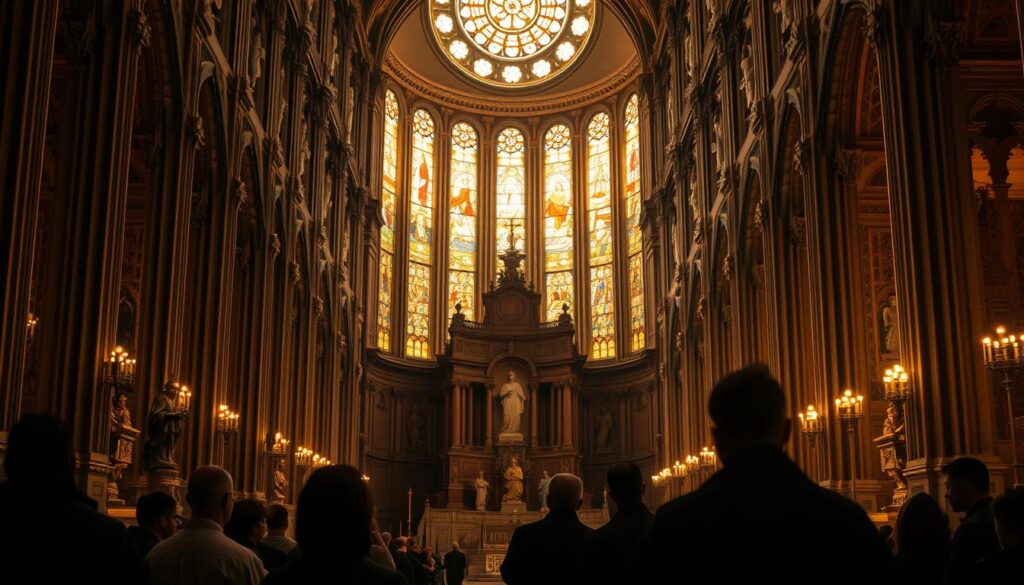
Separation of Church and State in Theory
Reformers saw independence as vital for spiritual growth. “A free church thrives best in free societies,” argued one bishop. They believed political liberalism could strengthen faith communities, not weaken them.
This approach let laypeople engage fully in civic matters. Religious teaching emphasized personal conscience over institutional control. It became a bridge between sacred rituals and democratic participation.
Evolving Liturgical Practices and Religious Teaching
Worship styles adapted to emphasize social justice. Education reforms made theology more accessible to ordinary people. Traditional sacraments gained new layers of meaning tied to human dignity.
| Aspect | Traditional View | Reformed Approach |
|---|---|---|
| Authority | Centralized hierarchy | Shared spiritual leadership |
| Social Role | Maintain status quo | Drive ethical change |
| Scripture | Literal interpretation | Contextual application |
| Human Dignity | Original sin focus | Inherent worth emphasis |
These shifts balanced timeless truths with contemporary needs. They showed how spiritual life could shape political things without domination. The movement proved faith could evolve while keeping its soul intact.
Contemporary Perspectives on liberal catholicism
What does the future hold for faith communities navigating modern social divides? A groundbreaking study reveals seismic shifts in religious leadership trends. The Catholic Project’s research shows how priestly identities have transformed across generations.
Interview Insights and Generational Shifts
Younger priests now overwhelmingly identify as traditionalists. Only 14% of new ordinands describe themselves as moderate – a stark contrast to the 68% progressive majority from fifty years ago. “We’re seeing three distinct waves,” explains one study editor. “Vietnam-era reformers, John Paul II traditionalists, and post-9/11 ultra-conservatives.”
| Generation | Years Active | Dominant Theology |
|---|---|---|
| Vatican II Era | 1960s-1980s | Progressive Social Justice |
| John Paul II | 1980s-2000s | Orthodox Teaching |
| Post-Benedict XVI | 2010s-Present | Traditional Conservatism |
Modern Critiques and Enduring Influence
This decline in progressive voices raises questions about social engagement. While Pope Francis pushes climate action, young conservative catholics often prioritize abortion opposition over environmentalism. “It’s not rejection of justice,” argues a seminary instructor, “but different priorities shaped by cultural wars.”
Older liberal catholics warn about losing reform momentum. Yet their legacy persists through interfaith partnerships and poverty initiatives. As one retired priest noted: “True service transcends labels – it’s about showing up where need meets faith.”
“The data doesn’t show disengagement, but redirected energy toward spiritual renewal rather than political activism.”
Political, Cultural, and Social Impacts
Modern faith communities face a critical question: How does spiritual tradition drive societal transformation? Michael Sean Winters of the National Catholic Reporter offers a bold answer: “We never went away and never could go away.” This resilience shines through intergenerational efforts to merge sacred values with contemporary justice movements.
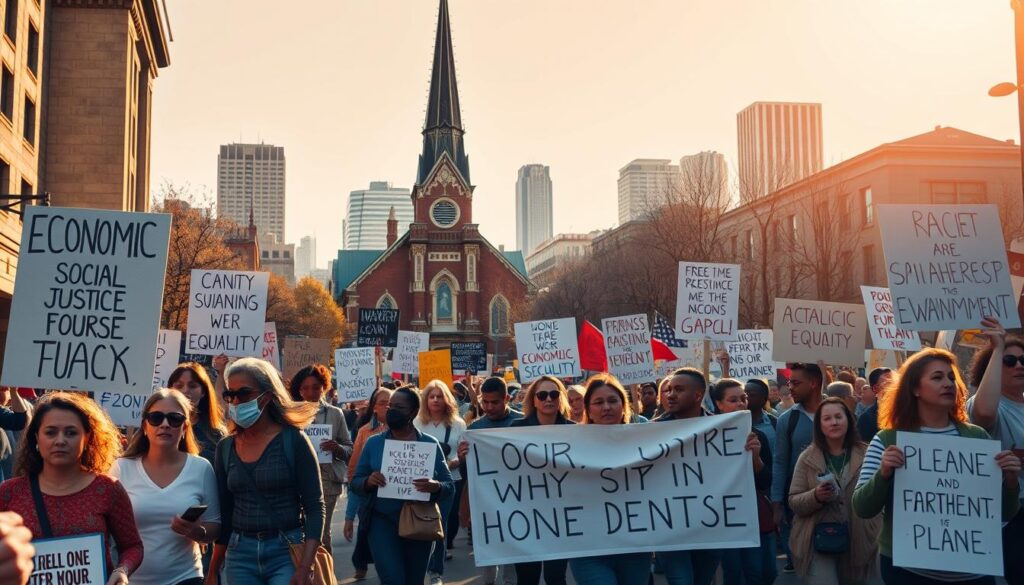
The Role of Social Justice and Policy in Modern Society
Gray-haired reformers and college theology students now march side by side. You’ll find them advocating for climate action through the Green New Deal or joining racial justice protests. Retired sisters and bishops still lead poverty initiatives, proving commitment outlasts clerical trends.
Executive editor Heidi Schlumpf observes: “These activists wear multiple hats – parish volunteers one day, policy advocates the next.” Their work bridges Sunday sermons and Monday’s legislative battles, showing how faith fuels civic engagement.
Legacy, Change, and Future Implications
While younger priests lean conservative, lay leaders fill the gap. Catholic universities have become hubs for progressive theology courses. This shift mirrors broader cultural debates about immigration and economic fairness.
The movement’s survival hinges on blending tradition with fresh approaches. As one theology professor notes: “Our students want sacramental depth and systemic change.” This dual focus could redefine Catholic influence in coming decades, ensuring ancient values speak to modern struggles.
Conclusion
Balancing timeless beliefs with societal change remains a tightrope walk for modern believers. The liberal catholicism movement demonstrated how spiritual depth could fuel civic progress. Its decline among clergy offers lessons for today’s polarized world.
The dwindling number of priests embracing progressive social engagement presents a paradox. As one editor notes: “We gained doctrinal clarity but lost vital bridges to secular reformers.” Lay movements now carry this legacy through poverty relief and climate action.
Younger men entering religious life often prioritize orthodoxy over political activism. Yet universities keep the reform spirit alive through ethics courses and interfaith partnerships. This shift mirrors broader debates about tradition’s role in fast-changing societies.
True faith thrives when honoring roots while nurturing new growth. As liberalism evolves, the challenge remains: How can sacred values address modern crises without compromising core principles? The answer may lie in blending ancient wisdom with fresh approaches.
FAQ
What sparked the early development of progressive Catholic thought?
Ideas emerged in 19th-century France and Belgium, influenced by political revolutions and calls to adapt Church engagement with modern democratic ideals.
How did Vatican leadership address theological debates in the past?
Figures like Pope Leo XIII and Pius X issued documents critiquing certain interpretations, emphasizing alignment with traditional teachings on authority and doctrine.
Why is the church-state relationship central to these discussions?
Advocates historically pushed for greater autonomy of civil institutions, challenging older models where religious and political power were deeply intertwined.
Have worship styles shifted alongside theological ideas?
Some communities embraced vernacular languages or inclusive practices post-Vatican II, though reforms often vary by region and local leadership.
Do younger generations view these topics differently today?
Surveys suggest many prioritize issues like environmental care and equity, reflecting broader cultural values while still valuing spiritual traditions.
How does social justice intersect with faith in current movements?
Activists frequently cite teachings on human dignity to support efforts like poverty reduction, immigration reform, and peacebuilding initiatives.
What challenges might this outlook face moving forward?
Tensions persist between adaptation and preservation, particularly regarding authority structures, moral teachings, and intergenerational expectations.