Walking through the sunlit streets of Athens or Thessaloniki, visitors might stumble upon a unique spiritual tapestry. While Orthodox Christianity dominates the landscape, a lesser-known story of faith has quietly shaped communities since the 1800s. This journey began with small groups of believers committed to scriptural teachings and evolved into a united movement recognized nationally in 2014.
These faith communities blend traditions from Presbyterian, Congregational, Methodist, and Independent Brethren backgrounds. Their shared focus on Biblical authority creates a distinct worship style that bridges Eastern and Western Christian practices. Today, 32 active congregations serve over 5,000 members while maintaining their denominational identities.
What makes this story remarkable isn’t just survival—it’s growth. Through social programs and refugee support, these groups demonstrate faith in action. Their membership in global organizations like the World Council of Churches highlights their international connections while staying rooted in local culture.
Key Takeaways
- United faith communities gained legal recognition in 2014 after 150+ years of development
- Blend of four Christian traditions under shared theological principles
- Active in humanitarian work across the Mediterranean region
- Membership in five major international religious organizations
- Balances cultural adaptation with distinct worship practices
- 32 congregations serving diverse spiritual needs nationwide
Historical Foundations and Early Influences
The story of evangelical communities in this Mediterranean nation begins with a daring blend of ancient heritage and new ideas. Like olive trees grafting foreign branches, early reformers planted seeds that would grow into unique spiritual traditions.
Roots in Reformation and Early Evangelical Movements
Sixteenth-century reformers like Luther and Calvin inspired a theological revolution. But it took three centuries for these ideas to take root locally. Dr. Michael Kalopothakis, a medical pioneer turned spiritual leader, became the bridge between eras.
His 1858 magazine Astir tis Anatolis sparked conversations about Scripture’s central role. “Truth shines brighter when shared freely,” he wrote, facing fierce opposition. This publication became the heartbeat of a growing movement.
Formation of the First Greek Evangelical Church in 1858
Persecution fueled determination. By 1871, believers gathered beneath the Acropolis’s marble slopes, forming their first official community. American missionary Dr. Jonas King had laid groundwork decades earlier, proving cross-cultural partnerships could thrive.
Parallel developments emerged across the Aegean. In Asia Minor, congregations adopted congregational models while keeping local flavors. This dual growth—homegrown and international—created lasting networks that still shape worship practices today.
Protestant Church Greece: Historical Legacy and Impact
History often unfolds at crossroads of crisis and opportunity. For Greek Evangelical communities, the early 20th century brought both through waves of displaced believers seeking sanctuary.
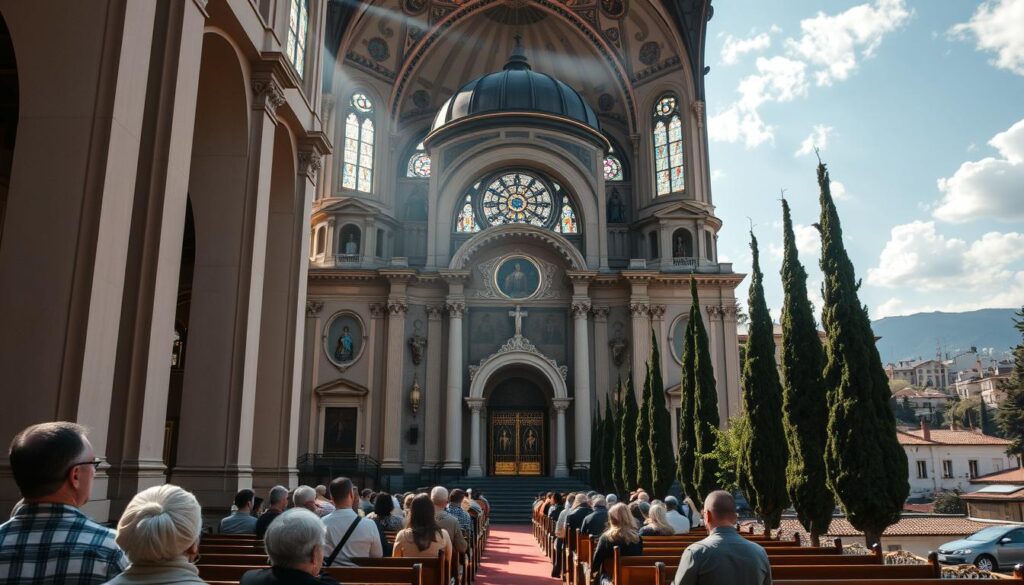
Migration and the Influence of Asia Minor Refugees
The 1922 population exchange reshaped spiritual landscapes. Over 1.5 million people crossed the Aegean, including thousands of evangelicals carrying Bibles alongside suitcases. These displaced families didn’t just seek shelter—they planted seeds of faith.
Newcomers revitalized existing congregations while founding others in untouched regions. Their arrival doubled active worship spaces within a decade. “We brought hymns in our hearts and governance models in our memories,” recalled one refugee’s descendant.
Development Through the United Church Model
By 1938, Presbyterian and Congregational streams merged like tributaries forming a river. The union followed Reformed theology but blended organizational styles—a recipe that required wisdom from global partners.
Canadian church leaders shared blueprints for balancing local autonomy with national cohesion. This cross-continental mentorship helped create governance structures still guiding communities today. Their innovative approach proved unity doesn’t require uniformity.
This era birthed lasting commitments to social action. Having experienced displacement firsthand, members became advocates for marginalized groups—a legacy visible in modern outreach programs.
Modern Presence and Cultural Significance
Like a bridge spanning ancient and modern worlds, these spiritual communities connect timeless values with urgent needs. Their story isn’t written in stone monuments but in transformed lives and empowered neighborhoods.
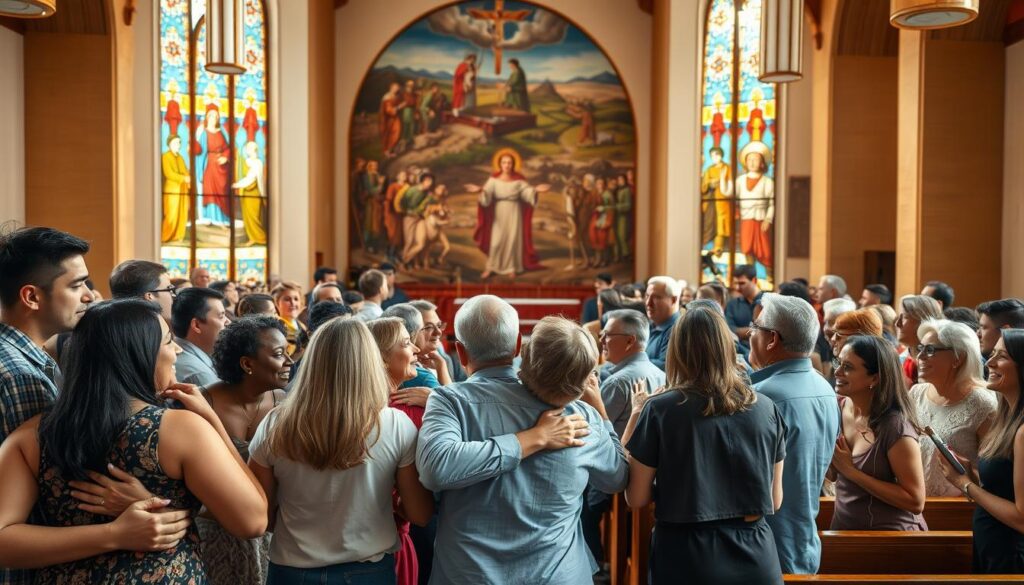
Multigenerational Faith in Action
From Athens to Crete, Anglican congregations serve as spiritual oases. St. Paul’s hosts services in five languages, while Holy Trinity Corfu blends historic liturgy with local traditions. These spaces welcome both travelers and lifelong residents, creating dialogue through shared agape love in action.
Since 2016, over 3,000 refugees gained job skills through vocational programs. One Syrian tailor now employs six others, stitching hope into every garment. “We teach marketable skills,” explains a ministry leader, “but more importantly—dignity.”
Innovation Meets Compassion
Two detox centers near Thessaloniki break addiction cycles through counseling and community. Their 72% success rate draws attention from European health organizations. Meanwhile, solar-powered classrooms in Tanzania show how faith fuels sustainable solutions.
Digital tools amplify these efforts. Live-streamed services reach diaspora communities worldwide, while apps connect volunteers with local needs. Yet the heartbeat remains personal—a handwritten note tucked into a food parcel, or a mentor’s patient guidance.
Theological Foundations and Community Outreach
At the heart of these spiritual communities beats a rhythm older than the Parthenon yet fresh as morning dew. Their work flows from ancient confessions made vibrant through modern service, blending creedal conviction with hands-on compassion.

Ancient Words, Living Faith
The Nicene Creed serves as both anchor and compass. Members recite these 4th-century words not as dusty relics, but as living truths shaping daily decisions. “We believe in one holy catholic church,” they declare weekly, their actions proving this unity through interdenominational partnerships.
Biblical teaching fuels practical ministry. Youth programs mix Scripture study with beach cleanups, while adult classes explore how Jesus’ parables inform fair trade practices. This fusion of doctrine and deed creates disciples ready to serve.
When Mercy Gets Muddy Boots
Perichoresis—the NGO launched in 2016—embodies this theology in action. Volunteers distribute 15,000 meals monthly while offering legal aid to displaced families. One Syrian teen, now studying through their scholarship program, shares: “They saw my potential before I did.”
The ministry’s holistic approach includes:
- Mobile medical clinics serving rural areas
- Recycling initiatives reducing landfill waste by 40%
- Job training centers teaching marketable skills
“Come to me, all you who are weary and burdened, and I will give you rest.”
This invitation echoes through every outreach. From addiction recovery homes to after-school tutoring, the message remains clear: faith without works isn’t just dead—it’s disconnected from its divine source.
Conclusion
Time-tested faith communities reveal how spiritual roots deepen through cultural adaptation. From Dr. Michael Kalopothakis’ 1858 magazine to today’s 32 active congregations, these groups show resilient growth while upholding Biblical truth. Their journey proves traditions can evolve without losing core values.
Historic challenges became catalysts for connection. The 1920s refugee influx didn’t weaken communities—it sparked creative unity through the United Church model. Shared governance structures allowed diverse worship styles to coexist, strengthening collective impact.
Modern initiatives continue this legacy of innovation. Youth programs blend environmental care with scripture study, while vocational training empowers displaced families. These efforts demonstrate how spiritual integrity meets societal needs, creating bridges across generations and cultures.
Through 160 years of change, one constant remains: faith that transforms through action. As communities address contemporary issues like sustainable development and refugee support, they write new chapters in an enduring story of hope.
FAQ
How did evangelical communities in Greece begin?
Their roots trace back to the Reformation and early evangelical movements. Missionaries and Bible societies in the 19th century helped spread teachings focused on personal faith and Scripture, leading to the first organized congregations.
What role did refugees play in shaping these communities?
After the 1923 population exchange, many Asia Minor refugees brought diverse Christian traditions. Their arrival strengthened existing groups and inspired new ministries, blending cultural heritage with shared beliefs.
How do these congregations address modern social issues?
Through diaconal work, they prioritize refugee assistance, education, and poverty relief. Many partner with global organizations to advocate for justice while staying grounded in biblical principles like the Nicene Creed.
What theological beliefs unite these groups?
They emphasize the authority of Scripture, salvation through faith, and the Trinity—core ideas from the Nicene Creed. This shared foundation fosters unity across diverse worship styles and outreach methods.
How have these communities adapted over time?
By merging smaller congregations into united churches, they’ve pooled resources for training and outreach. Today, they balance tradition with innovation, using digital tools and multilingual services to engage younger generations.
Are there international connections?
Yes! Partnerships with global faith networks help fund community projects and refugee care. These ties also encourage cultural exchange, enriching local practices with insights from other countries.