Words hold extraordinary power in shaping spiritual traditions. Across centuries, sacred texts and chants have preserved wisdom for millions of followers worldwide. This vibrant religious tradition thrives through an evolving linguistic tapestry that connects ancient practices to modern devotion.
Many might be surprised to learn the term describing this faith emerged recently. British scholars in the 1800s coined it to categorize diverse philosophies originating from the Indian subcontinent. Yet its roots stretch back over 3,000 years, with Vedic hymns still recited today.
From Sanskrit mantras to regional dialects, verbal expression remains central to rituals and teachings. This adaptability allows the living tradition to flourish globally while maintaining its spiritual essence. Whether through temple prayers or home ceremonies, language acts as a bridge between devotees and the divine.
Our journey will explore how verbal artistry preserves history while embracing contemporary needs. You’ll see why this dynamic interplay of words and worship continues to inspire generations across continents.
Key Takeaways
- Sacred texts and chants have preserved spiritual wisdom for thousands of years
- The term describing this faith originated from 19th-century Western scholars
- Linguistic diversity reflects adaptability across cultures and eras
- Verbal rituals connect modern practices to ancient traditions
- Regional dialects coexist with classical Sanskrit in worship
Understanding the Historical Roots of Hinduism
Ancient voices still whisper through time, carried by sacred sounds etched into humanity’s memory. This spiritual heritage grew from a remarkable fusion of oral wisdom and written mastery, shaping one of history’s most enduring belief systems.
From Vedic Scripts to Epic Narratives
The story begins with Sanskrit’s arrival around 1500 BCE. Migrating communities brought this precise tongue to India, where it became the bedrock of spiritual expression. While people used simpler dialects daily, Sanskrit remained sacred – a divine channel for rituals and revelations.
Early sages perfected oral transmission long before ink met parchment. Chants flowed through generations with rhythmic precision. When writing emerged, it captured not just words but sound itself, preserving vibrational patterns believed to awaken higher consciousness.
Epic tales like the Mahabharata transformed Sanskrit’s role. These sweeping narratives turned philosophical ideas into relatable stories. Warriors became metaphors for inner struggles, and royal dramas illustrated cosmic truths. This shift made profound teachings accessible to all.
Commentaries by later scholars kept texts alive across centuries. They debated meanings while honoring original sounds, proving tradition could evolve without losing its essence. Even today, priests recite verses unchanged for millennia, maintaining an unbroken sonic legacy.
Ancient Traditions and the Indus Valley Connection
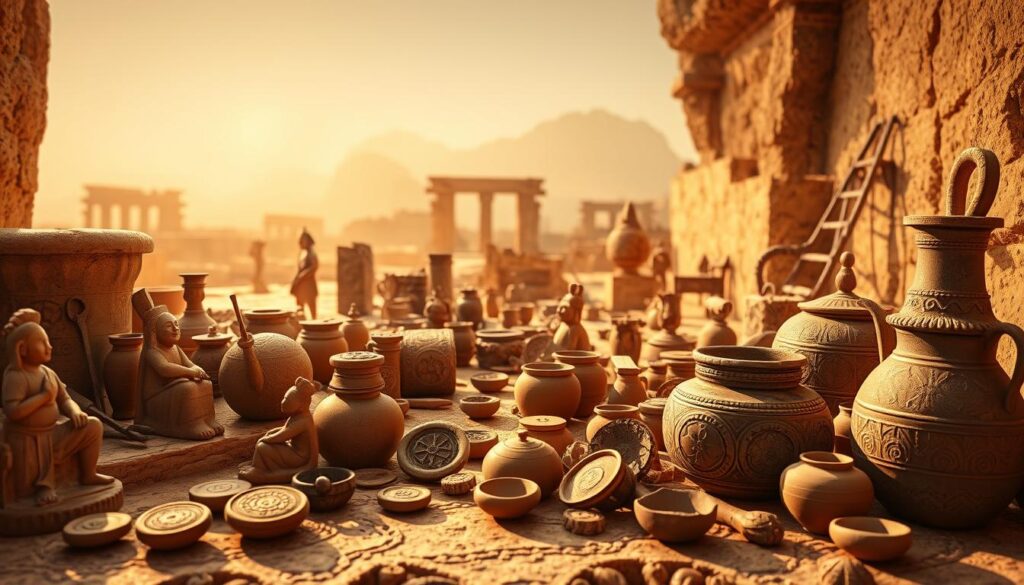
Imagine peeling back layers of time to uncover a civilization where ritual baths and clay goddesses shaped spiritual foundations. The Indus Valley’s advanced cities flourished between 3300-1300 BCE, leaving behind clues that whisper across millennia.
Civilizational Foundations in the Indus Valley
This Bronze Age society built carefully planned cities with drainage systems still impressive today. Among their ruins, archaeologists found:
- Terra-cotta figurines resembling later deity images
- Seals depicting meditative poses and sacred animals
- Great Bath structures mirroring modern ritual spaces
Though their script remains undeciphered, these artifacts suggest symbolic communication preceding Sanskrit. The famous “Dancing Girl” statue hints at early artistic traditions that would evolve into temple sculptures.
Archaeological Insights and Early Textual Evidence
Scholars note striking parallels between Indus Valley symbols and later spiritual practices. Water-focused rituals in Mohenjo-Daro’s Great Bath foreshadowed purification ceremonies still performed today.
“The continuity between these ancient sites and living traditions challenges our understanding of cultural evolution.”
Greek historian Herodotus first used “Hindu” to describe people near the Indus River. This geographical label gradually transformed into a cultural identity, blending local customs with incoming Vedic influences over centuries.
Exploring the Role of hinduism language in Cultural Identity
Across bustling markets and temple courtyards, a vibrant tapestry of sounds weaves communities together. This rich oral heritage shaped identities while adapting to local landscapes. From ancient trade routes to digital spaces, expressions of faith continue evolving while honoring timeless roots.
Unity Through Regional Voices
Regional dialects became powerful tools for sharing spiritual ideas. Tamil poets crafted verses celebrating divine love, while Bengali singers transformed myths into melodic stories. These creative forms allowed teachings to resonate deeply within local contexts.
The Indian subcontinent saw remarkable growth as shared linguistic elements connected distant regions. Merchant networks carried philosophical concepts alongside spices, creating cultural bridges. This exchange fueled artistic and commercial development across Southern Asia.
Living Traditions in Contemporary Spaces
Modern celebrations showcase this dynamic blend. Festival processions might feature centuries-old Sanskrit chants alongside folk instruments from the hosting region. Families often mix ancestral prayers with vernacular translations during home rituals.
Diaspora communities maintain connections through this flexible system of expression. Temples in new lands incorporate local languages while preserving core practices. This adaptive approach helps traditions stay relevant across generations and geographies.
From Bali’s dance dramas to Trinidad’s prayer gatherings, shared spiritual vocabulary creates unity. Yet each community adds distinct flavors through their native tongues, proving cultural identity thrives through both preservation and innovation.
Sacred Texts and Liturgical Practices Across Centuries
The rustle of palm-leaf pages carries wisdom across generations. Spiritual traditions thrive through written texts and oral recitations that adapt to new eras while preserving core truths. This dynamic interplay between preservation and innovation defines one of humanity’s richest literary legacies.
Key Scriptures and Their Interpretations
Ancient Sanskrit works like the Vedas form a foundation for thousands of commentaries. Priests still chant these verses exactly as their ancestors did, yet modern translations make the content accessible worldwide. Regional dialects added fresh perspectives without displacing classical forms.
Consider these fascinating aspects:
- Oral transmission preserves sound patterns believed to carry divine energy
- Temple rituals blend 3,000-year-old mantras with local musical styles
- Digital archives now protect fragile manuscripts from decay
A scholar notes:
“The real miracle lies in how these traditions remain relevant. They speak to universal human experiences through time-specific cultural expressions.”
Contemporary practice shows this flexibility. Youth groups reinterpret ancient stories through street theater, while apps teach proper ritual pronunciation. This living tradition proves spiritual wisdom grows richer when roots stay strong but branches reach freely.
The Evolution from Sanskrit to Regional Dialects
The journey of words from sacred chants to market chatter reveals a story of cultural resilience. As spiritual ideas traveled beyond temple walls, they found new voices in everyday speech. This shift transformed how communities connected with divine concepts while fostering practical communication.
Transition to Prakrit Languages
Sanskrit’s intricate structure thrived in rituals but proved challenging for daily use. By 500 BCE, simpler Prakrit forms emerged as the people’s tongue. These dialects democratized spiritual knowledge, letting farmers and merchants engage with teachings once reserved for scholars.
Five regional traditions shaped modern Hindi:
- Braj’s poetic Krishna devotion
- Avadhi’s mystical storytelling
- Dingal’s warrior ballads
- Maithili’s folk wisdom
- Sadhu Bhasa’s philosophical depth
Hindi and Urdu’s Shared Roots
Twin branches grew from a common trunk. While Hindi absorbed Sanskrit terms for spiritual ideas, Urdu blended Persian influences for Islamic contexts. A 16th-century poet remarked:
“Words dress differently for mosque and temple, but their heartbeat remains the same.”
This linguistic family shows how shared roots support diverse expressions. Merchants used both dialects, fostering trade networks across Northern India. Today, Bollywood films mix these tongues seamlessly—proof that unity thrives through adaptable development.
Interplay of Religion, Tradition, and Social Structures
Social structures have always shaped how communities express their deepest beliefs. For over three millennia, spiritual practices intertwined with daily life through carefully maintained systems of communication. These frameworks influenced everything from temple rituals to marketplace conversations.
Caste System Influences on Language Use
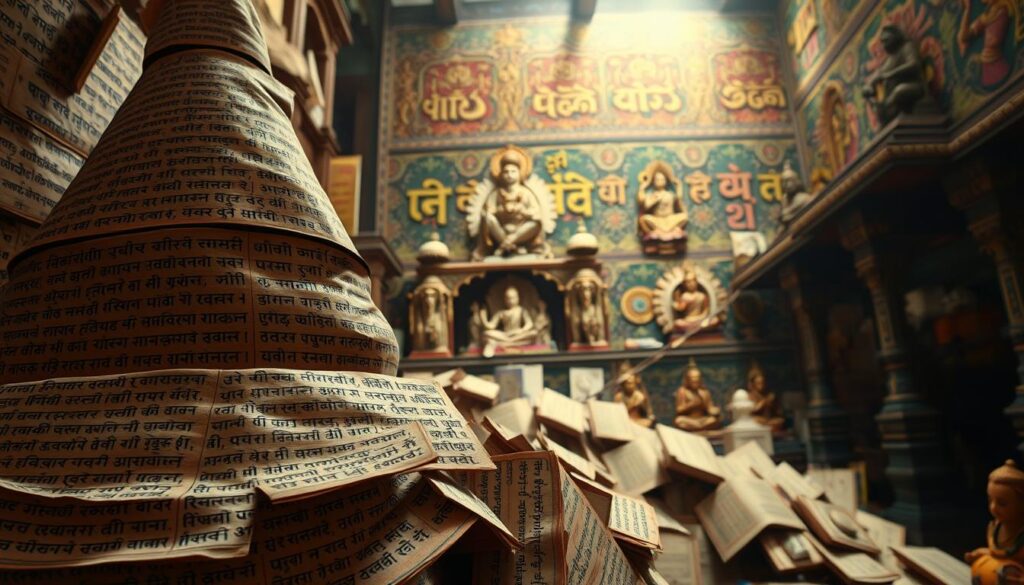
The four-tiered social hierarchy determined access to sacred words. Brahmins guarded Sanskrit like treasured heirlooms, using it for rituals and teachings. This created a linguistic divide – priests spoke the “language of gods,” while others used regional dialects.
Dharma took different meanings across castes. Warriors heard it as duty to protect, while merchants understood it as ethical trade practices. A farmer’s karma discussions differed vastly from a scholar’s, showing how social roles shaped spiritual vocabulary.
Bhakti poets revolutionized this system in medieval times. They sang divine love songs in local tongues, bypassing caste restrictions. “Why whisper secrets in a dead tongue?” challenged mystic Kabir, making wisdom accessible through everyday speech.
Modern reformers balance tradition with inclusivity. New translations preserve ancient law concepts while using gender-neutral terms. Apps now teach Sanskrit mantras to all, proving spiritual nature adapts to changing times without losing its core.
The Impact of Hindu Sects on Linguistic Development
India’s spiritual landscape thrives through diverse expressions of devotion. Four major sects have shaped unique verbal traditions that mirror their philosophical priorities. These living systems of communication preserve ancient wisdom while adapting to local cultures.
Language in Shaivism and Vaishnavism Practices
Shaivite practices echo through Tamil Nadu’s temple hymns and Bali’s ritual chants. Followers use poetic metaphors comparing Shiva’s dance to cosmic cycles. Vaishnavites developed lyrical forms celebrating Krishna’s stories, with 640 million adherents singing in dialects from Braj Bhasha to Bengali.
Preserving Tradition in Shaktism and Smartism
Shaktism’s goddess-focused traditions thrive through oral folk songs and tantric mantras. Smartist scholars maintain Sanskrit precision while honoring five deities through philosophical debates. Both sects show how regional variations strengthen core teachings rather than dilute them.
From Kerala’s ritual chants to Himalayan prayer flags, these forms prove spiritual identity grows richer through linguistic diversity. They remind us that sacred words remain vital when rooted in lived experience rather than rigid uniformity.
FAQ
How did ancient texts shape Hindu traditions?
Early Vedic hymns and epic stories like the Mahabharata laid the groundwork for rituals, philosophies, and social norms. These works were shared orally before being written in Sanskrit, preserving teachings across generations.
What role did the Indus Valley play in early belief systems?
Artifacts from sites like Mohenjo-Daro suggest symbolic practices tied to nature worship. While direct links to later traditions are debated, these findings highlight a cultural continuity in the region.
Why is Sanskrit still significant today?
Though not widely spoken, Sanskrit remains vital for studying sacred texts like the Upanishads and performing rituals. It also influenced regional dialects, enriching literary traditions such as Hindi and Tamil.
How do regional languages reflect cultural identity?
Dialects like Bengali or Marathi carry localized myths, festivals, and devotional practices. This diversity strengthens community ties while maintaining shared values rooted in Dharma.
Did Hindu sects impact linguistic development?
Yes! Shaivism and Vaishnavism used Tamil and Telugu for hymns, while Shaktism preserved folk songs in Bengali. These sectarian practices helped regional tongues thrive alongside Sanskrit.
How did the caste system affect language use?
Social hierarchies often restricted Sanskrit access to elites, while marginalized groups developed vernaculars like Pali. This divide influenced how teachings spread across communities.
Are Indus Valley symbols connected to modern practices?
Some motifs, like sacred animals or ritual baths, appear in later traditions. However, interpretations vary due to gaps in deciphering the Indus script.
What’s the relevance of oral storytelling today?
Oral recitations of the Ramayana or Bhagavad Gita remain popular, blending music and regional dialects. This keeps ancient wisdom accessible in contemporary settings.
How did post-independence India preserve linguistic heritage?
Efforts include digitizing manuscripts, promoting Sanskrit schools, and recognizing regional languages in education. Projects like the Digital Library of India help safeguard these resources.
Why do rituals vary across the subcontinent?
Local ecology, historical rulers, and community customs shaped unique practices. For example, Onam in Kerala and Durga Puja in Bengal both celebrate harvests but with distinct rituals.