Christianity’s landscape transformed dramatically in 16th-century Europe. A movement began challenging traditional doctrines, sparking reforms that reshaped faith practices forever. The term “Protestant” emerged in 1529 when reformers stood firm against religious restrictions at the Diet of Speyer. This pivotal moment birthed a new branch of Christianity, distinct from Roman Catholicism and Eastern Orthodoxy.
Today, hundreds of denominations exist worldwide, each with unique traditions. From Lutheranism’s focus on grace to Pentecostalism’s vibrant worship styles, these groups share core principles like scripture’s authority and salvation through faith. Yet their interpretations of rituals, leadership, and community roles vary widely.
Modern churches reflect this diversity. Some prioritize structured liturgy, while others embrace spontaneous prayer. Despite differences, all aim to connect believers with their beliefs and foster spiritual growth. This guide explores how these traditions evolved and why they remain vital to millions today.
Key Takeaways
- Protestantism began as a 16th-century reform movement in Europe
- Core principles include scripture authority and salvation through faith
- Denominations vary in worship styles and organizational structures
- Major traditions include Lutheranism, Anglicanism, and Pentecostalism
- Modern churches adapt historical teachings to contemporary needs
- Global influence spans religious, cultural, and social dimensions
Introduction to Protestant Denominations
Exploring Christian traditions reveals a rich mosaic of beliefs and practices shaped by centuries of interpretation. While these faith communities share core principles like scripture’s authority and salvation through grace, their approaches to worship and leadership vary widely. This guide helps you navigate that diversity with clarity.
Purpose and Scope of the Article
We’ll unpack how different denominations developed from shared Reformation roots. You’ll discover:
- Why Baptists emphasize adult baptism
- How Methodist churches structure community outreach
- What makes Presbyterian governance unique
The focus extends beyond historical branches to modern movements. Non-denominational churches, for example, prioritize biblical teachings over traditional labels. Over 35% of U.S. congregations now identify this way.
Understanding the Listicle Format
Complex ideas become approachable through bite-sized sections. Each entry highlights:
- Key doctrinal distinctions
- Notable worship practices
- Cultural influences
This structure lets you compare traditions like Lutheranism’s liturgical depth with Pentecostalism’s spontaneous worship. Whether you’re new to faith studies or deepening your knowledge, the format delivers insights without overwhelm.
Historical Foundations of Protestantism
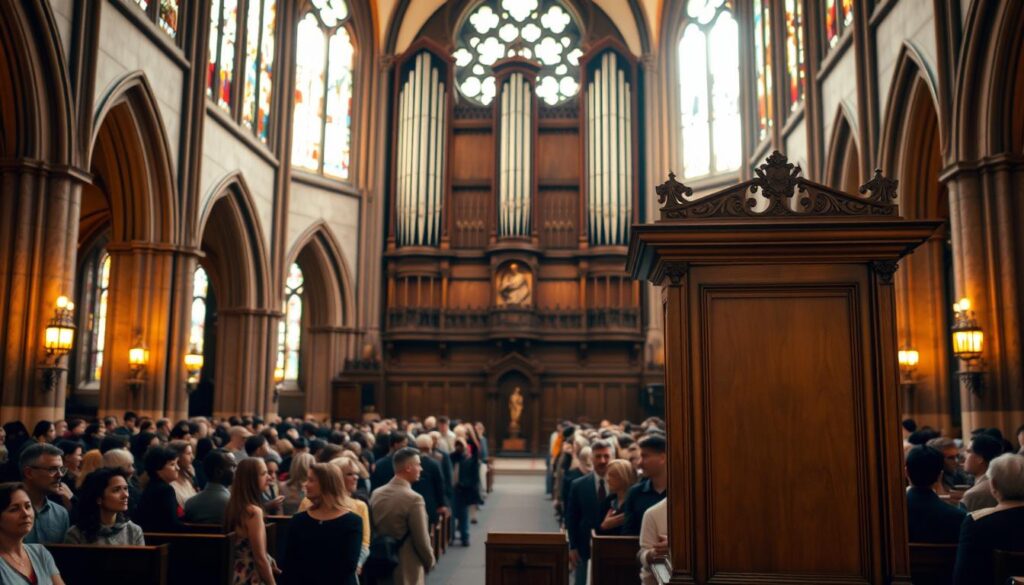
Religious transformation in the 1500s didn’t emerge from a vacuum. Centuries of simmering tensions within the Roman Catholic Church created fertile ground for change. By Luther’s time, many believers questioned practices that seemed more about power than spiritual growth.
Origins of the Protestant Reformation
The 16th-century movement began as pushback against systemic issues. Church leaders sold forgiveness certificates called indulgences, while funding lavish projects in Rome. Ordinary people grew frustrated as local clergy seemed disconnected from their needs.
Earlier critics like Jan Hus had demanded reforms a century before Luther. Their ideas spread through handwritten texts, planting seeds for larger changes. When the printing press arrived, it supercharged this process.
The Social and Political Context
Kings and citizens alike resented Rome’s control over local affairs. German princes saw religious independence as a way to strengthen their rule. Meanwhile, merchants and tradespeople wanted faith that matched their practical, self-made lives.
Three key factors accelerated the Protestant Reformation:
- Growing literacy rates let people read scripture themselves
- National rulers sought to reduce foreign influence
- New middle classes valued personal faith over hierarchy
This mix of ideas reshaped Europe’s religious map within decades. What began as church debates became revolutions in how communities worshipped and governed themselves.
The Protestant Reformation and Its Key Figures
Three visionaries reshaped Christianity’s course through bold actions and revolutionary ideas. Their distinct approaches to faith created lasting frameworks that still guide millions today. Let’s explore how these leaders challenged norms and built enduring spiritual legacies.
Martin Luther and the Break from Rome
A monk’s hammer strikes echoed across Europe in 1517. When Martin Luther nailed his 95 Theses to Wittenberg’s church door, he questioned the Roman Catholic practice of selling forgiveness. His radical claim? Salvation comes through faith alone, not payments or rituals.
Luther’s German Bible translation empowered ordinary people to read Scripture themselves. This broke the clergy’s monopoly on biblical interpretation. His stand at the Diet of Worms became legendary: “Here I stand; I can do no other.”
John Calvin’s Influence on Reformed Theology
While Luther sparked change, John Calvin systematized it. His Institutes of the Christian Religion outlined God’s complete control over human destiny. Calvin’s Geneva became a laboratory for Reformed teachings, emphasizing predestination and moral discipline.
The reformer’s ideas crossed oceans. Puritan settlers carried Calvinist principles to America, shaping early colonial values. His focus on God’s sovereignty still defines Presbyterian and Reformed churches worldwide.
John Wesley and the Rise of Methodism
Centuries later, John Wesley brought fiery passion to English fields. His open-air sermons reached coal miners and factory workers ignored by traditional churches. Wesley’s “heart strangely warmed” experience fueled a movement emphasizing personal holiness and social action.
Methodism’s circuit riders and class meetings created spiritual networks across continents. Wesley traveled distances equal to circling Earth ten times, proving faith could thrive beyond church walls.
| Reformer | Key Contribution | Lasting Impact | Notable Work |
|---|---|---|---|
| Martin Luther | Scripture accessibility | Lutheran churches | 95 Theses |
| John Calvin | Predestination doctrine | Reformed traditions | Institutes |
| John Wesley | Methodist movement | Social holiness | 40,000 sermons |
Distinctive Doctrines and Worship Practices
Walk into any two churches sharing the same core beliefs, and you might think they’re from different worlds. This vibrant diversity stems from how communities express shared teachings through unique worship practices.
Core Beliefs and Teachings
All these traditions agree salvation comes through faith alone, not works. They uphold scripture as ultimate authority and reject hierarchical priesthoods. But interpretations vary widely:
- Lutherans emphasize Christ’s presence in communion
- Baptists focus on adult baptism by immersion
- Methodists stress social justice alongside personal holiness
Differences in Sacramental Understanding
The Lord’s Supper sparks particularly diverse views. Lutherans teach Christ is present “in, with, and under” the bread and wine. Baptists see communion as symbolic, while Anglicans blend traditional and modern approaches.
| Tradition | Baptism Practice | Communion View |
|---|---|---|
| Lutheran | Infant sprinkling | Real presence |
| Baptist | Adult immersion | Memorial symbol |
| Anglican | Infant pouring | Spiritual presence |
Music styles further showcase diversity. Some churches use pipe organs and hymnals, while others feature electric guitars and projection screens. These practices all aim to deepen faith, proving unity exists within variety.
Exploring Protestant Groups in America
Modern believers in the U.S. encounter a mosaic of spiritual communities shaped by cultural adaptation. Historic traditions brought by European settlers blend with fresh approaches developed in the 20th century. This creates vibrant spaces where ancient teachings meet contemporary life.

The Diversity of Denominational Practices
Walk through America’s spiritual landscape, and you’ll find:
- Lutheran congregations preserving Scandinavian hymns
- African Methodist Episcopal churches blending gospel music with social activism
- Korean Presbyterian assemblies offering bilingual services
These churches maintain theological roots while adapting to local cultures. Hispanic evangelical movements often integrate family-centered worship, while Asian American communities emphasize educational programs.
Non-Denominational Churches and Modern Trends
Over 35% of U.S. congregations now avoid specific denomination labels. The Vineyard churches, for example, combine rock-style worship with practical teachings on daily living. Their focus? Creating accessible faith experiences through:
- Casual dress codes
- Interactive sermon discussions
- Community service projects
From 20,000-seat mega-churches to living-room gatherings, these spaces prove spiritual connection thrives in varied settings. They attract people seeking authenticity beyond traditional structures.
Anabaptist Traditions and Their Descendants
Some spiritual paths choose peace over power. In 1525, a movement began in Zurich that valued personal faith above institutional rules. These reformers insisted baptism should follow conscious belief – a radical idea that sparked intense opposition.
Mennonites, Hutterites, and Amish Communities
Menno Simons gave his name to the largest Anabaptist group. Today’s Mennonites follow the 1632 Dordrecht Confession, emphasizing nonviolence and community support. Many run disaster relief programs while maintaining simple lifestyles.
The Amish trace their history to Jakob Amman’s 1693 reforms. Their horse-drawn buggies and hand-sewn clothes reflect a deliberate choice. “We shape our life around faith, not convenience,” explains an Ohio bishop. About 350,000 Amish now live across 31 U.S. states.
Hutterites stand out through shared ownership. Meals, work, and worship happen communally in colonies averaging 80 people. Though numbering just 50,000, they’ve preserved 16th-century German dialects and farming methods.
These communities share core values:
- Adult baptism after personal commitment
- Separation from mainstream society
- Practical service over doctrinal debates
Their churches often meet in homes or barns, keeping the focus on lived faith rather than ornate buildings. For Anabaptist children, learning practical skills matters as much as scripture study.
Anglican Heritage and the Book of Common Prayer
A unique blend of ancient rituals and modern flexibility defines the Anglican tradition. Rooted in the Church of England, this global family values both scripture and tradition. Its 70 million members share the Book of Common Prayer – a 16th-century worship guide still shaping services today.
Foundations of Faith and Governance
Henry VIII’s 1534 Act of Supremacy shifted religious authority from Rome to the English crown. This move birthed a church balancing Catholic rituals with Reformed theology. While keeping bishops and liturgy, the Anglican Church emphasized scripture’s role in daily life.
Global Adaptations and Innovations
Today’s Anglican communities reflect local cultures while honoring heritage. African dioceses often blend traditional dance with prayer book recitations. Many Church of England branches now ordain women as clergy, sparking both celebration and debate. Even the common prayer tradition evolves, with some churches adding modern language versions.
FAQ
What sparked the Protestant Reformation in the 16th century?
The Reformation began as a response to corruption in the Roman Catholic Church, including the sale of indulgences. Martin Luther’s 95 Theses in 1517 challenged these practices, emphasizing salvation through faith alone and Scripture’s authority over church tradition.
How did John Calvin shape Reformed theology?
Calvin’s teachings on predestination and God’s sovereignty became central to Reformed theology. His work Institutes of the Christian Religion influenced denominations like Presbyterians and Congregationalists, stressing a structured, Bible-centered church life.
What distinguishes Methodist churches from other traditions?
Founded by John Wesley, Methodism emphasizes personal holiness, social justice, and practical faith. Its focus on small-group accountability and evangelism set it apart from Lutheran or Anglican practices.
Why do Anabaptist communities like the Amish reject modern technology?
Groups such as the Amish prioritize simplicity and separation from worldly influences, rooted in their interpretation of Scripture. This includes limiting technology to preserve community bonds and traditional lifestyles.
How does the Book of Common Prayer define Anglican worship?
The Book of Common Prayer, established under the Church of England, standardizes liturgy and sacraments for Anglicans worldwide. It blends Scripture readings, prayers, and rituals, reflecting a balance between Catholic tradition and Reformed theology.
What role do non-denominational churches play in modern Christianity?
These churches often avoid formal labels, focusing on adaptable worship styles and community outreach. They appeal to those seeking less structured traditions while retaining core teachings like salvation through Christ.
Why do Pentecostal churches emphasize speaking in tongues?
Pentecostals view speaking in tongues as evidence of the Holy Spirit’s presence, based on Acts 2:4. This practice underscores their belief in direct spiritual experiences and empowerment for ministry.
How do Baptist churches approach baptism?
Baptists practice believer’s baptism by immersion, viewing it as a public declaration of faith rather than a sacrament. This contrasts with traditions like Lutheranism, which baptize infants as a covenant sign.