Finding a spiritual home that matches your beliefs can feel overwhelming. In this historic Pennsylvania city, you’ll discover a vibrant mix of congregations blending tradition with modern values. From centuries-old sanctuaries to innovative community hubs, these faith-based groups create spaces where everyone belongs.
The area’s spiritual landscape features diverse worship styles and denominations. Some congregations focus on timeless rituals, while others prioritize casual gatherings and hands-on service projects. No matter your preferences, you’ll find opportunities to connect through Sunday services, volunteer initiatives, or educational programs.
Many local organizations go beyond Sunday mornings by offering youth activities, food drives, and neighborhood partnerships. These efforts reflect their commitment to strengthening both faith and community ties. Whether you’re new to the region or exploring different traditions, you’re welcome here.
Key Takeaways
- Diverse worship experiences cater to traditional and contemporary preferences
- Historic congregations coexist with modern community-focused groups
- Active outreach programs address local needs and foster connections
- Inclusive environments welcome people from all backgrounds
- Educational and social activities support spiritual growth at every age
Overview of Christian Churches in York, PA
York’s faith-based organizations create vibrant spaces for connection across denominations. You’ll find Lutheran, Baptist, Presbyterian, and nondenominational groups scattered from downtown to suburban areas. These congregations balance tradition with fresh approaches to community engagement.
Historic institutions like Trinity Lutheran and First St John’s share streets with newer ministries. Many have served locals for generations, while others focus on modern outreach. Whether you prefer liturgical services or casual gatherings, options abound.
Smaller groups foster tight-knit relationships through shared meals and study sessions. Larger organizations offer youth programs, food pantries, and music ministries. Each church tailors its activities to support spiritual growth and practical needs.
Weekend services might include traditional hymns or contemporary bands, depending on the congregation. Midweek events range from volunteer projects to prayer groups. This variety ensures everyone finds meaningful ways to participate in worship and service.
Guide to christian churches york pa
Choosing where to worship involves three key factors: location, worship style, and community connections. Start by exploring congregations near your home or workplace. Many groups cluster in walkable downtown areas, while others thrive in suburban neighborhoods.
Check when each church opens its doors beyond Sunday gatherings. Most host midweek activities like youth groups or volunteer projects. Evening programs let busy people engage with their spiritual community after work hours.
Compare service formats using online resources before visiting. Websites often list:
- Denominational affiliations
- Music preferences (traditional vs contemporary)
- Accessibility features like ramps or hearing aids
| Feature | Downtown Locations | Suburban Sites |
|---|---|---|
| Parking | Street/metered | Free lots |
| Building Age | Historic (100+ years) | Modern facilities |
| Service Times | Multiple Sunday options | Single morning service |
First-time visitors appreciate welcome teams who explain programs and beliefs. Don’t hesitate to call or email staff with specific questions about childcare, transportation help, or belief systems. Friendly congregations want to make your search easier!
Historical Legacy of York’s Christian Communities
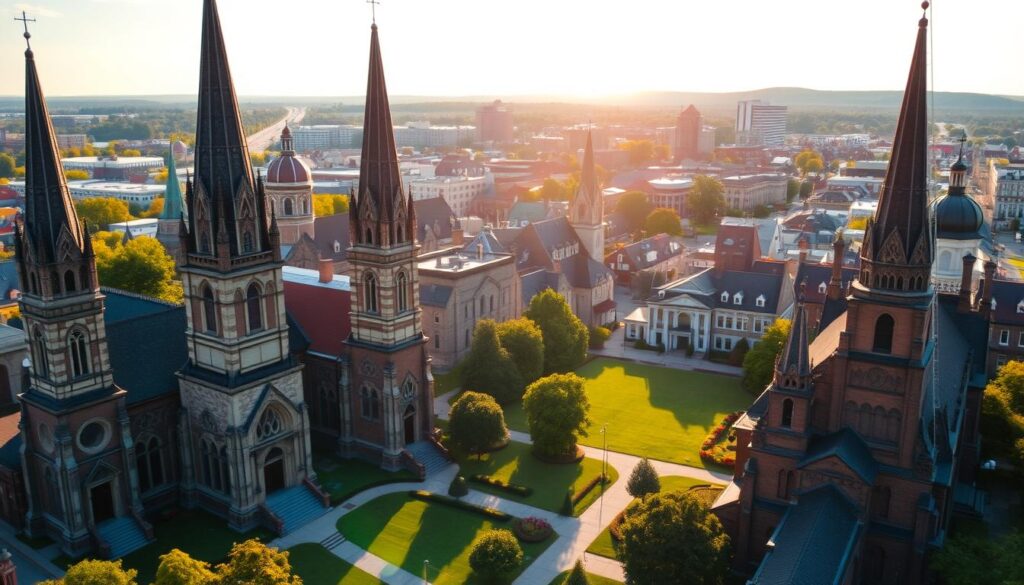
The roots of spiritual gatherings in this region stretch back to colonial times, when determined settlers planted seeds of faith that still flourish today. These early groups laid foundations for both religious practice and civic development, shaping the area’s cultural identity.
Founding Stories and Traditions
In 1733, German immigrants established what would become a cornerstone of local spirituality. Led by Pastor Stoever, 23 families created a congregation initially named in their native tongue – a nod to their European origins. Their meeting place served as more than a worship center; it became a hub for preserving language, customs, and mutual support during frontier challenges.
Impact on Local Heritage
These pioneers didn’t just build houses of prayer. They founded schools, organized healthcare efforts, and fostered literacy. Their stone sanctuaries evolved into neighborhood landmarks, blending European architectural styles with practical American adaptations. Many original structures still stand as testaments to enduring craftsmanship.
Modern congregations honor this legacy through historical archives and anniversary celebrations. Traditional hymns occasionally echo through vaulted ceilings, connecting today’s worshippers to generations past. This living history reminds us how spiritual community shapes both individual life and collective progress.
Worship Services and Community Life
Gathering for spiritual nourishment takes many forms across local congregations. Weekly rhythms blend ancient traditions with fresh expressions of worship, creating spaces where faith grows through shared experiences. These gatherings often extend beyond Sunday mornings, weaving spiritual practices into daily life.
Weekly Liturgy and Sacraments
Denominational traditions shape how groups celebrate sacred moments. Lutheran congregations like Christ Lutheran prioritize liturgical structure, offering Holy Eucharist weekly at 10:00 AM. Others observe communion monthly or quarterly, treating each observance as a unifying spiritual refreshment.
| Tradition | Communion Frequency | Music Style |
|---|---|---|
| Lutheran | Weekly | Hymns & Organ |
| Baptist | Monthly | Contemporary Band |
| Non-denominational | Quarterly | Mixed Styles |
Many locations now blend time-honored elements with modern touches. Responsive readings might precede multimedia-enhanced sermons, while traditional choirs share schedules with praise teams.
Pastoral Care and Fellowship
Support systems thrive through milestone celebrations and everyday connections. Clergy guide families during baptisms, weddings, and memorial services, offering comfort during life’s transitions. One pastor notes, “We walk alongside people in their brightest and darkest hours.”
Fellowship flourishes through:
- Shared meals after worship
- Small group discussions
- Seasonal festivals
- Volunteer partnerships
Christ Lutheran’s Coffee Hour model inspires similar gatherings citywide, fostering friendships over refreshments. Many groups also provide virtual access, live-streaming events for homebound participants.
Locations and Denominations Across York, PA
Spiritual seekers will find welcoming spaces throughout the city’s neighborhoods. Each area offers distinct advantages shaped by its history and local needs.
Downtown and Historic Venues
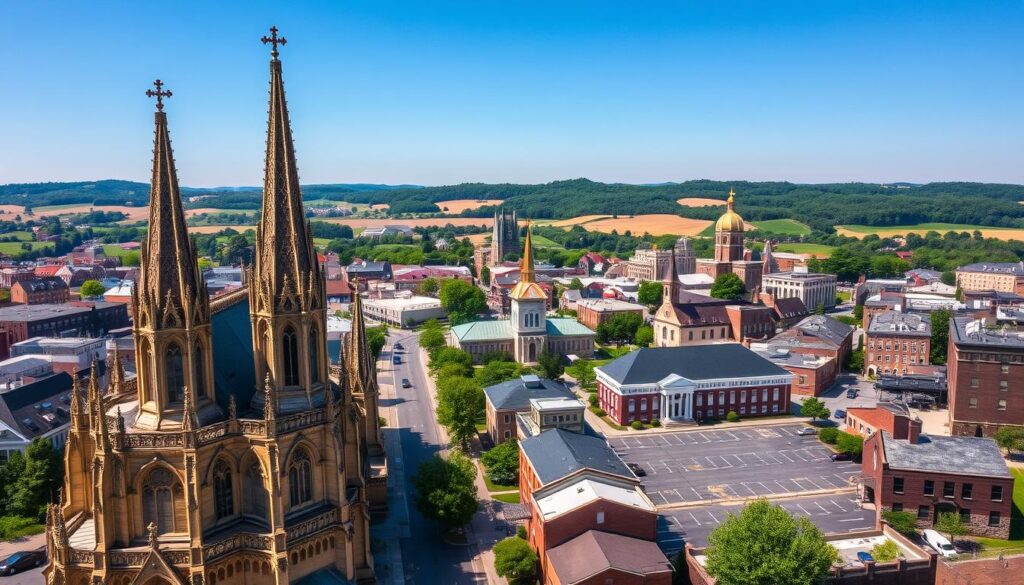
Walkable streets host century-old congregations like Christ Lutheran Church at 29 S. George Street. These architectural gems blend stained-glass beauty with active ministries. First Presbyterian Church on E Market Street and St Matthew Lutheran on W Market Street form a spiritual corridor near cultural landmarks.
Historic districts make denomination-hopping easy. Saints Peter & Paul Catholic Church near Beaver Street shares blocks with Protestant groups. Many buildings feature original woodwork and pipe organs, creating awe-inspiring settings for traditional worship.
Suburban and Community-Based Churches
Neighborhoods beyond downtown prioritize modern convenience. Good Shepherd Lutheran on Roosevelt Avenue offers ample parking and youth sports leagues. Pine Grove United Methodist’s campus at 2523 Pine Grove Road includes playgrounds and tech-equipped classrooms.
Grace Baptist Church near Prospect Road exemplifies suburban adaptability. Their café-style gathering space hosts contemporary services alongside parenting workshops. These locations prove community connections thrive in newer facilities too.
Whether drawn to urban heritage or suburban accessibility, people discover meaningful ways to grow their faith. The city’s geographic spread ensures everyone finds a spiritual home within reach.
Service Times, Events, and Programs
Balancing spiritual commitments with daily life becomes easier when congregations offer flexible options. Local groups design schedules to meet diverse needs while maintaining meaningful traditions. You’ll find morning and evening opportunities that adapt to work hours and family routines.
Regular Service Schedules
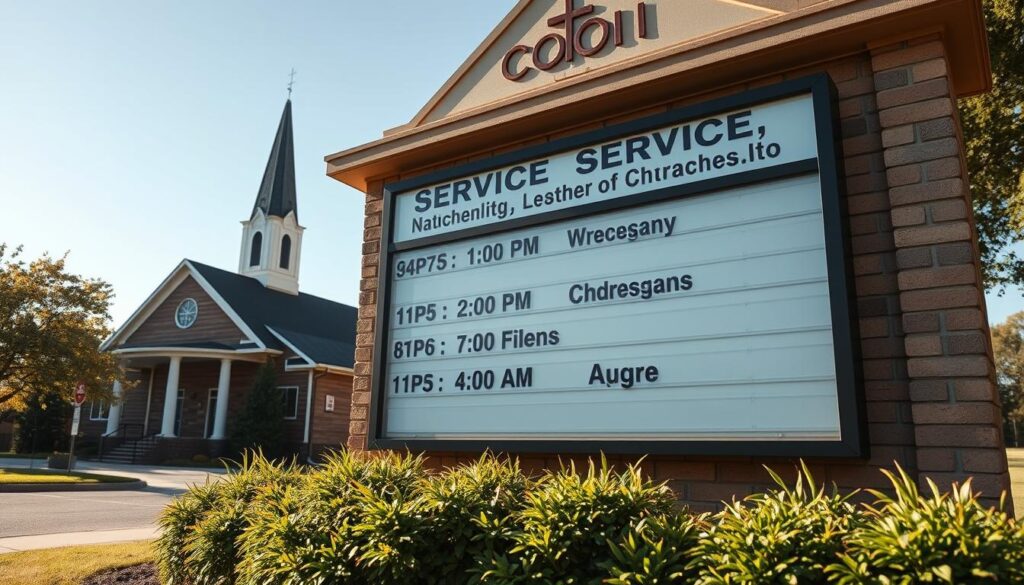
Most locations provide multiple Sunday gatherings. Early risers appreciate 8:00 AM worship, while others prefer mid-morning services at 10:00 or 11:00. Some groups even host evening sessions for those with weekend commitments.
Christ Lutheran Church demonstrates this flexibility well. Their September-May schedule includes Holy Eucharist at 10:00 AM followed by Coffee Hour fellowship. Summer brings consolidated services from June through Labor Day to accommodate vacation plans.
- Live-streaming via Facebook expands access
- Wheelchair ramps ensure inclusive participation
- Staff answers questions at (717) 854-5589
Special Community Gatherings
Annual celebrations unite neighbors through shared traditions. Easter sunrise services and Christmas Eve candlelight events draw crowds with special music and themed messages. Many locations host outdoor summer worship in parks or parking lots.
Year-round activities strengthen bonds beyond Sunday mornings:
- Vacation Bible School programs for kids
- Harvest festivals with local vendors
- Midweek prayer groups and Bible studies
These gatherings create welcoming spaces for spiritual exploration. As one organizer notes, “Our doors stay open for both regulars and first-time visitors.”
Church Community and Outreach
Local congregations transform faith into action through hands-on service. Groups collaborate across neighborhoods to address pressing needs while building meaningful relationships. This shared commitment turns spiritual values into tangible support systems.
Engaging with the Local Community
Organizations like Christ Lutheran Church live out their mission to “reflect God’s love” through practical initiatives. The York Alliance Family of Churches strengthens this effort by coordinating resources across multiple locations. Their joint programs create safety nets for vulnerable populations.
Essential outreach efforts include:
| Program Type | Frequency | Community Partners |
|---|---|---|
| Food Distribution | Weekly | Local Schools |
| Tutoring Services | Bi-Weekly | Public Libraries |
| Housing Support | Monthly | Shelter Networks |
One volunteer coordinator shares, “We keep our doors open because everyone deserves dignity.” This philosophy drives partnerships with civic groups to address education gaps and family needs. Seasonal projects like back-to-school drives ensure year-round engagement.
Facilities often serve as community hubs beyond worship hours. Meeting spaces host addiction recovery groups and cultural events, strengthening neighborhood bonds. Global missions extend this care worldwide through disaster relief and development projects.
Navigating Your Journey of Faith in York
Embarking on a spiritual path requires both personal reflection and community support. Local congregations offer diverse environments where beliefs can flourish through shared experiences. Your exploration might start with weekend visits or casual conversations with members.
Building Relationships with Spiritual Guides
Ministry teams play vital roles in nurturing growth. Pastors and lay leaders provide tailored guidance through life’s challenges and celebrations. At Christ Lutheran, for example, staff emphasize baptismal foundations while supporting practical needs.
Living Your Beliefs Through Action
True faith blossoms when paired with service. Many groups integrate volunteer work into their programs, creating pathways to apply spiritual values. Food drives, mentorship initiatives, and neighborhood cleanups let members make tangible impacts.
Starting your journey here means finding alignment between teachings and daily life. Most organizations welcome questions about traditions and outreach efforts. Through these connections, you’ll discover meaningful ways to grow while enriching the wider community.
FAQ
What types of worship services are available?
Most congregations offer weekly liturgy, sacraments, and contemporary gatherings. Many blend traditional hymns with modern worship styles to meet diverse spiritual needs.
How can I get involved in local outreach programs?
Connect with staff or volunteers to explore opportunities like food drives, mentorship initiatives, or neighborhood cleanups. Many groups prioritize partnerships that uplift families and individuals.
Are there resources for those new to faith?
Yes! Leaders often provide classes, small groups, or one-on-one guidance to help people explore beliefs, ask questions, and grow in their spiritual journey.
Do churches host events beyond Sunday services?
Absolutely. Look for seasonal celebrations, youth activities, volunteer fairs, and fellowship meals. These gatherings strengthen bonds and create space for shared purpose.
How do congregations support individuals facing challenges?
Pastoral care teams offer counseling, prayer support, and practical assistance. Many also partner with local organizations to address needs like housing or healthcare.
What role do historic traditions play in modern services?
While honoring legacy through architecture, music, or rituals, most groups balance heritage with fresh approaches to keep worship relevant and engaging for all ages.
Can I visit multiple locations to find the right fit?
Of course! Exploring different denominations and settings—from downtown sanctuaries to suburban campuses—helps you discover where you feel most connected.
How do staff members help newcomers feel welcome?
Greeters, orientation sessions, and social events ease first-time visits. Don’t hesitate to ask about membership processes or ways to join small groups for deeper connections.