The Episcopal Church is known for its progressive stance on various social issues, including LGBTQ+ rights. At its core, the church’s beliefs are centered around love, acceptance, and the dignity of every person. As stated by the church, “In Jesus, we find that the nature of God is love, and through baptism, we share in his victory over sin and death.”
The church’s approach to LGBTQ+ matters is reflective of its overall mission to love our neighbors as ourselves and respect the dignity of every individual. With a significant presence in the U.S. and worldwide through the Anglican Communion, the Episcopal Church’s governance structure, including the House of Deputies and the House of Bishops, plays a crucial role in shaping its stance on LGBTQ+ issues.
Key Takeaways
- The Episcopal Church emphasizes love and acceptance.
- It respects the dignity of every person, including those in the LGBTQ+ community.
- The church’s stance is influenced by its core beliefs and governance structure.
- The Episcopal Church is part of the worldwide Anglican Communion.
- Its beliefs on LGBTQ+ matters are rooted in its interpretation of Christian teachings.
Overview of Episcopalian Beliefs
The Episcopal Church’s stance on LGBTQ+ issues is rooted in its foundational principles, which emphasize love, acceptance, and inclusivity. At the heart of the church’s beliefs is a commitment to understanding and interpreting Christian teachings in a way that is relevant and compassionate.
Key Principles of the Episcopal Church
The Episcopal Church is guided by several key principles that inform its stance on various issues, including LGBTQ+ matters. One of the core principles is the belief in the importance of scripture, tradition, and reason. The church holds that these three elements are essential in understanding God’s will and in making decisions about its teachings and practices.
In 1976, the Episcopal Church made a significant decision by voting for full inclusion, affirming that “homosexual persons are children of God who have a full and equal claim with all other persons upon the love, acceptance, and pastoral concern and care of the Church.” This decision reflected the church’s commitment to love and acceptance, setting a precedent for its ongoing support of LGBTQ+ individuals.
Importance of Scripture and Tradition
The Episcopal Church places a significant emphasis on the interpretation of scripture and the role of tradition in shaping its beliefs and practices. The church believes that scripture and tradition must be understood in the context of reason and experience, allowing for a nuanced and compassionate approach to complex issues.
The church’s interpretation of scripture is not limited to literal readings but is informed by a broader understanding of God’s love and acceptance. This approach has enabled the Episcopal Church to adopt a progressive stance on LGBTQ+ issues, recognizing the inherent dignity and worth of all individuals regardless of their sexual orientation or gender identity.
Historical Context of LGBTQ+ Rights in the Church
Historically, the Episcopal Church’s views on LGBTQ+ issues have transformed from caution to acceptance. This shift is a result of decades of dialogue, debate, and advocacy within the church.
Early Attitudes Toward Homosexuality
In the past, the Episcopal Church, like many other religious institutions, held conservative views on homosexuality. The church’s stance was influenced by traditional interpretations of scripture.
However, as societal attitudes began to change, the Episcopal Church started to reevaluate its position. This led to a more inclusive and affirming approach towards LGBTQ+ individuals.
Milestones in LGBTQ+ Acceptance
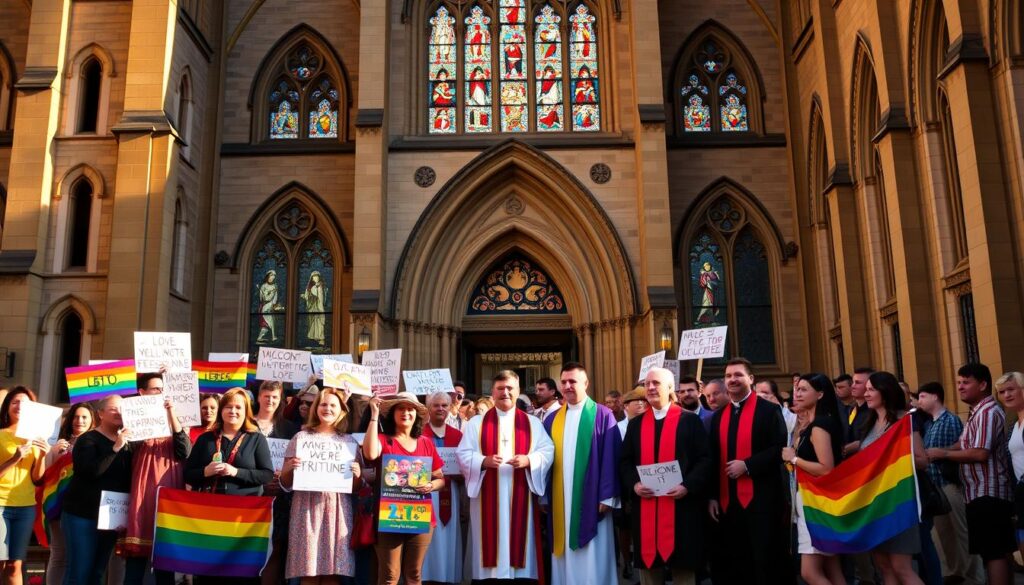
The Episcopal Church has achieved several significant milestones in its journey towards LGBTQ+ acceptance. One of the most notable was the consecration of its first openly gay bishop, Gene Robinson, in 2003.
“The consecration of Bishop Gene Robinson was a groundbreaking moment for the Episcopal Church, marking a significant step forward in its commitment to inclusivity and diversity.”
Another important milestone was the approval of transgender ordination in 2012, further solidifying the church’s commitment to LGBTQ+ inclusivity.
| Year | Event | Significance |
|---|---|---|
| 2003 | Consecration of Gene Robinson | First openly gay bishop |
| 2012 | Approval of transgender ordination | Recognition of transgender clergy |
The Episcopal Church continues to evolve, striving to be more inclusive and supportive of LGBTQ+ individuals. This journey reflects the church’s broader commitment to social justice and equality.
Current Stance on Same-Sex Relationships
The Episcopal Church’s stance on same-sex relationships reflects a broader commitment to inclusivity and diversity within the church. This approach is evident in its policies and practices regarding same-sex couples.
Blessings for Same-Sex Couples
In 2015, the Episcopal Church passed significant resolutions supporting same-sex marriage, allowing clergy to officiate using either the Book of Common Prayer or a trial liturgy. This move was a landmark decision that underscored the church’s commitment to equality.
As the Rev. Gayle Harris, a bishop in the Episcopal Church, noted, “The church’s decision to allow same-sex marriages is a reflection of our commitment to love and serve all people.”
“We believe that marriage is a gift from God, and we want to make sure that all people can participate in this gift.”
The Role of Marriage in the Church
The Episcopal Church ensures that no clergy can be forced to preside over a marriage ceremony that contradicts their beliefs, thus maintaining a balance between the rights of LGBTQ+ individuals and the beliefs of its clergy.
| Year | Significant Event | Impact on LGBTQ+ Community |
|---|---|---|
| 2015 | Resolution supporting same-sex marriage | Allowed clergy to officiate same-sex marriages |
| 2018 | Revision of liturgy for same-sex couples | Provided more inclusive language for ceremonies |
| 2020 | Further clarification on clergy rights | Protected clergy from being forced to perform marriages against their beliefs |
The church’s approach to same-sex relationships is part of a larger narrative of creating a welcoming and inclusive environment. As the Episcopal Church continues to evolve, its stance on LGBTQ+ issues remains a significant aspect of its identity and mission.
Gender Identity and the Episcopal Church
As a champion of LGBTQ+ rights, the Episcopal Church has taken significant steps to affirm transgender individuals, fostering a culture of inclusivity and acceptance within its community.
The Episcopal Church’s approach to gender identity is multifaceted, involving both the affirmation of transgender individuals and the implementation of policies that promote gender inclusivity. This commitment is reflected in its decision to approve the ordination of transgender individuals in 2012, a milestone that underscored the church’s dedication to equality and diversity.
Affirmation of Transgender Individuals
The Episcopal Church has been proactive in affirming transgender individuals, recognizing the importance of creating a welcoming environment for all members. This affirmation is not limited to ordination but extends to various aspects of church life, including liturgy and community activities.
By including “gender identity or expression” in its non-discrimination canons, the Episcopal Church has demonstrated its commitment to protecting the rights of transgender individuals, ensuring they are treated with dignity and respect.
Policies on Gender Inclusivity
The Episcopal Church’s policies on gender inclusivity are designed to create a supportive and inclusive environment. These policies encompass various areas, including liturgical language, sacramental practices, and community engagement.
| Policy Area | Description | Impact |
|---|---|---|
| Liturgical Language | Inclusive language in worship services | Fosters a welcoming atmosphere |
| Sacramental Practices | Recognition of transgender individuals in sacraments | Ensures equality in spiritual practices |
| Community Engagement | Support for LGBTQ+ events and advocacy | Promotes solidarity and advocacy |
The Episcopal Church continues to evolve its practices and policies to better serve its diverse community, reflecting its core values of love, acceptance, and inclusivity.
The Episcopal Church and LGBTQ+ Clergy
The Episcopal Church’s commitment to inclusivity is reflected in its ordination of LGBTQ+ clergy. This progressive stance is part of a broader history of embracing diversity within the church’s leadership.
Ordination of LGBTQ+ Individuals
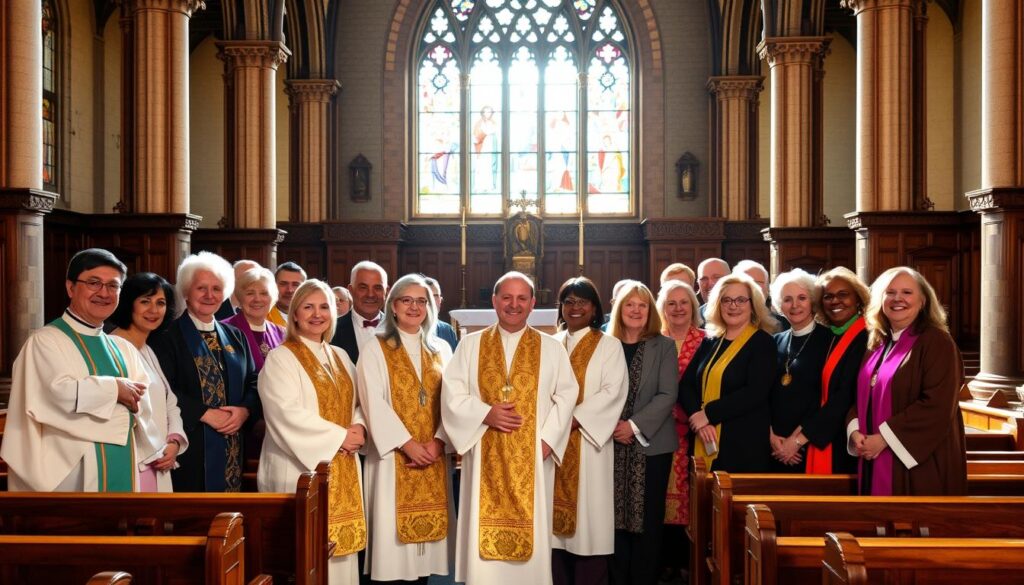
The Episcopal Church has a history of ordaining women since 1974, marking a significant step towards gender equality. In 2003, it consecrated its first openly gay bishop, further solidifying its commitment to LGBTQ+ inclusion. By 2012, the church had also approved the ordination of transgender individuals, demonstrating a continued effort to be more inclusive.
The ordination process for LGBTQ+ individuals in the Episcopal Church is the same as for anyone else, emphasizing merit and calling rather than sexual orientation or gender identity. This approach has fostered a diverse clergy that reflects the church’s values of acceptance and love.
Impact on Church Leadership
The inclusion of LGBTQ+ clergy has had a profound impact on the Episcopal Church’s leadership. It has not only brought diverse perspectives to the forefront but has also served as a powerful statement of the church’s commitment to equality and inclusivity.
LGBTQ+ clergy members have played crucial roles in shaping the church’s stance on various issues, from advocacy to liturgical practices. Their presence has enriched the church’s dialogue and decision-making processes, ensuring that the church remains relevant and compassionate in its ministry.
The Episcopal Church’s affirmation of LGBTQ+ clergy is a testament to its broader commitment to being a welcoming and affirming denomination. As the church continues to evolve, the role of LGBTQ+ clergy will undoubtedly remain a vital part of its identity and mission.
Community Support for LGBTQ+ Members
The Episcopal Church fosters a welcoming environment for LGBTQ+ individuals through numerous programs. This commitment to inclusivity is reflected in its various initiatives and active participation in local LGBTQ+ events.
Programs and Initiatives
The Episcopal Church supports several programs aimed at promoting the inclusion of LGBTQ+ members. One notable organization is Integrity USA, a nonprofit that advocates for the full inclusion of LGBTQ+ Episcopalians. Through such initiatives, the church provides a supportive community for LGBTQ+ individuals.
- Advocacy for LGBTQ+ rights within the church
- Support groups for LGBTQ+ Episcopalians and their families
- Educational programs to promote understanding and acceptance
Involvement in Local LGBTQ+ Events
The Episcopal Church actively participates in local LGBTQ+ events, demonstrating its commitment to the community. This involvement not only promotes understanding but also fosters a sense of belonging among LGBTQ+ members.
Some ways the church gets involved include:
- Participating in Pride parades and festivals
- Hosting or supporting local LGBTQ+ events and fundraisers
- Providing volunteers for LGBTQ+ organizations
By engaging with the LGBTQ+ community through these events, the Episcopal Church reaffirms its commitment to creating a welcoming and inclusive environment. This support is crucial for fostering a sense of belonging among LGBTQ+ Episcopalians.
The church’s efforts to support LGBTQ+ members are multifaceted, ranging from internal programs to external community engagement. Through these initiatives, the Episcopal Church continues to demonstrate its dedication to LGBTQ+ inclusivity.
Challenges and Controversies Within the Church
The Episcopal Church’s embrace of LGBTQ+ inclusion has led to both praise and criticism from within and outside its community. This dichotomy reflects the complex landscape the church navigates as it strives to balance its commitment to inclusivity with the diverse beliefs of its members.
Divisions in Beliefs Among Members
The Episcopal Church is not immune to the internal debates that often accompany significant changes in doctrine or practice. Some members welcome the church’s progressive stance on LGBTQ+ issues, seeing it as a vital aspect of the church’s mission to serve as a welcoming and inclusive community.
Others, however, have expressed concerns that these changes undermine traditional values and interpretations of scripture. This internal division sometimes manifests in heated debates during church gatherings and online forums.
Responses to Criticism from Other Denominations
Externally, the Episcopal Church faces scrutiny from other Christian denominations that hold more conservative views on LGBTQ+ matters. Critics argue that the Episcopal Church’s stance on these issues deviates from traditional Christian teachings.
In response, the Episcopal Church emphasizes its commitment to interpreting scripture in the context of contemporary understanding and compassion. The church points to its commitment to LGBTQ+ rights as a reflection of its broader mission to promote love, acceptance, and inclusivity.
The church engages in dialogue with other denominations, seeking common ground while standing firm in its convictions. This approach reflects the church’s belief in the importance of both remaining true to its principles and maintaining unity within the broader Christian community.
The Role of the Book of Common Prayer
The Episcopal Church’s commitment to inclusivity is reflected in the revisions made to the Book of Common Prayer. This foundational liturgical text has undergone significant changes to promote a more welcoming environment for LGBTQ+ individuals.
Liturgical Changes for Inclusivity
The Episcopal Church has made concerted efforts to revise the Book of Common Prayer, ensuring that its language and liturgies are inclusive of all individuals, regardless of their sexual orientation or gender identity. These changes are part of a broader initiative to create a more affirming and supportive community.
Inclusive language has been a key focus, with revisions aimed at removing language that could be perceived as exclusionary or hurtful to LGBTQ+ individuals. This shift reflects the church’s commitment to being a place of welcome and belonging for everyone.
New Prayers and Blessings
One of the significant updates to the Book of Common Prayer includes the introduction of new prayers and blessings that are specifically designed to be inclusive. These additions acknowledge the diversity of the church’s membership and provide liturgical tools for supporting LGBTQ+ individuals.
| Category | Previous Practice | Current Practice |
|---|---|---|
| Liturgical Language | Traditional, potentially exclusionary language | Inclusive language, affirming LGBTQ+ individuals |
| Prayers and Blessings | Limited options, not specifically inclusive | New prayers and blessings, designed to be affirming |
| Community Impact | Potential for exclusion or discomfort | Enhanced sense of welcome and belonging |
The Episcopal Church continues to evolve, with the revisions to the Book of Common Prayer representing a significant step forward in its journey toward greater inclusivity and affirmation of LGBTQ+ individuals.
Episcopal Advocacy for LGBTQ+ Rights
Episcopal advocacy for LGBTQ+ rights is a multifaceted effort that includes collaboration with national advocacy groups and participation in Pride events. This comprehensive approach underscores the church’s commitment to supporting the LGBTQ+ community beyond its walls.
Engagement with National Advocacy Groups
The Episcopal Church engages with various national advocacy groups to promote LGBTQ+ rights. This collaboration involves working together on policy initiatives, supporting legislative efforts that protect LGBTQ+ individuals from discrimination, and participating in public awareness campaigns.
A notable example is the church’s partnership with organizations like the Human Rights Campaign (HRC), which works to achieve equality for LGBTQ+ people. Through these partnerships, the Episcopal Church amplifies its impact, contributing to a broader movement for LGBTQ+ inclusivity.
Participation in Pride Events
Participation in Pride events is another significant way the Episcopal Church demonstrates its support for LGBTQ+ rights. By marching in Pride parades, hosting Pride services, and engaging in other Pride-related activities, the church visibly shows its solidarity with the LGBTQ+ community.
“We are proud to stand with our LGBTQ+ siblings, advocating for their rights and dignity,” said a spokesperson for the Episcopal Church. “Our participation in Pride events is a celebration of love, acceptance, and the ongoing pursuit of equality.”
The church’s involvement in Pride events not only fosters a sense of belonging among LGBTQ+ Episcopalians but also serves as a public witness to the church’s commitment to social justice.
Through these efforts, the Episcopal Church continues to be a vocal advocate for LGBTQ+ rights, working towards a more inclusive and equitable society.
Personal Stories from LGBTQ+ Episcopalians
The experiences of LGBTQ+ Episcopalians offer a glimpse into the church’s efforts to foster a welcoming community for all members. These personal stories highlight the journey towards acceptance and the importance of faith in their lives.
Experiences of Acceptance and Belonging
For many LGBTQ+ Episcopalians, finding acceptance within the church has been a transformative experience. One member shared how the church’s inclusive policies made them feel seen and valued for the first time in their spiritual journey.
The Episcopal Church’s commitment to diversity has created a safe space for LGBTQ+ individuals to explore their faith without fear of judgment.
Testimonials on Faith and Identity
LGBTQ+ Episcopalians often speak about the harmony between their faith and identity.
“Being part of the Episcopal Church has allowed me to be my authentic self while deepening my relationship with God,”
said one member.
Such testimonials underscore the church’s role in supporting the spiritual growth of its LGBTQ+ members, fostering a sense of belonging and spiritual fulfillment.
The stories of LGBTQ+ Episcopalians not only reflect the church’s inclusive environment but also highlight the positive impact of its policies on the lives of its members. As the church continues to embrace diversity, these personal narratives serve as a testament to its commitment to creating a welcoming space for everyone.
Future Directions for LGBTQ+ Inclusion
The Episcopal Church continues to evolve in its approach to LGBTQ+ inclusion, driven by ongoing discussions and a commitment to affirmation. As the church moves forward, it remains dedicated to creating a welcoming environment for all members.
Ongoing Dialogue
The church’s leadership is engaged in continuous dialogue about how to better support LGBTQ+ individuals, reflecting on the principles of episcopal church lgbtq beliefs and the importance of episcopal church lgbt affirmation. This includes exploring new ways to integrate inclusive practices into daily life and worship.
Projected Changes
Potential changes in policy and practice are on the horizon, aimed at further embracing episcopal church and lgbt rights. These developments are expected to strengthen the church’s stance on inclusivity, ensuring that all members feel valued and supported.
As the Episcopal Church looks to the future, its commitment to LGBTQ+ inclusion remains a guiding principle, shaping its path forward.
FAQ
What are the core beliefs of the Episcopal Church regarding LGBTQ+ matters?
The Episcopal Church’s stance on LGBTQ+ issues is rooted in its core beliefs about love, acceptance, and the dignity of every person, reflecting its commitment to inclusivity and diversity.
How does the Episcopal Church view scripture and tradition in relation to LGBTQ+ issues?
The Episcopal Church considers scripture and tradition in its decision-making process, balancing historical teachings with contemporary understanding and compassion, particularly in its approach to LGBTQ+ matters.
What has been the historical development of the Episcopal Church’s stance on LGBTQ+ rights?
The Episcopal Church has evolved significantly in its views on LGBTQ+ rights, from initial hesitation to full inclusion, marked by key milestones such as the consecration of LGBTQ+ clergy and the blessing of same-sex unions.
What is the Episcopal Church’s current stance on same-sex relationships and marriage?
The Episcopal Church currently permits the blessing of same-sex unions and has policies in place to support LGBTQ+ individuals in their relationships, reflecting its commitment to love and acceptance.
How does the Episcopal Church approach issues of gender identity?
The Episcopal Church affirms transgender individuals and has implemented policies aimed at promoting gender inclusivity within the church, creating a welcoming environment for all members.
What role do LGBTQ+ clergy play in the Episcopal Church?
LGBTQ+ clergy are fully integrated into the Episcopal Church’s leadership, reflecting the church’s commitment to diversity and inclusivity, and have played a significant role in shaping its stance on LGBTQ+ issues.
How does the Episcopal Church support its LGBTQ+ members?
The Episcopal Church supports its LGBTQ+ members through various programs and initiatives, both internally and in collaboration with external organizations, and actively participates in local LGBTQ+ events.
What challenges and controversies has the Episcopal Church faced regarding its stance on LGBTQ+ issues?
The Episcopal Church has encountered internal divisions and external criticisms regarding its stance on LGBTQ+ issues, to which it has responded with ongoing dialogue and a commitment to its inclusive principles.
How has the Book of Common Prayer been adapted to be more inclusive of LGBTQ+ individuals?
The Episcopal Church has made liturgical changes and introduced new prayers and blessings in the Book of Common Prayer to be more inclusive of LGBTQ+ individuals, enhancing the worship experience for all members.
What advocacy efforts does the Episcopal Church undertake on behalf of LGBTQ+ rights?
The Episcopal Church engages in advocacy efforts on behalf of LGBTQ+ rights, collaborating with national advocacy groups and participating in Pride events, underscoring its commitment to social justice.
What are some personal experiences of LGBTQ+ Episcopalians within the church?
LGBTQ+ Episcopalians have shared stories of acceptance, belonging, and the positive impact of the church’s inclusive policies on their faith and identity, highlighting the church’s success in creating a welcoming environment.
What future directions is the Episcopal Church considering for LGBTQ+ inclusion?
The Episcopal Church is committed to ongoing discussions and potential changes in policy and practice to further enhance LGBTQ+ inclusion, reflecting its dedication to adaptation and dialogue.
What is the Episcopal stance on LGBT issues?
The Episcopal Church is fully inclusive and supportive of LGBT individuals, allowing same-sex marriages and the ordination of LGBT clergy.
How does the Episcopal Church affirm LGBT individuals?
The Episcopal Church affirms LGBT individuals through its inclusive policies, liturgical changes, and active support for LGBT rights, creating a welcoming environment.