Death is a universal human experience, yet how we understand it shapes our lives in profound ways. For members of the Episcopal Church, this moment isn’t an ending but a sacred passage. Rooted in the teachings of Jesus Christ, their perspective offers hope that transcends fear.
The resurrection story stands at the heart of this tradition. As Rev. Catherine Thompson notes, “God’s love doesn’t abandon us at death—it raises us to new life.” This conviction, grounded in scripture like Romans 8:38-39, reassures believers that physical death cannot sever their connection to divine grace.
Modern culture often avoids discussions about mortality, but the Episcopal faith leans into them. Instead of denial, there’s an emphasis on spiritual growth and trust. Followers are encouraged to view their final days not with dread but with the same faith that guides their daily lives.
Key Takeaways
- Episcopal teachings frame death as a transition, not an endpoint, through Christ’s resurrection.
- Scriptural promises, like God’s unbreakable love, provide comfort amid grief.
- The church contrasts with secular views by embracing death as a sacred journey.
- Believers focus on eternal life, seeing mortality as a chance for spiritual renewal.
- Trust in divine grace helps followers approach death with peace rather than fear.
Understanding Death, Resurrection, and the Episcopal Faith
The Episcopal Church teaches that resurrection transforms mortality into eternal hope. Rooted in New Testament teachings, this tradition views physical endings as spiritual beginnings. Scripture passages like 1 Corinthians 15:54-55 declare, “Death has been swallowed up in victory,” offering assurance that divine love outlasts earthly limits.
The Biblical Foundation
Paul’s letters form the backbone of Episcopal views on mortality. His words in 1 Corinthians 15 emphasize Christ’s triumph, framing death as a defeated enemy. Three key texts shape this perspective:
| Book | Key Verse | Theological Theme |
|---|---|---|
| 1 Corinthians 15 | 54-55 | Victory over death through Christ |
| 1 Thessalonians 4 | 16-17 | Union with Christ at His return |
| Revelation 20 | 6 | Eternal reign with the living God |
The Theological Significance of Resurrection
This victory isn’t just future—it reshapes how believers live now. As theologian Marcus Borg observed, “Resurrection symbolizes the power of love to transcend even the grave.” Episcopal teachings suggest that physical bodies will be renewed, mirroring Jesus’ resurrected form.
The Apostles’ Creed’s mention of Christ’s descent into hell underscores divine solidarity with all who suffer. This belief fuels confidence that life continues beyond our earthly understanding, sustained by grace until Christ’s final return.
what do episcopalians believe happens after death
The journey beyond physical existence holds deep theological significance in Episcopal teachings. While Scripture offers no detailed map, it describes an intermediate state where departed souls rest in divine care. Passages like 1 Thessalonians 4:14 suggest believers remain connected to Christ while awaiting final resurrection.

Core Doctrines and Grace
Episcopal theology avoids strict timelines about the afterlife. Instead, it emphasizes God’s ongoing embrace. As one clergy member explains, “We trust that loved ones aren’t lost—they’re held securely until all creation is renewed.” This mystery brings comfort, assuring families their faith community continues praying for both the living and departed.
Three key principles shape this view:
| Concept | Biblical Basis | Practical Impact |
|---|---|---|
| Intermediate Rest | 1 Corinthians 15:20 | Reduces anxiety about exact afterlife mechanics |
| Resurrection Hope | Revelation 21:4 | Focuses on ultimate healing, not immediate rewards |
| Grace-Centered Salvation | Ephesians 2:8 | Encourages humble trust rather than fear of judgment |
Unlike traditions stressing instant heavenly entry, Episcopalians highlight Christ’s eventual restoration of all things. This perspective sees physical death as one part of a larger spiritual journey—a transition guided by unearned divine favor.
The Role of Scripture and Tradition in Shaping Beliefs
The interplay between sacred writings and time-honored rituals shapes how Episcopalians approach life’s ultimate transition. For over 500 years, the Book of Common Prayer has united theology with practice, offering a roadmap for understanding eternity.
Insights from the Book of Common Prayer
Since Thomas Cranmer’s 1549 edition, the Book of Common Prayer has framed death through resurrection hope. Its funeral rites declare, “All we go down to the dust; yet even at the grave we make our song: Alleluia!” This Easter-focused liturgy celebrates Christ’s victory rather than dwelling on loss.
The 1979 revision introduced the Apostles’ Creed directly into services, reinforcing beliefs about Christ’s descent into hell and bodily resurrection. However, shortened committal prayers removed explicit references to resurrection life beginning at Christ’s return—a shift from the clearer 1928 language.
Historical Perspectives on Death and Resurrection
Cranmer’s work established Anglican views of eternal glory as both future promise and present comfort. Later revisions balanced scriptural authority with evolving community needs. As theologian Ellen Charry notes, “Tradition isn’t static—it breathes with the church’s lived faith.”
Through centuries, the Book of Common Prayer has taught believers to face mortality with trust. Its prayers honor grief while pointing toward renewal, embodying the church’s conviction that love outlasts even death.
Contemporary Views on Grief, Community, and Holy Dying
Modern Episcopal communities embrace both sorrow and hope when facing life’s hardest moments. “Resurrection joy doesn’t erase grief—it walks beside it,” explains Rev. Catherine Thompson. This balance allows family members to mourn deeply while trusting in eternal renewal.
Experiencing Joy Amidst Loss
Church teachings affirm that tears and laughter coexist. When loved ones pass, grief becomes sacred ground for connection. Shared meals, prayer circles, and memorial services let people honor loss without abandoning hope.
Support Within the Episcopal Community
Practical care forms the backbone of spiritual fellowship. Local congregations often organize:
| Support Type | Example | Impact |
|---|---|---|
| Practical Care | Meal trains for grieving families | Reduces daily burdens |
| Emotional Support | Grief-sharing circles | Validates complex emotions |
| Spiritual Guidance | Customized prayer services | Reinforces resurrection hope |
This threefold approach helps community members embody Christ’s love. Through these acts, the church becomes a living testament to joy that persists even in shadowed valleys.
Practical Considerations for End of Life and Funeral Planning
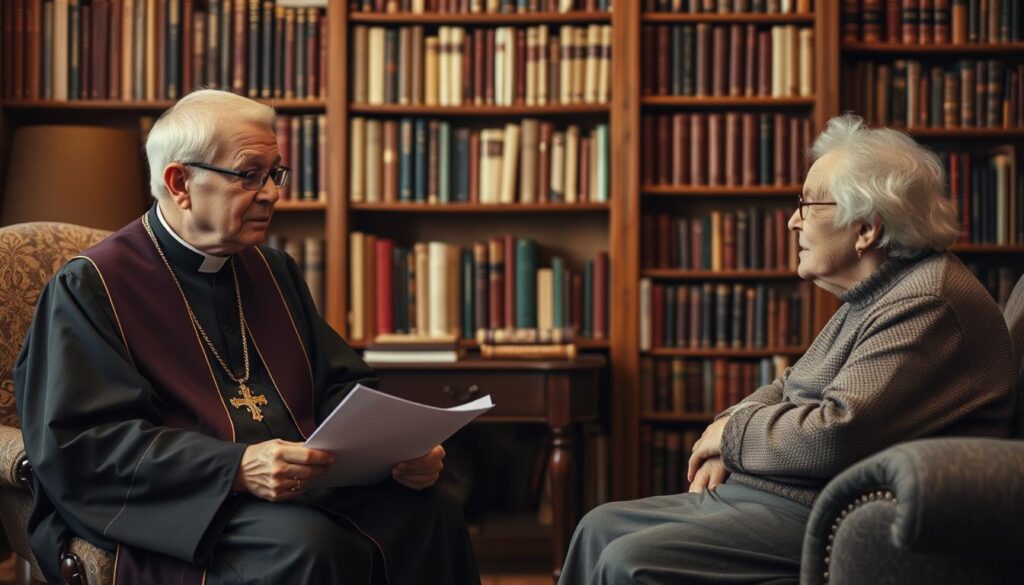
Preparing for life’s final chapter can become a profound act of faith. Rev. Catherine Thompson encourages Episcopalians to view end-of-life planning not as surrender but as spiritual stewardship. “When we arrange our affairs with care,” she notes, “we free ourselves to fully live our remaining days in trust.”
Aligning Legal and Spiritual Priorities
Practical preparation begins with three key steps:
- Collaborating with clergy to design faith-centered funeral rites
- Creating advanced directives that reflect theological values
- Storing legal documents in accessible yet secure places
Families often find peace through structured conversations. The church recommends holding family meetings that blend practical details with prayer, transforming difficult discussions into moments of connection. Legal tools like wills and power of attorney become extensions of one’s beliefs when framed through resurrection hope.
| Planning Area | Faith Connection | Impact |
|---|---|---|
| Funeral Arrangements | Uses Book of Common Prayer liturgy | Honors personal and communal beliefs |
| Medical Directives | Prioritizes dignity over fear | Reduces family conflict |
| Asset Distribution | Reflects stewardship principles | Strengthens generational bonds |
By addressing these matters early, believers create space for sacred time—days focused on love rather than logistics. As one parishioner shared, “Completing my paperwork felt like laying down stones for others to cross the river after me.” This practical faithfulness becomes a lasting witness, reminding all that death holds no final victory.
Conclusion
In the quiet moments between life’s joys and sorrows, the Episcopal tradition shines light on eternity’s horizon. Its teachings frame mortality not as an end, but a sacred transition into divine glory. As Brother Roger of Taizé reminds us, “Our heart finds peace in knowing death opens the way toward life where God welcomes us forever.”
This perspective turns fear into quiet confidence. The church offers both spiritual depth and hands-on support, ensuring no one walks through grief alone. Shared prayers, meal trains, and memorial services become acts of witness—proof that love outlasts earthly days.
Central to this hope is the conviction that Jesus Christ holds all creation in grace. Those who pass from this earth remain alive in God’s presence, awaiting final renewal. Every funeral liturgy, every whispered prayer, echoes this truth: life triumphs.
For believers, facing mortality becomes an invitation. An invitation to trust, to community, and to the unshakable promise that light always pierces darkness. Here, in the shadow of the cross, hope blooms eternal.
FAQ
How does the Episcopal Church view resurrection?
The Episcopal Church teaches that resurrection is central to Christian hope. Rooted in Jesus Christ’s victory over death, believers trust in God’s promise of eternal life. This hope is affirmed in the Book of Common Prayer, emphasizing unity with God and the eventual renewal of all creation.
What role does the Book of Common Prayer play in end-of-life practices?
The Book of Common Prayer provides liturgy for funerals, comfort for grieving families, and prayers for the departed. It highlights trust in God’s mercy and the belief that death is not an end but a transition into divine presence, surrounded by peace and light.
How do Episcopalians reconcile grief with joy?
While grief is a natural response to loss, Episcopalians lean on community support and sacraments to find hope. The church teaches that even in sorrow, there’s joy in knowing loved ones rest in God’s eternal care, and resurrection assures reunion in glory.
Are funerals in the Episcopal tradition focused on mourning or celebration?
Episcopal funerals balance both. They honor grief while celebrating the deceased’s life and faith. Services often include scripture, hymns, and the Eucharist, reflecting trust in resurrection and the power of Christ’s love to sustain families.
How does the Episcopal Church support families after a death?
Clergy and congregants offer practical and spiritual care, from planning services to providing meals. The community gathers in prayer, shares memories, and upholds the family through ongoing fellowship, embodying Christ’s call to bear one another’s burdens.
What does "holy dying" mean in Episcopal theology?
“Holy dying” emphasizes approaching death with faith, dignity, and trust in God’s grace. It involves preparing spiritually, receiving sacraments like anointing, and entrusting loved ones to God’s peace, guided by the witness of scripture and tradition.